
Esther Hautzig (1930–2009)
Author of The Endless Steppe
About the Author
Esther Hautzig was born on October 18, 1930. During World War II, her family was exiled from Poland to Siberia, where they worked in labor camps. In 1947, she traveled via ocean liner to New York on a student visa. While aboard the ocean liner, she met the Vienna-born pianist Walter Hautzig, who show more was returning from a concert tour. They married in 1950. She enrolled in Hunter College, but never finished because a professor there told her that her accent would disqualify her from becoming a teacher. She took a job as a secretary at the publisher G. P. Putnam's Sons and later was promoted to children's books. During her lifetime she wrote numerous books including Let's Cook without Cooking (1955), Let's Make Presents (1962), A Gift for Mama (1987), Remember Who You Are: Stories About Being Jewish (1990), Riches (1992) and A Picture of Grandmother (2002). The Endless Steppe: Growing Up in Siberia (1968) won the Jane Addams Children's Book Award and the Lewis Carroll Shelf Award. She also translated stories by the Yiddish writer I. L. Peretz. She died of congestive heart failure and complications of Alzheimer's disease on November 1, 2009 at the age of 79. (Bowker Author Biography) show less
Works by Esther Hautzig
Tagged
Common Knowledge
- Legal name
- Hautzig, Esther Rudomin
- Other names
- Rudomin, Esther
- Birthdate
- 1930-10-18
- Date of death
- 2009-11-01
- Gender
- female
- Education
- Hunter College
- Occupations
- children's book author
secretary
translator - Organizations
- G. P. Putnam's Sons
- Awards and honors
- Jane Addams Book Award 1970
Lewis Carroll Shelf Award 1971 - Relationships
- Hautzig, Deborah (daughter)
Hautzig, David (son) - Short biography
- Esther Rudomin wa born in Vilna, then part of Poland, to a Jewish family. In World War II, her father was drafted into the Russian Army, while Esther, her mother, and her grandparents were deported by the Soviets to Siberian forced labor camps. They spent five grueling years there and her grandfather died. After the war, Esther emigrated to the USA, settling in New York. After attending high school and college, she became a secretary in a publishing company and began promoting and writing books for children. In 1950, she married Walter Hautzig, a Viennese-born pianist whom she had met on the ship coming to America. Encouraged by Adlai Stevenson, Esther Hautzig started writing books on her childhood and on survival during the Holocaust, based on her own and her family's ordeal, that became classics of young people’s literature. She also translated stories by the Yiddish writer I.L. Peretz.
- Cause of death
- congestive heart failure
complications of Alzheimer's disease - Nationality
- USA
- Birthplace
- Vilna, Poland
- Places of residence
- Vilna, Poland
Rubtsovsk, Siberia, USSR
Lodz, Poland
Stockholm, Sweden
New York, New York, USA - Place of death
- USA
Members
Reviews

When my children (or I) get to whining … “ it's so hot” … “ewww, that's not what I want for dinner” … I always think of these people and what they went through at the hands of other human beings – packed into cattle cars and left standing on tracks in the summer heat, perishing of thirst, freezing in the cold Siberia north with inadequate clothing and overwork, digging through the snow trying to find anything to sustain their bodies.
Esther was a happy young girl in Poland, show more when her world was changed. Her father had a business in Vilna, Poland and the whole extended family lived together in a nice, rambling home surrounding a garden which her grandfather tends meticulously.
In 1940 the Russians, who were then allied with Germany, occupied Vilna. They confiscated the family business and our property, but did not evict us from our house, our garden. … My world was still intact and I had not the slightest premonition that it was about to end.
Until the day the soldiers broke into their home. “… you are capitalists and therefore enemies of the people … you are to be sent to another part of our great and mighty country…”
The flatness of this land was awesome. There wasn’t a hill in sight; it was an enormous, unrippled sea of parched and lifeless grass. “Tata, why is the earth so flat here?” “These must be steppes, Esther.” “Steppes? But steppes are in Siberia.” “This is Siberia,” he said quietly.
Although Esther tells her story in a matter-of-fact way, it is heart-wrenching to picture what her family went through trying to survive. I found this book to have even more impact than The Diary of Anne Frank. (4.2 stars) show less
Esther was a happy young girl in Poland, show more when her world was changed. Her father had a business in Vilna, Poland and the whole extended family lived together in a nice, rambling home surrounding a garden which her grandfather tends meticulously.
In 1940 the Russians, who were then allied with Germany, occupied Vilna. They confiscated the family business and our property, but did not evict us from our house, our garden. … My world was still intact and I had not the slightest premonition that it was about to end.
Until the day the soldiers broke into their home. “… you are capitalists and therefore enemies of the people … you are to be sent to another part of our great and mighty country…”
The flatness of this land was awesome. There wasn’t a hill in sight; it was an enormous, unrippled sea of parched and lifeless grass. “Tata, why is the earth so flat here?” “These must be steppes, Esther.” “Steppes? But steppes are in Siberia.” “This is Siberia,” he said quietly.
Although Esther tells her story in a matter-of-fact way, it is heart-wrenching to picture what her family went through trying to survive. I found this book to have even more impact than The Diary of Anne Frank. (4.2 stars) show less

3.5 stars. During WWII, 10-year old Esther and her family, Polish Jews, are arrested and taken by cattle car with other families to remote Siberia. They are exiled here for the duration of the war and this book tells their story. They live in poverty and often don't know if they'll have any food for their next meal, but Esther actually begins to enjoy her life in remote rural Siberia.
I liked it. I didn't know that people were sent to Siberia in exile during the war. It's a bit of a show more different type of holocaust story because of where it takes place and what happens to Esther and her family. show less
I liked it. I didn't know that people were sent to Siberia in exile during the war. It's a bit of a show more different type of holocaust story because of where it takes place and what happens to Esther and her family. show less

This is the reminiscence of a woman who spent nearly 5 years of her adolescence, 1941 to 1946, in exile in Siberia with her family, who the Russian government had declared to be "capitalist enemies of the people". They were Polish Jews who operated a "family business", the nature of which she does not specify. Before the war, their lifestyle in the city of Vilna was comfortable, but far from extravagant. After Hitler invaded Poland the Soviets rounded up thousands of Poles, and sent them off show more in cattle cars to mines and work camps in the Siberian steppes. The journey itself was an unimaginable ordeal; old women and children then being forced to work in gypsum mines a brutality; the vicious weather, the lack of decent food, housing or clothing all combined to make it unimaginable that many would survive. And yet Esther’s immediate family –mother, father and grandmother--did have a future together after the war. Being sent to Siberia was not equivalent to being sent to a Nazi concentration camp, as extermination was not an integral part of the overall plan. But comparing two such evils is futile. Looking back on the experience from an adult perspective, Esther has clearly filtered some of the horror out of her recollections by focusing on the strength, resourcefulness and optimism of her mother in particular, and on random moments of satisfaction and acts of kindness that made life bearable under such circumstances. Written for young adults. Recommended for everyone. show less
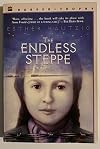
This is a fairly easy read aimed at middle schoolers. I didn't find it to be overly graphic, and I think most younger readers could handle it. After having read so many brutal accounts of life under Communism, myself, this one actually seemed a bit tame. However, the author captures the voice of a young girl perfectly, and I came to care about her and her family as they faced treacherous circumstances living in Siberia for the unpardonable crime of practicing capitalism.
Lists
Awards


You May Also Like


Associated Authors
Statistics
- Works
- 23
- Members
- 3,170
- Popularity
- #8,055
- Rating
- 4.0
- Reviews
- 48
- ISBNs
- 82
- Languages
- 6
- Favorited
- 1