
Jean-Benoît Nadeau
Author of Sixty Million Frenchmen Can't Be Wrong: Why We Love France but Not the French
About the Author
Works by Jean-Benoît Nadeau
Sixty Million Frenchmen Can't Be Wrong: Why We Love France but Not the French (2003) 587 copies, 14 reviews
Tagged
Common Knowledge
- Canonical name
- Nadeau, Jean-Benoît
- Birthdate
- 1964
- Gender
- male
- Education
- McGill University (Political Science and History)
- Occupations
- journalist
author - Agent
- Williams, Roger
- Relationships
- Barlow, Julie (spouse)
- Nationality
- Canada
- Birthplace
- Sherbrooke, Québec, Canada
- Places of residence
- Montréal, Québec, Canada
- Associated Place (for map)
- Québec, Canada
Members
Reviews
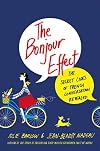
Don't be fooled by how light and easy to read this introduction to French social norms is. Although the authors wear their learning lightly, it is clear they have thought a lot about the social science behind their claims (I say this as a Ph.D. in anthropology). The book is also extraordinarily well-composed, moving effortlessly between topics and offering anecdotes in a way that makes the prose flow without drawing attention to the carefully-wrought structure. The epigrams are also very show more well done. I have not read many 'how to France' books, but so far this is the best one I've come across. show less

Some years ago — not long before I retired — I had to go to Beijing with a colleague to discuss technical cooperation with our counterparts in a Chinese government agency. The technical part of the talks was carried out, as expected, in various functional dialects of International Business English, but the opening of the meeting took the form of a welcoming speech in elegant, very formal, French by a senior official of the host organisation, which I suspect none of her Chinese colleagues show more could understand. My Dutch colleague had to do some swift thinking to come up with a reply in kind: I was impressed that he remembered to start with "Madame le directeur-général, mesdames et messieurs...", the lady being of a generation to consider any other form of her title a terrible solecism.
That experience sums up a lot of preconceptions about the roles of English and French in the world of international communication. French comes loaded with style, protocol and status and the suggestion that Metternich and Talleyrand will be joining the meeting shortly; English lives in the world of Powerpoint presentations and pragmatic solutions. The directeur-général was entitled to assume that we, as representatives of an international organisation, would understand French, and she was also reminding us and her own subordinates that she had the enormous prestige of being a graduate of the Sorbonne. But she was perhaps exposing herself as a kind of dinosaur, one of the last representatives of the generations that were educated to believe that a good knowledge of French was all you needed in international discussions between educated people.
And of course, none of those preconceptions are entirely true, as Nadeau and Barlow set out to show in this follow-up to their dissection of modern France (Sixty million Frenchmen can't be wrong, 2003). Although it's presented as a history of the language, the historical part of the story is fairly perfunctory, and a good half of the book is given to a social and political examination of the status of French as a global language since 1945. They remind us how widely French is still spoken as a first or second language in many parts of the world, and how many students continue to learn it (voluntarily or not...). They look at the way the French-speaking community in Québec woke from centuries of self-isolation to become a dynamic political and cultural force in the 1960s, at the way French has survived the end of colonialism in North and West Africa, at the influence of French international schools, the Alliance française, and the Francophonie, at the French communities in Belgium and Switzerland, and at the unexpected importance of French in some countries where it doesn't have any formal standing, like Israel and Romania, or even the USA, where it is still in fourth place as a household language (after English, Spanish and Chinese).
French is still clearly very far from being at a dead end in the world at large, and a lot of that continued good health is due to clever language-promotion by governments and NGOs, but Nadeau and Barlow seem less confident about the health of French at home: the French are still inclined to get hung up on sterile discussions about language purism and ignore the fact that the world has moved on since the days of Molière-Racine-Corneille (whose works, as they remind us, French students only know through editions in which the spelling has been updated and standardised to nineteenth-century norms). The Académie française gets a particularly hard time: as far as Nadeau and Barlow are concerned, the Immortels are a bunch of amateurs who have been doing nothing in particular since 1635, and not doing it very well. They contrast this destructive conservatism with the open approach of the Office québécois de la langue française, which spends its time trying to come up with practical French terms for new concepts that would otherwise require borrowings from English.
As in their earlier book, the text is marred by imprecisions, minor errors and editorial slips (at one point they even manage to write "Indonesia" when they mean "Indochina"!), and they repeat themselves a bit, but on the whole it's a useful and very readable book, and it covers quite a few topics I haven't read much about elsewhere. show less
That experience sums up a lot of preconceptions about the roles of English and French in the world of international communication. French comes loaded with style, protocol and status and the suggestion that Metternich and Talleyrand will be joining the meeting shortly; English lives in the world of Powerpoint presentations and pragmatic solutions. The directeur-général was entitled to assume that we, as representatives of an international organisation, would understand French, and she was also reminding us and her own subordinates that she had the enormous prestige of being a graduate of the Sorbonne. But she was perhaps exposing herself as a kind of dinosaur, one of the last representatives of the generations that were educated to believe that a good knowledge of French was all you needed in international discussions between educated people.
And of course, none of those preconceptions are entirely true, as Nadeau and Barlow set out to show in this follow-up to their dissection of modern France (Sixty million Frenchmen can't be wrong, 2003). Although it's presented as a history of the language, the historical part of the story is fairly perfunctory, and a good half of the book is given to a social and political examination of the status of French as a global language since 1945. They remind us how widely French is still spoken as a first or second language in many parts of the world, and how many students continue to learn it (voluntarily or not...). They look at the way the French-speaking community in Québec woke from centuries of self-isolation to become a dynamic political and cultural force in the 1960s, at the way French has survived the end of colonialism in North and West Africa, at the influence of French international schools, the Alliance française, and the Francophonie, at the French communities in Belgium and Switzerland, and at the unexpected importance of French in some countries where it doesn't have any formal standing, like Israel and Romania, or even the USA, where it is still in fourth place as a household language (after English, Spanish and Chinese).
French is still clearly very far from being at a dead end in the world at large, and a lot of that continued good health is due to clever language-promotion by governments and NGOs, but Nadeau and Barlow seem less confident about the health of French at home: the French are still inclined to get hung up on sterile discussions about language purism and ignore the fact that the world has moved on since the days of Molière-Racine-Corneille (whose works, as they remind us, French students only know through editions in which the spelling has been updated and standardised to nineteenth-century norms). The Académie française gets a particularly hard time: as far as Nadeau and Barlow are concerned, the Immortels are a bunch of amateurs who have been doing nothing in particular since 1635, and not doing it very well. They contrast this destructive conservatism with the open approach of the Office québécois de la langue française, which spends its time trying to come up with practical French terms for new concepts that would otherwise require borrowings from English.
As in their earlier book, the text is marred by imprecisions, minor errors and editorial slips (at one point they even manage to write "Indonesia" when they mean "Indochina"!), and they repeat themselves a bit, but on the whole it's a useful and very readable book, and it covers quite a few topics I haven't read much about elsewhere. show less
Sixty million Frenchmen can't be wrong : (why we love France but not the French) by Jean-Benoît Nadeau

This looks from the cover and blurb like yet another of those handy guides to expat life written by some self-declared expert who has parachuted into Paris/the Dordogne for a few months, but it turns out to be something rather more ambitious: the bilingual Canadian couple Jean-Benoît Nadeau and Julie Barlow are both serious journalists who set themselves the task — with the help of a handy grant from an international foundation — of working out how the French state and its economy show more really work in practice, and they have tried to condense the results of that investigation into a format that would make sense to a North American reader. Their project clearly involved a lot of discussions on and off the record with influential people in France, as well as plenty of burrowing in libraries and databases, but the result is lively and informative.
Admittedly, it's twenty years old now, so probably well past its use-by date. Also, I'm not a North American reader, and there were only a few parts of the book where I really felt I was learning something new about France — I found the chapter about the inner workings of the elite civil service college ENA very interesting, for example, but I didn't really need a rehash of De Gaulle, World War II and Algeria. Or half a chapter on Minitel, for that matter! And what Nadeau and Barlow say about the French role in the EEC and EU seems too superficial to be of any use to anyone.
Obviously you can't cover the whole of French life in one small paperback: being mostly interested in economic and constitutional matters, they don't find any time for the role of art and design in France, and what they say about food is also oddly narrow — there's quite a bit about the importance of local food production and terroir, but next to nothing about the way the French buy and consume food.
I was amused by the way they were both so shocked by the French insistence that every encounter, however superficial, must start with a greeting: it never occurred to me that that might be strange to a North American. Don't they say "bonjour" in Quebec?
Better than it looks, but out of date. show less
Admittedly, it's twenty years old now, so probably well past its use-by date. Also, I'm not a North American reader, and there were only a few parts of the book where I really felt I was learning something new about France — I found the chapter about the inner workings of the elite civil service college ENA very interesting, for example, but I didn't really need a rehash of De Gaulle, World War II and Algeria. Or half a chapter on Minitel, for that matter! And what Nadeau and Barlow say about the French role in the EEC and EU seems too superficial to be of any use to anyone.
Obviously you can't cover the whole of French life in one small paperback: being mostly interested in economic and constitutional matters, they don't find any time for the role of art and design in France, and what they say about food is also oddly narrow — there's quite a bit about the importance of local food production and terroir, but next to nothing about the way the French buy and consume food.
I was amused by the way they were both so shocked by the French insistence that every encounter, however superficial, must start with a greeting: it never occurred to me that that might be strange to a North American. Don't they say "bonjour" in Quebec?
Better than it looks, but out of date. show less
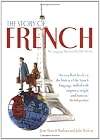
Hard to believe now, when French has virtually been reduced to a boutique language for those who love French cinema, Edith Piaf, and being seen in fashionable Paris cafes, that it was once the Western world's no. 1 language. From the 16th to 19th centuries, anyone who had cultural or societal pretensions simply had to be conversant in French. Only the French themselves now regard their native tongue as a serious international language, although it is still ranked No. 5 in the world, after show more Mandarin, English, Spanish and Arabic. This book details how French gained its lofty position, and then lost it under a ferocious assault from that most unglamorous of languages, English, against which it is still fighting a desperate, but failing rearguard action, and does it in a most entertaining manner. A thoroughly enjoyable read. show less
Lists
Awards


You May Also Like


Associated Authors
Statistics
- Works
- 14
- Members
- 1,621
- Popularity
- #15,881
- Rating
- 3.7
- Reviews
- 47
- ISBNs
- 43
- Languages
- 2
- Favorited
- 1

