
Sara Donati
Author of Into the Wilderness
About the Author
Rosina Lippi was born in Chicago, Illinois on January 14, 1956. She received a PhD in linguistics from Princeton University. Before becoming a full-time writer, she worked as a professor. She writes the Wilderness series under the pen name Sara Donati. Her title The Gilded Hour is a New York Times show more bestseller. (Bowker Author Biography) show less
Image credit: Nurmi Husa
Series
Works by Sara Donati
English with an Accent: Language, Ideology and Discrimination in the United States (1997) 174 copies, 2 reviews
Language Ideology and Language Change in Early Modern German: A sociolinguistic study of the consonantal system of Nuremberg (1994) 9 copies
Złota Godzina 1 copy
Wilderness (6 Book Series) 1 copy
Associated Works
Tagged
Common Knowledge
- Legal name
- Lippi-Green, Rosina
- Other names
- Donati, Sara
Lippi, Rosina - Birthdate
- 1956-01-14
- Gender
- female
- Education
- Princeton University (PhD|Linguistics)
- Occupations
- professor
novelist - Short biography
- Rosina Lippi was born on January 14, 1956 in Chicago, Illinois. She has lived for long periods in the Austrian alps, on the East coast (where she earned a PhD in linguistics from Princeton) and Michigan. After twelve years as a tenured professor --getting up early and staying up late to write fiction-- she took heart in hand and left academia. These days she writes full time from her home on Puget Sound, where she lives with her husband (the Mathematician), their daughter (the Girlchild), Tuck and Bunny (the puppy boys) and the Girlchld's two cats. She divides her time between her next novel, family, friends, television and textile arts.
- Nationality
- USA (birth)
- Birthplace
- Chicago, Illinois, USA
- Places of residence
- Chicago, Illinois, USA (birth)
Vorarlberg, Austria
Princeton, New Jersey, USA
Boston, Massachusetts, USA
Roselle, New Jersey, USA
Ann Arbor, Michigan, USA (show all 8)
Bellingham, Washington, USA
Harpenden, Hertfordshire, England, UK - Associated Place (for map)
- USA
Members
Reviews
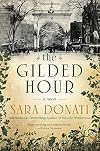
Armed with both the book and book-on-tape, I intended to start with the audio version (for a short road trip) and then switch to the hardback. Instead, because I so loved the language and storytelling, I listened to the entire 31 hours of audio and was completely absorbed into a different period of time.
The Gilded Hour combines the best of three genres -- historical fiction, romance, and murder mystery. It takes you deep into New York City in the 1880s where cousins Anna and Sophie Savard show more (one a woman of color) are among the first women doctors in the city. Facing intense sexism and second class status in both their professional and social lives, these women nevertheless devote themselves to improving the lives of the poor and less fortunate. It's a tall order in a city where zealot Anthony Comstock is trying to prevent women from learning even the most basic information about how their reproductive organs work and women of all classes can find themselves at the mercy of a tyrannical and brutal husband.
In this one novel, Donati paints such a rich picture of society in NYC -- from the posh parties at the Vanderbilt mansion to the thousands of orphans living on the street. There's a lot to absorb about the limitations of medical treatment, including the nearly impossible access to contraception and resulting botched abortions. Prejudice against AND BY new immigrants and "coloreds", bribes in the police department, glimpses of less-than-authentic church-sponsored charity, even congested pre-automobile traffic --- are all brought to life through rich characters, believable dialog, and just enough period detail. To counter what could have been an overly dark picture of the city at this time, Donati also includes budding romance, the intense love and support provided by family, and the resiliency of human beings able to recover from the most disturbing tragedies. And Donati doesn't make the mistake of tying everything up too neatly at the end. The resolutions are more realistic than that.
I found the entire book interesting and surprising. So it was a joy to turn every page (or switch to the next disc). This is the first book I've read by Sara Donati (aka Rosina Lippi) but I will certainly now go on to read more. show less
The Gilded Hour combines the best of three genres -- historical fiction, romance, and murder mystery. It takes you deep into New York City in the 1880s where cousins Anna and Sophie Savard show more (one a woman of color) are among the first women doctors in the city. Facing intense sexism and second class status in both their professional and social lives, these women nevertheless devote themselves to improving the lives of the poor and less fortunate. It's a tall order in a city where zealot Anthony Comstock is trying to prevent women from learning even the most basic information about how their reproductive organs work and women of all classes can find themselves at the mercy of a tyrannical and brutal husband.
In this one novel, Donati paints such a rich picture of society in NYC -- from the posh parties at the Vanderbilt mansion to the thousands of orphans living on the street. There's a lot to absorb about the limitations of medical treatment, including the nearly impossible access to contraception and resulting botched abortions. Prejudice against AND BY new immigrants and "coloreds", bribes in the police department, glimpses of less-than-authentic church-sponsored charity, even congested pre-automobile traffic --- are all brought to life through rich characters, believable dialog, and just enough period detail. To counter what could have been an overly dark picture of the city at this time, Donati also includes budding romance, the intense love and support provided by family, and the resiliency of human beings able to recover from the most disturbing tragedies. And Donati doesn't make the mistake of tying everything up too neatly at the end. The resolutions are more realistic than that.
I found the entire book interesting and surprising. So it was a joy to turn every page (or switch to the next disc). This is the first book I've read by Sara Donati (aka Rosina Lippi) but I will certainly now go on to read more. show less
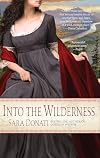
Elizabeth is a committed spinster with passion for books and a thirst for adventure. Guided by these qualities, she decides to leave the genteel home of her aunt in England and make the long journey to the remote town in upstate New York where her father is the local judge. He has promised to set her up there as a school teacher and Elizabeth imagines her new frontier life containing unparallel freedom and self-determination.
She is greatly dismayed to realize that her father has instead show more lured her to the remote town of Paradise in order to marry her off to cover his considerable debts and the reckless behavior of her wastrel brother. Unwilling to be bartered away to a stranger, Elizabeth quickly hatches a plan to outfox her father and elope with her new love interest, Nathaniel Bonner - an accomplished trapper who has been adopted by the local indigenous people.
This little bit of trickery will hopefully secure both Elizabeth's freedom and Nathaniel's native home, as the mountain he lives on is owned by her father and deeded to Elizabeth at the point her marriage. Once the deed is done, the newlywed pair must escape into the dense wilderness in order to evade Elizabeth's jilted admirer, Richard Todd, who is obsessed with taking everything Nathaniel loves.
This book was entertaining but not particularly convincing in its character development. Common romance tropes plagued the narrative from the beginning, the most egregious of which is how Nathaniel and Elizabeth are essentially instantly in love for no apparent reason. I would have like the premise much more if the marriage started off as a business arrangement and then affection blossomed overtime. Instead, we have Elizabeth going from committed spinster to love sick teenager almost overnight.
When she elopes with Nathaniel, she has only known him for a few months and hasn't spent much time with him at all. It's not clear why they love each other and their romance is pretty flat as a result. More than that, it really makes Elizabeth's character pretty shallow. She says she's a spinster, but in actuality, it appears that no man has ever taken an interest in her and she immediately agrees to becoming a man's legal property the instant he says he loves her. Even in the modern day, this is pretty reckless, but Elizabeth is acutely aware that her husband will have complete control over her once she signs the marriage contract. Yet she enters into it without the slightest hesitation.
Beyond this central issue, this book's pacing is pretty up and down with many odd and episodic plots that pop up and resolve too quickly. This had the effect of me being interested in a new development only for it to get wrapped up and for me to be less interested in returning. Lots of dramatic things just seemed to happen out of no where with little justification and people would just kinda be over it a few pages later.
The most obvious infraction of this is the way the reader seems to be encouraged to forgive the villains of the story. Elizabeth's father, brother, and Richard Todd all reveal themselves to be purely evil: liars, cowards, enslavers, and racists who look upon people as property. By the end, the narrative is telling us to forgive them because the consequences of their own actions have made them sad. I'm sorry, I refuse. The actions of each of these men have led to multiple deaths, some directly others indirectly and we are expected to overlook this because they are now kinda sorry.
The most senseless of this is Richard himself who has chased Elizabeth and Nathaniel across the state and threatened them with open violence. When he's not trying to kill them, he's saying the worst thing he can think of at any moment. He is lying about them and seeking legal action against them. He is enlisting others to perjure themselves. And then at the end of the book, he shows up unannounced at their house and Elizabeth is so terrified at the sight of him that she falls and nearly dies.
Richard pulls her out of the water and tries to help her and this is presented as a nice thing for him to do. Sorry, no it isn't. He was trespassing and he was directly responsible for Elizabeth almost dying. I don't even think you can say he saved her life when it's his fault she fell in the first place. In any case, Many Doves was there too and also dove into the water to save Elizabeth and did most of the nursing so if anything, Richard was just also there but not integral in her rescue or recovery. But the book makes a point of giving him so much credit for doing the literal bare minimum and Elizabeth tells him she is in his debt. No she isn't.
Elizabeth also has a dream about Julian which seems to for no reason present him as somehow redeemed. He died in a fire trying to save Hannah - even though he didn't save Hannah and once again, was just also there when Nathaniel broke through a window and actually saved Hannah. And then he just sorta stands around in the fire for awhile before running out to die.
The whole fire rescue scene was so bizarre and pointless. He only went into the building because he thought Many Doves was inside, and he has creepy obsession with her. He's actively disappointed when he finds Hannah and again, doesn't actually save her. His dying words were reminding his sister that he doesn't care about her or his new wife and only wants to spite her. He literally does nothing good in the whole book and seems to have no motivation beyond greed and predatory lust. But again, the narrative makes a point of Elizabeth telling him "thank you" for again, making a half hearted attempt to save Hannah.
Elizabeth's father also ends the book slightly sad and therefore somehow good. He's sad because for the second time in the book he accidentally shot someone and this time killed them. The innocent person killed by Elizabeth's father is Chingachgook, Nathaniel's adoptive grandfather and chief of the local indigenous tribe.
Literally no one in the book is mad at this doddering old man who keeps hitting people he's not aiming at. They don't even forgive him because no one even bother's to blame him. Look, he may not have intended to do murder, but someone died and it's his fault. I couldn't fathom this choice. To further redeem him, everyone keeps pointing out that also his son died and now he's sad about that too.
Okay, but his son was a literal monster who the judge raised to be a monster and continued to enable even as his gambling drove him farther into debt and his senseless hatred led to death and destruction. No one should be sad that Julian is dead - he canonically lacked a soul.
Finally, there is the not insignificant issue of racial representation in this book. It's not my place as a white woman to say whether or not this is good representation, but I will note a few things I observed.
White people have a tendency to appropriate native culture to add romance or mysticism to their own stories and that does appear to be happening in this novel quite a bit. None of the native characters are main characters and seem to take a fairly passive role while the white characters fight to "save" their land. When the land ends the book in the possession of a white member of the tribe, this seems to be considered a victory.
To my non-expert eyes, most gross tropes about native people seem to have been avoided by the author. She seems to be making an effort to present their culture as valid and seems to want to portray them as whole and developed humans. How successful she is at this is debatable.
The depiction of Black people is also troubling to me. There are few African Americans in Paradise and probably half of them are enslaved. Most do not appear on page or if they do, don't speak. Curiosity, is the only Black character with any significance to the plot and she is Elizabeth's father's housekeeper. Although not perhaps a perfect stereotype, she hits a lot of the common tropes of the Mammy.
She is instantly devoted to Elizabeth and goes out of her way help her achieve her various schemes. Later this is presented as somewhat self-interested because she hopes that Elizabeth will somehow find a way to free the enslaved people in town. No clear reason is provided as to why Curiosity believes this will happen but it does eventually come to pass.
Curiosity is presented as very intelligent and wise and acts as a universal mother figure assisting with births and injuries. However, she lacks a lot of interiority and is only ever on page when she is being of service to someone. Again, it's not my place to say whether this is good or bad representation, but it left me uneasy and dissatisfied.
All that being said, I didn't pick up this book thinking it would be some great piece of literature. I expected an immersive and addictive page turner. Instead, I struggled to get through this book in places. It's quite long and the pacing was herky-jerky. Plot threads seemed to resolve very quickly and in ways that felt anti-climactic. The central romance was pretty shallow and both Nathaniel and Elizabeth's motivations were inscrutable to me. I enjoyed it, but it also frustrated me. I thought I would throw the book across the room when Elizabeth randomly shot Nathaniel by accident. It seemed like a rehash of previous drama but also made her seem totally incompetent. And just like with her father, everyone immediately forgives her. At this point I'm unsure if I will continue the series. show less
She is greatly dismayed to realize that her father has instead show more lured her to the remote town of Paradise in order to marry her off to cover his considerable debts and the reckless behavior of her wastrel brother. Unwilling to be bartered away to a stranger, Elizabeth quickly hatches a plan to outfox her father and elope with her new love interest, Nathaniel Bonner - an accomplished trapper who has been adopted by the local indigenous people.
This little bit of trickery will hopefully secure both Elizabeth's freedom and Nathaniel's native home, as the mountain he lives on is owned by her father and deeded to Elizabeth at the point her marriage. Once the deed is done, the newlywed pair must escape into the dense wilderness in order to evade Elizabeth's jilted admirer, Richard Todd, who is obsessed with taking everything Nathaniel loves.
This book was entertaining but not particularly convincing in its character development. Common romance tropes plagued the narrative from the beginning, the most egregious of which is how Nathaniel and Elizabeth are essentially instantly in love for no apparent reason. I would have like the premise much more if the marriage started off as a business arrangement and then affection blossomed overtime. Instead, we have Elizabeth going from committed spinster to love sick teenager almost overnight.
When she elopes with Nathaniel, she has only known him for a few months and hasn't spent much time with him at all. It's not clear why they love each other and their romance is pretty flat as a result. More than that, it really makes Elizabeth's character pretty shallow. She says she's a spinster, but in actuality, it appears that no man has ever taken an interest in her and she immediately agrees to becoming a man's legal property the instant he says he loves her. Even in the modern day, this is pretty reckless, but Elizabeth is acutely aware that her husband will have complete control over her once she signs the marriage contract. Yet she enters into it without the slightest hesitation.
Beyond this central issue, this book's pacing is pretty up and down with many odd and episodic plots that pop up and resolve too quickly. This had the effect of me being interested in a new development only for it to get wrapped up and for me to be less interested in returning. Lots of dramatic things just seemed to happen out of no where with little justification and people would just kinda be over it a few pages later.
The most obvious infraction of this is the way the reader seems to be encouraged to forgive the villains of the story. Elizabeth's father, brother, and Richard Todd all reveal themselves to be purely evil: liars, cowards, enslavers, and racists who look upon people as property. By the end, the narrative is telling us to forgive them because the consequences of their own actions have made them sad. I'm sorry, I refuse. The actions of each of these men have led to multiple deaths, some directly others indirectly and we are expected to overlook this because they are now kinda sorry.
The most senseless of this is Richard himself who has chased Elizabeth and Nathaniel across the state and threatened them with open violence. When he's not trying to kill them, he's saying the worst thing he can think of at any moment. He is lying about them and seeking legal action against them. He is enlisting others to perjure themselves. And then at the end of the book, he shows up unannounced at their house and Elizabeth is so terrified at the sight of him that she falls and nearly dies.
Richard pulls her out of the water and tries to help her and this is presented as a nice thing for him to do. Sorry, no it isn't. He was trespassing and he was directly responsible for Elizabeth almost dying. I don't even think you can say he saved her life when it's his fault she fell in the first place. In any case, Many Doves was there too and also dove into the water to save Elizabeth and did most of the nursing so if anything, Richard was just also there but not integral in her rescue or recovery. But the book makes a point of giving him so much credit for doing the literal bare minimum and Elizabeth tells him she is in his debt. No she isn't.
Elizabeth also has a dream about Julian which seems to for no reason present him as somehow redeemed. He died in a fire trying to save Hannah - even though he didn't save Hannah and once again, was just also there when Nathaniel broke through a window and actually saved Hannah. And then he just sorta stands around in the fire for awhile before running out to die.
The whole fire rescue scene was so bizarre and pointless. He only went into the building because he thought Many Doves was inside, and he has creepy obsession with her. He's actively disappointed when he finds Hannah and again, doesn't actually save her. His dying words were reminding his sister that he doesn't care about her or his new wife and only wants to spite her. He literally does nothing good in the whole book and seems to have no motivation beyond greed and predatory lust. But again, the narrative makes a point of Elizabeth telling him "thank you" for again, making a half hearted attempt to save Hannah.
Elizabeth's father also ends the book slightly sad and therefore somehow good. He's sad because for the second time in the book he accidentally shot someone and this time killed them. The innocent person killed by Elizabeth's father is Chingachgook, Nathaniel's adoptive grandfather and chief of the local indigenous tribe.
Literally no one in the book is mad at this doddering old man who keeps hitting people he's not aiming at. They don't even forgive him because no one even bother's to blame him. Look, he may not have intended to do murder, but someone died and it's his fault. I couldn't fathom this choice. To further redeem him, everyone keeps pointing out that also his son died and now he's sad about that too.
Okay, but his son was a literal monster who the judge raised to be a monster and continued to enable even as his gambling drove him farther into debt and his senseless hatred led to death and destruction. No one should be sad that Julian is dead - he canonically lacked a soul.
Finally, there is the not insignificant issue of racial representation in this book. It's not my place as a white woman to say whether or not this is good representation, but I will note a few things I observed.
White people have a tendency to appropriate native culture to add romance or mysticism to their own stories and that does appear to be happening in this novel quite a bit. None of the native characters are main characters and seem to take a fairly passive role while the white characters fight to "save" their land. When the land ends the book in the possession of a white member of the tribe, this seems to be considered a victory.
To my non-expert eyes, most gross tropes about native people seem to have been avoided by the author. She seems to be making an effort to present their culture as valid and seems to want to portray them as whole and developed humans. How successful she is at this is debatable.
The depiction of Black people is also troubling to me. There are few African Americans in Paradise and probably half of them are enslaved. Most do not appear on page or if they do, don't speak. Curiosity, is the only Black character with any significance to the plot and she is Elizabeth's father's housekeeper. Although not perhaps a perfect stereotype, she hits a lot of the common tropes of the Mammy.
She is instantly devoted to Elizabeth and goes out of her way help her achieve her various schemes. Later this is presented as somewhat self-interested because she hopes that Elizabeth will somehow find a way to free the enslaved people in town. No clear reason is provided as to why Curiosity believes this will happen but it does eventually come to pass.
Curiosity is presented as very intelligent and wise and acts as a universal mother figure assisting with births and injuries. However, she lacks a lot of interiority and is only ever on page when she is being of service to someone. Again, it's not my place to say whether this is good or bad representation, but it left me uneasy and dissatisfied.
All that being said, I didn't pick up this book thinking it would be some great piece of literature. I expected an immersive and addictive page turner. Instead, I struggled to get through this book in places. It's quite long and the pacing was herky-jerky. Plot threads seemed to resolve very quickly and in ways that felt anti-climactic. The central romance was pretty shallow and both Nathaniel and Elizabeth's motivations were inscrutable to me. I enjoyed it, but it also frustrated me. I thought I would throw the book across the room when Elizabeth randomly shot Nathaniel by accident. It seemed like a rehash of previous drama but also made her seem totally incompetent. And just like with her father, everyone immediately forgives her. At this point I'm unsure if I will continue the series. show less

High in the Austrian Alps a postcard arrives in the remote village of Rosenau addressed to ‘Anna Fink’. Due to naming conventions there are nine potential recipients for the postcard. The mystery and discussion the missive elicits is our introduction to a close-knit community where the lives of Rosenau’s inhabitants are forever intertwined.
Beginning in 1909 with Anna’s story, for whom the arrival of the postcard is the start of a revealing personal journey, we follow the lives of show more Rosenau’s women and their families through the generations up until 1977. The story is structured as a series of 12 short chapters each from the point of view of a different woman. There are many inter-relationships between these women, which is emphasised by many of the characters having their stories concluded via another’s chapter later in the book.
Early in the 20th century Rosenau is secluded and rural with the villagers living in the traditional way. Over the course of the eight decades covered are two World Wars, rationing, occupation and the rise of industrialism, with the wars taking a terrible toll on the village clans and industrialisation changing their traditional lifestyle.
At some points I did find it a little hard to keep track of all the relationships, but there are three clan charts included at the beginning of my edition which were really helpful. There was also a glossary, pronunciation guide and information on naming conventions which highlighted important and interesting aspects of traditional Austrian clan life.
Lippi herself spent a number of years in Austria, and as a result this is a richly observed story, told with gentle compassion, of the universal wants and needs of women everywhere, and filled with details of village life in the Alps. As one reviewer put it “the women of this book are deeply and uniquely of their place”, and this is a great strength of Homestead, that Lippi can so deftly evoke a place and way of life that is quite foreign to most of us.
I devoured this book, and highly recommend it. show less
Beginning in 1909 with Anna’s story, for whom the arrival of the postcard is the start of a revealing personal journey, we follow the lives of show more Rosenau’s women and their families through the generations up until 1977. The story is structured as a series of 12 short chapters each from the point of view of a different woman. There are many inter-relationships between these women, which is emphasised by many of the characters having their stories concluded via another’s chapter later in the book.
Early in the 20th century Rosenau is secluded and rural with the villagers living in the traditional way. Over the course of the eight decades covered are two World Wars, rationing, occupation and the rise of industrialism, with the wars taking a terrible toll on the village clans and industrialisation changing their traditional lifestyle.
At some points I did find it a little hard to keep track of all the relationships, but there are three clan charts included at the beginning of my edition which were really helpful. There was also a glossary, pronunciation guide and information on naming conventions which highlighted important and interesting aspects of traditional Austrian clan life.
Lippi herself spent a number of years in Austria, and as a result this is a richly observed story, told with gentle compassion, of the universal wants and needs of women everywhere, and filled with details of village life in the Alps. As one reviewer put it “the women of this book are deeply and uniquely of their place”, and this is a great strength of Homestead, that Lippi can so deftly evoke a place and way of life that is quite foreign to most of us.
I devoured this book, and highly recommend it. show less

This is the second book by Sara Donati (aka Rosina Lippi) that I've read this year and she is rapidly becoming a favorite author. Though I don't rate this one quite as highly as THE GILDED HOUR, what I recognize most is the same depth and dimension in all the characters, even though the two plots couldn't be more different.
This time, the two main characters are Julia Darrow, a young widow running a fancy linen shop (including pajamas) in the small Southern town of Lambert Square, and John show more Dodge, a 40-ish free spirit who likes to buy, fix up, and sell small businesses. At its heart THE PYJAMA GIRLS is a budding love story, between two people with issues around commitment and intimacy. But there are no easy fixes here and Donati's end does not tie everything up too neatly. Instead, the story is much more realistic. These characters are human-- they make mistakes, they change slowly, they wrestle with internal demons, then slowly move cautiously toward each other.
In addition, there are a host of other fascinating characters (and dogs) who are nearly as fully developed. An Afro-American divorced worker at Julia's shop, trying to balance the needs of her precocious 10 year old with her new romance with a white man. There's a curmudgeon with an encyclopedic knowledge of antique pens. A super-smart woman mayor who expertly reads everyone in town. And about a dozen others, all with believable and distinctive personalities. Like any small town, they all keep up on each other's business and offer lots of unsolicited advice. Having just finished the book, I wish I could visit the town and meet them all. show less
This time, the two main characters are Julia Darrow, a young widow running a fancy linen shop (including pajamas) in the small Southern town of Lambert Square, and John show more Dodge, a 40-ish free spirit who likes to buy, fix up, and sell small businesses. At its heart THE PYJAMA GIRLS is a budding love story, between two people with issues around commitment and intimacy. But there are no easy fixes here and Donati's end does not tie everything up too neatly. Instead, the story is much more realistic. These characters are human-- they make mistakes, they change slowly, they wrestle with internal demons, then slowly move cautiously toward each other.
In addition, there are a host of other fascinating characters (and dogs) who are nearly as fully developed. An Afro-American divorced worker at Julia's shop, trying to balance the needs of her precocious 10 year old with her new romance with a white man. There's a curmudgeon with an encyclopedic knowledge of antique pens. A super-smart woman mayor who expertly reads everyone in town. And about a dozen others, all with believable and distinctive personalities. Like any small town, they all keep up on each other's business and offer lots of unsolicited advice. Having just finished the book, I wish I could visit the town and meet them all. show less
Lists
Awards


You May Also Like


Associated Authors
Statistics
- Works
- 28
- Also by
- 1
- Members
- 8,903
- Popularity
- #2,696
- Rating
- 4.1
- Reviews
- 242
- ISBNs
- 207
- Languages
- 12
- Favorited
- 43


