
Natan Sharansky
Author of The Case For Democracy: The Power of Freedom to Overcome Tyranny and Terror
About the Author
Natan Sharansky is currently the Chairman of the Adelson Institute for Strategic Studies in Jerusalem.
Image credit: Andrew Ratto
Works by Natan Sharansky
The Case For Democracy: The Power of Freedom to Overcome Tyranny and Terror (2004) 520 copies, 4 reviews
Associated Works
Tagged
Common Knowledge
- Legal name
- Щаранский, Натан
- Other names
- Shcharansky, Anatoly Borisovich (birth)
- Birthdate
- 1948
- Gender
- male
- Education
- Moscow Institute of Physics and Technology
- Occupations
- activist
politician - Organizations
- Adelson Institute for Strategic Studies, Jerusalem
Knesset
Israeli Cabinet - Awards and honors
- Congressional Gold Medal (1986)
Presidential Medal of Freedom (2006) - Nationality
- USSR
Israel - Birthplace
- Donetsk, Ukrainian SSR, USSR
- Places of residence
- Donetsk, Soviet Union
Jerusalem, Israel
Members
Reviews
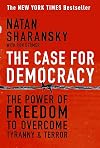
I finally got around to reading Natan Sharansky's The Case for Democracy: The Power of Freedom to
Overcome Tyranny and Terror (2006). Sharansky's argument is that freedom is good for everyone. The more freedom, the more security. Everyone will be happy and peaceful. Dictatorships are bad for their people, and threats to peace. It is an argument that President George W. Bush repeated during the invasion of Iraq.
Sharansky's struggle for freedom began as a dissident in the Soviet society of show more fear, where after years of agitation he was labeled a spy, and sent to the gulag. After Ronald Reagan personally mentioned Sharansky in a conversation with Mikhail Gorbachev, the dissident was fattened up, released, and allowed to immigrate to Israel. Sharansky entered politics in his adoptive land, and formed a party whose objective was to assimilate the massive influx of Soviet emigres into Israeli Society. The party was so successful, that it lost its purpose. A powerful figure in Israeli politics, Sharansky was active in the negotiations with Yasser Arafat throughout the 1990s. He believes that peace in the Middle East is elusive because of the dictators hold such tremendous power over their fearful and subjected people. These regimes are propped up with a false ideology ruthlessly supported by state organized media, and maintained by a brutal oppression of civil rights and free thought. Sharansky sees the same pattern in Syria or the Palestinian Authority as he saw in the old Soviet Union. These authoritarian regimes are abetted by the foreign policy realists in the West. As an example, he recounts a conversation he had with former president Jimmy Carter. In discussing his experience advocating peace in the Middle East, Carter stated he had a good partnership with Syrian dictator Hafez Assad because he felt that he could always trust the dictator to keep his word. To Sharansky, this line of thinking lacked moral clarity. Even if one could take a dictator's word to the bank, it still did not change the fact that they crushed human freedom and degraded the humanity of their peoples. The entire book is an argument for idealism in foreign policy and against realism or relativism.
Historians will find interesting insights on US-Soviet Detente (he opposed it), Jimmy Carter, Ronald Reagan (he speaks highly of the Gipper), his arrival in Israel (he was shocked by the division he found within a democratic society), and the Middle East peace negotiations in the 1990s (he wanted to couple concessions with guarantees of more open, transparent government). Future historians will undoubtedly look to this book to gain an insights into early year of the Global War on Terror.
From my blog: http://gregshistoryblog.blogspot.com/2014/06/recent-read-natan-sharansky-case-fo... show less
Overcome Tyranny and Terror (2006). Sharansky's argument is that freedom is good for everyone. The more freedom, the more security. Everyone will be happy and peaceful. Dictatorships are bad for their people, and threats to peace. It is an argument that President George W. Bush repeated during the invasion of Iraq.
Sharansky's struggle for freedom began as a dissident in the Soviet society of show more fear, where after years of agitation he was labeled a spy, and sent to the gulag. After Ronald Reagan personally mentioned Sharansky in a conversation with Mikhail Gorbachev, the dissident was fattened up, released, and allowed to immigrate to Israel. Sharansky entered politics in his adoptive land, and formed a party whose objective was to assimilate the massive influx of Soviet emigres into Israeli Society. The party was so successful, that it lost its purpose. A powerful figure in Israeli politics, Sharansky was active in the negotiations with Yasser Arafat throughout the 1990s. He believes that peace in the Middle East is elusive because of the dictators hold such tremendous power over their fearful and subjected people. These regimes are propped up with a false ideology ruthlessly supported by state organized media, and maintained by a brutal oppression of civil rights and free thought. Sharansky sees the same pattern in Syria or the Palestinian Authority as he saw in the old Soviet Union. These authoritarian regimes are abetted by the foreign policy realists in the West. As an example, he recounts a conversation he had with former president Jimmy Carter. In discussing his experience advocating peace in the Middle East, Carter stated he had a good partnership with Syrian dictator Hafez Assad because he felt that he could always trust the dictator to keep his word. To Sharansky, this line of thinking lacked moral clarity. Even if one could take a dictator's word to the bank, it still did not change the fact that they crushed human freedom and degraded the humanity of their peoples. The entire book is an argument for idealism in foreign policy and against realism or relativism.
Historians will find interesting insights on US-Soviet Detente (he opposed it), Jimmy Carter, Ronald Reagan (he speaks highly of the Gipper), his arrival in Israel (he was shocked by the division he found within a democratic society), and the Middle East peace negotiations in the 1990s (he wanted to couple concessions with guarantees of more open, transparent government). Future historians will undoubtedly look to this book to gain an insights into early year of the Global War on Terror.
From my blog: http://gregshistoryblog.blogspot.com/2014/06/recent-read-natan-sharansky-case-fo... show less
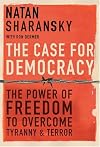
This book was cited by The President as an influence on his decision to invade Iraq. (to bring another democracy into the middle east) I think it's worth the read, but I'm not so sure that he makes enough of a case for democracy as a pure virtue in itself to justify said action. Maybe we'll get lucky and history will be kinder than the current political climate. An important book regardless of your political views.

What is your identity?
Do you have an identity?
What is identity, anyway?
And does it matter?
These are four major questions that the reader may have that run through Natan Sharansky's book as its subtext. At first it is not clear in which of it meanings Sharansky is using the word. The book is more polemical than closely analytical, and buzzwords such as post-colonial, post-identity, post-nationalism, post-modernism, multi-culturalism, and cosmopolitanism make their fiercely heated appearance show more in the text. Gradually, however, the intended meaning of 'identity' and the thrust of Sharansky's argument become clear.
Sharansky passionately argues that yes, now more than ever, it is necessary for liberal Western democracies to understand and embrace fervently their own identities against the anti-democratic identities that are abroad in the world.
Natan Sharansky is a former Soviet dissident who knows, beyond peradventure of doubt, that it was his own internal personal identification with the historical roots and continuing existence of his own Jewish heritage that provided the stamina to resist nearly countless interrogations by the Soviet KGB while in their Lefortovo prison in Moscow -- 110 interrogations during 16 months, to be exact -- and then nine years of further imprisonment as a political prisoner in the Soviet Gulag. He is directly aware of the power of having an identity that extends beyond one's own personal or selfish interests, and having bonds with a larger community of like-minded people outside of one's self, whether national, religious, cultural, ethnic, or sharing the same ideals.
Almost needles to say, in a multi-cultural world or society, different people and cultures see their own and other people's identities in different ways. In addition, identity is not merely personal but can have its political edge as well -- as, for example, in regimes which support terrorism or violence and are sworn to the overthrow or complete eradication of Western democracies and nations..
Sharansky provides a survey of the current international scene and discusses the different levels of acceptance that national, religious, cultural and ethnic identity receive in America, Europe and Israel, and describes historical and cultural reasons why that is so.
Sharansky vigorously eschews cultural and moral relativism and appeals to the words of Eleanor Roosevelt, one of the authors of the Declaration of Human Rights, speaking 60 years ago, in 1948, in the early stages of the Cold War, as "the Soviet Union was working tirelessly to sow moral confusion in every internal forum."
"We must not be deluded by efforts of the forces of reaction to prostitute the great words of our free tradition and there by confuse the struggle. Democracy, freedom, human rights have come to have a definite meaning to the people of the world which we must not allow any nation to so change that they are made synonymous with uppression and dictatorship."
His own closing remarks are:
"The free world's shield against its enemies is its own identity, vigorously asserted and framed by a comitment to democratic life. Not all cultures are the same. Not all values are equivalent. The right to live a unique way of life is a right worth fighting for and if necessary worth dying for.
United, freedom and identity cannot be defeated. By reconciling these two powerful forces and strengthening this indispensable alliance, we can both fill our lives with purpose and advance the cause for peace."
This is a book well worth reading for its insights into the divergent passions that fuel many of today's headlines, which seem increasingly to describe violence, wanton murder, genocide and acts of terrorism, and which increasingly have Western democracy as their target. show less
Do you have an identity?
What is identity, anyway?
And does it matter?
These are four major questions that the reader may have that run through Natan Sharansky's book as its subtext. At first it is not clear in which of it meanings Sharansky is using the word. The book is more polemical than closely analytical, and buzzwords such as post-colonial, post-identity, post-nationalism, post-modernism, multi-culturalism, and cosmopolitanism make their fiercely heated appearance show more in the text. Gradually, however, the intended meaning of 'identity' and the thrust of Sharansky's argument become clear.
Sharansky passionately argues that yes, now more than ever, it is necessary for liberal Western democracies to understand and embrace fervently their own identities against the anti-democratic identities that are abroad in the world.
Natan Sharansky is a former Soviet dissident who knows, beyond peradventure of doubt, that it was his own internal personal identification with the historical roots and continuing existence of his own Jewish heritage that provided the stamina to resist nearly countless interrogations by the Soviet KGB while in their Lefortovo prison in Moscow -- 110 interrogations during 16 months, to be exact -- and then nine years of further imprisonment as a political prisoner in the Soviet Gulag. He is directly aware of the power of having an identity that extends beyond one's own personal or selfish interests, and having bonds with a larger community of like-minded people outside of one's self, whether national, religious, cultural, ethnic, or sharing the same ideals.
Almost needles to say, in a multi-cultural world or society, different people and cultures see their own and other people's identities in different ways. In addition, identity is not merely personal but can have its political edge as well -- as, for example, in regimes which support terrorism or violence and are sworn to the overthrow or complete eradication of Western democracies and nations..
Sharansky provides a survey of the current international scene and discusses the different levels of acceptance that national, religious, cultural and ethnic identity receive in America, Europe and Israel, and describes historical and cultural reasons why that is so.
Sharansky vigorously eschews cultural and moral relativism and appeals to the words of Eleanor Roosevelt, one of the authors of the Declaration of Human Rights, speaking 60 years ago, in 1948, in the early stages of the Cold War, as "the Soviet Union was working tirelessly to sow moral confusion in every internal forum."
"We must not be deluded by efforts of the forces of reaction to prostitute the great words of our free tradition and there by confuse the struggle. Democracy, freedom, human rights have come to have a definite meaning to the people of the world which we must not allow any nation to so change that they are made synonymous with uppression and dictatorship."
His own closing remarks are:
"The free world's shield against its enemies is its own identity, vigorously asserted and framed by a comitment to democratic life. Not all cultures are the same. Not all values are equivalent. The right to live a unique way of life is a right worth fighting for and if necessary worth dying for.
United, freedom and identity cannot be defeated. By reconciling these two powerful forces and strengthening this indispensable alliance, we can both fill our lives with purpose and advance the cause for peace."
This is a book well worth reading for its insights into the divergent passions that fuel many of today's headlines, which seem increasingly to describe violence, wanton murder, genocide and acts of terrorism, and which increasingly have Western democracy as their target. show less

This is the classic story of Nathan Sharansky who was throws into the USSR gulag for the crime of wanting to immigrate to Israel and for speaking out against soviet human rights abuses.
Throughout his 9 years in the russian prison sestem Sharansky never let go of his morals and remained steadfast in his beliefs even when it almost cost him his life.
This book should be required reading for everyone especially these days when it seems people are once again starting to forget the evils of show more communism and are mixing up good and evil.
I highly recommend this to everyone out there!!!!!! show less
Throughout his 9 years in the russian prison sestem Sharansky never let go of his morals and remained steadfast in his beliefs even when it almost cost him his life.
This book should be required reading for everyone especially these days when it seems people are once again starting to forget the evils of show more communism and are mixing up good and evil.
I highly recommend this to everyone out there!!!!!! show less
Awards


You May Also Like


Associated Authors
Statistics
- Works
- 6
- Also by
- 1
- Members
- 1,043
- Popularity
- #24,686
- Rating
- 4.0
- Reviews
- 11
- ISBNs
- 39
- Languages
- 3
