
Peter N. Stearns
Author of The Encyclopedia of World History
About the Author
Peter N. Stearns is University Professor of History at George Mason University, USA. He has written and taught widely on subjects in world history and has researched several aspects of the modern history of parenting and childhood. He also serves on the editorial board of the leading journal on show more childhood history. show less
Image credit: By Slowking4 - Own work, GFDL 1.2, https://commons.wikimedia.org/w/index.php?curid=35425434
Series
Works by Peter N. Stearns
Documents in World History, Volume I: The Great Tradition: From Ancient Times to 1500 (1988) 72 copies
Documents in World History, Volume II: The Modern Centuries (from 1500 to the present) (1988) 66 copies
World Civilizations: The Global Experience, Vol. 2 - 1450 To Present, Third Edition (1992) 52 copies
Knowing, Teaching, and Learning History: National and International Perspectives (2000) — Editor; Contributor — 50 copies
Consumerism in World History: The Global Transformation of Desire (Themes in World History) (2001) 46 copies
World Civilizations: The Global Experience, Volume I - Beginnings to 1750 (Chapters 1-22) (4th Edition) (1996) 31 copies
World History in Brief: Major Patterns of Change and Continuity, Volume I (to 1450) (6th Edition) (1998) 30 copies
American Cool: Constructing a Twentieth-Century Emotional Style (History of Emotions) (1994) 27 copies
Educating Global Citizens in Colleges and Universities: Challenges and Opportunities (2008) 11 copies
Workers in the Industrial Revolution: Recent Studies of Labor in the United States and Europe (1974) — Editor; Contributor — 11 copies
Peacebuilding through Dialogue: Education, Human Transformation, and Conflict Resolution (2019) 6 copies
Una Nueva historia para un mundo global : introducción a la "World history" (2012) 5 copies, 1 review
Expanding the past : a reader in social history : essays from the Journal of social history (1988) 5 copies
Global Outrage: The Origins and Impact of World Opinion from the 1780s to the 21st Century (2005) 3 copies
From alienation to addiction : modern American work in global historical perspective (2008) 3 copies
Old Age in a Bureaucratic Society: The Elderly, the Experts, and the State in American Society (Contributions to the Study of Aging) (1986) 3 copies
Samhälle i förvandling : Europas socialhistoria från 1870-talet till våra dagar Europas socialhistoria (1972) 2 copies
EDUCAÇÃO NA HISTÓRIA MUNDIAL 2 copies
AP Student Review Manual to accompany World Civilizations: The Global Experience, AP 4th Edition (2004) 2 copies
Paths to Authority. The Middle Class and the Industrial Labor Force in France, 1820-48 (1978) 1 copy
The Vulnerable Child 1 copy
Associated Works
Workers & protest;: The European labor movement, the working classes and the origins of social democracy, 1890-1914 (1971) 6 copies
History and Women, Culture and Faith, Volume 1: Selected Writings of Elizabeth Fox-Genovese: Women Past and Present (2011) — Foreword, some editions — 4 copies
Tagged
Common Knowledge
- Birthdate
- 1936-03-03
- Gender
- male
- Education
- Harvard University
- Occupations
- professor
provost
author
editor - Organizations
- Carnegie Mellon University
George Mason University - Nationality
- USA
- Associated Place (for map)
- USA
Members
Reviews
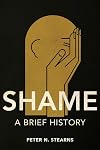
Excellently written, and a great intellectual dive into shame. Shame is such an integral part of the human experience, and this book fills a gap in the current literature. History is often looked at as a series of events and social experiences, but the nuances are often left by the wayside. Shame is one of those nuances that changes not only from culture to culture, but individual to individual, and can be wielded as a mighty weapon to influence and control others. A must-read for those who show more wish to dive deeper. show less

Stearns has written here a very broad description of how the industrial revolution evolved, or failed to evolve, in many countries over the last two centuries. This is a very big task, and has no well defined beginning or end, nor even very many milestones. Moreover, there are, according to Stearns, nearly as many paths to development as there are countries that develop. No tipping points, no critical inventions and no heroic personalities either. While I suppose there is a certain truth to show more this point of view, and may even be historically accurate, it makes for a somewhat dull read. I prefer to have my history laced with a few gee-whizes accomplished by some impossibly heroic figures. But that's just me.
His recitation of the changes that took place is almost formless, without generalities, or even much definition. While it was certainly humbling to contemplate the breadth of his scholarship, I didn't get what I was looking for out of this work--some hypotheses or possible explanations for what happened. I appreciate the difficulty of the problem and the mystery of ultimate historical causation, but the author would have been better off, I think, if he had taken a little stab at it, at least.
The book has four maps and a dozen or so illustrations, but only five graphs--and most of those are ridiculously parsimonious in the amount of data shown. Surely in a subject of this scope, tables and better graphs would have helped to organize it.
Despite these shortcomings, I think the book is a worthwhile contribution to the history of a very important part of the human story, and I'm glad to have read it. show less
His recitation of the changes that took place is almost formless, without generalities, or even much definition. While it was certainly humbling to contemplate the breadth of his scholarship, I didn't get what I was looking for out of this work--some hypotheses or possible explanations for what happened. I appreciate the difficulty of the problem and the mystery of ultimate historical causation, but the author would have been better off, I think, if he had taken a little stab at it, at least.
The book has four maps and a dozen or so illustrations, but only five graphs--and most of those are ridiculously parsimonious in the amount of data shown. Surely in a subject of this scope, tables and better graphs would have helped to organize it.
Despite these shortcomings, I think the book is a worthwhile contribution to the history of a very important part of the human story, and I'm glad to have read it. show less

Think of the construction of the great pyramids of Egypt, or the development of democratic rule in ancient Greece. Recall the innovations of the European Renaissance and Enlightenment—the remarkable flowering of drama and the arts, and revolutionary breakthroughs in science and philosophy. These are intriguing and important episodes, familiar to students of history. But haven't you also wondered: What else was going on in the world?
I love this book! Peter Stearns did a brilliant job of presenting shaming uses and norms in societies past and present, and I love the way he examines the resurgence of shame 's use as a force in today 's social media.
I’m very interested in this topic because I live in Malaysia, a country with a collective and hierarchical culture, which means shame is perceived and used in ways that we don’t really see much of in the West. This really helped me pull together some threads of thought, and show more I am certain that I will be better at my job because of it.
Shame: A Brief History is a well researched beautifully written thought-provoking book! A must read for psychologists, leaders, teachers, parents, managers and anyone interested in human nature.
I received a copy of this book from the publishers through NetGalley and am reviewing voluntarily. show less
I’m very interested in this topic because I live in Malaysia, a country with a collective and hierarchical culture, which means shame is perceived and used in ways that we don’t really see much of in the West. This really helped me pull together some threads of thought, and show more I am certain that I will be better at my job because of it.
Shame: A Brief History is a well researched beautifully written thought-provoking book! A must read for psychologists, leaders, teachers, parents, managers and anyone interested in human nature.
I received a copy of this book from the publishers through NetGalley and am reviewing voluntarily. show less
Lists
Awards

You May Also Like


Associated Authors
Statistics
- Works
- 118
- Also by
- 5
- Members
- 2,289
- Popularity
- #11,217
- Rating
- 3.6
- Reviews
- 23
- ISBNs
- 391
- Languages
- 9
- Favorited
- 1

