
Ji-li Jiang
Author of Red Scarf Girl: A Memoir of the Cultural Revolution
About the Author
Image credit: By Jeffrey Beall - Own work, CC BY 3.0, https://commons.wikimedia.org/w/index.php?curid=33792143
Works by Ji-li Jiang
Tagged
Common Knowledge
- Canonical name
- Jiang, Ji-li
- Birthdate
- 1954
- Gender
- female
- Education
- Shanghai Teacher's College
Shanghai University
University of Hawaii - Occupations
- science teacher
operations analyst for a hotel chain
budget director for a healthcare company - Short biography
- Ji-li Jiang came to the United States in 1984. She worked at various jobs, until she started her own company, East West Exchange, in 1992. Her company promotes cultural exchange between Western countries and China. She is the author of two books: her memoir, Red Scarf Girl; and The Magical Monkey King, a retelling of traditional Chinese tales.
- Nationality
- China
- Places of residence
- Shanghai, China
San Francisco Bay Area, California, USA - Associated Place (for map)
- China
Members
Reviews

A lonely young girl named Lotus, isolated from her peers by an illness that has left her mute, rescues an injured crane in this poignant and powerful picture-book, nursing him back to health with her grandfather, and gaining a true friend in the process. Naming the bird Feather, Lotus builds a lasting bond with her avian companion, who follows her to school, dances when she plays her reed flute, and helps to reconnect Lotus with her classmates. When the nearby lake floods, Feather's alert show more warning even saves the village! But as close as they have become, when Feather is able once again to fly, the time comes for the friends to part. Will Lotus ever see her crane again...?
An absolutely lovely book, one which pairs a moving and thought-provoking tale with gorgeous illustrations, Lotus & Feather highlights a number of important themes and ideas, from the role of animal companions in helping children who are facing difficult times, to the centrality of conserving the natural world, not just for the sake of the environment itself, but for the sake of human welfare as well. I appreciated the sensitive way in which these lessons, and others beside, are worked seamlessly into the story, without much didactic fanfare. The artwork by Julie Downing is simply stunning, capturing the beauty of Lotus and Feather's world, and the emotional depths of their relationship. This is a fairly text-heavy picture-book, so I would recommend it to a slightly older audience, but if you have a young animal-lover who likes a slightly longer tale, than this is the book for you! show less
An absolutely lovely book, one which pairs a moving and thought-provoking tale with gorgeous illustrations, Lotus & Feather highlights a number of important themes and ideas, from the role of animal companions in helping children who are facing difficult times, to the centrality of conserving the natural world, not just for the sake of the environment itself, but for the sake of human welfare as well. I appreciated the sensitive way in which these lessons, and others beside, are worked seamlessly into the story, without much didactic fanfare. The artwork by Julie Downing is simply stunning, capturing the beauty of Lotus and Feather's world, and the emotional depths of their relationship. This is a fairly text-heavy picture-book, so I would recommend it to a slightly older audience, but if you have a young animal-lover who likes a slightly longer tale, than this is the book for you! show less
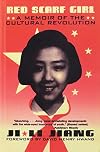
Ji-Li Jiang is part of that 'Lost Generation' who had to endure the Cultural Revolution in China. Barely a teenager when it all started she remembers, of course, all the details we now know were the lot of ordinary people under such a socialist dictatorship (the vile propaganda, the brutal zeal of the Red Guards, the violence of a society where individuals turn against each other and, the uncertainties of what constitutes a revolutionary attitude or an anti-revolutionary one). What makes her show more testimony more moving and harrowing though, is the fact that she belonged then to a so called 'black family' that is, labelled 'enemy of the people' -her grandfather was a landlord, her father accused of being a rightist. Thus, what she had to go through -especially considering she was just a child- is even more dreadful and revolting.
The betrayal of relatives and friends, the constant fear of persecution and humiliation, the arrest and emprisonment of her dad, the despair haunting her household and, the pressure put on her to betray her own parents (which she didn't) is a testimony indicting enough of the human impact of the Cultural Revolution. However what I found particularly disturbing is, how ambivalent her feelings were -torn between her naive admiration for the revolutionaries (the result of a powerful propaganda and brainwashing) and the love of her family, being tormented by those same revolutionaries! Such insight into the psyche of a child going through this, besides all the other events being told, makes 'Red Scarf Girl' a great and instructive read.
Don't be put off on the ground that, this book is targeted to young aduld readers! Sure, the simple prose and the fact it reads like novel can be a bit unsettling and/ or annoying. But, it remains a very commendable read to better understand how the Cultural Revolution affected ordinary people's lives. A very informative read. show less
The betrayal of relatives and friends, the constant fear of persecution and humiliation, the arrest and emprisonment of her dad, the despair haunting her household and, the pressure put on her to betray her own parents (which she didn't) is a testimony indicting enough of the human impact of the Cultural Revolution. However what I found particularly disturbing is, how ambivalent her feelings were -torn between her naive admiration for the revolutionaries (the result of a powerful propaganda and brainwashing) and the love of her family, being tormented by those same revolutionaries! Such insight into the psyche of a child going through this, besides all the other events being told, makes 'Red Scarf Girl' a great and instructive read.
Don't be put off on the ground that, this book is targeted to young aduld readers! Sure, the simple prose and the fact it reads like novel can be a bit unsettling and/ or annoying. But, it remains a very commendable read to better understand how the Cultural Revolution affected ordinary people's lives. A very informative read. show less

Set during the Cultural Revolution in China, a heartwarming tale of a father and son whose love never stops soaring.
Tai Shan and his father, Baba, like to climb to the tippy-top of their roof and fly kites. The two kites—one red and one blue—rise and dive through the sky together. But one day, Baba is taken away to a labor camp, and Tai Shan must stay with a woman called Granny Wang, who is not his grandmother but is kind to him. A thick forest and many miles stand between father and show more son. Luckily, Baba devises a secret way for them to talk: Every morning, Tai Shan flies his red kite on the hill, and every evening Baba flies his blue one. The kites wave in the wind and whisper messages of comfort until the two are reunited. Ruth’s muted primary palette of dusty tans and browns are a stark contrast to the few carefully placed flashes of color. The Red Guards’ armbands blaze angrily, yet the two kites soaring in the sky and the bright orange leaves on the trees are spots of hope.
Though this is told against the backdrop of a dark part of Chinese history, any child coping with separation from a loved one may find comfort in this story. (author's note) (Picture book. 5-8)
-Kirkus Review show less
Tai Shan and his father, Baba, like to climb to the tippy-top of their roof and fly kites. The two kites—one red and one blue—rise and dive through the sky together. But one day, Baba is taken away to a labor camp, and Tai Shan must stay with a woman called Granny Wang, who is not his grandmother but is kind to him. A thick forest and many miles stand between father and show more son. Luckily, Baba devises a secret way for them to talk: Every morning, Tai Shan flies his red kite on the hill, and every evening Baba flies his blue one. The kites wave in the wind and whisper messages of comfort until the two are reunited. Ruth’s muted primary palette of dusty tans and browns are a stark contrast to the few carefully placed flashes of color. The Red Guards’ armbands blaze angrily, yet the two kites soaring in the sky and the bright orange leaves on the trees are spots of hope.
Though this is told against the backdrop of a dark part of Chinese history, any child coping with separation from a loved one may find comfort in this story. (author's note) (Picture book. 5-8)
-Kirkus Review show less

Ji-li Jiang turned twelve in 1966, the year The Cultural Revolution began. She was an excellent student and lived with her parents, two siblings, and grandmother in one room in Shanghai. At first, she joyfully embraces the new revolutionary mandates and dreams of becoming a Red Guard. When Chairman Mao instructs the country to sweep out the Fourolds (old ideas, old culture, old customs, and old habits), she joins in readily. When this is followed by sweeping educational reforms, and she has show more to denounce her teachers, she becomes uncertain. Then her family is attacked, and she must make even tougher decisions about whether to be loyal to family, tainted by a landowning grandfather who died when her father was seven, or remain an "educable" child.
The author grew up in Shanghai, but moved to the United States when she was thirty. She wrote this book in the hopes of helping Americans understand China a bit more. Because the audience is for middle school or high school students, the book is written simply, but it remains a powerful story. I was surprised at the extent to which elementary aged students were embroiled in the work of the revolution (writing propaganda or da-zi-bao posters, participating in study groups and struggle sessions, and working on rural farms during the summer). It was interesting seeing Ji-li evolve from being a unquestioning follower as she experiences more of life during the Cultural Revolution. It was also interesting to see traces of her family's Muslim faith appear during times of stress. Her afterward provides updates on the fates of several of her schoolfriends, as well as her family, after the book ends in 1968. There is a helpful glossary as well. show less
The author grew up in Shanghai, but moved to the United States when she was thirty. She wrote this book in the hopes of helping Americans understand China a bit more. Because the audience is for middle school or high school students, the book is written simply, but it remains a powerful story. I was surprised at the extent to which elementary aged students were embroiled in the work of the revolution (writing propaganda or da-zi-bao posters, participating in study groups and struggle sessions, and working on rural farms during the summer). It was interesting seeing Ji-li evolve from being a unquestioning follower as she experiences more of life during the Cultural Revolution. It was also interesting to see traces of her family's Muslim faith appear during times of stress. Her afterward provides updates on the fates of several of her schoolfriends, as well as her family, after the book ends in 1968. There is a helpful glossary as well. show less
Lists
Awards


You May Also Like


Associated Authors
Statistics
- Works
- 8
- Members
- 3,553
- Popularity
- #7,140
- Rating
- 4.0
- Reviews
- 140
- ISBNs
- 46
- Languages
- 6
- Favorited
- 1
