
David Suzuki
Author of The Sacred Balance: Rediscovering Our Place in Nature
About the Author
David Suzuki is an internationally renowned geneticist and environmentalist and a recipient of UNESCO'S Kalinga Prize for the Popularization of Science and the 2009 Right Livelihood Award. Host of the long-running CBC television program The Nature of Things, he is also the author of more than fifty show more books. He lives in Vancouver, British Columbia. show less
Image credit: Courtesy of Allen and Unwin
Works by David Suzuki
From Naked Ape to Super Species: A Personal Perspective on Humanity and the Global Ecocrisis (1999) 162 copies, 1 review
The David Suzuki Reader: A Lifetime of Ideas from a Leading Activist and Thinker (2003) 116 copies, 2 reviews
The Big Picture: Reflections on Science, Humanity, and a Quickly Changing Planet (2009) 51 copies, 1 review
When the Wild Comes Leaping Up: Personal Encounters with Nature (2002) — Editor — 34 copies, 1 review
Just Cool It!: The Climate Crisis and What We Can Do - A Post-Paris Agreement Game Plan (2017) 23 copies
The True north strong & free? : proceedings of a public inquiry into Canadian defence policy and nuclear arms (1987) 10 copies
The sacred balance [videorecording: DVD] / produced by Kensington Communications in association with Sacred Balance Prod (2003) 2 copies
Memperhatikan Tubuh 1 copy
Associated Works
A Silent Forest: The Growing Threat, Genetically Engineered Trees — Narrator — 1 copy
Tagged
Common Knowledge
- Legal name
- Suzuki, David Takayoshi
- Birthdate
- 1936-03-24
- Gender
- male
- Education
- Amherst College (BA | 1958)
University of Chicago (Ph.D | 1961 | Zoology) - Occupations
- radio show host
television host
environmental activist
author
professor (University of British Columbia | Genetics | 1963 | 2001) - Organizations
- David Suzuki Foundation
Canadian Broadcasting Corporation - Awards and honors
- Order of British Columbia (1995)
Order of Canada (Companion, 2006)
Order of Canada (Officer, 1976)
CBA Libris Award (Author of the Year, 1990) - Nationality
- Canada
- Birthplace
- Vancouver, British Columbia, Canada
- Places of residence
- Vancouver, British Columbia, Canada
Islington, Ontario, Canada
Leamington, Ontario, Canada
London, Ontario, Canada
Kingston, Ontario, Canada - Associated Place (for map)
- Ontario, Canada
Members
Reviews
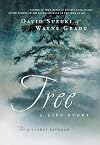
Evergreens help make much of the Pacific Northwest one of the most beautiful places on earth. Pines, cedars, and Douglas-fir line the horizon almost everywhere I go, and I’m lucky enough to see a few out any window of my house. But trees are more than ornaments. They are environments unto themselves. They provide shelter, food, and nutrients to a rich mix of birds, mammals, insects, and smaller organisms in the soil. I sometimes stop in the woods during mountain hikes and try to picture show more all the activity, both seen and unseen. Seeing a tree is one thing. Understanding and appreciating them is much deeper.
David Suzuki and Wayne Grady have put together an enjoyable book to help you do that. Tree: A Life Story, follows the long life of a single Douglas-fir in the Pacific Northwest. Beginning with the aftermath of a forest fire, the book studies the germination, growth, death, and recycling of the seed that becomes a giant. It rises through the forest canopy seeking sunlight, and deals with attacks and inconveniences from insects, birds, and other natural forces, before returning to the soil.
This may seem like a child’s book on the life cycle of a tree, but it is not simplistic. Suzuki (whom you may know from the television series The Nature of Things) and Grady delve into science every step of the way. Why do roots dig down while the stem sprouts up? How does the seedling know down from up anyway? How does chlorophyll work? How do the sugars produced in that process get distributed and, for that matter, how does the tree pump water and nutrients up a trunk that is over 200 feet tall?
The authors look beyond “our” individual Douglas-fir. They explore the tree’s relationships, too. A tree does not move, of course, but it connects, interacts, and communicates with nearly everything in its ecosystem, starting with the mychorrhyzial relationship its root tips share with fungi and the chemical defenses it deploys against insects. It even releases warnings to other trees when disease strikes.
Pleasantly meandering discussions in the book wander into the science of genetics, pollen distribution, bird, squirrel and salamander activity, how salmon improve forests, and the growth of botanical science over the centuries. All these topics — tread upon lightly but addressed satisfactorily — fit into a slim volume. I haven’t enjoyed a popular science book as much as this one in a long time.
Trees live longer and grow larger than any other organisms on earth, but they literally blend into the scenery unless you stop to notice the often small-scale, slow-motion activity feverishly taking place in and around them. By the time you reach the last page of Tree, even a rotted-out nurse log might stir your thoughts.
Find more of my reviews at Mostly NF. show less
David Suzuki and Wayne Grady have put together an enjoyable book to help you do that. Tree: A Life Story, follows the long life of a single Douglas-fir in the Pacific Northwest. Beginning with the aftermath of a forest fire, the book studies the germination, growth, death, and recycling of the seed that becomes a giant. It rises through the forest canopy seeking sunlight, and deals with attacks and inconveniences from insects, birds, and other natural forces, before returning to the soil.
This may seem like a child’s book on the life cycle of a tree, but it is not simplistic. Suzuki (whom you may know from the television series The Nature of Things) and Grady delve into science every step of the way. Why do roots dig down while the stem sprouts up? How does the seedling know down from up anyway? How does chlorophyll work? How do the sugars produced in that process get distributed and, for that matter, how does the tree pump water and nutrients up a trunk that is over 200 feet tall?
The authors look beyond “our” individual Douglas-fir. They explore the tree’s relationships, too. A tree does not move, of course, but it connects, interacts, and communicates with nearly everything in its ecosystem, starting with the mychorrhyzial relationship its root tips share with fungi and the chemical defenses it deploys against insects. It even releases warnings to other trees when disease strikes.
Pleasantly meandering discussions in the book wander into the science of genetics, pollen distribution, bird, squirrel and salamander activity, how salmon improve forests, and the growth of botanical science over the centuries. All these topics — tread upon lightly but addressed satisfactorily — fit into a slim volume. I haven’t enjoyed a popular science book as much as this one in a long time.
Trees live longer and grow larger than any other organisms on earth, but they literally blend into the scenery unless you stop to notice the often small-scale, slow-motion activity feverishly taking place in and around them. By the time you reach the last page of Tree, even a rotted-out nurse log might stir your thoughts.
Find more of my reviews at Mostly NF. show less
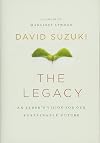
Renowned, both within Canada and the international scientific community, geneticist and environmentalist David Suzuki is best known, by me anyways, for his involvement with the CBC TV series The Nature of Things, which he has hosted since 1972. The Legacy is based upon a lecture that Suzuki gave in December 2009 at the University of British Columbia. I did not have the opportunity to hear his lecture in person, so I was quite happy to discover that this book is based upon that lecture and is show more the culmination of Suzuki's knowledge and wisdom to date - he is only in his 70's so one can only guess what may still be to come!
With forward written by Canadian author Margaret Atwood, The Legacy shows, in the written word, Suzuki's amazing skill at presenting the mysteries of nature and science in succinct, layman's terms. In less than 100 pages, Suzuki manages to summaries the earth's evolutionary process, explain the four elements of Earth, Air, Fire and Water and tie these elements into Biodiversity, while still managing a brilliant minor side-step into the discussion of economics - how relentless growth is both a mathematical and an economic impossibility, ecology, borders as a strictly human creation that goes counter to the very laws of nature, and even touches on the whole nature/nurture question - Answer: one cannot exist without the other and on that note, is a completely pointless question.
The take away from this amazing work - that the elders, the ones that have lived the past and seen the changes that now comprise our present remind us that, in the words of Bernard Lown, "We must convince each generation that they are transient passengers on this planet earth. It does not belong to them. They are not free to doom generations yet unborn. They are not at liberty to erase humanity's past nor dim its future."
In a word, brilliant, especially the personalization that the change beings with each of us, then with our families, our communities, our country and the world. Suzuki closes off by listing off some attainable goals based on his childhood memories and attainable dreams: clean drinkable water in any river or lake, logging forests according to the principles of ecosystem-based management, cities built to optimally capture all the natural rhythms of the seasons - maximize sunlight, rooftop gardens, capture waterfall from rain. show less
With forward written by Canadian author Margaret Atwood, The Legacy shows, in the written word, Suzuki's amazing skill at presenting the mysteries of nature and science in succinct, layman's terms. In less than 100 pages, Suzuki manages to summaries the earth's evolutionary process, explain the four elements of Earth, Air, Fire and Water and tie these elements into Biodiversity, while still managing a brilliant minor side-step into the discussion of economics - how relentless growth is both a mathematical and an economic impossibility, ecology, borders as a strictly human creation that goes counter to the very laws of nature, and even touches on the whole nature/nurture question - Answer: one cannot exist without the other and on that note, is a completely pointless question.
The take away from this amazing work - that the elders, the ones that have lived the past and seen the changes that now comprise our present remind us that, in the words of Bernard Lown, "We must convince each generation that they are transient passengers on this planet earth. It does not belong to them. They are not free to doom generations yet unborn. They are not at liberty to erase humanity's past nor dim its future."
In a word, brilliant, especially the personalization that the change beings with each of us, then with our families, our communities, our country and the world. Suzuki closes off by listing off some attainable goals based on his childhood memories and attainable dreams: clean drinkable water in any river or lake, logging forests according to the principles of ecosystem-based management, cities built to optimally capture all the natural rhythms of the seasons - maximize sunlight, rooftop gardens, capture waterfall from rain. show less
The book, in the version I got, is a bit outdated. However, it has some interesting parts that, at least for me, were worth considering.
Nonetheless, this is not for everyone, for it has strong opinions and a very clear ecological agenda. That, in itself, is not a bad thing. But you're not going to get a completely unbiased picture of its main subject. However, given that we are facing such a humongous environmental crisis, the taking of strong stances may well be the only possible course to show more force a change in the reader's perception. show less
Nonetheless, this is not for everyone, for it has strong opinions and a very clear ecological agenda. That, in itself, is not a bad thing. But you're not going to get a completely unbiased picture of its main subject. However, given that we are facing such a humongous environmental crisis, the taking of strong stances may well be the only possible course to show more force a change in the reader's perception. show less
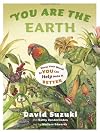
Although not a book to be read cover-to-cover by its target audience, this is still a good book to use for young readers interested in Earth issues such as ecology and environmental science. I especially liked how the author wove myths from various indigenous cultures to illustrate certain points. The lives of some non-western children are also outlined in comparison to the average American child to show the contrast in how we live. An undercurrent romanticizing Nature may disqualify this show more book from being purely scientific, but the subtle reverence for the Soul of the Earth was not a detracting feature in the opinion of this reader. Young readers will probably enjoy reading this book in sections, and they especially might enjoy the many "Things to do" activities listed throughout the book. A science class teacher could find a wealth of ideas for simple science experiments from this resource. show less
Lists
Climate Change (1)
Awards


You May Also Like


Associated Authors
Statistics
- Works
- 70
- Also by
- 3
- Members
- 3,620
- Popularity
- #6,992
- Rating
- 3.8
- Reviews
- 37
- ISBNs
- 279
- Languages
- 4
- Favorited
- 3