
Julian Barnes
Author of The Sense of an Ending
About the Author
Julian Barnes was born in Leicester, England, on January 19, 1946. He received a degree in modern languages from Magdalen College, Oxford University in 1968. He has held jobs as a lexicographer for the Oxford English Dictionary, a reviewer and literary editor for the New Statesmen and the New show more Review, and a television critic. He has written numerous works of fiction including Arthur and George, Pulse: Stories, The Noise of Time, and England, England. He received the Somerset Maugham Award in 1980 for Metroland, the Geoffrey Faber Memorial Prize in 1985 and a Prix Medicis in 1986 for Flaubert's Parrot, and the Man Booker Prize in 2011 for The Sense of an Ending. He also writes non-fiction works including Letters from London, The Pedant in the Kitchen, and Nothing to Be Frightened Of. He received the Shakespeare Prize by the FVS Foundation in 1993, the Austrian State Prize for European Literature in 2004, and the David Cohen Prize for Literature in 2011. He writes detective novels under the pseudonym Dan Kavanaugh. His works under this name include Duffy, Fiddle City, Putting the Boot In, and Going to the Dogs. (Bowker Author Biography) show less
Series
Works by Julian Barnes
Through the Window: Seventeen Essays and a Short Story (Vintage International) (2012) 278 copies, 13 reviews
Upstream: Short Stories 5 copies
Αναχωρήσεις 3 copies
Vertrek(punt) 2 copies
The Limner 2 copies
East wind 2 copies
Playing Chess with Arthur Koestler 2 copies
Plecare, plecări 1 copy
“Flaubert's Death Masks” 1 copy
Nieuw Werk 1 copy
PAPAGALLI I FLOBERIT 1 copy
NIVELE JETE 1 copy
ZHURMA E KOHES 1 copy
ENIGMA E NJË FUNDI 1 copy
Oklukirpi 1 copy
Knowing French (Storycuts) 1 copy
Complicity 1 copy
Krauts 1 copy
Writers on Artists 1 copy
2009 1 copy
Sleeping With John Updike 1 copy
Hygiene (Storycuts) 1 copy
Introduction to "The Reef" 1 copy
One of a Kind 1 copy
Associated Works
Secret Ingredients: The New Yorker Book of Food and Drink (2007) — Contributor — 593 copies, 10 reviews
The Art of the Story: An International Anthology of Contemporary Short Stories (1999) — Contributor — 394 copies, 5 reviews
A Book of Mediterranean Food and Other Writings (2006) — Preface, some editions — 63 copies, 1 review
The Public Domain Review: Selected Essays, The First Three Years, 2011-2013 (2014) — Contributor — 33 copies, 2 reviews
Maigret Three-Volume Set: Maigret and the Calame Report; Maigret and the Saturday Caller; Maigret and the Wine Merchant — Introduction, some editions — 10 copies, 1 review
Tagged
Common Knowledge
- Legal name
- Barnes, Julian Patrick
- Other names
- Kavanagh, Dan
Pygge, Edward - Birthdate
- 1946-01-19
- Gender
- male
- Education
- City of London School
Magdalen College, Oxford University (BA|1968) - Occupations
- lexicographer
literary editor
television critic
novelist - Organizations
- American Academy of Arts and Letters (Honorary member, 2016)
- Awards and honors
- David Cohen British Literature Prize (2011)
Ordre des Arts et des Lettres (Commandeur, 2004)
Jerusalem Prize (2021)
Ordre des Arts et des Lettres (Chevalier. 1988)
Siegfried Lenz Prize (2016)
Austrian State Prize for European Literature (2004) (show all 7)
E. M. Forster Award (1986) - Relationships
- Barnes, Jonathan (brother)
- Short biography
- Julian Barnes was born in Leicester, England on January 19, 1946. He was educated at the City of London School from 1957 to 1964 and at Magdalen College, Oxford, from which he graduated in modern languages (with honours) in 1968.
After graduation, he worked as a lexicographer for the Oxford English Dictionary supplement for three years. In 1977, Barnes began working as a reviewer and literary editor for the New Statesman and the New Review. From 1979 to 1986 he worked as a television critic, first for the New Statesman and then for the Observer.
Barnes has received several awards and honours for his writing, including the 2011 Man Booker Prize for The Sense of an Ending. Three additional novels were shortlisted for the Man Booker Prize (Flaubert's Parrot 1984, England, England 1998, and Arthur & George 2005). Barnes's other awards include the Somerset Maugham Award (Metroland 1981), Geoffrey Faber Memorial Prize (FP 1985); Prix Médicis (FP 1986); E. M. Forster Award (American Academy and Institute of Arts and Letters, 1986); Gutenberg Prize (1987); Grinzane Cavour Prize (Italy, 1988); and the Prix Femina (Talking It Over 1992). Barnes was made a Chevalier de l'Ordre des Arts et des Lettres in 1988, Officier de l'Ordre des Arts et des Lettres in 1995 and Commandeur de l'Ordre des Arts et des Lettres in 2004. In 1993 he was awarded the Shakespeare Prize by the FVS Foundation and in 2004 won the Austrian State Prize for European Literature. In 2011 he was awarded the David Cohen Prize for Literature. Awarded biennially, the prize honours a lifetime's achievement in literature for a writer in the English language who is a citizen of the United Kingdom or the Republic of Ireland. He received the Sunday Times Award for Literary Excellence in 2013 and the 2015 Zinklar Award at the first annual Blixen Ceremony in Copenhagen. In 2016, the American Academy of Arts & Letters elected Barnes as an honorary foreign member. Also in 2016, Barnes was selected as the second recipient of the Siegfried Lenz Prize for his outstanding contributions as a European narrator and essayist.
Julian Barnes has written numerous novels, short stories, and essays. He has also translated a book by French author Alphonse Daudet and a collection of German cartoons by Volker Kriegel. His writing has earned him considerable respect as an author who deals with the themes of history, reality, truth and love. - Nationality
- UK
- Birthplace
- Leicester, Leicestershire, England, UK
- Places of residence
- Northwood, Middlesex, England, UK
London, Middlesex, England, UK - Map Location
- England, UK
Members
Discussions
April 2026: Julian Barnes in Monthly Author Reads (May 3)
Group Read: Arthur & George by Julian Barnes in 75 Books Challenge for 2018 (February 2018)
Flaubert's Parrot by Julian Barnes (Bowie's Top 100 for August) in 75 Books Challenge for 2016 (August 2016)
The Sense of an Ending by Julian Barnes in Booker Prize (August 2011)
Reviews
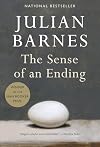
This book is a scream. A hilarious take on people making assumptions that sound logical but are based on nothing substantial at all. Kind of a Holden Caulfield who ages and learns nothing except that he is still emotionally stunted. A homage to the French penchant for discussing self-deception but then being nonchalant about the answer (Descartes' deus deceptor) and Montaigne's fruitless search for moral universals but felt the search still noble.
Barnes' flirtation with French folly or show more illusion was what kept me going till the end. Finished this, in two days. Great read based on Adrian's earnest proclamation: "Adrian paused. He took a sip of beer, and then said with sudden vehemence, "I hate the way the English have of not being serious about being serious. I really hate it."
Not for young adults. This is the third book by Barnes I've read. All excellent: England, England and A History of the World in 10 1/2 Chapters. show less
Barnes' flirtation with French folly or show more illusion was what kept me going till the end. Finished this, in two days. Great read based on Adrian's earnest proclamation: "Adrian paused. He took a sip of beer, and then said with sudden vehemence, "I hate the way the English have of not being serious about being serious. I really hate it."
Not for young adults. This is the third book by Barnes I've read. All excellent: England, England and A History of the World in 10 1/2 Chapters. show less
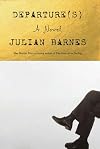
This collection (or novella—depending on how you categorize it) seems to promise a tale of “double matchmaking.” We get two attempts to engineer intimacy, two departures from solitude, and perhaps two reckonings with chance. Yet the narrative never quite delivers. The strands don’t deepen each other; they just sit side by side. Instead of resonance, we get two parallel lines that don’t intersect in any meaningful way. Instead of resolution, we get a meditation on the fragility of show more intention. Indeed, the failed matchmaking efforts may only reflect the emotional evasions of Barnes’ characters. Their relationship doesn’t go anywhere because the characters themselves don’t risk going anywhere.
The frame feels loose. Scenes feel essayistic rather than dramatic; ideas hover without accumulating force. This can seem less like purposeful storytelling and more like narrative underdevelopment. However, if one reads this book as a meditation on departure itself—emotional, temporal, even existential, it becomes more coherent—but also quieter and more abstract than many readers might expect. The unusually pluralized title hints at multiple kinds of leave-taking: from youth, from romantic expectation, and even from the illusion that love can be arranged.
Reading “Departure(s)” can be frustrating primarily because of the mismatch between what it promises and what it actually delivers. It promises narrative momentum but delivers stasis. Yet Barnes seems to be content with this more controlled, reflective and detached mood. It’s not that one loses the key to the story; it’s that the door may simply open onto a different room than expected. show less
The frame feels loose. Scenes feel essayistic rather than dramatic; ideas hover without accumulating force. This can seem less like purposeful storytelling and more like narrative underdevelopment. However, if one reads this book as a meditation on departure itself—emotional, temporal, even existential, it becomes more coherent—but also quieter and more abstract than many readers might expect. The unusually pluralized title hints at multiple kinds of leave-taking: from youth, from romantic expectation, and even from the illusion that love can be arranged.
Reading “Departure(s)” can be frustrating primarily because of the mismatch between what it promises and what it actually delivers. It promises narrative momentum but delivers stasis. Yet Barnes seems to be content with this more controlled, reflective and detached mood. It’s not that one loses the key to the story; it’s that the door may simply open onto a different room than expected. show less
Julian Barnes turned 80 on January 19, the day before this book was published. And it is so very much a Julian Barnes book, one difficult to categorize as either fiction or non-fiction, which the narrator’s friend would undoubtedly dismiss as “’This hybrid stuff you do.’”
The narrator is a writer named Julian Barnes who states that what we are reading will be his last book. He begins with a lengthy discussion of memory, how it works and its fallibility. Promising that there will be show more a story, or a story within the story, he eventually tells the story of two friends, Jean and Stephen, for whom he played matchmaker, once in the 1960s and again 40 years later. This narrative feels less of a plot and more a device for examining love. The latter part of the book is a reflection of the narrator’s life (his writing career, the deaths of his wife and friends, his diagnosis with blood cancer, the ravishes of aging, and his eventual death). The book closes with a farewell to his readers.
I’ve really liked several of Barnes’ novels and this one was no exception. I enjoyed reading his thoughts about memory, love, grief, and death. Perhaps because I am only a decade away from his age, his reflections resonated with me. I especially liked his way of accepting life’s vicissitudes and one’s inevitable death: it’s just the universe doing its stuff.
At the end, the narrator addresses the reader directly and imagines the writer and reader sitting side by side at a cafe, watching and musing at the lives passing by. Throughout, the narrator speaks in a relaxed voice as if indeed the reader and writer are having a conversation – though he admits to seldom catching the reader’s mutterings since he imagines the reader sitting on his deaf side. As such conversations between companions do, this one meanders with digressions touching on both serious and trivial topics.
The serious topics outnumber the inconsequential, but there are definite touches of humour. The discussions about Jimmy, a Jack Russell, are often hilarious. I chuckled at Julian’s description of his triage fantasy: imagining that during Covid, he’d be dismissed as an old geezer relegated to end-of-life care until someone notices his lapel badge announcing his winning of the Booker Prize. And I loved his jabs at Trump, commenting it would be appropriate if he’d sworn on a copy of the Wicked Bible which commands “Thou shalt commit adultery.”
The title is perfect. The narrator has experienced the departure of memories, has had some people in his life leave temporarily and some die, and he gives more than passing thought to his own departure from life. And is he saying goodbye to his writing career? The narrator emphasizes how writers lie and don’t keep promises, like the one he made to Jean and Stephen to never write about them. So should we take Barnes’s statement, about this being his last book, at face value?
I hope this is not his last book, but if it is, it is a good one to mark the end of his career. And though I won’t stop looking at “the many and varied expressions of life,” I’ll miss his “sturdy presence” and “conversational mutterings.”
Note: I received an eARC from the publisher via NetGalley.
Please check out my reader's blog (https://schatjesshelves.blogspot.com/). show less
The narrator is a writer named Julian Barnes who states that what we are reading will be his last book. He begins with a lengthy discussion of memory, how it works and its fallibility. Promising that there will be show more a story, or a story within the story, he eventually tells the story of two friends, Jean and Stephen, for whom he played matchmaker, once in the 1960s and again 40 years later. This narrative feels less of a plot and more a device for examining love. The latter part of the book is a reflection of the narrator’s life (his writing career, the deaths of his wife and friends, his diagnosis with blood cancer, the ravishes of aging, and his eventual death). The book closes with a farewell to his readers.
I’ve really liked several of Barnes’ novels and this one was no exception. I enjoyed reading his thoughts about memory, love, grief, and death. Perhaps because I am only a decade away from his age, his reflections resonated with me. I especially liked his way of accepting life’s vicissitudes and one’s inevitable death: it’s just the universe doing its stuff.
At the end, the narrator addresses the reader directly and imagines the writer and reader sitting side by side at a cafe, watching and musing at the lives passing by. Throughout, the narrator speaks in a relaxed voice as if indeed the reader and writer are having a conversation – though he admits to seldom catching the reader’s mutterings since he imagines the reader sitting on his deaf side. As such conversations between companions do, this one meanders with digressions touching on both serious and trivial topics.
The serious topics outnumber the inconsequential, but there are definite touches of humour. The discussions about Jimmy, a Jack Russell, are often hilarious. I chuckled at Julian’s description of his triage fantasy: imagining that during Covid, he’d be dismissed as an old geezer relegated to end-of-life care until someone notices his lapel badge announcing his winning of the Booker Prize. And I loved his jabs at Trump, commenting it would be appropriate if he’d sworn on a copy of the Wicked Bible which commands “Thou shalt commit adultery.”
The title is perfect. The narrator has experienced the departure of memories, has had some people in his life leave temporarily and some die, and he gives more than passing thought to his own departure from life. And is he saying goodbye to his writing career? The narrator emphasizes how writers lie and don’t keep promises, like the one he made to Jean and Stephen to never write about them. So should we take Barnes’s statement, about this being his last book, at face value?
I hope this is not his last book, but if it is, it is a good one to mark the end of his career. And though I won’t stop looking at “the many and varied expressions of life,” I’ll miss his “sturdy presence” and “conversational mutterings.”
Note: I received an eARC from the publisher via NetGalley.
Please check out my reader's blog (https://schatjesshelves.blogspot.com/). show less
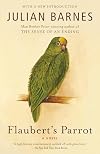
The storyline of this book centers on deciphering the mystery of which stuffed parrot actually sat on Flaubert’s desk while he wrote his books. Two museums claim to own this bird, which served as a muse to Flaubert. Narrator Geoffrey Braithwaite is a retired doctor with a passion for Flaubert’s writings. He would love to publish his own work about Flaubert, and fancies himself an amateur scholar.
A look below the surface is needed to fully appreciate this masterly crafted book. Dr. show more Braithwaite is searching for meaning in a recent significant event in the narrator’s life. This book is a combination of biography (of both Flaubert and the narrator), critique of literary criticism, and self-disclosure. It is about writing as an artform, and what a writer’s art reveals about the author, and similarly, what a critic’s viewpoint reveals about the critic.
It is a humorously written clever work of creative brilliance that deals with both obsession and the drive to gain meaning from tragedies in one’s life. I have only read a couple of Flaubert’s works so I do not think it is necessary to be well-versed in his writings to appreciate this book. It will not be for everyone, but I enjoyed every minute of it and will likely re-read it in the future. show less
A look below the surface is needed to fully appreciate this masterly crafted book. Dr. show more Braithwaite is searching for meaning in a recent significant event in the narrator’s life. This book is a combination of biography (of both Flaubert and the narrator), critique of literary criticism, and self-disclosure. It is about writing as an artform, and what a writer’s art reveals about the author, and similarly, what a critic’s viewpoint reveals about the critic.
It is a humorously written clever work of creative brilliance that deals with both obsession and the drive to gain meaning from tragedies in one’s life. I have only read a couple of Flaubert’s works so I do not think it is necessary to be well-versed in his writings to appreciate this book. It will not be for everyone, but I enjoyed every minute of it and will likely re-read it in the future. show less
Lists
Best Satire (1)
Gen X Library (1)
2024 Reads (1)
A Novel Cure (1)
1980s (1)
. (1)
Put a Bird On It (1)
Art of Reading (1)
At the Library (1)
Fiction For Men (1)
Deathreads (2)
My TBR (2)
Five star books (3)
Booker Prize (4)
Metafiction (1)
Short and Sweet (1)
Review 2 (1)
United Kingdom (1)
Awards


You May Also Like


Associated Authors
Statistics
- Works
- 89
- Also by
- 40
- Members
- 42,995
- Popularity
- #396
- Rating
- 3.7
- Reviews
- 1,531
- ISBNs
- 1,241
- Languages
- 30
- Favorited
- 123
