

Anne Roiphe
Author of 1185 Park Avenue: A Memoir
About the Author
Anne Roiphe writes a biweekly column for the New York Observer.
Works by Anne Roiphe
Associated Works
Tagged
Common Knowledge
- Birthdate
- 1935-12-25
- Gender
- female
- Education
- Sarah Lawrence College
Brearley School, New York - Occupations
- writer
journalist - Relationships
- Roiphe, Katie (daughter)
Richardson, Jack (husband | divorced)
Carter, Emily (daughter) - Nationality
- USA
- Birthplace
- New York, New York, USA
- Places of residence
- New York, New York, USA
- Associated Place (for map)
- New York, New York, USA
Members
Reviews
I've been a fan of Anne Roiphe's writing since college (which was a looooong time ago), beginning with her then-bestseller UP THE SANDBOX! More recently I've been reading her various memoirs:
1185 PARK AVENUE,
ART AND MADNESS, and
EPILOGUE - all of them excellent.
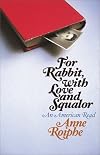
This book, FOR RABBIT, WITH LOVE AND SQUALOR, is a different sort of book altogether, and I enjoyed it immensely. It is a very personalized sort of literary criticism, I suppose, as Roiphe writes of her special and long relationships show more with several established fictional characters from contemporary American Literature, namely: Salinger's Holden Caulfield, Hemingway's Robert Jordan, Fitzgerald's Dick Diver, Updike's Harry "Rabbit" Angstrom, Roth's Nathan Zuckerman, Richard Ford's Frank Bascomb, and Maurice Sendak's Max and Mickey.
Like Roiphe I am a booklover of epic proportions and know all these classic characters. The only one I don't know is Dick Diver, and I probably never will, since even THE GREAT GATSBY never really engaged me, so I doubt if, at this late stage of my life, I really want to read TENDER IS THE NIGHT.
Her title is, of course, an amalgam of Updike and Salinger, and I did feel that perhaps she felt the closest to those two characters: Harry Angstrom and Holden Caulfield. (Salinger's precocious and weird Glass family I was never quite so crazy about, and I suspect neither was Roiphe.) She feels an inordinate affection and protectiveness toward the big clueless Rabbit, despite what she sees as a subtly veiled anti-Semitism here and there in the tetralogy, a subject that arises in the Roth chapter too. Well, me too, Anne, about loving Harry, I mean. I loved all of the Rabbit books and remember being quite devastated when Updike killed him off in RABBIT AT REST. I always hoped he might write a more complete 'prequel' about Harry's high school and army days. No such luck, since Updike himself is now gone - another devastating blow back in 2009.
Too much I could say here, so I'll just say Holden has been important to me since I was fourteen. I recently read CATCHER again, and it holds up, even now, fifty-five years later. Rabbit? Well, I miss him and his "user" attitude towards women and other people. He really was a lot like a rabbit, living "inside his skin," instinctively, his only defense, to run, "ah, run."
Except for the Fitzgerald, I loved this lovely sometimes funny, often warm meditation on all these guys, and the way Roiphe actually inserted herself into their lives to react, comment, gently criticize, and even give comfort. It was fun, and often very moving too. Thanks for reviving the memories of all these great books and characters, Anne.
If you're a lover of serious literature, and know all these fictional guys, you'll like this book. I recommend it highly. show less
1185 PARK AVENUE,
ART AND MADNESS, and
EPILOGUE - all of them excellent.
This book, FOR RABBIT, WITH LOVE AND SQUALOR, is a different sort of book altogether, and I enjoyed it immensely. It is a very personalized sort of literary criticism, I suppose, as Roiphe writes of her special and long relationships show more with several established fictional characters from contemporary American Literature, namely: Salinger's Holden Caulfield, Hemingway's Robert Jordan, Fitzgerald's Dick Diver, Updike's Harry "Rabbit" Angstrom, Roth's Nathan Zuckerman, Richard Ford's Frank Bascomb, and Maurice Sendak's Max and Mickey.
Like Roiphe I am a booklover of epic proportions and know all these classic characters. The only one I don't know is Dick Diver, and I probably never will, since even THE GREAT GATSBY never really engaged me, so I doubt if, at this late stage of my life, I really want to read TENDER IS THE NIGHT.
Her title is, of course, an amalgam of Updike and Salinger, and I did feel that perhaps she felt the closest to those two characters: Harry Angstrom and Holden Caulfield. (Salinger's precocious and weird Glass family I was never quite so crazy about, and I suspect neither was Roiphe.) She feels an inordinate affection and protectiveness toward the big clueless Rabbit, despite what she sees as a subtly veiled anti-Semitism here and there in the tetralogy, a subject that arises in the Roth chapter too. Well, me too, Anne, about loving Harry, I mean. I loved all of the Rabbit books and remember being quite devastated when Updike killed him off in RABBIT AT REST. I always hoped he might write a more complete 'prequel' about Harry's high school and army days. No such luck, since Updike himself is now gone - another devastating blow back in 2009.
Too much I could say here, so I'll just say Holden has been important to me since I was fourteen. I recently read CATCHER again, and it holds up, even now, fifty-five years later. Rabbit? Well, I miss him and his "user" attitude towards women and other people. He really was a lot like a rabbit, living "inside his skin," instinctively, his only defense, to run, "ah, run."
Except for the Fitzgerald, I loved this lovely sometimes funny, often warm meditation on all these guys, and the way Roiphe actually inserted herself into their lives to react, comment, gently criticize, and even give comfort. It was fun, and often very moving too. Thanks for reviving the memories of all these great books and characters, Anne.
If you're a lover of serious literature, and know all these fictional guys, you'll like this book. I recommend it highly. show less
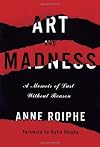
This is an amazing, honest, and sad memoir about Anne Roiphe's life amongst the literati in late 1950's/1960's New York. What's stunning about the book is how an intelligent woman like Roiphe could repeatedly hitch herself to some damaged man, thinking that her lot in life was to assist him in creating masterpieces. Roiphe allows herself to be used by these guys (many of whom are somewhat forgotten/no one reads anymore), while they drink themselves into oblivion. It is amazing that such a show more world once existed - or rather that women allowed themselves to be treated in this way. "Madness" is a good way to describe it- self-delusion would be good too. I could barely put "Art and Madness" down; it was compelling, in the way that wrecks and collisions are fascinating. Although in this case one can't help but wonder why the 'vicitims' (Roiphe and the other wives and women in these literary men's lives) put up with their crap, and didn't get out of the way. Truly a snapshot of a completely different world.... show less
 This review was written for LibraryThing Early Reviewers.
This is an intriguing, odd book. The author tells, in a disjointed, scene-shifting fashion, the story of her life from her late teens to her early thirties. She marries a playwright and becomes part of the young intellectual scene in New York in the fifties and early sixties. Author Roiphe brings the era to life with all its failed promise.
It's amazing how different things were then. Roiphe falls in love with a man who is in love with himself; he doesn't bother to hide it. He drinks so show more heavily it's alarming; he gambles; he cheats; he squanders her money and ignores their child. He's a repellent personality with no sense of responsiblity. The modern reader is apt to become impatient with the whole thing, and wonder why Roiphe doesn't just ditch the guy and go on with her work. But, as the author makes very clear, she sees no role models for female authors (Cather and Woolf seem too alien to apply to herself); in an astonishing paragraph, we learn that she had never met a woman doctor or lawyer. She knew they existed, but not in her sphere. In this time and place, women were seen to be servers of men, and men, especially talented men, were granted almost god-like status, suitable objects of worship by the women they used and abused. How and why Roiphe breaks away from this self-destructive pattern makes up the arc of the book.
There are one or two unusual aspects here: The author refers to her husband only as "Jack" and insists that he's a failed dramatist, yet he won an Obie. She calls her daughter "the child" almost always; she never mentions the child's name, and only calls her "the baby" or "my daughter" two or three times. As a mother, I found this somewhat offputting and yet interesting. She clearly loves her daughter deeply; why doesn't she use her name? And I noted that, with the exception of her ex-husband, all the authors she exposes are dead. I'm not saying that she's not telling the truth--I'm saying I thought she was still protective of authors still alive, in spite of their singular failings as human beings.
Most of the book is written in short sentences, very reminiscent of Hemingway's style. I found this a very moving, and very disturbing exploration of a time and a way of life that has almost disappeared.
Highly recomended if you are interested in the fifites or in feminist issues. show less
It's amazing how different things were then. Roiphe falls in love with a man who is in love with himself; he doesn't bother to hide it. He drinks so show more heavily it's alarming; he gambles; he cheats; he squanders her money and ignores their child. He's a repellent personality with no sense of responsiblity. The modern reader is apt to become impatient with the whole thing, and wonder why Roiphe doesn't just ditch the guy and go on with her work. But, as the author makes very clear, she sees no role models for female authors (Cather and Woolf seem too alien to apply to herself); in an astonishing paragraph, we learn that she had never met a woman doctor or lawyer. She knew they existed, but not in her sphere. In this time and place, women were seen to be servers of men, and men, especially talented men, were granted almost god-like status, suitable objects of worship by the women they used and abused. How and why Roiphe breaks away from this self-destructive pattern makes up the arc of the book.
There are one or two unusual aspects here: The author refers to her husband only as "Jack" and insists that he's a failed dramatist, yet he won an Obie. She calls her daughter "the child" almost always; she never mentions the child's name, and only calls her "the baby" or "my daughter" two or three times. As a mother, I found this somewhat offputting and yet interesting. She clearly loves her daughter deeply; why doesn't she use her name? And I noted that, with the exception of her ex-husband, all the authors she exposes are dead. I'm not saying that she's not telling the truth--I'm saying I thought she was still protective of authors still alive, in spite of their singular failings as human beings.
Most of the book is written in short sentences, very reminiscent of Hemingway's style. I found this a very moving, and very disturbing exploration of a time and a way of life that has almost disappeared.
Highly recomended if you are interested in the fifites or in feminist issues. show less
This review was written for LibraryThing Early Reviewers.I've become an avid fan of Anne Roiphe again, after a forty-year hiatus. The last fiction I read by Roiphe was Long Division back in the early 70s. But in the past few years I've been reading her various books of memoirs - EPILOGUE, 1185 PARK AVENUE, and now her latest, ART AND MADNESS. And let us not forget the new book's subtitle, because it is exceedingly apt: A MEMOIR OF LUST WITHOUT REASON. Who'da thunk the famously sedate fifties were filled with so much sex, drinking, sleeping around, show more visiting of prostitutes and, well, yeah, lust.
Roiphe was born on Christmas Day 1935 and was raised under conditions of wealth and privilege, although her home life was plagued by parents who did not love each other, a philandering and cold father and all kinds of other unhappy stuff. That story is told in 1185 PARK AVENUE, all the way up through the dissolution of Roiphe's own first marriage and the deaths of her parents and brother. EPILOGUE is all about the grief-stricken period which followed the sudden death of her second husband, a marriage that had endured for forty years.
ART AND MADNESS is quite a different kind of animal. It was written, perhaps, in response to repeated queries from her adult daughter Katie (also a writer, who penned the Foreword) about what Mom's life was like during her twenties. But I also got the feeling that, at 75-plus, Roiphe is beginning to fell time closing in, because, unlike the carefully crafted prose of the other two memoirs, this one is told in a kind of full-speed-ahead, stream-of-consciousness mode, in a broken, back-and-forth chronology jumping between the fifties and sixties. There are no chapter headings; each section is labeled only with a year, and may jump from high school to young-married/new-mother, then back to a college year, and so on. The style is often terse and short, almost Hemingway-esque in manner. I thought too of the simplistic style of another minor writer I remember from the 60s, Jonathan Strong and his debut book, TIKE AND FIVE STORIES - and a damn good book at that. Other readers, I have noticed, complained of two many "I's" in this book. I noticed this too, but I didn't feel it detracted in any way from the forward (or backward) flow of the narrative. It maintained a uniform speed, which was considerable for the entirety of the book. So I'm not going to 'dis' this stylistic change, because it's not worse, it's just different. And it works, because you feel the urgency to get the stories told; you also benefit from the lifetime of encyclopedic reading she's done and a hard-won wisdom she has gained in the intervening years. Because a younger writer could never have told the kind of story you read here.
There is so much here that is so on-the-mark about coming of age in the 50s (and early 60s too). On dating, for example -
"...I let Bill kiss me until his face was covered with lipstick. I let him put his hands on my breasts. I didn't let him do anything else, because I knew that if I did he would talk about me." Then she tells how at the end of the evening, at her door, he became "not the knight in shining armor," but a "predator," and how she didn't want to be "spoiled goods," as her mother warned her.
There is a rather sad yet nearly comical description of her deflowering in a Barcelona tenement during an overseas college jaunt, by a would-be writer - a lover whose writing turned out to be so bad that she was glad to see the last of him.
There is much here about the doomed-to-failure marriage to playwright Jack Richardson, a man described as entirely self-centered, alcoholic and deeply damaged. In fact he sounds like he may have had some form of Asperberger's in a time before that disorder had even been 'discovered.' A child results from this unfortunate union, which finally dissolved after six years. "The child" - which is the only way Roiphe ever refers to this baby here - ends up irreparably damaged herself, despite being adopted by Roiphe's second husband, a good marriage which lasted for over forty years.
And then there are all the endless parties, happenings and orgies at which Roiphe was a frequent 'decoration' during her divorced years, all the adulterous affairs with married artists and writers from those crazy decadent years that were the 60s. She makes no apologies, but she's not particularly proud of any of it either, noting at the close of her narrative that she "would never do it again. Never." Many famous writers with whom she had dalliances are named here - almost all of them dead now, victims of alcohol, drugs, and too-much-too-soon - or in the case of her first husband, not enough; just failure.
This is one hell of a ride, lemme tell ya. I found most of it positively riveting. If I have a complaint, it's that there is some redundancy here, stuff from the other two memoirs that is repeated. But if you only read this one, that's not anything you'll notice. And this is an excellent, blazingly honest slice-of-life from the artistic scene in NYC in the 50s and 60s. I will recommend it highly. show less
Roiphe was born on Christmas Day 1935 and was raised under conditions of wealth and privilege, although her home life was plagued by parents who did not love each other, a philandering and cold father and all kinds of other unhappy stuff. That story is told in 1185 PARK AVENUE, all the way up through the dissolution of Roiphe's own first marriage and the deaths of her parents and brother. EPILOGUE is all about the grief-stricken period which followed the sudden death of her second husband, a marriage that had endured for forty years.
ART AND MADNESS is quite a different kind of animal. It was written, perhaps, in response to repeated queries from her adult daughter Katie (also a writer, who penned the Foreword) about what Mom's life was like during her twenties. But I also got the feeling that, at 75-plus, Roiphe is beginning to fell time closing in, because, unlike the carefully crafted prose of the other two memoirs, this one is told in a kind of full-speed-ahead, stream-of-consciousness mode, in a broken, back-and-forth chronology jumping between the fifties and sixties. There are no chapter headings; each section is labeled only with a year, and may jump from high school to young-married/new-mother, then back to a college year, and so on. The style is often terse and short, almost Hemingway-esque in manner. I thought too of the simplistic style of another minor writer I remember from the 60s, Jonathan Strong and his debut book, TIKE AND FIVE STORIES - and a damn good book at that. Other readers, I have noticed, complained of two many "I's" in this book. I noticed this too, but I didn't feel it detracted in any way from the forward (or backward) flow of the narrative. It maintained a uniform speed, which was considerable for the entirety of the book. So I'm not going to 'dis' this stylistic change, because it's not worse, it's just different. And it works, because you feel the urgency to get the stories told; you also benefit from the lifetime of encyclopedic reading she's done and a hard-won wisdom she has gained in the intervening years. Because a younger writer could never have told the kind of story you read here.
There is so much here that is so on-the-mark about coming of age in the 50s (and early 60s too). On dating, for example -
"...I let Bill kiss me until his face was covered with lipstick. I let him put his hands on my breasts. I didn't let him do anything else, because I knew that if I did he would talk about me." Then she tells how at the end of the evening, at her door, he became "not the knight in shining armor," but a "predator," and how she didn't want to be "spoiled goods," as her mother warned her.
There is a rather sad yet nearly comical description of her deflowering in a Barcelona tenement during an overseas college jaunt, by a would-be writer - a lover whose writing turned out to be so bad that she was glad to see the last of him.
There is much here about the doomed-to-failure marriage to playwright Jack Richardson, a man described as entirely self-centered, alcoholic and deeply damaged. In fact he sounds like he may have had some form of Asperberger's in a time before that disorder had even been 'discovered.' A child results from this unfortunate union, which finally dissolved after six years. "The child" - which is the only way Roiphe ever refers to this baby here - ends up irreparably damaged herself, despite being adopted by Roiphe's second husband, a good marriage which lasted for over forty years.
And then there are all the endless parties, happenings and orgies at which Roiphe was a frequent 'decoration' during her divorced years, all the adulterous affairs with married artists and writers from those crazy decadent years that were the 60s. She makes no apologies, but she's not particularly proud of any of it either, noting at the close of her narrative that she "would never do it again. Never." Many famous writers with whom she had dalliances are named here - almost all of them dead now, victims of alcohol, drugs, and too-much-too-soon - or in the case of her first husband, not enough; just failure.
This is one hell of a ride, lemme tell ya. I found most of it positively riveting. If I have a complaint, it's that there is some redundancy here, stuff from the other two memoirs that is repeated. But if you only read this one, that's not anything you'll notice. And this is an excellent, blazingly honest slice-of-life from the artistic scene in NYC in the 50s and 60s. I will recommend it highly. show less
This review was written for LibraryThing Early Reviewers.Lists
Awards


You May Also Like


Associated Authors
Statistics
- Works
- 20
- Also by
- 6
- Members
- 1,137
- Popularity
- #22,579
- Rating
- 3.9
- Reviews
- 59
- ISBNs
- 62
- Languages
- 1
