
Elena Ferrante
Author of My Brilliant Friend
About the Author
Elena Ferrante was born in Naples, Italy. Her work includes Those Who Leave and Those Who Stay, The Story of the Lost Child, The Story of a New Name, The Lost Daughter, Fragments, and My Brilliant Friend. She is the author of My Brilliant Friend which made The New York Times Bestsellers List and show more The New Zealand Best Seller List 2015. She was included on Time magazine's annual list of the 100 most influential people in the world. (Bowker Author Biography) show less
Disambiguation Notice:
(fre) ATTENTION AUX COMBINAISONS POUR CET AUTEUR DANS CHAQUE LANGUE ET ENTRE LES TRADUCTIONS.
APRES UN GROS TRAVAIL DÛ DE GRANDES CONFUSIONS, UNE PARTIE DES SEPARATIONS CORRECTION COMBINAISON EST FAITE AU 3 JUILLET 2022 POUR LA SERIE L'AMIE PRODIGIEUSE..
A Noter que les EAN, ISBN, Code ASIN, Les titres des volumes ne correspondent pas toujours
Series
Works by Elena Ferrante
Associated Works
After the War: A Collection of Short Fiction by Postwar Italian Women (2004) — Contributor — 10 copies
Tagged
Common Knowledge
- Birthdate
- 1943
- Gender
- female
- Occupations
- author
- Short biography
- Elena Ferrante is the pseudonym of the otherwise anonymous author.
https://www.newyorker.com/culture/cult... - Nationality
- Italy
- Birthplace
- Naples, Italy
- Map Location
- Italy
Members
Discussions
September 2021: Elena Ferrante in Monthly Author Reads (October 2021)
Reviews
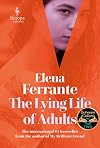
Transitions are often fraught, whether they are between socio-economic levels, stages of life, or states of being and experience. We first meet Giovanna when she is still a naive schoolgirl. She has loving, hard-working, aspirant parents, friends in similar life-situations, and a sheltered and comfortable existence. Everything begins to crumble as she moves towards womanhood, feels disappointment, even animosity, from her father and mother, discovers a hitherto unknown wealth of relations in show more the lower reaches of Naples (i.e. her father’s family), and begins to see more clearly who her parents, and others, truly are. Emotions are vibrant but it’s never clear whether they are proportional. However, the cumulative effect of all these changes is that Giovanna begins thinking for herself, perhaps for the first time, interrogating the impressions people make on her even as she begins to interrogate literature and schoolwork, again perhaps for the first time. Even as she begins to see others differently, so too is she perceived differently. And it’s clear that these transitions to new states of understanding, so long as she remains inquisitive, will be endlessly ongoing. Just how she will take advantage of her self-awareness becomes the open question at the end of the novel.
Told from Giovanna’s perspective, there is much that Ferrante is able to accomplish with a teenage narrator. But equally there are limitations. Giovanna is particularly unaware of what is really going on in her household at first. And that forces her narrative to be somewhat piecemeal as enlightenment is gained only a bit here and a bit there. With more adult narrators, Ferrante can let the full force of her literary and emotional arsenal loose. Here, we see that only in glimpses until perhaps the last quarter of the novel. Growth, for Giovanna, can be painful and it can be awkward for readers sharing her journey. There are cul de sacs, dead ends, pointless forays (perhaps) into religious anxiety and casuistry. But isn’t that precisely what life was like for many of us as teens? And though this may merely presage a further transition to the lying life of adults, it might also, as in this case, encourage the participants to “become adults as no one ever had before.”
As ever, Ferrante is fascinating and challenging in equal measure. And always highly recommended. show less
Told from Giovanna’s perspective, there is much that Ferrante is able to accomplish with a teenage narrator. But equally there are limitations. Giovanna is particularly unaware of what is really going on in her household at first. And that forces her narrative to be somewhat piecemeal as enlightenment is gained only a bit here and a bit there. With more adult narrators, Ferrante can let the full force of her literary and emotional arsenal loose. Here, we see that only in glimpses until perhaps the last quarter of the novel. Growth, for Giovanna, can be painful and it can be awkward for readers sharing her journey. There are cul de sacs, dead ends, pointless forays (perhaps) into religious anxiety and casuistry. But isn’t that precisely what life was like for many of us as teens? And though this may merely presage a further transition to the lying life of adults, it might also, as in this case, encourage the participants to “become adults as no one ever had before.”
As ever, Ferrante is fascinating and challenging in equal measure. And always highly recommended. show less

The Story of the Lost Child is the fourth and final of Elena Ferrante’s Neapolitan Novels. It circles back to the first volume in at least two regards: it finally catches up with the frame narrative that started off My Brilliant Friend and in it both Raffaella / Lila and Elena / Lena return not only to Naples but to the neighbourhood where they spent their childhood and adolescence.
While the previous novels each spanned several years, this final one spans decades, roughly from the eighties show more into the 21st century, this incorporating both middle and old age of its protagonists. This shows how close Ferrante’s narrative nestles up against experience, and I mean not only in its content but in the specific way it is told – here, it mirrors the way time passes at varying speeds during different ages; a year is a very long time for a child who has not lived through many, but it passes almost without being noticed for someone who has experienced a considerable amount of them. I think everyone has noticed how time passes faster as we grow older, and Ferrante lets her series of novels reflect that structurally by giving her protagonists’ early years more room than their later ones. I am trying to avoid spoilers here, as this novel still is fairly recent and it continues to deploy a soap-operatic narrative strategy to keep the reader hooked, so I won’t be giving away any details of what is happening in The Story of the Lost Child (not that I am big on plot summaries in any case), and confine myself to saying that the feminist / political element is receding almost completely into the background (almost, but not quite – and the reader should be so sensitized by the previous novels to sense its presence even when the narrative does not shine a spotlight on it) in favour of the private circumstances of and relations between Lila and Lena.
That relationship has been at the core of the novels throughout, of course, and not the least impressive thing to admire about the Neapolitan Novels is how it has been changing constantly. Weirdly, that is something where soap opera and psychological realism meet – the first because it needs to keep the story going and thus can’t allow anything to remain static: basically, soap operas are in constant flux, there are continuous reveals of supposedly hidden sides to a character’s personality which in turn determine their various relationships. While that kind of layer cake psychology (as I like to call it) is not exactly realistic, it might end up looking very much like realism once you follow a relationship over decades as it happens in Ferrante’s novels, a period during which extreme changes in any kind of relationship are realistically almost inevitable. The difference between the two is of course that psychological realism is bound to stay within the bounds of plausibility while a soap opera emphatically is not limited by that – but this difference certainly is gradual rather than absolute, and it may be argued that in the final analysis plausibility is just another literary trope. From whichever perspective you view it, the friendship between LIla and Lena never ceases to fascinate, the way their lives revolves around each other, both drawn to and repelled by each other like twin stars, the way each mirrors the other’s hopes and desires, one always seeming to have attained what the other is lacking, and finally the way the course of this friendship traces the developments in Italian from the 1950s into the 21st century.
Like the previous volumes, The Story of the Lost Child pays close attention to language – the way it is used to not only mark geographical but also class distinctions, and how command of language, knowing how to write or talk well, can give some degree of power which is not bound to social status or financial wealth (although attaining that command will of course be greatly facilitated if one’s family is influential or wealthy). A power which can also be used to hurt – something that paradoxically not the writer Lena but Lila appears to be more aware of, maybe because, as the narrator keeps reminding us, the Neapolitan dialect Lila is speaking is inherently aggressive. So Lila attempts to erase herself out of existence like a failed novel while Lena finally finishes the memoirs of her friendship which she started at the beginning of A Brilliant Friend and publishes them, knowing this will hurt her friend’s feeling even as it might revive her failing career as an author, and so the book comes full circle in yet another regard, as that book is possibly the one we have been reading, this causing the series to metafictionally turn back upon itself. Or does it? The book Lena publishes is a referred to as a slim volume, and slim is something the Neapolitan Novels certainly are not. The circle does not quite close, there is a gap left, and in a way it is that gap which all four novels (all but the first of which are designated as “Storia” in their original Italian titles, by the way) has been revolving al the time, spinning its tale of friendship and power, of love and violence in that small but unclosable space between reality and fiction. show less
While the previous novels each spanned several years, this final one spans decades, roughly from the eighties show more into the 21st century, this incorporating both middle and old age of its protagonists. This shows how close Ferrante’s narrative nestles up against experience, and I mean not only in its content but in the specific way it is told – here, it mirrors the way time passes at varying speeds during different ages; a year is a very long time for a child who has not lived through many, but it passes almost without being noticed for someone who has experienced a considerable amount of them. I think everyone has noticed how time passes faster as we grow older, and Ferrante lets her series of novels reflect that structurally by giving her protagonists’ early years more room than their later ones. I am trying to avoid spoilers here, as this novel still is fairly recent and it continues to deploy a soap-operatic narrative strategy to keep the reader hooked, so I won’t be giving away any details of what is happening in The Story of the Lost Child (not that I am big on plot summaries in any case), and confine myself to saying that the feminist / political element is receding almost completely into the background (almost, but not quite – and the reader should be so sensitized by the previous novels to sense its presence even when the narrative does not shine a spotlight on it) in favour of the private circumstances of and relations between Lila and Lena.
That relationship has been at the core of the novels throughout, of course, and not the least impressive thing to admire about the Neapolitan Novels is how it has been changing constantly. Weirdly, that is something where soap opera and psychological realism meet – the first because it needs to keep the story going and thus can’t allow anything to remain static: basically, soap operas are in constant flux, there are continuous reveals of supposedly hidden sides to a character’s personality which in turn determine their various relationships. While that kind of layer cake psychology (as I like to call it) is not exactly realistic, it might end up looking very much like realism once you follow a relationship over decades as it happens in Ferrante’s novels, a period during which extreme changes in any kind of relationship are realistically almost inevitable. The difference between the two is of course that psychological realism is bound to stay within the bounds of plausibility while a soap opera emphatically is not limited by that – but this difference certainly is gradual rather than absolute, and it may be argued that in the final analysis plausibility is just another literary trope. From whichever perspective you view it, the friendship between LIla and Lena never ceases to fascinate, the way their lives revolves around each other, both drawn to and repelled by each other like twin stars, the way each mirrors the other’s hopes and desires, one always seeming to have attained what the other is lacking, and finally the way the course of this friendship traces the developments in Italian from the 1950s into the 21st century.
Like the previous volumes, The Story of the Lost Child pays close attention to language – the way it is used to not only mark geographical but also class distinctions, and how command of language, knowing how to write or talk well, can give some degree of power which is not bound to social status or financial wealth (although attaining that command will of course be greatly facilitated if one’s family is influential or wealthy). A power which can also be used to hurt – something that paradoxically not the writer Lena but Lila appears to be more aware of, maybe because, as the narrator keeps reminding us, the Neapolitan dialect Lila is speaking is inherently aggressive. So Lila attempts to erase herself out of existence like a failed novel while Lena finally finishes the memoirs of her friendship which she started at the beginning of A Brilliant Friend and publishes them, knowing this will hurt her friend’s feeling even as it might revive her failing career as an author, and so the book comes full circle in yet another regard, as that book is possibly the one we have been reading, this causing the series to metafictionally turn back upon itself. Or does it? The book Lena publishes is a referred to as a slim volume, and slim is something the Neapolitan Novels certainly are not. The circle does not quite close, there is a gap left, and in a way it is that gap which all four novels (all but the first of which are designated as “Storia” in their original Italian titles, by the way) has been revolving al the time, spinning its tale of friendship and power, of love and violence in that small but unclosable space between reality and fiction. show less
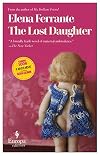
Leda is an academic who travels to the beach to find relaxation. There, she is drawn to a young mother and her daughter while she's reading and writing under the sun, and past and present begin to collide as the story unravels.
Mothers and daughters is perhaps the subject that stands out the most.
"How foolish to think you can tell your children about yourself before they’re at least fifty. To ask to be seen by them as a person and not as a function. To say: I am your history, you begin from show more me, listen to me, it could be useful to you."
Seeing that I have no experience with parenting or parenthood I was puzzled by these words and had to think about them for a moment. I have been a child to parents for twenty seven years now and I am still uncertain if I haven't seen my parents more for their functions than their humanness. The more I thought about it, the more it seemed to me that I had at some point, and it wasn't until relatively recently that I began seeing past hurts and disappointments as parents being very human and capable of mistakes and misunderstandings as much as any other person is, and so I agree.
It's observations like this that make me stop and think that make me love art and therefore also love Ferrante's works. Leda struggled to be a parent to her two young daughters while pursuing her self-discovery at the same time, and the actions she took to free herself of the responsibilities left her with guilt decades afterwards.
Speaking of quotes, another that made me stop in my tracks:
"My daughters make a constant effort to be the reverse of me."
Reading that felt like a blow and again made me marvel at Ferrante's social observations. Only this happened with me and my father and not like Leda and her mother and later Leda's daughters and Leda.
And the other quote that perfectly captures what I have thought about before reading this book:
"Even that way of complaining about the present and the recent past, and idealizing the distant past, didn’t annoy me as it usually does. It seemed, rather, a way, like many, to convince oneself that there is always a slender branch of one’s life to hang on to, and, by being suspended there, get used to the inevitability of falling."
All of these wonderful observations as well as Ferrante's brilliant way of portraying inner chaos made this a good read. Ferrante's protagonists aren't pleasant, they are messy and some of their actions leave the reader struggling to understand intent.
Also it's just become apparent how Ferrante relays such intense inner chaos to the reader perfectly. Storms brewing, large crowds, the heat, insects. External factors that the reader has experienced and which the protagonist experiences while in an anxious state as well, heightens a feeling of wanting to flee. I am unaware if this is an intentional technique that writers use, but this is my first time observing it. With that incredible way she lets you slip into the protagonist's mind as she slips into yours.
I must agree with those that have spoken about the similarities between this book and the Neapolitan novels. Certainly most of the themes are similar and it seems like Ferrante expanded some of them later but I believe that this is still a fantastic read by itself. show less
Mothers and daughters is perhaps the subject that stands out the most.
"How foolish to think you can tell your children about yourself before they’re at least fifty. To ask to be seen by them as a person and not as a function. To say: I am your history, you begin from show more me, listen to me, it could be useful to you."
Seeing that I have no experience with parenting or parenthood I was puzzled by these words and had to think about them for a moment. I have been a child to parents for twenty seven years now and I am still uncertain if I haven't seen my parents more for their functions than their humanness. The more I thought about it, the more it seemed to me that I had at some point, and it wasn't until relatively recently that I began seeing past hurts and disappointments as parents being very human and capable of mistakes and misunderstandings as much as any other person is, and so I agree.
It's observations like this that make me stop and think that make me love art and therefore also love Ferrante's works. Leda struggled to be a parent to her two young daughters while pursuing her self-discovery at the same time, and the actions she took to free herself of the responsibilities left her with guilt decades afterwards.
Speaking of quotes, another that made me stop in my tracks:
"My daughters make a constant effort to be the reverse of me."
Reading that felt like a blow and again made me marvel at Ferrante's social observations. Only this happened with me and my father and not like Leda and her mother and later Leda's daughters and Leda.
And the other quote that perfectly captures what I have thought about before reading this book:
"Even that way of complaining about the present and the recent past, and idealizing the distant past, didn’t annoy me as it usually does. It seemed, rather, a way, like many, to convince oneself that there is always a slender branch of one’s life to hang on to, and, by being suspended there, get used to the inevitability of falling."
All of these wonderful observations as well as Ferrante's brilliant way of portraying inner chaos made this a good read. Ferrante's protagonists aren't pleasant, they are messy and some of their actions leave the reader struggling to understand intent.
Also it's just become apparent how Ferrante relays such intense inner chaos to the reader perfectly. Storms brewing, large crowds, the heat, insects. External factors that the reader has experienced and which the protagonist experiences while in an anxious state as well, heightens a feeling of wanting to flee. I am unaware if this is an intentional technique that writers use, but this is my first time observing it. With that incredible way she lets you slip into the protagonist's mind as she slips into yours.
I must agree with those that have spoken about the similarities between this book and the Neapolitan novels. Certainly most of the themes are similar and it seems like Ferrante expanded some of them later but I believe that this is still a fantastic read by itself. show less
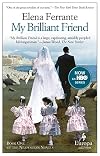
Born into a poor and violent neighbourhood, plagued by death, most people accept their fate, some dream, and a few make plans. For Elena, the narrator, studying hard becomes the likely route out. Lila, the shoe-mender’s daughter, hopes her fantastical shoe designs will one day bring wealth. Footwear is a transformative element in so many myths and fairytales, it seems apt: Hermes/Mercury, Cinderella, The Elves and the Shoemaker, Puss in Boots, The Wizard of Oz, and The Red Shoes.
Image: show more Mythical winged sandals (Source)
This charts the early years of Elena and Lila’s lives, as friends and rivals, bonded forever, whatever the future may hold.
Location: time and place
“We lived in a world in which children and adults were often wounded, blood flowed from the wounds, they festered, and sometimes people died.”
The setting is utterly alien: 1950s (mostly) in an impoverished, closely interconnected neighbourhood of Naples, where people speak a slum dialect rather than “school Italian”, and the Neapolitan equivalent of the mafia, the Camorra, hold sway.
“There were no written rules, everyone knew that’s how it was.”
But it’s so vividly portrayed, filled with universal experiences (childhood friendships and fears, mythologising, dares, competitiveness, battles with parents, shame, showing off, puberty, sexual stirrings, fashion, slut and fag-shaming, manipulative and difficult relationships), that there’s familiarity too - despite the normalised violence and abuse.
Roots and routes
School gives Elena the possibility of a different life, but it increasingly distances her from those she is growing up with.
“I had grown up with these boys, I considered their behaviour normal, their violent language was mine. But for six years now I had also been following daily a path that they were completely ignorant of… With them… I had to suppress myself.”
When Don Sarratore publishes a book of poems and moves to a better area, she begins to believe it is possible to escape one’s roots - for people like her to succeed, even by writing (she doesn’t seem to consider it might be easier for a man).
“Was it possible that only our neighborhood was filled with conflicts and violence, while the rest of the city was radiant and benevolent?”
Nevertheless, Elena’s childhood means that long after she’s moved away, violence, death, and poverty are among “the many fears that accompanied me all my life”.
Yin and yang
“A continuous game of exchanges and reversals.”
Again and again, Lila’s and Elena’s experiences switch: when one is happy or pretty or popular, the other is not - until it flips.
Yet despite that, broad differences persist. Lila is wild and angry, brilliant and, eventually, beautiful. By age six, she’s taught herself to read, despite living in a barely literate household. Elena is scared and in awe of her, but decides to accept Lila’s superiority, while being determined to keep up with her:
“That was my way of reacting to envy, and hatred, and of suffocating them.”
Even in the context of school work, the vocabulary is violent.
“My life was splendid but uneventful… while hers was dark but full.”
It seems that Lila is the brilliant one, going to waste, while Elena succeeds through hard graft and being allowed to continue in school. But it’s Lila who tells Elena, “You’re my brilliant friend”.
Dissolving margins
In childhood, the girls are constrained within their tiny neighbourhood, but as teens they occasionally venture to more affluent areas.
“It was like crossing a border. I remember a dense crowd and a sort of humiliating difference… The women: they were absolutely different from us. They seemed to have breathed another air… They didn’t see any of the five of us.
This is a grimly and sublimely realistic novel, with an intriguing exception: Lila’s occasional experience of “dissolving margins”. It could be a type of migraine or a touch of magical-realism. Either way, it’s also a metaphor for the boundaries and breaches that run through the book.
Image: Children playing in the street in Naples, c1950 (Source)
Scale
When I opened this medium-length novel, I was startled by the dauntingly long cast list. When I finished, I was startled that it just stopped, in the middle of a big celebration, with trouble brewing. That’s because this is actually an epic novel published in 4 volumes, following Elena and Lila, born in Naples c1944, from childhood to old age. This one has a short present-day prologue, 60 pages about their childhood, and 240 of their adolescence. I will get the other three volumes.
Quotes
• “Trained by our school books to speak with great skill about what we had never seen we were excited by the invisible.”
• “She took the facts and in a natural way charged them with tension; she intensified reality as she reduced it to words.”
• “The sea. But what a sea. It was very rough, and loud; the wind took your breath away, pasted your clothes to your body and blew the hair off your forehead… The waves rolled in like blue metal tubes carrying an egg white of foam on their peaks, then broke in a thousand glittering splinters and came up the street.”
• “I lay in the sun reading, dissolving into the pages like a jellyfish.”
• “I was terrified… by the horror it created, but the pleasure that I nevertheless felt.” [a brave, but plausible description of a teen being gently (only in a physical sense) sexually assaulted]
• “She gave off a glow that seemed a violent slap in the face of the poverty of the neighborhood.”
• “The embarrassment of gazing with pleasure at her body… I was washing her… just so that [person] could sully her.”
• “To listen to him lighted up my mind almost the way Lila once had.”
The Neapolitan quartet
1. My Brilliant Friend, read November ‘22, 4* (this review).
2. The Story of a New Name, read April ‘23, 4*, review HERE.
3. Those Who Leave and Those Who Stay, tbr.
4. The Story of the Lost Child, tbr.
Who's the “brilliant” one?
In book 1, Lila calls Elena her brilliant friend.
In book 2, their old teacher says that Lila was the best student she ever taught. show less
Image: show more Mythical winged sandals (Source)
This charts the early years of Elena and Lila’s lives, as friends and rivals, bonded forever, whatever the future may hold.
Location: time and place
“We lived in a world in which children and adults were often wounded, blood flowed from the wounds, they festered, and sometimes people died.”
The setting is utterly alien: 1950s (mostly) in an impoverished, closely interconnected neighbourhood of Naples, where people speak a slum dialect rather than “school Italian”, and the Neapolitan equivalent of the mafia, the Camorra, hold sway.
“There were no written rules, everyone knew that’s how it was.”
But it’s so vividly portrayed, filled with universal experiences (childhood friendships and fears, mythologising, dares, competitiveness, battles with parents, shame, showing off, puberty, sexual stirrings, fashion, slut and fag-shaming, manipulative and difficult relationships), that there’s familiarity too - despite the normalised violence and abuse.
Roots and routes
School gives Elena the possibility of a different life, but it increasingly distances her from those she is growing up with.
“I had grown up with these boys, I considered their behaviour normal, their violent language was mine. But for six years now I had also been following daily a path that they were completely ignorant of… With them… I had to suppress myself.”
When Don Sarratore publishes a book of poems and moves to a better area, she begins to believe it is possible to escape one’s roots - for people like her to succeed, even by writing (she doesn’t seem to consider it might be easier for a man).
“Was it possible that only our neighborhood was filled with conflicts and violence, while the rest of the city was radiant and benevolent?”
Nevertheless, Elena’s childhood means that long after she’s moved away, violence, death, and poverty are among “the many fears that accompanied me all my life”.
Yin and yang
“A continuous game of exchanges and reversals.”
Again and again, Lila’s and Elena’s experiences switch: when one is happy or pretty or popular, the other is not - until it flips.
Yet despite that, broad differences persist. Lila is wild and angry, brilliant and, eventually, beautiful. By age six, she’s taught herself to read, despite living in a barely literate household. Elena is scared and in awe of her, but decides to accept Lila’s superiority, while being determined to keep up with her:
“That was my way of reacting to envy, and hatred, and of suffocating them.”
Even in the context of school work, the vocabulary is violent.
“My life was splendid but uneventful… while hers was dark but full.”
It seems that Lila is the brilliant one, going to waste, while Elena succeeds through hard graft and being allowed to continue in school. But it’s Lila who tells Elena, “You’re my brilliant friend”.
Dissolving margins
In childhood, the girls are constrained within their tiny neighbourhood, but as teens they occasionally venture to more affluent areas.
“It was like crossing a border. I remember a dense crowd and a sort of humiliating difference… The women: they were absolutely different from us. They seemed to have breathed another air… They didn’t see any of the five of us.
This is a grimly and sublimely realistic novel, with an intriguing exception: Lila’s occasional experience of “dissolving margins”. It could be a type of migraine or a touch of magical-realism. Either way, it’s also a metaphor for the boundaries and breaches that run through the book.
Image: Children playing in the street in Naples, c1950 (Source)
Scale
When I opened this medium-length novel, I was startled by the dauntingly long cast list. When I finished, I was startled that it just stopped, in the middle of a big celebration, with trouble brewing. That’s because this is actually an epic novel published in 4 volumes, following Elena and Lila, born in Naples c1944, from childhood to old age. This one has a short present-day prologue, 60 pages about their childhood, and 240 of their adolescence. I will get the other three volumes.
Quotes
• “Trained by our school books to speak with great skill about what we had never seen we were excited by the invisible.”
• “She took the facts and in a natural way charged them with tension; she intensified reality as she reduced it to words.”
• “The sea. But what a sea. It was very rough, and loud; the wind took your breath away, pasted your clothes to your body and blew the hair off your forehead… The waves rolled in like blue metal tubes carrying an egg white of foam on their peaks, then broke in a thousand glittering splinters and came up the street.”
• “I lay in the sun reading, dissolving into the pages like a jellyfish.”
• “I was terrified… by the horror it created, but the pleasure that I nevertheless felt.” [a brave, but plausible description of a teen being gently (only in a physical sense) sexually assaulted]
• “She gave off a glow that seemed a violent slap in the face of the poverty of the neighborhood.”
• “The embarrassment of gazing with pleasure at her body… I was washing her… just so that [person] could sully her.”
• “To listen to him lighted up my mind almost the way Lila once had.”
The Neapolitan quartet
1. My Brilliant Friend, read November ‘22, 4* (this review).
2. The Story of a New Name, read April ‘23, 4*, review HERE.
3. Those Who Leave and Those Who Stay, tbr.
4. The Story of the Lost Child, tbr.
Who's the “brilliant” one?
In book 1, Lila calls Elena her brilliant friend.
In book 2, their old teacher says that Lila was the best student she ever taught. show less
Lists
Overdue Podcast (1)
2022 (1)
Favourite Books (1)
. (1)
My TBR (1)
Coming of Age (1)
2016 UpROOTed (1)
2024 (1)
el (1)
2021 (1)
Finished in 2020 (4)
Five star books (2)
Female Author (4)
To borrow next (2)
Movies/Shows (1)
2023 (1)
Awards


You May Also Like


Associated Authors
Statistics
- Works
- 42
- Also by
- 3
- Members
- 27,860
- Popularity
- #732
- Rating
- 4.1
- Reviews
- 1,054
- ISBNs
- 833
- Languages
- 33
- Favorited
- 43