
Adrian Tchaikovsky
Author of Children of Time
About the Author
Adrian Tchaikovsky is a British fantasy and science fiction author, born on June 14, 1972 in Woodhall Spa, Lincolnshire. He studied Zoology and Psychology at the University of Reading. His career focus changed to law and has worked as a Legal Executive in both Reading and Leeds. He's the author of show more the Shadows of the Apt series, and his standalone novel Children of Time is the winner of the 2016 Arthur C Clarke Award for Best Science Fiction Novel. (Bowker Author Biography) show less
Series
Works by Adrian Tchaikovsky
Journal of the Plague Year: An Omnibus of Post-Apocalyptic Tales (2014) — Contributor — 32 copies, 3 reviews
The Final Architecture Series 3 Books Collection Set By Adrian Tchaikovsky (Shards of Earth, Eyes of the Void & Lords of Uncreation) (2023) 14 copies
Conquest Unbound: Stories from the Mortal Realms (Warhammer Age of Sigmar) (2022) — Contributor — 8 copies
The Heart of the Reproach 8 copies
Spoils Of War [short story] 3 copies
The Dreams of Avaris 3 copies
The Sun of the Morning 2 copies
An Old Man In A Lean Season 2 copies
Heart of the Reproach 2 copies
Camouflage 2 copies
The Prince 2 copies
Low Energy Economy 2 copies
To Own The Sky 2 copies
Fallen Heroes 2 copies
The Shadows of their Lamps 1 copy
Die Retter der Zeit: Roman - Gewinner des Hugo Award 2023 für Beste Serie (Die Zeit-Saga, Band 4) 1 copy
The Naturalist 1 copy
La hiena y el halcón 1 copy
Shadow Hunters 1 copy
Salvation’s Child 1 copy
Rapture (short story) 1 copy
Sword and Circle 1 copy
The Working Title 1 copy
Good Taste (short story) 1 copy
Care (short story) 1 copy
Pipework 1 copy
The God-shark (short story) 1 copy
Idle Hands 1 copy
Loyalties 1 copy
First Sight 1 copy
Queen of the Night 1 copy
Associated Works
Evil Is a Matter of Perspective: An Anthology of Antagonists (2017) — Contributor — 94 copies, 3 reviews
Solaris Rising 2: The New Solaris Book of Science Fiction (2013) — Contributor — 74 copies, 6 reviews
Monstrous Little Voices: New Tales From Shakespeare's Fantasy World (2016) — Contributor — 74 copies, 2 reviews
Consolation Songs: Optimistic Speculative Fiction for a Time of Pandemic (2020) — Contributor — 35 copies, 3 reviews
Stories of Hope and Wonder: In Support of the UK's Healthcare Workers (2020) — Contributor — 11 copies, 1 review
Looking Landwards: Stories Commemorating the 75th Anniversary of the Institution of Agricultural Engineers (2013) — Contributor — 6 copies
The Digital Aesthete: Human Musings on the Intersection of Art and AI (2023) — Contributor — 6 copies
The Iron Code — Contributor — 3 copies
Unexpected Journeys — Contributor — 2 copies
Tagged
Common Knowledge
- Legal name
- Czajkowski, Adrian
- Birthdate
- 1972
- Gender
- male
- Education
- University of Reading (zoology and psychology)
- Occupations
- fantasy writer
legal executive - Agent
- Simon Kavanagh (Mic Cheetham Literary (UK))
- Nationality
- UK
- Birthplace
- Woodhall Spa, Lincolnshire, England, UK
- Places of residence
- Woodhall Spa, Linconshire, England, UK (birth)
Reading, Berkshire, England, UK
Leeds, Yorkshire, England, UK - Map Location
- England, UK
Members
Discussions
British Author Challenge February 2025: Kia Abdullah & Adrian Tchaikovsky in 75 Books Challenge for 2025 (December 2025)
Reviews
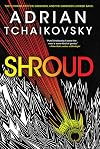
Rating: 4.5* of five
The Publisher Says: An utterly gripping story of alien encounter and survival from Adrian Tchaikovsky, author of the Arthur C. Clarke Award-winning Children of Time.
They looked into the darkness and the darkness looked back . . .
New planets are fair game to asset strippers and interplanetary opportunists—and a commercial mission to a distant star system discovers a moon that is pitch black, but alive with radio activity. Its high-gravity, high-pressure, zero-oxygen show more environment is anathema to human life, but ripe for exploitation. They named it Shroud.
Under no circumstances should a human end up on Shroud’s inhospitable surface. Except a catastrophic accident sees Juna Ceelander and Mai Ste Etienne doing just that. Forced to stage an emergency landing, in a small, barely adequate vehicle, they are unable to contact their ship and are running out of time. What follows is a gruelling journey across land, sea and air. During this time, Juna and Mai begin to understand Shroud’s dominant species. It also begins to understand them . . .
If they escape Shroud, they’ll face a crew only interested in profiteering from this extraordinary world. They’ll somehow have to explain the impossible and translate the incredible. That is, if they make it back at all.
I RECEIVED A DRC FROM THE PUBLISHER VIA NETGALLEY. THANK YOU.
My Review: A stand-alone story by a genre stalwart? Make the trip to the bookstore! A story where the aliens on a truly unnerving world are actually more humane than the humans' own bosses? Perfect for Dad on his special day, especially if he's not retired yet. Talk about living in hope....
Hope feels like a luxury to the women trying not to die on a moon whose every physical parameter seems purpose-built to kill them. (Of course it was—this is a novel.) These two women are put in a terrible place to determine if Shroud, the human name for their likely grave-place, has economic value to their corporation.
Author Adrian is not the biggest supporter of the capitalist world we live in. I knew I loved him for a reason.
As the constraints of Shroud bind their actions and options ever-tighther, their gynergy and their willingness to think outside the training and the constructs of their society coupled with Shroud's life form's desire to communicate with these utterly alien things meet and merge into true First Contact. One of my favorite plot devices, that.
I think it's clear I like Author Adrian's storytelling. I want to spoiler the hell out if why in this story's case more than in Bee Speaker's case. I'm really impressed this arachnid-fancyin' fantasy writer has bent his brain to the task of making Shroud make sense without showing too much of the gearshifting tech he used to get there. Author Adrian doesn't babble his techno, and doesn't imbibe a pint of handwavium before every chapter. I find the balance of fiction to science matches my preference in this story so perfectly you can't see the seam. Unless your Dad's a physicist by trade, I'm guessing he will quite probably enjoy this balance between story told and space-world built too.
I recommend it, and get one for yourself too. Borrowing Dad's might be tough to talk him into. show less
The Publisher Says: An utterly gripping story of alien encounter and survival from Adrian Tchaikovsky, author of the Arthur C. Clarke Award-winning Children of Time.
They looked into the darkness and the darkness looked back . . .
New planets are fair game to asset strippers and interplanetary opportunists—and a commercial mission to a distant star system discovers a moon that is pitch black, but alive with radio activity. Its high-gravity, high-pressure, zero-oxygen show more environment is anathema to human life, but ripe for exploitation. They named it Shroud.
Under no circumstances should a human end up on Shroud’s inhospitable surface. Except a catastrophic accident sees Juna Ceelander and Mai Ste Etienne doing just that. Forced to stage an emergency landing, in a small, barely adequate vehicle, they are unable to contact their ship and are running out of time. What follows is a gruelling journey across land, sea and air. During this time, Juna and Mai begin to understand Shroud’s dominant species. It also begins to understand them . . .
If they escape Shroud, they’ll face a crew only interested in profiteering from this extraordinary world. They’ll somehow have to explain the impossible and translate the incredible. That is, if they make it back at all.
I RECEIVED A DRC FROM THE PUBLISHER VIA NETGALLEY. THANK YOU.
My Review: A stand-alone story by a genre stalwart? Make the trip to the bookstore! A story where the aliens on a truly unnerving world are actually more humane than the humans' own bosses? Perfect for Dad on his special day, especially if he's not retired yet. Talk about living in hope....
Hope feels like a luxury to the women trying not to die on a moon whose every physical parameter seems purpose-built to kill them. (Of course it was—this is a novel.) These two women are put in a terrible place to determine if Shroud, the human name for their likely grave-place, has economic value to their corporation.
Author Adrian is not the biggest supporter of the capitalist world we live in. I knew I loved him for a reason.
As the constraints of Shroud bind their actions and options ever-tighther, their gynergy and their willingness to think outside the training and the constructs of their society coupled with Shroud's life form's desire to communicate with these utterly alien things meet and merge into true First Contact. One of my favorite plot devices, that.
I think it's clear I like Author Adrian's storytelling. I want to spoiler the hell out if why in this story's case more than in Bee Speaker's case. I'm really impressed this arachnid-fancyin' fantasy writer has bent his brain to the task of making Shroud make sense without showing too much of the gearshifting tech he used to get there. Author Adrian doesn't babble his techno, and doesn't imbibe a pint of handwavium before every chapter. I find the balance of fiction to science matches my preference in this story so perfectly you can't see the seam. Unless your Dad's a physicist by trade, I'm guessing he will quite probably enjoy this balance between story told and space-world built too.
I recommend it, and get one for yourself too. Borrowing Dad's might be tough to talk him into. show less

Dying Earth, nano-virus, terraforming, arkship, non-human intelligence, a crazy scientist, AI, human-AI mix, crazy ship captain and a few millennia of history. It sounds like a checklist of what can be added to a science fiction series, doesn't it?
For his debut science fiction novel (but not his debut novel by a lot), Tchaikovsky did not just pick one thing from the list. Or 2. Or 5. He used all of them - and added even more. And then he decided that this will be a standalone story and show more wrapped the story in 600 pages. It should not have worked. And yet, it is one of the best SF novels I had read in a long time.
It all started with the uplift project (ran by the Brin Habitat of course - how else could it have been called?) - a project to terraform a string of planets, add monkeys and a nano-virus to allow them to reach intelligence a lot faster and see what will happen. It should have been the biggest success of the human race. But that being humanity after all, the things do not go as planned and the slightly crazy scientist Dr. Kern ends up overseeing her own project - minus the monkeys. And while the planet is evolving with the help of the virus (but without the recipients for it), humanity destroys Earth in more than one way (and lives through an ice age just to make it really messy) and ends up on an arkship, trying to follow a map everyone had forgotten for millennia. And that's where the story really starts.
The planet, Kern's World, now has a living population - of big intelligent spiders (at least it was not cockroaches - that would have been logical but would not have worked - Tchaikovsky knows his animals and picked the one that actually could pull off a success). The protection inside of the virus that was supposed to protect the monkeys from competition, does its job rendering all vertebrae animals stupid. But everyone forgot the other members of the animal family - and the green planet is more of a nightmare. And humanity is coming.
Add a few battles, a shifting story (we have one chapter with the humans, one with the spiders) and evolution on a scale that noone had ever seen (time passes and the nano-virus helps as well), more than one reversal of fortune (for both species), the titular crazy scientist getting crazier and causing a lot of the issues on both sides and an end that was so logical but also so unexpected that I did not see it coming. And it is a perfect end of a story about intelligence and beliefs.
But it is not just a story of battle and survival - because Tchaikovsky builds his evolution story step by step - through the dark ages and the religious dark times (and it is almost logical that the first time the spiders go on a war against each other, it is because of a human); through innovation and progress. It is a success story, even if the monkeys never made it on the planet - and at the end, the evolution wins against stupidity.
A wonderful story (as long as you are not afraid of spiders) and I am not surprised at all that it won the Arthur C. Clarke award - it is a reimaged story from the past but told in a new way. show less
For his debut science fiction novel (but not his debut novel by a lot), Tchaikovsky did not just pick one thing from the list. Or 2. Or 5. He used all of them - and added even more. And then he decided that this will be a standalone story and show more wrapped the story in 600 pages. It should not have worked. And yet, it is one of the best SF novels I had read in a long time.
It all started with the uplift project (ran by the Brin Habitat of course - how else could it have been called?) - a project to terraform a string of planets, add monkeys and a nano-virus to allow them to reach intelligence a lot faster and see what will happen. It should have been the biggest success of the human race. But that being humanity after all, the things do not go as planned and the slightly crazy scientist Dr. Kern ends up overseeing her own project - minus the monkeys. And while the planet is evolving with the help of the virus (but without the recipients for it), humanity destroys Earth in more than one way (and lives through an ice age just to make it really messy) and ends up on an arkship, trying to follow a map everyone had forgotten for millennia. And that's where the story really starts.
The planet, Kern's World, now has a living population - of big intelligent spiders (at least it was not cockroaches - that would have been logical but would not have worked - Tchaikovsky knows his animals and picked the one that actually could pull off a success). The protection inside of the virus that was supposed to protect the monkeys from competition, does its job rendering all vertebrae animals stupid. But everyone forgot the other members of the animal family - and the green planet is more of a nightmare. And humanity is coming.
Add a few battles, a shifting story (we have one chapter with the humans, one with the spiders) and evolution on a scale that noone had ever seen (time passes and the nano-virus helps as well), more than one reversal of fortune (for both species), the titular crazy scientist getting crazier and causing a lot of the issues on both sides and an end that was so logical but also so unexpected that I did not see it coming. And it is a perfect end of a story about intelligence and beliefs.
But it is not just a story of battle and survival - because Tchaikovsky builds his evolution story step by step - through the dark ages and the religious dark times (and it is almost logical that the first time the spiders go on a war against each other, it is because of a human); through innovation and progress. It is a success story, even if the monkeys never made it on the planet - and at the end, the evolution wins against stupidity.
A wonderful story (as long as you are not afraid of spiders) and I am not surprised at all that it won the Arthur C. Clarke award - it is a reimaged story from the past but told in a new way. show less

~100 pages in, we have one story line about giant spiders, one about a colony ship, and one about an insane AI tying them together. And it's all played very hard sci-fi/seriously. As in: it's the reasons and causality behind the giant spider that are cool, not the fact that they are giant spiders.
Update: Finished:
This is fantastic. It is all the things I want in sci-fi.
It is all the best of a deep-dive into 'what if' without getting lost in the technical weeds or failing develop any show more emotional attachments.
It is reminiscent of classic epics from Niven or Heinlein - that perfect balance of supposition and adventure - but without all the slide rules and chauvinism.
It is the imagination of Charlie Stross, but with a coherent, driving plot.
It is that rush of novelty you get from a short story, filled out to a satisfying meal without feeling bloated with padding or stretched too thin to support itself.
It raises disturbing philosophical questions organically, without whacking you over the head with them or feeling like a sermon.
to paraphrase it's main character it is getting awfully close to answering "that impossible question every historian longs to ask: 'what is it like to be you' " for some incredibly interesting perspectives.
The ending is not quite as good as the tension leading up to it, but that's really just more praise for how amazing that tension was.
Anyway, I love it all the way.
Best book. show less
Update: Finished:
This is fantastic. It is all the things I want in sci-fi.
It is all the best of a deep-dive into 'what if' without getting lost in the technical weeds or failing develop any show more emotional attachments.
It is reminiscent of classic epics from Niven or Heinlein - that perfect balance of supposition and adventure - but without all the slide rules and chauvinism.
It is the imagination of Charlie Stross, but with a coherent, driving plot.
It is that rush of novelty you get from a short story, filled out to a satisfying meal without feeling bloated with padding or stretched too thin to support itself.
It raises disturbing philosophical questions organically, without whacking you over the head with them or feeling like a sermon.
to paraphrase it's main character it is getting awfully close to answering "that impossible question every historian longs to ask: 'what is it like to be you' " for some incredibly interesting perspectives.
The ending is not quite as good as the tension leading up to it, but that's really just more praise for how amazing that tension was.
Anyway, I love it all the way.
Best book. show less

Words fail to express how much I loved this book. I mean, I'm a dog person through and through, so this story had a head start on the competition from the get-go.
Rex and Honey and Dragon and Bees? Yeah. They're the best. This book is filled with characters that you just can't help but love, despite some terrible and atrocious actions. And some characters that are easy to hate.
But in addition to that, Tchaikovsky brings the story to unexpected places. This isn't just a book about war and the show more possible journeys on which genetic engineering will take us--it's a book that asks much deeper questions about what it means to be human and all the philosophical conundrums that spiral out from that.
The best compliment I can possibly give to this book is:
Good dog. ヽ(°ᴥ°)ノ show less
Rex and Honey and Dragon and Bees? Yeah. They're the best. This book is filled with characters that you just can't help but love, despite some terrible and atrocious actions. And some characters that are easy to hate.
But in addition to that, Tchaikovsky brings the story to unexpected places. This isn't just a book about war and the show more possible journeys on which genetic engineering will take us--it's a book that asks much deeper questions about what it means to be human and all the philosophical conundrums that spiral out from that.
The best compliment I can possibly give to this book is:
Good dog. ヽ(°ᴥ°)ノ show less
Lists
To Read (1)
Up Next (1)
Which house? (1)
Generation Ship (1)
Fantasy TBR (1)
Awards


You May Also Like


Associated Authors
Statistics
- Works
- 131
- Also by
- 51
- Members
- 27,655
- Popularity
- #739
- Rating
- 3.9
- Reviews
- 1,062
- ISBNs
- 564
- Languages
- 12
- Favorited
- 32

