
Ward Just (1935–2019)
Author of An Unfinished Season
About the Author
Works by Ward Just
Associated Works
About Face: The Odyssey of an American Warrior (1989) — Introduction, some editions — 814 copies, 12 reviews
My Bookstore: Writers Celebrate Their Favorite Places to Browse, Read, and Shop (2012) — Contributor — 621 copies, 16 reviews
Writers on Writing: Collected Essays from the New York Times (2001) — Contributor — 480 copies, 5 reviews
Reporting Vietnam: American Journalism 1959-1969, Volume 1 (1998) — Contributor — 347 copies, 3 reviews
Who's Writing This? Notations on the Authorial I, with Self-Portraits {not Antæus} (1995) — Contributor — 75 copies
Literary Traveller: An Anthology of Contemporary Short Fiction (1994) — Contributor — 55 copies, 1 review
The Literary Lover: Great Stories of Passion and Romance (1993) — Contributor — 55 copies, 2 reviews
The Other Side of Heaven: Post-War Fiction by Vietnamese and American Writers (1995) — Contributor — 43 copies
Tagged
Common Knowledge
- Birthdate
- 1935-09-05
- Date of death
- 2019-12-19
- Gender
- male
- Education
- Trinity College, Hartford
- Occupations
- journalist
writer
novelist
short story writer - Organizations
- Washington Post
Newsweek - Awards and honors
- James Fenimore Cooper Prize
- Relationships
- Bradlee, Ben (colleague)
- Nationality
- USA
- Birthplace
- Michigan City, Indiana, USA
- Places of residence
- Washington, D.C., USA
Vineyard Haven, Massachusetts, USA - Place of death
- Plymouth, Massachusetts, USA
- Associated Place (for map)
- USA
Members
Reviews
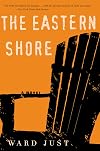
In this fairly recent novel (2016) Just tells the story of newspaper man Ned Ayres, from his early days as managing editor of a small town paper in Indiana to editor of a major Washington, D.C. daily. Ned's long hours and total absorption in his work mean he isn't much of a "catch", despite his successful career. He has no interest in the kind of compromise he sees as necessary to a happy married life. He has a couple relatively serious long-term relationships, but there is never any show more commitment on either side, and in both cases the women move on, without drama, to pursue their own interests. Ned's choice of career alienated him from his father early on, so what we have is a man without personal attachments of any kind. He is perfectly capable of socializing, enjoying the details of other people's lives, but his favorite place to be, at any hour, is in the newsroom. The changing character of journalism and the rise of the internet as a source of information lead to Ned's retirement to the Eastern Shore of Maryland, and a mansion he has admired for decades, but really has no use for. He spends his final years working on a memoir that we all know will never be finished...doing some mild soul-searching, but generally just fading away. As he observed about himself "he had no material. He edited material." Ned’s life makes a very suitable vehicle for Just’s own examination of the newspaper world, the question of personal privacy vs. the public’s “right to know”, and the decline of the traditional press. Good solid prose, interesting character development, an enjoyable read. show less
I was drawn to this book because the main character is a newspaper editor and his reflections on his career and life. The book provides a hopscotch through his career ending with him making a weak effort to write his memoirs. The book itself becomes the memoir. I underlined many parts as they were telling for those looking for some insight into the news business. The book takes a look at the darker side of the biz. In fact, it felt like an apology. Like he was saying: "I am sorry to all show more those who were hurt by a news story. But that happens when you are in the business of telling the news. It comes with the job." Still, he felt guilty and when you read the book, you will understand why. His guilt hinges on a decision he made early in his career. I'm not sure what I would have done? Thus this book presents an important challenge for all newspapers: when does it stop being news? show less
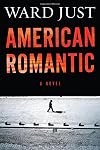
I LOVED this book. There. Not a particularly erudite or literate start, but it's the truth. AMERICAN ROMANTIC is Ward Just's 18th novel, and it may be one of his best, but then I've only read five of his books - so far - so I could be wrong, but I doubt it. His books are like fine wine, they get better with age, and so does Just himself, who will turn 81 this year.
With AMERICAN ROMANTIC, Just seems to be looking back once more to events that happened when he was a young journalist who spent show more time in Vietnam, "when the war was not quite a war, more a prelude to a war." His protagonist Harry Sanders is a young foreign service officer who comes from a privileged background in rural Connecticut, his father a recipient of a well-endowed trust. He grew up surrounded by people of wealth and power, attended the best schools, and his overseas posting to Vietnam is seen as a first step toward advancement in the State Department. He is just adjusting to his role there, and has begun a love affair with Sieglinde, a young German medical technician, when he is hand-picked for a special undercover mission into the jungle. He is briefed personally by the Ambassador, who tells Harry: "This is what I call a moment of consequence."
The mission is not a success, and in fact goes profoundly wrong when Harry, unarmed and lost in the southern jungle, suddenly meets a young enemy soldier, and, in a brief, desperate struggle, Harry disarms the man "and shot him dead." Harry is stunned and shocked by his action, and visions of this chance encounter will continue to haunt him for the rest of his life.
The story which follows is a look at Harry's subsequent life as he rises through government ranks to become an ambassador himself, with postings in Africa, South America, Europe and, of course, Washington. He marries, quite happily, he thinks, but he never forgets Sieglinde, and how she so abruptly disappeared from his life so many years ago. Sieglinde's story is also detailed in a middle portion of the narrative, and, gradually, the reader begins to see how their lives nearly intersected at various points. Harry's wife, May, also becomes central, and we learn of her rough origins in rural Vermont, how she met Harry, and her various frustrations, disappointments and indiscretions as an ambassador's wife in obscure out-of-the way countries. Because that early "moment of consequence" continues to haunt Harry's career path, closing to him the plum assignments in Paris, Berlin, or other glamorous cities.
There is a Poe-like moment in one scene in which a still-grieving Harry, pondering some of his wife's private letters and diaries he finds after her death, thinks he hears "a tap at the door." Indeed, the bookshelves of his Washington office contain, "along with Koestler and Kennan, the poems of Poe ..."
Obviously influenced by the writing of people like Koestler and Kennan, Ward Just's novels have often dealt with the inner workings of Washington and the corridors of power, although he seldom takes sides. Harry, however, retired and living in a remote village in the south of France, considers the latest news from America.
"A black man running for the presidency! Harry had lived outside the country for so long he could not fathom how such a thing could happen, yet here he was, a graduate of both Columbia University and Harvard law, a white man's pedigree. He was a marvelous speaker and an even better writer ... Some caution warranted there. Probably a writer's temperament would not fit well in the modern White House, too much time given over to the shape and music of sentences while all around him clamored for action."
What a marvelous summing up of President Obama, his beautiful memoir, DREAMS FROM MY FATHER, and his eternal dilemma of a tendency toward thoughtfulness. Ward Just is apparently not, it turns out, without opinion as to the political scene. But that fundamental decency and civility that one finds in all of his books is also an important element in this, his latest. As a close and intimate look into the life of a career diplomat, a decent man, AMERICAN ROMANTIC is an unqualified success. I love the way Ward Just writes, and can't wait to read more of him. My highest recommendation.
- Tim Bazzett, author of the memoir, BOOKLOVER show less
With AMERICAN ROMANTIC, Just seems to be looking back once more to events that happened when he was a young journalist who spent show more time in Vietnam, "when the war was not quite a war, more a prelude to a war." His protagonist Harry Sanders is a young foreign service officer who comes from a privileged background in rural Connecticut, his father a recipient of a well-endowed trust. He grew up surrounded by people of wealth and power, attended the best schools, and his overseas posting to Vietnam is seen as a first step toward advancement in the State Department. He is just adjusting to his role there, and has begun a love affair with Sieglinde, a young German medical technician, when he is hand-picked for a special undercover mission into the jungle. He is briefed personally by the Ambassador, who tells Harry: "This is what I call a moment of consequence."
The mission is not a success, and in fact goes profoundly wrong when Harry, unarmed and lost in the southern jungle, suddenly meets a young enemy soldier, and, in a brief, desperate struggle, Harry disarms the man "and shot him dead." Harry is stunned and shocked by his action, and visions of this chance encounter will continue to haunt him for the rest of his life.
The story which follows is a look at Harry's subsequent life as he rises through government ranks to become an ambassador himself, with postings in Africa, South America, Europe and, of course, Washington. He marries, quite happily, he thinks, but he never forgets Sieglinde, and how she so abruptly disappeared from his life so many years ago. Sieglinde's story is also detailed in a middle portion of the narrative, and, gradually, the reader begins to see how their lives nearly intersected at various points. Harry's wife, May, also becomes central, and we learn of her rough origins in rural Vermont, how she met Harry, and her various frustrations, disappointments and indiscretions as an ambassador's wife in obscure out-of-the way countries. Because that early "moment of consequence" continues to haunt Harry's career path, closing to him the plum assignments in Paris, Berlin, or other glamorous cities.
There is a Poe-like moment in one scene in which a still-grieving Harry, pondering some of his wife's private letters and diaries he finds after her death, thinks he hears "a tap at the door." Indeed, the bookshelves of his Washington office contain, "along with Koestler and Kennan, the poems of Poe ..."
Obviously influenced by the writing of people like Koestler and Kennan, Ward Just's novels have often dealt with the inner workings of Washington and the corridors of power, although he seldom takes sides. Harry, however, retired and living in a remote village in the south of France, considers the latest news from America.
"A black man running for the presidency! Harry had lived outside the country for so long he could not fathom how such a thing could happen, yet here he was, a graduate of both Columbia University and Harvard law, a white man's pedigree. He was a marvelous speaker and an even better writer ... Some caution warranted there. Probably a writer's temperament would not fit well in the modern White House, too much time given over to the shape and music of sentences while all around him clamored for action."
What a marvelous summing up of President Obama, his beautiful memoir, DREAMS FROM MY FATHER, and his eternal dilemma of a tendency toward thoughtfulness. Ward Just is apparently not, it turns out, without opinion as to the political scene. But that fundamental decency and civility that one finds in all of his books is also an important element in this, his latest. As a close and intimate look into the life of a career diplomat, a decent man, AMERICAN ROMANTIC is an unqualified success. I love the way Ward Just writes, and can't wait to read more of him. My highest recommendation.
- Tim Bazzett, author of the memoir, BOOKLOVER show less
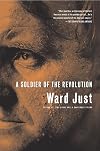
A SOLDIER OF THE REVOLUTION (1970) is a novel so polished, so Hemingway-esque, that it's hard to believe it was Ward Just's first effort. And maybe it wasn't, because it seems to me I read a Just interview somewhere in which he stated his 'first' novel, written somewhere around '68, was flatly rejected and in not very polite terms. Well, he must have learned something from that, because this novel kept me flashing back to FOR WHOM THE BELL TOLLS. But Just's book is set not in Spain, but an show more unnamed country in South America, not long after Che Guevara was killed. Indeed Che and Fidel are mentioned more than once in this dark tale of intrigue in which American expat Michael Reardon is drawn into the plans of a small band of ragged revolutionaries. Reardon, a failed Catholic, is initially kidnapped by the guerillas, but finds himself drawn inexorably to their cause to become himself that titular character. This is simply one helluva good read. It is the sixth Just novel I have read, but, time allowing, it will certainly not be the last. I already have two more Just books waiting on deck. This one? I highly recommend it. show less
Lists
Favourite Books (2)
Five star books (2)
Awards


You May Also Like


Associated Authors
Statistics
- Works
- 24
- Also by
- 17
- Members
- 2,389
- Popularity
- #10,742
- Rating
- 3.8
- Reviews
- 80
- ISBNs
- 95
- Languages
- 3
- Favorited
- 13