
Isaac Babel (1894–1940)
Author of Collected Stories
About the Author
Isaac Babel was born in Odessa, Russia, in 1894. He won early success with stories about his native Odessa and about the exploits of the Bolshevik cavalry in the Polish campaign of 1920-21. During the 1930s his output was small, but his talent remained undiminished. He was arrested in May 1939 show more during the Great Purge, and his manuscripts were confiscated. His exact fate remains unknown. Although Babel's reputation was restored in 1956, he was still published only occasionally in the Soviet Union-the very strong Jewish element in his stories, as well as the ambiguous positions he took on war and revolution, made his stories uncomfortable for Soviet authorities. For a Russian reader, the Odessa Tales (1916) are particularly exotic. Their protagonists, members of the city's Jewish underworld, are presented in romantic, epic terms. The Red Cavalry stories are noted for their account of the horrors of war. In both cycles Babel relies on precisely constructed short plots, on paradox of situation and of character response, and on nonstandard, captivating language-be it the combination of Yiddish, slang, and standard Russian in the Odessa Tales or of uneducated Cossack speech and standard Russian in the Red Cavalry cycle. The result of such features is a prose heritage rare in the history of Russian literature. Isaac Babel passed away in 1941. (Bowker Author Biography) Isaac Babel was born on July 13, 1894 in Odessa, Russia, to a middle-class Jewish family. He attended the Institute of Business Studies. His life was filled with persecution, which greatly influenced his writing. During the civil war that followed the Russian Revolution, Babel served as a soldier in Poland. This experience provided him with material for Red Cavalry, a collection of his stories. Later, in the Odessa Tales, published in 1931, Babel drew on his Jewish heritage to create colorful and memorable characters. As with many great artists in Russia, Babel's creative style was unpopular with the Stalin regime. Babel admitted to a long association with Trotskyites, but denied this testimony at his trial. He was ultimately found guilty of espionage and shot in Moscow in 1939, although, nearly a year later, his wife and the general public were told that he died in a labor camp. (Bowker Author Biography) show less
Image credit: Courtesy of the NYPL Digital Gallery (image use requires permission from the New York Public Library)
Works by Isaac Babel
Isaac Babel: the lonely years 1925-1939 : unpublished stories and private correspondence (1964) 49 copies
Toneel 13 copies
Racconti proibiti e lettere intime 5 copies
חיל הפרשים ועוד סיפורים 4 copies
Maria : näidend 8 pildis 4 copies
Одесские рассказы 3 copies
The Odessa Stories - Isaac Babel 3 copies
CONTOS SOVIÉTICOS 2 copies
Maestros de la literatura universal. Tomo IX: Rusia, 2/ Tolstoi: Sonata a Kreutzer; Gorki: Caminando por el mundo; Bulgakov: Los huevos fatales; Bábel: Caballería roja;… — Contributor — 2 copies
Konarmija. Rasskazy 1925 - 1938 gg. P§esy. Vospominanija, portrety. Stat§i i vystuplenija. Kinoscenarii (1991) 2 copies
В Одессе и около 2 copies
Большие пожары 2 copies
Utwory wybrane 2 copies
El comandante del escuadrón 2 copies
Correspondance: (1923-1939) 1 copy
Детство и другие рассказы 1 copy
Сочинения в 2 т 1 copy
Король 1 copy
Debes Saberlo Todo 1 copy
stelle erranti 1 copy
Early Stories 1 copy
Sochineniia v dvukh tomakh 1 copy
Сочинения. Том 2. 1 copy
Bir öpücük 1 copy
Bir Öpücük 1 copy
Baba 1 copy
Babel Isaac 1 copy
El despertar 1 copy
Centenary of Isaak Babel 1 copy
Maria : näidend 8 pildis 1 copy
Prvá jazdecká : Poviedky 1 copy
The Collected Stories of Isaac Babel by Babel, Isaac unknown Edition [Paperback(2002)] (2002) 1 copy
Одесские рассказы 1 copy
Rudá jízda 1 copy
Verhalen 1913-1924 1 copy
"Crossing into Poland" 1 copy
"First Love" 1 copy
"The King" 1 copy
Through the Transom 1 copy
The Collected Stories 1 copy
Detstvo i drugie rasskazy. 1 copy
"Pan Apolek" 1 copy
"The Sin of Jesus" 1 copy
Povídky 1 copy
Geschichten aus Odessa 1 copy
Isaac Babel: Complete Works 1 copy
Récits d'Odessa: suivi de Le crépuscule, pièce en huit scènes et de Béniak krik, récit autobiographique (2021) 1 copy
WERKE - Erster Band, 1 copy
CABALERÍA ROJA 1 copy
Utwory odnalezione 1 copy
סיפורים 1 copy
Associated Works
The Story and Its Writer: An Introduction to Short Fiction (1976) — Contributor — 1,215 copies, 3 reviews
In the Stacks: Short Stories about Libraries and Librarians (2002) — Contributor — 546 copies, 13 reviews
The World of the Short Story: A 20th Century Collection (1986) — Contributor — 512 copies, 4 reviews
You've Got to Read This: Contemporary American Writers Introduce Stories that Held Them in Awe (1994) — Contributor — 415 copies, 3 reviews
The Jewish caravan : great stories of twenty-five centuries (1965) — Contributor, some editions — 140 copies
Anthology of Russian Literature in the Soviet Period from Gorki to Pasternak (1960) — Contributor — 69 copies
A Cross of Centuries: Twenty-five Imaginative Tales About the Christ (2007) — Contributor — 32 copies, 2 reviews
Bijt me toch, bijt me! De mooiste dierenverhalen uit de Russische Bibliotheek (2013) — Contributor — 5 copies
50 seltsame Geschichten — Contributor — 1 copy
ソヴェート文学 Советская Литература No.17 / 1968 1月号 — Contributor — 1 copy
ロシア短編集 ПЁСТРЫЕ РАССКАЗЫ 雑話集 IV — Contributor — 1 copy
世界文学大系. 第93 (近代小説集 第3) — Contributor — 1 copy
季刊 ソヴェート文学 Советская Литература 1984年 No. 90 — Contributor — 1 copy
季刊 ソヴェート文学 Советская Литература 1984年 No. 89 — Contributor — 1 copy
Tagged
Common Knowledge
- Canonical name
- Babel, Isaac
- Legal name
- Бабель, Исаак Эммануилович
- Other names
- Babel, Isaak
Bobel, Isaac Manievich (birth name)
Babel, Isaak Emmanuilovich
Бабель, Исаак Эммануилович - Birthdate
- 1894-07-13
- Date of death
- 1940-01-27
- Gender
- male
- Education
- Kiev Institute of Finance and Business
- Occupations
- journalist
writer
literary translator
short story writer
playwright
diarist - Relationships
- Gorky, Maksim (friend)
Brown, Nathalie Babel (daughter)
Paustovsky, Konstantin (friend) - Short biography
- Isaac Babel was born to a Jewish family in Odessa, then part of the Russian Empire (present-day Ukraine). In 1911, Babel went to study economics and business at the Kiev Institute of Finance and Business Studies, receiving his degree in 1916. While finishing his studies in Kiev, he also enrolled in the Faculty of Law at the Psycho-Neurological Institute in St. Petersburg. At this time, he met Maxim Gorky, who welcomed Babel into a literary career by publishing a selection of his short stories in the November 1916 issue of his journal Letopis (Chronicle). Gorky's mentorship was a major coup for a fledgling author and assured his wider recognition. Babel also became a journalist, playwright, and literary translator. He is best known as the author of the acclaimed collections Red Cavalry (1920s) and Odessa Stories (1921-24). Stalin's Great Terror purges destroyed the lives and careers of many of Babel’s friends, and finally reached Babel himself. He was arrested by the Soviet secret police on May 15, 1939 on fabricated charges of terrorism and espionage, and executed on January 27, 1940.
- Cause of death
- firing squad
- Nationality
- Russia
- Birthplace
- Odessa, Russian Empire
- Places of residence
- Odessa, Russian Empire
St. Petersburg, Russia - Place of death
- Butyrka prison, Moscow, USSR
- Burial location
- Donskoi Cemetery, Moscow, Russia [mass grave]
- Map Location
- Russia
Members
Reviews
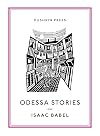
Fiendishly short and sharp stories of Jewish mafioso types in Odessa during the years leading up to the Russian Revolution. Some of them could be excerpts from the Sopranos, and in general the writing is as lively as the most contemporary crime series. The stories don't hang together as such, and the larger than life characters have fleeting appearances. The most striking in Benya Krik, "The King" - "How Things Were Done in Odessa" tells how in a ceremony of scale and pomp hardly seen show more before, he buries the ordinary victim of a botched raid, and at the same occasion then asks the congregation to accompany the perpetrator, a man already deceased as well (by his hand) to his own grave. show less
I have great respect for Pushkin Press, who publish interesting authors in such a beautiful format. The short stories in the beginning of this collection which focus on gangsters and various other characters in Odessa were hit and miss with me, but it got more interesting and more poignant towards the middle, with more direct references to the atrocities of the Red Army, pogroms against the Jews, and Babel’s own semi-autobiographical accounts of life growing up. Babel is sometimes salty show more and is highly idiomatic throughout, some examples of which are these lines: “I don’t want you, Rook, like no one wants to die; I don’t want you like a bride doesn’t want pimples on her head”, and “Beyond the window, stars scattered like soldiers relieving themselves – green stars across a dark blue field.”
As I read, I thought I was getting a glimpse into the reasons Babel was dangerous to the Soviet Union, but it was interesting to find he was targeted instead because of his affair with the wife of NKVD chief Nikolai Yezhov. My favorite story was ‘Karl-Yankel’, in which a communist party member takes his mother-in-law to court for having his newborn son circumcised, and for having calling his son Yankel instead of the name he’s chosen, which is Karl, after Karl Marx. It’s presented as a farce, but quite clearly shows the conflict between the Soviet state and Judaism, and in the trial rabbis show up because the “Jewish faith itself would be on trial.” Other nice stories are ‘The Story of My Dovecote’, ‘First Love’, ‘In the Basement’, and ‘The Awakening’, which were written between 1925 and 1931, a golden period for him, before he was disillusioned while travelling to Ukraine and before Stalin began cracking down on artistic expression. Babel’s short stories didn’t blow me away, but were certainly worth reading. show less
As I read, I thought I was getting a glimpse into the reasons Babel was dangerous to the Soviet Union, but it was interesting to find he was targeted instead because of his affair with the wife of NKVD chief Nikolai Yezhov. My favorite story was ‘Karl-Yankel’, in which a communist party member takes his mother-in-law to court for having his newborn son circumcised, and for having calling his son Yankel instead of the name he’s chosen, which is Karl, after Karl Marx. It’s presented as a farce, but quite clearly shows the conflict between the Soviet state and Judaism, and in the trial rabbis show up because the “Jewish faith itself would be on trial.” Other nice stories are ‘The Story of My Dovecote’, ‘First Love’, ‘In the Basement’, and ‘The Awakening’, which were written between 1925 and 1931, a golden period for him, before he was disillusioned while travelling to Ukraine and before Stalin began cracking down on artistic expression. Babel’s short stories didn’t blow me away, but were certainly worth reading. show less

This collection of short stories about life among Jewish traders, workers and robbers in early-20th century Odessa, leading up to the revolution, almost packs the same punch as Red Cavalry. That's high praise. Yes, it's a bit uneven, but the best stories here are astounding, switching from jovial tales of childhood that never forget the darkness underneath, to brutally violent stories of antisemitism and crime, all with a language that wants to squeeze out evey possibility carbonated with a show more dark sense of humour.
Take "The Story of My Dovecot", for instance, which starts out as a hopeful story about how the narrator has saved for years to buy the pigeons he wants to raise, then suddenly out of nowhere the bright market day careens into bloody surrealism -
My world was tiny, and it was awful. I closed my eyes so as not to see it, and pressed myself tight into the ground that lay beneath me in soothing dumbness. This trampled earth in no way resembled real life, waiting for exams in real life. Somewhere far away Woe rode across it on a great steed, but the noise of the hoofbeats grew weaker and died away, and silence, the bitter silence that sometimes overwhelms children in their sorrow, suddenly deleted the boundary between body and the earth that was moving nowhither. The earth smelled of raw depths, of the tomb, of flowers. I smelled its smell and started crying, unafraid. I was walking along an unknown street set on either side with white boxes, walking in a getup of bloodstained feathers, alone between the pavements swept clean as on Sunday, weeping bitterly, fully and happily as I never wept again in all my life.
- until at the end, we understand what this child is experiencing.
And so with Kuzma I went to the home of the tax-inspector, where my parents, escaping the pogrom, had sought refuge.
The irony only gets bleaker when I look at the foreword of my 1960 edition: "Isaac Babel, 1894-1941(?)". That a writer capable of captuing the wold's messiness like this was not only denied the right to live, but even the right to a proper death, instead was swallowed in silence up by a dictator's prison camps, is beyond criminal. show less
Take "The Story of My Dovecot", for instance, which starts out as a hopeful story about how the narrator has saved for years to buy the pigeons he wants to raise, then suddenly out of nowhere the bright market day careens into bloody surrealism -
My world was tiny, and it was awful. I closed my eyes so as not to see it, and pressed myself tight into the ground that lay beneath me in soothing dumbness. This trampled earth in no way resembled real life, waiting for exams in real life. Somewhere far away Woe rode across it on a great steed, but the noise of the hoofbeats grew weaker and died away, and silence, the bitter silence that sometimes overwhelms children in their sorrow, suddenly deleted the boundary between body and the earth that was moving nowhither. The earth smelled of raw depths, of the tomb, of flowers. I smelled its smell and started crying, unafraid. I was walking along an unknown street set on either side with white boxes, walking in a getup of bloodstained feathers, alone between the pavements swept clean as on Sunday, weeping bitterly, fully and happily as I never wept again in all my life.
- until at the end, we understand what this child is experiencing.
And so with Kuzma I went to the home of the tax-inspector, where my parents, escaping the pogrom, had sought refuge.
The irony only gets bleaker when I look at the foreword of my 1960 edition: "Isaac Babel, 1894-1941(?)". That a writer capable of captuing the wold's messiness like this was not only denied the right to live, but even the right to a proper death, instead was swallowed in silence up by a dictator's prison camps, is beyond criminal. show less
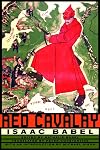
(2014 Boris Dralyuk translation)
A remarkable assembly of short pieces of writing, somewhere between journalism, short-story collection and novel, making up a composite picture of the experience of war in a Cossack Red Army cavalry unit fighting against the Poles in 1920.
This isn't an anti-war book, of course - as far as Babel and his readers were concerned, their country was being attacked from all sides and had every reason to defend itself - but it's a book that makes no attempt to show more conceal the cruelty and disorder that go with the suspension of the normal limits of civil society. Passages that seem to be celebrating the exuberance, skill and bloody-mindedness of the Cossacks are set against descriptions of rapes, brutal torture and casual vandalism, and those in turn with lyrical passages where the narrator caught up in the beauty of something in the towns and villages that they are all busy destroying.
The Catholic and Jewish religion of the locals is particularly involved in this: the narrator feels obliged to mock the superstition and exploitation that goes with it, but clearly still has the relics of a religious (urban Jewish) upbringing and the respect for religious leaders and sites that goes with that: in a church with excrement and holy relics scattered over the floor, we get a loving and detailed description of the wonderful naive wall-paintings in which the saints are clearly all modelled on local characters. There are similar tensions going on when the narrator comes into contact with local Jews. He's clearly simultaneously attracted and disgusted by the Hasidic shtetl-culture.
This must have been a very tricky book to translate, as Babel is constantly switching voices and registers without warning, drawing on everything from high literary language to extremely coarse dialect. Dralyuk seems to have done very well and most of the text reads quite naturally, but this isn't a book where you can ever escape from the awareness that what you are reading is a translation. Dialect is always a problem: I found it disconcerting that his Cossacks were using so many Americanisms, but of course it's almost impossible to write earthy dialect that doesn't have some sort of regional marker to it. There were passages I had some trouble making sense of at first, but that probably comes from Dralyuk's poetic instinct to render the full complexity of Babel's layering of images, leaving the reader with a lot of unpacking to do (one of these is the "milk" passage Dralyuk discusses in his English Pen article).
Very interesting, and definitely a book that increased my motivation to learn Russian (although I suspect that it would be quite challenging for a beginner...). show less
A remarkable assembly of short pieces of writing, somewhere between journalism, short-story collection and novel, making up a composite picture of the experience of war in a Cossack Red Army cavalry unit fighting against the Poles in 1920.
This isn't an anti-war book, of course - as far as Babel and his readers were concerned, their country was being attacked from all sides and had every reason to defend itself - but it's a book that makes no attempt to show more conceal the cruelty and disorder that go with the suspension of the normal limits of civil society. Passages that seem to be celebrating the exuberance, skill and bloody-mindedness of the Cossacks are set against descriptions of rapes, brutal torture and casual vandalism, and those in turn with lyrical passages where the narrator caught up in the beauty of something in the towns and villages that they are all busy destroying.
The Catholic and Jewish religion of the locals is particularly involved in this: the narrator feels obliged to mock the superstition and exploitation that goes with it, but clearly still has the relics of a religious (urban Jewish) upbringing and the respect for religious leaders and sites that goes with that: in a church with excrement and holy relics scattered over the floor, we get a loving and detailed description of the wonderful naive wall-paintings in which the saints are clearly all modelled on local characters. There are similar tensions going on when the narrator comes into contact with local Jews. He's clearly simultaneously attracted and disgusted by the Hasidic shtetl-culture.
This must have been a very tricky book to translate, as Babel is constantly switching voices and registers without warning, drawing on everything from high literary language to extremely coarse dialect. Dralyuk seems to have done very well and most of the text reads quite naturally, but this isn't a book where you can ever escape from the awareness that what you are reading is a translation. Dialect is always a problem: I found it disconcerting that his Cossacks were using so many Americanisms, but of course it's almost impossible to write earthy dialect that doesn't have some sort of regional marker to it. There were passages I had some trouble making sense of at first, but that probably comes from Dralyuk's poetic instinct to render the full complexity of Babel's layering of images, leaving the reader with a lot of unpacking to do (one of these is the "milk" passage Dralyuk discusses in his English Pen article).
Very interesting, and definitely a book that increased my motivation to learn Russian (although I suspect that it would be quite challenging for a beginner...). show less
Lists
Awards


You May Also Like


Associated Authors
Statistics
- Works
- 166
- Also by
- 58
- Members
- 4,392
- Popularity
- #5,710
- Rating
- 3.9
- Reviews
- 89
- ISBNs
- 306
- Languages
- 23
- Favorited
- 26

