
B. H. Liddell Hart (1895–1970)
Author of Strategy
About the Author
Captain B. H. Liddell Hart is the foremost authority on World War I. In The Real War, the author has fused exhaustive research and creative brilliance with brevity and precision. Thus we have in one volume the war transformed into literature -- an understandable, kaleidoscopic masterwork of show more military history. show less
Series
Works by B. H. Liddell Hart
The Other Side of the Hill: Germany's Generals, Their Rise and Fall, with Their Own Account of Military Events, 1939-1945 (1948) 506 copies, 4 reviews
The Sword and the Pen: Selections from the Worlds' Greatest Military Writings (1976) 68 copies, 1 review
The Liddell Hart memoirs 15 copies
Purnell's History of the Second World War [complete set] (1970) — Series Editor — 4 copies, 1 review
The future of infantry 4 copies
Storia militare della seconda guerra mondiale vol.2 — Author — 3 copies
The Current of War 3 copies
The Red Army 2 copies
L'ARTE DELLA GUERRA NEL XX SECOLO 2 copies
The Tanks: The History of the Royal Tank Regiment and its predecessors... 1914-1945 - Volume One 1914-1939 (1959) 2 copies
The Tanks: 1914-1939 1 copy
Megiddo 1 copy
O Outro Lado da Colina. 1 copy
Guerilla Warfare 1 copy
История Первой Мировой войны 1 copy
По другую сторону холма 1 copy
Сципион Африканский 1 copy
Armament and Its Future Use 1 copy
La guerre sans haine, t. 1, les années de victoire. Carnets presentes par Liddell Hart (1952) 1 copy
El espectro de Napoleón 1 copy
Scrapbooks On Fashion 1 copy
Costume Society 1 copy
Paintings And Drawings 1 copy
Associated Works
A Sense of History: The Best Writing from the Pages of American Heritage (1985) — Contributor — 490 copies, 4 reviews
Tagged
Common Knowledge
- Canonical name
- Liddell Hart, B. H.
- Legal name
- Liddell Hart, Sir Basil Henry
- Other names
- Liddell Hart, Captain B. H.
Liddell Hart, Basil - Birthdate
- 1895-10-31
- Date of death
- 1970-01-29
- Gender
- male
- Education
- Corpus Christi College, Cambridge
St Paul's School, London, England, UK - Occupations
- soldier
military historian
military theorist
journalist - Organizations
- The Daily Telegraph [military correspondent]
The Times [London] [military correspondent]
Morning Post [lawn tennis correspondent]
British Army: King's Own Yorkshire Light Infantry [World War I] - Awards and honors
- Knight Bachelor (1966)
- Relationships
- Liddell Hart, Adrian (son)
- Nationality
- UK
- Birthplace
- Paris, Île-de-France, France
- Places of residence
- Marlow, Wycombe District, Buckinghamshire, England, UK
- Place of death
- Marlow, Wycombe District, Buckinghamshire, England, UK
- Burial location
- St Peter and St Paul Churchyard, Medmenham, Buckinghamshire, England, UK
- Associated Place (for map)
- Buckinghamshire, England, UK
Members
Reviews

توصل المؤرخ اليوناني بوليبيوس، قبل أكثر من 2000 عام، إلى أنَّ أفضل طريقة للتغلب على مشاكل المجتمع الحالية هي أن «نسترجع إلى الذهن الكوارث التي حلّت بالآخرين». وها نحن، بعد آلاف السنين، ما زالنا نتجاهل دروس الماضي. أوتو فون بسمارك مثلاً، أحد أبرز رجال الدولة في القرن التاسع show more عشر، الذي وحّد بذكائه الدبلوماسي وحسمه العسكري في غضون بضعة عقود قصيرة العشرات من الإمارات المتناحرة في إمبراطورية ألمانية واحدة، كان نفسه يقول إن خبرته لم تأت بالصدفة ولم تكن مبنية على موهبة طبيعية، بل من خلال دراسة التاريخ. وصرّح أنّ الحمقى وحدهم من يتعلمون فقط من تجاربهم. القادة ذوو الرؤية الحقيقية - وفقًا لبسمارك - يستمدون الإلهام والبصيرة من تجارب الآخرين.
لكن التاريخ أكثر من مجرد مسعى أكاديمي. فهو يساعد على اتخاذ قرارات أفضل ويمنح المعرفة والحكمة التي لا يمكن الحصول عليها من الحياة اليومية. قد يملك من يبلغ من العمر 80 عاماً دروساً حياتية لعقود من الزمن تمكّنه من توجيه أفعاله، لكن لدى القارئ في التاريخ مئات أو آلاف السنين من البيانات للاستفادة منها. من المهم بشكل خاص دراسة التاريخ العسكري. فقد يركز المؤرخون عادةً على التحولات البطيئة والدقيقة في المجتمع الناجمة عن التغيرات الاقتصادية والاجتماعية. ومع ذلك، غالباً ما يكون النزاع المسلح هو محرّك الأحداث. كم كان العالم ليكون مختلفاً لو سارت المعارك الحاسمة في الاتجاه الآخر. ماذا لو غزا الفرس اليونان؟ ماذا لو سُحق نابليون في تولون؟ أو انتصر هتلر على الحلفاء؟ من المهم أثناء التفكير في هذه الأسئلة الحفاظ على رؤية واسعة للصورة. فالانغماس كثيراً في التفاصيل أو في مصدر واحد فقط يعني تشويه فهم الأحداث، فعملية التأريخ لا تخلو من التحيز، سواء تحيز من كتب هذا التاريخ أو الباحث فيه.
يقوم الكتاب على تأملات المؤرخ العسكري ليدل هارت، موضحاً سبب صعوبة فهم أحداث الماضي، وكيف يتم تشويه وتحريف السجلات التاريخية، ولماذا ما يزال بلاء الحروب مرافقاً للبشرية. كتيب صغير لكن هام ومفيد. يدخل في صلب الموضوع مباشرةً، مقدماً عدة أمثلة ومقارنات مع التركيز على فترة الحرب العالمية الأولى. show less
لكن التاريخ أكثر من مجرد مسعى أكاديمي. فهو يساعد على اتخاذ قرارات أفضل ويمنح المعرفة والحكمة التي لا يمكن الحصول عليها من الحياة اليومية. قد يملك من يبلغ من العمر 80 عاماً دروساً حياتية لعقود من الزمن تمكّنه من توجيه أفعاله، لكن لدى القارئ في التاريخ مئات أو آلاف السنين من البيانات للاستفادة منها. من المهم بشكل خاص دراسة التاريخ العسكري. فقد يركز المؤرخون عادةً على التحولات البطيئة والدقيقة في المجتمع الناجمة عن التغيرات الاقتصادية والاجتماعية. ومع ذلك، غالباً ما يكون النزاع المسلح هو محرّك الأحداث. كم كان العالم ليكون مختلفاً لو سارت المعارك الحاسمة في الاتجاه الآخر. ماذا لو غزا الفرس اليونان؟ ماذا لو سُحق نابليون في تولون؟ أو انتصر هتلر على الحلفاء؟ من المهم أثناء التفكير في هذه الأسئلة الحفاظ على رؤية واسعة للصورة. فالانغماس كثيراً في التفاصيل أو في مصدر واحد فقط يعني تشويه فهم الأحداث، فعملية التأريخ لا تخلو من التحيز، سواء تحيز من كتب هذا التاريخ أو الباحث فيه.
يقوم الكتاب على تأملات المؤرخ العسكري ليدل هارت، موضحاً سبب صعوبة فهم أحداث الماضي، وكيف يتم تشويه وتحريف السجلات التاريخية، ولماذا ما يزال بلاء الحروب مرافقاً للبشرية. كتيب صغير لكن هام ومفيد. يدخل في صلب الموضوع مباشرةً، مقدماً عدة أمثلة ومقارنات مع التركيز على فترة الحرب العالمية الأولى. show less

This book proves the old adage that history repeats itself. Almost 100 years after this book was published and world is repeating the same steps and hoping that now results might be different.
Author gives a very thorough overview of Europe's major powers, their armies, latest combat experiences, training and level of technological development (including speed of adoption of new technology into the arsenals and troops). Sounds too modern to be true? Well, with the industrial revolution and show more ability to mass produce everything form helmets to tanks, military affairs from 1930's onward actually did not change that much. What today are drones, AI (although this is such a misappropriation of the term, I cringe when I have to write it down), smart weapons, munitions etc in 1930's was development of airplanes, tanks, machine guns and automated high powered weaponry, improvements in armor alloys and increased range and precision of artillery and development of high mobility equipment - motorized or tracked, not to mention development of submarines, fast strike torpedo vessels and main ships of the line, destroyers and cruisers.
Basically when you look at it nothing is actually changed. It is only that after almost 100 years technology (electronics above all) made weapons more precise, highly automated but equally pricey and precious. Which brings us to army organization, something I will comment below.
Chapters on meaningful role of dreadnoughts when confronted against relatively small submarine force that (according to the author) was highly restricted in movements and operational tempo [but nevertheless achieved very much] in WW1, and even danger of fast strike vessel flotillas armed with torpedoes all echo today's comments on the role of aircraft carriers on the open sea where in situations of high intensity warfare they are more or less just huge targets (just imagine swarms of Bazalts in approach).
Even issues with recruitment are the same as today, although author lived in time when he was able to call the spade a spade. His comments on bringing onboard men of required quality especially in the highly technical and elite regiments like tank and mechanized forces (not to mention air force) strongly resonate today. I think author would be dumbfounded if he read that army is ready to accept people (for political reasons) that would have .... well actually they would be administration only and basically have no role within the army (since they can reject the active deployments on the basis of criteria they were accepted into the army in the first place). But hey, they would be in army (imagine that this was the way you got jobs in any civilian industry because, hey, you feel you should be there?).
Author is patriotically British but (for this time at least) propaganda is not present. While talking about the totalitarian regimes of the day (Germany, Italy, Soviet Union) author talks about military issues and although he sees these regimes as enemies (not just for UK but for [again these cliches but taking into account time when this was written I understand it] democratic institutions) he does not fall low by giving attributes to people on other side that are now trade-mark of all the current justice-writers. I guess at the time there was certain ..... quality when it comes to prolific authors on specialized matters and journalists/correspondents (author was all of this). Imagine Mr. Galeotti writing something about his favorite subject without comments like 'drunkard', 'incapable' or 'gravel voiced but unable to keep his mouth shut' - impossible, right?
What differentiates time when this book was written from modern experts is set of values related to the nation. Back then if one was not patriotic, even while being adherent pacifist, one was .... strange, not only to his compatriots but to foreigners too. Now, one is strange if one stands for his nation because new value is no-nations, only happy people holding their hands across the globe being protected by nations who do have rights to exert their national interests :) Schizophrenic times indeed.
Now part I do not agree with, although author does present it mostly for the UK scenarios but tends to preach it to everyone.
Constant mantra of small professional army.
I understand that author has great aversion towards mass armies fighting in WW1 but small army (couple of divisions at best) is no means of defending the country especially on level of WW1 (or later WW2) intensity.
Reason, for me at least at the very least, are losses. You can have finest infantry or mechanized unit but if you cannot rotate people or have sufficient forces to cover the battlefield or have sufficient force to push through the front-line breakpoints, then you have a fine stiletto, made of magnificent steel, extra pointy and with great penetration abilities but unfortunately your opponent is clad in concrete and armor, presents only small eye slit on helmet as a target and even without weapons he is going to stomp you out.
You can have SOF and airborne troops you spent years training, capable of shooting at distances of 10km, outrunning everyone and able to hold positions for weeks without support, lightly armored assault forces with satellite navigation and missiles but once these troops get stopped by hail of artillery and obliterated by thermobaric-or-napalm type of weapons, they are gone. You need to rebuild. From scratch? Yes if you plan to wage war for say 10 years. You need to have a large army, large body of reserves at least to recover from your losses. Not to mention industry and ability to pump out vehicles, tanks, munition and so on.
Small army = disaster. From big army you can create task forces to handle smaller engagements. But from small army you can only get heavily armed SWAT team that is supposed to engage in prolonged high intensity warfare. Again..... recipe for disaster.
While "big battalions" on their own don't win wars any more (all battalions are vulnerable if not used properly), appropriate equipment usable weapons and technology big battalions will always win wars.
Again, author wants this approach for UK (again, he is preaching it to everyone but concentrates on UK) because he is very much against any land force involvement in any future conflict. He sees UK as navy/air-force provider to coalition forces (sounds familiar? UK of this period is what US became post WW2). They can send advisers and fight as part of smaller contingents in allied troops but author says UK should never engage in direct ground fighting.
So, for UK advice, makes sense. But on a global scale author's visions are more of knights jousting then modern armies engaging in combat, which makes no sense. Since author was a great influence on western military thought I now understand this proclivity of the West towards what might be called assassin-wars, striking down the perceived enemy after months and months of hungering them down and closing them off from the rest of the world (like was case with Iraq). But when this approach is attempted against the force that is not blocked off and is self-sustainable it all falls down. Author's warning about politicians willing to instigate wars, especially long term low level/intensity conflicts proves that author was not ignorant on what would end up as preferred ways of waging wars even in 1937.
Other author's comment is pretty interesting and so contemporary. The eternal fight between offense and defense. Author is very realistic and aware that advances in offensive methods and technology will always hit the wall of adapted defensive methods and technology. This means that one might wield a unique weapon today (like tank in 1918) only to be humbled after some time when countermeasures are applied (like anti tank guns, individual anti tank rifles and grenades that became prevalent in infantry units by end of 1930's). Of course this false feeling of offensive dominance is a safe way to destruction. As author states, in peace-time every army thinks their offensive is something that cannot be broken. And when it comes to actual execution ....... oh, lots of bad things happen at that time. Because when new approaches and technology are applied for the first time en masse against equal adversary nobody knows how events will develop. And usually those that rely more on emotions than reason will pay the price (or their allies).
Very informative book, lots of comments, views and suggestions that are applicable even in our times.
Highly recommended. show less
Author gives a very thorough overview of Europe's major powers, their armies, latest combat experiences, training and level of technological development (including speed of adoption of new technology into the arsenals and troops). Sounds too modern to be true? Well, with the industrial revolution and show more ability to mass produce everything form helmets to tanks, military affairs from 1930's onward actually did not change that much. What today are drones, AI (although this is such a misappropriation of the term, I cringe when I have to write it down), smart weapons, munitions etc in 1930's was development of airplanes, tanks, machine guns and automated high powered weaponry, improvements in armor alloys and increased range and precision of artillery and development of high mobility equipment - motorized or tracked, not to mention development of submarines, fast strike torpedo vessels and main ships of the line, destroyers and cruisers.
Basically when you look at it nothing is actually changed. It is only that after almost 100 years technology (electronics above all) made weapons more precise, highly automated but equally pricey and precious. Which brings us to army organization, something I will comment below.
Chapters on meaningful role of dreadnoughts when confronted against relatively small submarine force that (according to the author) was highly restricted in movements and operational tempo [but nevertheless achieved very much] in WW1, and even danger of fast strike vessel flotillas armed with torpedoes all echo today's comments on the role of aircraft carriers on the open sea where in situations of high intensity warfare they are more or less just huge targets (just imagine swarms of Bazalts in approach).
Even issues with recruitment are the same as today, although author lived in time when he was able to call the spade a spade. His comments on bringing onboard men of required quality especially in the highly technical and elite regiments like tank and mechanized forces (not to mention air force) strongly resonate today. I think author would be dumbfounded if he read that army is ready to accept people (for political reasons) that would have .... well actually they would be administration only and basically have no role within the army (since they can reject the active deployments on the basis of criteria they were accepted into the army in the first place). But hey, they would be in army (imagine that this was the way you got jobs in any civilian industry because, hey, you feel you should be there?).
Author is patriotically British but (for this time at least) propaganda is not present. While talking about the totalitarian regimes of the day (Germany, Italy, Soviet Union) author talks about military issues and although he sees these regimes as enemies (not just for UK but for [again these cliches but taking into account time when this was written I understand it] democratic institutions) he does not fall low by giving attributes to people on other side that are now trade-mark of all the current justice-writers. I guess at the time there was certain ..... quality when it comes to prolific authors on specialized matters and journalists/correspondents (author was all of this). Imagine Mr. Galeotti writing something about his favorite subject without comments like 'drunkard', 'incapable' or 'gravel voiced but unable to keep his mouth shut' - impossible, right?
What differentiates time when this book was written from modern experts is set of values related to the nation. Back then if one was not patriotic, even while being adherent pacifist, one was .... strange, not only to his compatriots but to foreigners too. Now, one is strange if one stands for his nation because new value is no-nations, only happy people holding their hands across the globe being protected by nations who do have rights to exert their national interests :) Schizophrenic times indeed.
Now part I do not agree with, although author does present it mostly for the UK scenarios but tends to preach it to everyone.
Constant mantra of small professional army.
I understand that author has great aversion towards mass armies fighting in WW1 but small army (couple of divisions at best) is no means of defending the country especially on level of WW1 (or later WW2) intensity.
Reason, for me at least at the very least, are losses. You can have finest infantry or mechanized unit but if you cannot rotate people or have sufficient forces to cover the battlefield or have sufficient force to push through the front-line breakpoints, then you have a fine stiletto, made of magnificent steel, extra pointy and with great penetration abilities but unfortunately your opponent is clad in concrete and armor, presents only small eye slit on helmet as a target and even without weapons he is going to stomp you out.
You can have SOF and airborne troops you spent years training, capable of shooting at distances of 10km, outrunning everyone and able to hold positions for weeks without support, lightly armored assault forces with satellite navigation and missiles but once these troops get stopped by hail of artillery and obliterated by thermobaric-or-napalm type of weapons, they are gone. You need to rebuild. From scratch? Yes if you plan to wage war for say 10 years. You need to have a large army, large body of reserves at least to recover from your losses. Not to mention industry and ability to pump out vehicles, tanks, munition and so on.
Small army = disaster. From big army you can create task forces to handle smaller engagements. But from small army you can only get heavily armed SWAT team that is supposed to engage in prolonged high intensity warfare. Again..... recipe for disaster.
While "big battalions" on their own don't win wars any more (all battalions are vulnerable if not used properly), appropriate equipment usable weapons and technology big battalions will always win wars.
Again, author wants this approach for UK (again, he is preaching it to everyone but concentrates on UK) because he is very much against any land force involvement in any future conflict. He sees UK as navy/air-force provider to coalition forces (sounds familiar? UK of this period is what US became post WW2). They can send advisers and fight as part of smaller contingents in allied troops but author says UK should never engage in direct ground fighting.
So, for UK advice, makes sense. But on a global scale author's visions are more of knights jousting then modern armies engaging in combat, which makes no sense. Since author was a great influence on western military thought I now understand this proclivity of the West towards what might be called assassin-wars, striking down the perceived enemy after months and months of hungering them down and closing them off from the rest of the world (like was case with Iraq). But when this approach is attempted against the force that is not blocked off and is self-sustainable it all falls down. Author's warning about politicians willing to instigate wars, especially long term low level/intensity conflicts proves that author was not ignorant on what would end up as preferred ways of waging wars even in 1937.
Other author's comment is pretty interesting and so contemporary. The eternal fight between offense and defense. Author is very realistic and aware that advances in offensive methods and technology will always hit the wall of adapted defensive methods and technology. This means that one might wield a unique weapon today (like tank in 1918) only to be humbled after some time when countermeasures are applied (like anti tank guns, individual anti tank rifles and grenades that became prevalent in infantry units by end of 1930's). Of course this false feeling of offensive dominance is a safe way to destruction. As author states, in peace-time every army thinks their offensive is something that cannot be broken. And when it comes to actual execution ....... oh, lots of bad things happen at that time. Because when new approaches and technology are applied for the first time en masse against equal adversary nobody knows how events will develop. And usually those that rely more on emotions than reason will pay the price (or their allies).
Very informative book, lots of comments, views and suggestions that are applicable even in our times.
Highly recommended. show less

In his [b:War Memoirs|720467|War Memoirs Of David Lloyd George|David Lloyd George|https://s.gr-assets.com/assets/nophoto/book/50x75-a91bf249278a81aabab721ef782c4a74.png|706709], [a:Lloyd George|1278911|David Lloyd George|https://s.gr-assets.com/assets/nophoto/user/m_50x66-82093808bca726cb3249a493fbd3bd0f.png] recalls a conversation with the French General de Castelnau as stalemate set in on the Western Front. “Had (Napoleon) been here”, de Castelnau observed, “he would have thought of show more the something else”. In fact, Napoleon’s conduct at Wagram, Borodino, and Waterloo suggests otherwise, but the belief took hold. As casualties on the Western Front ran into the hundreds of thousands for a single battle while the gains were measured in yards, some observers at the time and most observers since thought that there must be an alternative, we just had to find it. Those who persisted with the attacks in France and Belgium were guilty of callous stupidity; they should have been looking for the “something else”.
This book makes that argument better than any other. Understandably sickened by the Western Front, Liddell Hart developed the strategy of Indirect Approach, namely, avoiding the bulk of the enemy's forces and taking his flank or rear (see his book [b:Strategy|305909|Strategy|B.H. Liddell Hart|https://d.gr-assets.com/books/1347396282s/305909.jpg|3081541]). Offensives such as Loos, the Somme, or Third Ypres, where the bulk of the British army threw itself on the defences of the bulk of the German army, should have been avoided. Instead, Liddell Hart praises Gallipoli, in theory if not in practice, and Lawrence’s campaign in Arabia.
The trouble is, as [a:Richard Holmes|3002506|Richard Holmes|https://d.gr-assets.com/authors/1249593865p2/3002506.jpg] pointed out, that Liddell Hart “could produce no evidence that the destruction of railways in the Hejaz made the teacups rattle in Berlin”. And was the Indirect Approach not what the Schlieffen Plan was all about? It failed, and in doing so it left no room for further Indirect Approaches, only costly but irrelevant sideshows like Salonika. Where there was room for the Indirect Approach, on the Eastern Front, the front line swayed inconclusively this way and that for three years until the Tsarist regime collapsed from within. The Russian army was defeated as much by the uselessness of it's own leaders as by the good generalship of the Germans.
The tragic truth is that the “something else” did not exist militarily, only politically. This was beyond the purview of the generals to deliver, except in Germany where civil authority was more completely subordinated to military authority than elsewhere. To all intents and purposes Hindenburg and Ludendorff ran Germany by the end of the war, the same could not be said for Haig in Britain or even Foch in France. If politicians could not deliver peace the generals must deliver victory and to secure this there was no alternative to defeating the German army in the field. As horrible as the Western Front was, the “something else” on another battlefield is a chimera. show less
This book makes that argument better than any other. Understandably sickened by the Western Front, Liddell Hart developed the strategy of Indirect Approach, namely, avoiding the bulk of the enemy's forces and taking his flank or rear (see his book [b:Strategy|305909|Strategy|B.H. Liddell Hart|https://d.gr-assets.com/books/1347396282s/305909.jpg|3081541]). Offensives such as Loos, the Somme, or Third Ypres, where the bulk of the British army threw itself on the defences of the bulk of the German army, should have been avoided. Instead, Liddell Hart praises Gallipoli, in theory if not in practice, and Lawrence’s campaign in Arabia.
The trouble is, as [a:Richard Holmes|3002506|Richard Holmes|https://d.gr-assets.com/authors/1249593865p2/3002506.jpg] pointed out, that Liddell Hart “could produce no evidence that the destruction of railways in the Hejaz made the teacups rattle in Berlin”. And was the Indirect Approach not what the Schlieffen Plan was all about? It failed, and in doing so it left no room for further Indirect Approaches, only costly but irrelevant sideshows like Salonika. Where there was room for the Indirect Approach, on the Eastern Front, the front line swayed inconclusively this way and that for three years until the Tsarist regime collapsed from within. The Russian army was defeated as much by the uselessness of it's own leaders as by the good generalship of the Germans.
The tragic truth is that the “something else” did not exist militarily, only politically. This was beyond the purview of the generals to deliver, except in Germany where civil authority was more completely subordinated to military authority than elsewhere. To all intents and purposes Hindenburg and Ludendorff ran Germany by the end of the war, the same could not be said for Haig in Britain or even Foch in France. If politicians could not deliver peace the generals must deliver victory and to secure this there was no alternative to defeating the German army in the field. As horrible as the Western Front was, the “something else” on another battlefield is a chimera. show less
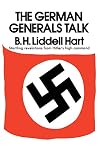
A very interesting account, but one that the German generals exploited for all it was worth. The appealed to Hart's ego and he got their version of events out for them. Of course, that version was that they were innocent dupes of the Nazi regime and knew nothing of atrocities towards civilians. Subsequent historiography has proven that they knew more than the claimed and played a larger role in waging aggressive war against civilians than they claimed in their talks with Hart.
Lists
Awards

You May Also Like


Associated Authors
Statistics
- Works
- 109
- Also by
- 12
- Members
- 4,988
- Popularity
- #5,022
- Rating
- 3.8
- Reviews
- 50
- ISBNs
- 208
- Languages
- 16
- Favorited
- 7

