
Harriet A. Jacobs (1813–1897)
Author of Incidents in the Life of a Slave Girl
About the Author
Born into slavery in North Carolina, Jacobs's early life was one of abuse and hardship. At the age of 21, she was sent to work on a plantation as penalty for having rejected the sexual advances of her white owner, whereupon she determined to free herself and her children at whatever cost. In 1842 show more Jacobs escaped to the North and was placed in the home of the popular New York writer, N. P. Willis. Several years later she moved to Rochester, New York, where she became active in a group of antislavery feminists. It was at their urging that she first came to think of writing her autobiography, since slave narratives were found to be an effective means of turning northern sentiment against the cruelties of slavery. Jacobs worked on her book during the next several years, finally finishing it in 1858, but no publisher was willing to publish it. Only after Lydia Maria Child, a leading white abolitionist, agreed to write a preface to Jacobs's autobiography was the book able to find its way into print in 1861. Coming as it did, however, so close to the beginning of the Civil War, Incidents in the Life of a Slave Girl (published under the pseudonym "Linda Brent") did not win the enormous popularity that other slave narratives had previously enjoyed, such as Frederick Douglass's Narrative (1845). Nor was its popularity increased by its frank depiction of the sexual exploitation of female slaves by their masters. However, white women reader were especially moved by the account of a woman who had fought so heroically to free herself and her children from slavery, even at the cost of her "virtue," and were able to identify with her through the perspective of their own situations as wives and mothers. During and after the Civil War, Jacobs traveled and spoke on behalf of the rights of African Americans, her effectiveness enhanced by the recognition that she had earned as an author. (Bowker Author Biography) show less
Works by Harriet A. Jacobs
Narrative of the Life of Frederick Douglass, an American Slave {and} Incidents in the Life of a Slave Girl (1845) 371 copies, 5 reviews
Incidents in the Life of a Slave Girl, Written by Herself, Enlarged Edition, Now with "A True Tale of Slavery" (1999) 196 copies, 1 review
Associated Works
Written by Herself, Volume I: Autobiographies of American Women (1992) — Contributor — 453 copies, 6 reviews
The Heath Anthology of American Literature, Volume 1 (1990) — Contributor, some editions — 252 copies, 1 review
The Civil War: The Second Year Told By Those Who Lived It (2012) — Contributor — 194 copies, 1 review
Daughters of Africa: An International Anthology of Words and Writings by Women of African Descent from the Ancient Egyptian to the Present (1992) — Contributor — 186 copies
The Civil War: The Third Year Told by Those Who Lived It (2013) — Contributor — 169 copies, 1 review
American Antislavery Writings: Colonial Beginnings to Emancipation (2012) — Contributor — 147 copies
Black on White: Black Writers on What It Means to Be White (1998) — Contributor — 129 copies, 2 reviews
Reconstruction: Voices from America's First Great Struggle for Racial Equality (2018) — Contributor — 125 copies, 1 review
Growing Up in Slavery: Stories of Young Slaves as Told by Themselves (2005) — Contributor — 104 copies, 1 review
The Portable Nineteenth-Century African American Women Writers (2017) — Contributor — 77 copies, 1 review
The Heath Anthology of American Literature, Concise Edition (2003) — Contributor — 73 copies, 1 review
Twelve Years a Slave / Life of Frederick Douglass / Uncle Tom's Cabin / Life of Josiah Henson / Incidents in the Life of a Slave Girl / Up From Slavery (2014) — Contributor — 69 copies
I Was Born a Slave: An Anthology of Classic Slave Narratives: Volume Two, 1849-1866 (1999) — Contributor — 36 copies
Before Harlem: An Anthology of African American Literature from the Long Nineteenth Century (2016) — Contributor — 12 copies
African American Literature: A Concise Anthology from Frederick Douglass to Toni Morrison (2009) — Contributor — 1 copy
Tagged
Common Knowledge
- Canonical name
- Jacobs, Harriet A.
- Legal name
- Jacobs, Harriet Ann
- Other names
- Brent, Linda (pseudonym)
- Birthdate
- 1813-02-11
- Date of death
- 1897-03-17
- Gender
- female
- Occupations
- abolitionist
writer - Cause of death
- illness
- Nationality
- USA
- Birthplace
- Edenton, North Carolina, USA
- Places of residence
- Cambridge, Massachusetts, USA
- Place of death
- Washington D.C., USA
- Burial location
- Mount Auburn Cemetery, Cambridge, Middlesex County, Massachusetts, USA
- Associated Place (for map)
- USA
Members
Reviews

Hakim Adi's selection of writings about Britain (mainly England) by Black people of the late 18th to the early 20th century is carefully chosen to establish their presence in all strata of society at a date earlier than certain commentators would wish it known. There's a thread showing the development of abolitionism into emancipation into supremacism to justify the continued exploitation of Black Labour, and Adi's selections often strongly resonate with current issues, such as the Windrush show more scandal and the illegal Tory Rwanda deportation policy.
There's also many fascinating glimpses into Georgian and Victorian society and, while varying degrees of racism are noted, many of the impressions of visitors to the island are positive about their reception and of the culture in which they find themselves.
A nuanced and balanced selection of historical testimonies which I thoroughly enjoyed reading, not least the short section on John Ocansey's day trip from Liverpool to my home town of Southport 🏖️ show less
There's also many fascinating glimpses into Georgian and Victorian society and, while varying degrees of racism are noted, many of the impressions of visitors to the island are positive about their reception and of the culture in which they find themselves.
A nuanced and balanced selection of historical testimonies which I thoroughly enjoyed reading, not least the short section on John Ocansey's day trip from Liverpool to my home town of Southport 🏖️ show less

Harriet Jacobs' memoir was the first to describe life as a slave from a female perspective. Other slave narratives had touched upon this, but there had never been a first-hand account. Jacobs' bravery in committing her story to paper was a significant bolstering to the abolitionist movement and won an even broader sympathy from readers.
Hers is a less straightforward telling than that of Frederick Douglass, just as personal but interspersed with essay-like asides that describe more generally show more what the slavery experience entailed for all those she knew. She highlights how physical attractiveness was a boon for white folks but a terrible curse if you were a black slave. It drew undesired attention from her master who was more than thirty years older, the low point of her experience. Some courageous and creative acts of bravery follow this, a path of defiance that few in her shoes would even have thought of. This was the degree of inventiveness required to escape the steel trap that southern laws and their enforcement sought to make all-ecompassing. I found one of the concluding points especially telling, when she contrasts how much worse off a slave is than the poorest of free folk. There's no question she was a very intelligent woman who could have gone far in another life.
Incredibly, between the death of Jacobs in the 1890s and up to the early 1980s, academic opinion was turned against her and dismissed this narrative as a work of fiction by her editor, a white woman. Only the diligent research of Jean Yellin was able to clear this miasma of skepticism in 1987 and restore the recognition that Harriet's true story actually deserves. show less
Hers is a less straightforward telling than that of Frederick Douglass, just as personal but interspersed with essay-like asides that describe more generally show more what the slavery experience entailed for all those she knew. She highlights how physical attractiveness was a boon for white folks but a terrible curse if you were a black slave. It drew undesired attention from her master who was more than thirty years older, the low point of her experience. Some courageous and creative acts of bravery follow this, a path of defiance that few in her shoes would even have thought of. This was the degree of inventiveness required to escape the steel trap that southern laws and their enforcement sought to make all-ecompassing. I found one of the concluding points especially telling, when she contrasts how much worse off a slave is than the poorest of free folk. There's no question she was a very intelligent woman who could have gone far in another life.
Incredibly, between the death of Jacobs in the 1890s and up to the early 1980s, academic opinion was turned against her and dismissed this narrative as a work of fiction by her editor, a white woman. Only the diligent research of Jean Yellin was able to clear this miasma of skepticism in 1987 and restore the recognition that Harriet's true story actually deserves. show less
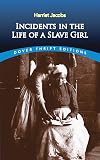
Unexpectedly, most of this book is about a woman choosing to live in a very tight prison cell for years, in order eventually to escape slavery. The irony is thick, and powerfully telling. Who would go through such an ordeal, if the terror of what they had escaped weren’t even more unbearable?
Though it must have been suspenseful for her to live through, the story of her own confinement—long, suffocating years hidden away—doesn’t carry the suspense of a thriller, since you know from show more the outset that she survives. But it still has a quiet tension. The strain of the ordeal isn’t in the specific details, which are actually pretty blurry. It’s in the waiting and isolation, stretched out beyond imagination. When Jacobs finally reaches freedom, the sense of relief isn’t so much about plot resolution as it is about the loosening of a weight that’s been pressing on every moment. It’s also a validation of her truly incredible endurance.
In some sense, the book is too tied to Jacobs’ own singular story—an enslavement free of the physical tortures that others around her had to bear; an escape that wasn’t overly challenging, at least in its initial steps; a family of enslavers who won’t release her from bondage even when they truly can’t afford not to; children whose lives teeter right before her eyes on the edge between enslavement and freedom. Jacobs does often pause to point out how her experiences mirror those of others under slavery, and those moments are usually powerful. But still this is certainly her story, far unlike any other.
It’s that thread of motherhood that gives the book most of its emotional weight. As I said, you know all along that Jacobs survives and gains her freedom. But what happens to her children isn’t so clear, and you’re always aware of her deep dread at the thought of them falling into enslavement. Every decision she makes seems to be weighed against their survival and safety. That anxiety doesn’t fade even in the moments of triumph, and it keeps the story grounded at a human level rather than in any abstract idea of freedom. show less
Though it must have been suspenseful for her to live through, the story of her own confinement—long, suffocating years hidden away—doesn’t carry the suspense of a thriller, since you know from show more the outset that she survives. But it still has a quiet tension. The strain of the ordeal isn’t in the specific details, which are actually pretty blurry. It’s in the waiting and isolation, stretched out beyond imagination. When Jacobs finally reaches freedom, the sense of relief isn’t so much about plot resolution as it is about the loosening of a weight that’s been pressing on every moment. It’s also a validation of her truly incredible endurance.
In some sense, the book is too tied to Jacobs’ own singular story—an enslavement free of the physical tortures that others around her had to bear; an escape that wasn’t overly challenging, at least in its initial steps; a family of enslavers who won’t release her from bondage even when they truly can’t afford not to; children whose lives teeter right before her eyes on the edge between enslavement and freedom. Jacobs does often pause to point out how her experiences mirror those of others under slavery, and those moments are usually powerful. But still this is certainly her story, far unlike any other.
It’s that thread of motherhood that gives the book most of its emotional weight. As I said, you know all along that Jacobs survives and gains her freedom. But what happens to her children isn’t so clear, and you’re always aware of her deep dread at the thought of them falling into enslavement. Every decision she makes seems to be weighed against their survival and safety. That anxiety doesn’t fade even in the moments of triumph, and it keeps the story grounded at a human level rather than in any abstract idea of freedom. show less
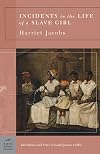
I first read Harriet Jacobs' charged narrative as part of an undergraduate course on African American literature. Reading Jacobs' account alongside that of Frederick Douglas was a wonderful experience, and happened to produce a strong bias on my part; after discussing the publication (and editing) history of Douglas' works I came to appreciate Jacobs' novel even more. Her account is unique at the time of its publication because it tells the story of a female slave from her own point of view show more - with no author or editor in the way. Jacobs, educated in her own right and therefore completely capable of producing such an eloquent text, is an extremely effective rhetor. She clearly identifies her audience - white Northern women who may be sympathetic to the abolitionist movements - and uses rhetorical techniques to produce the maximum impact. Jacobs' narrative focuses on many prominent issues, most notably the desire of the slave to remain morally pure and righteous (in a Christian sense) despite the sinful and heathenish demands of their masters, and the heartbreaking plight of the slave mother who must face the uncertainty and sorrow that comes with every auction and sale.
I was very pleased to have the chance to introduce Jacobs' story to my AP English student this semester, and was equally pleased with the charged responses that the text inspired. Jacobs' story - and skillful writing - is always sure to make an impact. show less
I was very pleased to have the chance to introduce Jacobs' story to my AP English student this semester, and was equally pleased with the charged responses that the text inspired. Jacobs' story - and skillful writing - is always sure to make an impact. show less
Lists
Awards


You May Also Like


Associated Authors
Statistics
- Works
- 10
- Also by
- 19
- Members
- 7,091
- Popularity
- #3,462
- Rating
- 4.0
- Reviews
- 105
- ISBNs
- 262
- Languages
- 8
- Favorited
- 3