
Harryette Mullen
Author of Sleeping with the Dictionary
About the Author
Harryette Mullen teaches in the English department and African American Studies program at the University of California, Los Angeles.
Works by Harryette Mullen
The Cracks Between What We Are and What We Are Supposed to Be: Essays and Interviews (Modern & Contemporary Poetics) (2012) 10 copies
Roots Worker: The Art of Alison Saar 2 copies
Oreo 1 copy
Urban Tumbleweed 1 copy
Associated Works
The Norton Anthology of African American Literature {2nd edition} (2003) — Contributor, some editions — 282 copies, 2 reviews
African American Poetry: 250 Years of Struggle and Song (2020) — Contributor — 237 copies, 4 reviews
In Search of Color Everywhere: A Collection of African-American Poetry (1994) — Contributor — 108 copies
The Best American Poetry 2014 (The Best American Poetry series) (2014) — Contributor — 89 copies, 1 review
The Poem Is You: 60 Contemporary American Poems and How to Read Them (2016) — Contributor — 78 copies
This Is the Honey: An Anthology of Contemporary Black Poets (2024) — Contributor — 69 copies, 1 review
Buzz Words: Poems About Insects (Everyman's Library Pocket Poets Series) (2021) — Contributor — 56 copies
Angles of Ascent: A Norton Anthology of Contemporary African American Poetry (2013) — Contributor — 48 copies
American Women Poets in the 21st Century: Where Lyric Meets Language (2002) — Contributor — 40 copies
Gathering Ground: A Reader Celebrating Cave Canem's First Decade (2006) — Contributor — 30 copies, 1 review
So Much Things to Say: 100 Poets from the First Ten Years of the Calabash International Literary Festival (2010) — Contributor — 26 copies, 1 review
Tagged
Common Knowledge
- Canonical name
- Mullen, Harryette
- Legal name
- Mullen, Harryette Romell
- Birthdate
- 1953-07-01
- Gender
- female
- Occupations
- dichter
professor of English - Nationality
- USA
- Birthplace
- Florence, Alabama, USA
- Map Location
- USA
Members
Reviews
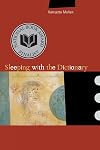
Language is a tricky thing, any translator will tell you. You think you know it, and then you miss. A mis-heard word, a mis-read phrase. Expectations aroused and thwarted. The work of the poet. This book explores with delight, despair, and demanding the slipperiness of the English language in the American idiom. An abcedarium of intentionally misdirected language, it is playful and political. She employs a range of techniques, from the occasional (and recognizable) N+7 to some far subtler show more slidings around in language. The uncannily familiar cadences lull, then surprise you. It's the kind of book that nearly demands dissection, interpretation, further investigation. Begs for close, critical readings.
What I loved most about the work is where it was most overtly political, engaging with feminist, gender, and racial identity politics, class politics, art politics (the "aggressively ironic" art critic!). It leaves no stone unturned.
[From: http://alluringlyshort.com/2013/04/14/sleeping-with-the-dictionary-by-harryette-.... show less
What I loved most about the work is where it was most overtly political, engaging with feminist, gender, and racial identity politics, class politics, art politics (the "aggressively ironic" art critic!). It leaves no stone unturned.
[From: http://alluringlyshort.com/2013/04/14/sleeping-with-the-dictionary-by-harryette-.... show less
If there were a poetic equivalent to the "Talent Deserving Wider Recognition" category on Downbeat's annual Jazz Poll, Harryette Mullen would be found there. While her first works were more obviously, albeit loosely, autobiographical, and inspired by the Black Arts movement, her later collections (Trimmings, Muse and Drudge, and SPermKT) show the influence of Gertrude Stein, L=A=N=G=U=A=G=E poetry, and word association games. The older pieces—recently collected in Blues Baby: Early Poems show more (Bucknell University Press, 2002)—do little to prepare the reader for the fractured slogans and linguistic experimentation evident in the later, richer books.
Sleeping with the Dictionary continues Mullen's serious wordplay. Using language games like S+7 (replacing words from familiar texts with words found seven entries away from them in the dictionary), "Tom Swifties," and "The Dozens," the poems, prose poems, and vignettes in Mullen's Dictionary shake up and reimagine the language. She rings changes on legalese, safety instructions, and fables. Shakespeare's sonnet 130 gets translated for tastes both colloquial ("My honeybunch's peepers are nothing like neon") and corporate ("My Mickey Mouse, when Walt waddles, trips on garbanzos"). She realigns phrases from popular culture and advertising, transforming the familiar so that language can regain its freshness, making the overly familiar strange and illuminating. Her concerns about the place of women in society and race have not disappeared—"This system needs your moral fiber like a bowl of X brand flakes," she writes in "Resistance is Fertile"—only now they are conveyed by what seem, at first, to be more indirect methods.
Many of the poems in Sleeping with the Dictionary also have an erotic edge. Mullen, who once defined poetry as "Words playing with each other," declares in the title poem:
Retiring to the canopy of the bedroom, turning on the beside light, taking the big dictionary to bed, clutching the unabridged bulk, heavy with the weight of all the meanings between these covers, smoothing the thin sheets, thick with accented syllables—all are exercises in the conscious regimen of dreamers, who toss words on their tongues while turning illuminated pages. To go through all these motions and procedures, groping in the dark for an alluring word, is the poet's nocturnal mission. Aroused by myriad possibilities, we try out the most perverse positions in the practice of our nightly act, the penetration of the denotative body of the work.
Not all of the entries in this Dictionary work as effectively. At times the words and phrases Mullen strings together, while humorous, go on too long after their initial point is made ("Baa baa, Baba, Bambam, Bebe, Berber, Bibi, blah-blah, Bobo, bonbon, // booboo, Bora Bora, Boutros Boutros, bye-bye" indeed!) or their meaning is too hermetic to be easily deciphered. Overall, however, Sleeping with the Dictionary contains more than enough light, heat, and sheer pleasure to bring Harryette Mullen the attention she so richly deserves. show less
Sleeping with the Dictionary continues Mullen's serious wordplay. Using language games like S+7 (replacing words from familiar texts with words found seven entries away from them in the dictionary), "Tom Swifties," and "The Dozens," the poems, prose poems, and vignettes in Mullen's Dictionary shake up and reimagine the language. She rings changes on legalese, safety instructions, and fables. Shakespeare's sonnet 130 gets translated for tastes both colloquial ("My honeybunch's peepers are nothing like neon") and corporate ("My Mickey Mouse, when Walt waddles, trips on garbanzos"). She realigns phrases from popular culture and advertising, transforming the familiar so that language can regain its freshness, making the overly familiar strange and illuminating. Her concerns about the place of women in society and race have not disappeared—"This system needs your moral fiber like a bowl of X brand flakes," she writes in "Resistance is Fertile"—only now they are conveyed by what seem, at first, to be more indirect methods.
Many of the poems in Sleeping with the Dictionary also have an erotic edge. Mullen, who once defined poetry as "Words playing with each other," declares in the title poem:
Retiring to the canopy of the bedroom, turning on the beside light, taking the big dictionary to bed, clutching the unabridged bulk, heavy with the weight of all the meanings between these covers, smoothing the thin sheets, thick with accented syllables—all are exercises in the conscious regimen of dreamers, who toss words on their tongues while turning illuminated pages. To go through all these motions and procedures, groping in the dark for an alluring word, is the poet's nocturnal mission. Aroused by myriad possibilities, we try out the most perverse positions in the practice of our nightly act, the penetration of the denotative body of the work.
Not all of the entries in this Dictionary work as effectively. At times the words and phrases Mullen strings together, while humorous, go on too long after their initial point is made ("Baa baa, Baba, Bambam, Bebe, Berber, Bibi, blah-blah, Bobo, bonbon, // booboo, Bora Bora, Boutros Boutros, bye-bye" indeed!) or their meaning is too hermetic to be easily deciphered. Overall, however, Sleeping with the Dictionary contains more than enough light, heat, and sheer pleasure to bring Harryette Mullen the attention she so richly deserves. show less
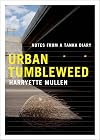
This was a good choice for my read-a-poem-every-morning-and-night routine, because Harryette Mullen wrote Urban Tumbleweed in a similar fashion, except I believe she did a poem every day which took a year and I read 2 pages every day which took about a month. But this was meditative in the sense of you're supposed to let thoughts come to you without judgement (or so I've heard, I've never meditated). So in that sense, Mullen is truly meditating on the things she depicts every day... from show more nature to pop culture, true crime to daily life, not judging anything as 'bad' or 'good', but just depicting it as she sees it. This is a worldview that I think I will try to adopt for a change.
There are a lot of nature poems in this collection, which made it a fitting replacement now that I've finished my big Mary Oliver book, but there's also a lot about Los Angeles, a city that I don't know much about. It's an effective portrait of LA culture, and some of the more dystopian parts about celebrity culture or technology reminded me of books like "Something New Under The Sun" by Alexandra Kleeman. It's not that Mullen exaggerates things in this book, but when you put a microscope on something like "Octomom" or Venice Beach, the grotesque is put front-and-center. But maybe this is my bias creeping in, and she's merely depicting Californian culture as part of its environment, something that the title "Urban Tumbleweed" encapsulates. show less
There are a lot of nature poems in this collection, which made it a fitting replacement now that I've finished my big Mary Oliver book, but there's also a lot about Los Angeles, a city that I don't know much about. It's an effective portrait of LA culture, and some of the more dystopian parts about celebrity culture or technology reminded me of books like "Something New Under The Sun" by Alexandra Kleeman. It's not that Mullen exaggerates things in this book, but when you put a microscope on something like "Octomom" or Venice Beach, the grotesque is put front-and-center. But maybe this is my bias creeping in, and she's merely depicting Californian culture as part of its environment, something that the title "Urban Tumbleweed" encapsulates. show less
I needed to update my poets and Harryette Mullen was a good pick to start. Her love of words was evident. Which letters didn't have a poem associated with them? I thought that interesting and wondered if she had planned it that way. Very very clever poet. I will read more of her work, happily.
Awards


You May Also Like


Associated Authors
Statistics
- Works
- 15
- Also by
- 27
- Members
- 659
- Popularity
- #38,282
- Rating
- 3.9
- Reviews
- 7
- ISBNs
- 15
- Favorited
- 2