
Irving Howe (1920–1993)
Author of World of Our Fathers
About the Author
Irving Howe was born in the Bronx, New York on June 11, 1920. He became a socialist at the age of 14. He graduated from City College in 1940. During World War II, he served in the Army. After the war, he began writing book reviews and essays for several magazines including Commentary, The Nation, show more and Partisan Review. For four years, he earned a living writing book reviews for Time magazine. He taught English at several colleges including Brandeis University, Stanford University, Hunter College, and City University, which he retired from in 1986. In 1954, he and a group of close friends founded the radical journal Dissent. He was the editor for nearly four decades. Also in the 1950's, he met a Yiddish poet named Eliezer Greenberg and the two began a long project to translate Yiddish prose and poetry into English, eventually publishing six collections of stories, essays, and poems. He wrote several books including Decline of the New, Politics and the Novel, and an autobiography entitled A Margin of Hope. World of Our Fathers won the National Book Award in 1976. He wrote critical studies of William Faulkner and Sherwood Anderson and a biography of Leon Trotsky. He died of cardiovascular disease on May 5, 1993 at the age of 72. (Bowker Author Biography) show less
Works by Irving Howe
How We Lived: A Documentary History of Immigrant Jews in America, 1880-1930 (1979) 225 copies, 2 reviews
We Lived There Too: In Their Own Words and Pictures Pioneer Jews and the Westward Movement of America 1630-1930 (1984) 153 copies
Orwell's Nineteen Eighty-Four: Text, Sources, Criticism (Harbrace Sourcebooks) (1982) — Editor — 112 copies
Classics of Modern Fiction: Twelve Short Novels — Editor — 5 copies
American Men of Letters in Five Volumes Sherwood Anderson, Theodore Dreiser, Henry James, Herman Melville, Walt Whitman (1951) 4 copies
Introduction to the Yiddish language 2 copies
Dissent, Winter 1972: Special Issue: The World of the Blue Collar Worker — Editor — 1 copy
Jude the Obscure 1 copy
Leon Trotsky 1 copy
Introduction to "The Castle" 1 copy
The Victorian Age 1 copy
Classics of Modern Fiction — Editor — 1 copy
Student activism 1 copy
Associated Works
The Sound and the Fury, A Norton Critical Edition (1929) — Contributor, some editions — 2,053 copies, 22 reviews
The Other America: Poverty in the United States (1962) — Introduction, some editions — 826 copies, 8 reviews
The Blithedale Romance [Norton Critical Edition, 1st ed.] (1978) — Contributor — 193 copies, 2 reviews
The Blithedale Romance [Norton Critical Edition, 2nd ed.] (2010) — Contributor — 62 copies, 2 reviews
Alger Hiss, Whittaker Chambers, and the Schism in the American Soul (2002) — Contributor — 25 copies, 1 review
Public Intellectuals: An Endangered Species? (Rights & Responsibilities) (2006) — Contributor — 10 copies
Tagged
Common Knowledge
- Canonical name
- Howe, Irving
- Legal name
- Horenstein, Irving (birth name)
- Birthdate
- 1920-06-11
- Date of death
- 1993-05-05
- Gender
- male
- Education
- City College of New York (BA|1940)
- Occupations
- public intellectual
teacher - Organizations
- Partisan Review
Dissent
Democratic Socialists of America
U.S. Army
Brandeis University
City University of New York (Hunter College) - Awards and honors
- American Academy of Arts and Letters Academy Award (Literature ∙ 1960)
American Academy of Arts and Letters (1979) - Nationality
- USA
- Birthplace
- The Bronx, New York, New York, USA
- Place of death
- Mount Sinai Hospital, Manhattan, New York, USA
- Map Location
- New York, USA
Members
Reviews
World of Our Fathers: The Journey of the East European Jews to America and the Life They Found and Made by Irving Howe
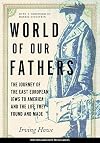
An absolute doorstopper of a history, World of our Fathers is both wide-ranging and oddly narrow. Howe wrote this book about the Yiddish culture of New York's East Side from 1880 to 1920. The world is literally that of his parents, who were Jewish immigrants themselves, in my case it's the world of my great grandparents.
The harsh pogroms of Czar Alexander III provided an impetus for millions of Jews to leave the Pale of Settlement. Immigrants endured an often horrific voyage in steerage show more class steamships, were hurriedly processed at Ellis Island, and almost invariably wound up working in a tailor's shop on the East Side. The crowded tenements and furious sweatshop pace were a far cry from the sedate and ordered world of the shtetl, but the Jews thrived, creating a Yiddish speaking society with newspapers, union organizers, theater, and literature.
The World of Our Fathers looks like a broad social history, but it gets narrow and deep with dives into union organizing, journalism, and literary criticism. These three areas are where Howe spent his career (he was a lifelong organizer with the DSA before it was cool, as well as the founding editor of Dissent), and these intensely detailed chapters make a somewhat ponderous book even more unwieldy.
And finally, there is an inevitable melancholy about the project. In Europe, a Jew had no choice to be a Jew. There was literally nothing between religious observation and atheist socialist agitator. In America, a secular land, as individuals and collectively, Jews had to make a choice as to how much of their culture they were going to preserve. Harsh quotas on immigration starting in 1921 cut the East Side off from the old world, a distance made infinite by the catastrophic losses of the Holocaust. The neighborhoods changed, as children left for the suburbs and new waves of immigrants came in. In the contest between Yiddish and English, assimilation and identity, America won almost completely. Thought I was astounded to learn that Yiddish newspaper Forward still exists, with a print edition running through January 2019!.
40 years on, the Yiddish world is even more distant. The debate has never really ended, with American Jewish identity contested between the poles of Hasidic insularity, AIPAC's ride-or-die Zionism, and the street level radicalism of Never Again Action. This book is a glimpse at a common origin, and the garden from whence modern American Judaism came. show less
The harsh pogroms of Czar Alexander III provided an impetus for millions of Jews to leave the Pale of Settlement. Immigrants endured an often horrific voyage in steerage show more class steamships, were hurriedly processed at Ellis Island, and almost invariably wound up working in a tailor's shop on the East Side. The crowded tenements and furious sweatshop pace were a far cry from the sedate and ordered world of the shtetl, but the Jews thrived, creating a Yiddish speaking society with newspapers, union organizers, theater, and literature.
The World of Our Fathers looks like a broad social history, but it gets narrow and deep with dives into union organizing, journalism, and literary criticism. These three areas are where Howe spent his career (he was a lifelong organizer with the DSA before it was cool, as well as the founding editor of Dissent), and these intensely detailed chapters make a somewhat ponderous book even more unwieldy.
And finally, there is an inevitable melancholy about the project. In Europe, a Jew had no choice to be a Jew. There was literally nothing between religious observation and atheist socialist agitator. In America, a secular land, as individuals and collectively, Jews had to make a choice as to how much of their culture they were going to preserve. Harsh quotas on immigration starting in 1921 cut the East Side off from the old world, a distance made infinite by the catastrophic losses of the Holocaust. The neighborhoods changed, as children left for the suburbs and new waves of immigrants came in. In the contest between Yiddish and English, assimilation and identity, America won almost completely. Thought I was astounded to learn that Yiddish newspaper Forward still exists, with a print edition running through January 2019!.
40 years on, the Yiddish world is even more distant. The debate has never really ended, with American Jewish identity contested between the poles of Hasidic insularity, AIPAC's ride-or-die Zionism, and the street level radicalism of Never Again Action. This book is a glimpse at a common origin, and the garden from whence modern American Judaism came. show less

It took me an awfully long time to read this, not because I didn't like it or that it wasn't interesting, but because it was so dense. So I had to read it little by little, and not in bed at night. Dense as it was, it was well worth the time it took to read. My parents were immigrants to the US, but they came after WWII, were not Yiddish-speakers, and we never lived in the lower East Side, only in Brooklyn, and then only for a short while before we moved to California. So Howe wasn't show more describing my family history, and yet somehow he was describing my history. And he described it in every detail, everything related to religion, culture, language, work, politics, art, you name it, he deals with it. This is an excellent history of American Jewish culture. show less

This anthology was pure reading pleasure. To anyone who, like me, has heard of Sholom Aleichem, and is probably familiar with his character Tevye the Dairyman from the successful 'Fiddler on the Roof' musical play/film - an adaptation of some of the 'Tevye's Daughters' stories, but who has not previously read his work; if you enjoyed that character - and want a bit more - then as far as I can tell you're in for a treat with much of what he wrote. 'The Best of' includes twenty-two stories show more from his work - many of which are newly translated here with previously omitted material, as well as three appearing in English for the first time.
These hugely enjoyable stories while on the one hand entertaining, are on the other also a moving illumination of a culture now vanished of course, that of the shtetl - the small Jewish semi-rural communities of eastern Europe that were scattered like salt and pepper throughout the Russian Empire's 'Pale of Settlement' and the fringes of the Austro-Hungarian Empire. That small planet of a Yiddish speaking people, the 'old country', their villages and inns, their prayer-houses and bath-houses, the chicken yards, tailors' workshops and market places where they worked, as we know had pretty much all gone by the mid-20th century - ending predominantly in either mass emigration or mass extermination. Reading these stories will momentarily recreate that lost world.
As the editors suggest in their epistolary introduction (which I found extremely worthwhile reading having finished the stories first) - If you follow the line of the plot, [referring to the Tevye stories] it traces nothing less than the breakup of an entire culture. ... Tevye, who is actually defenceless against the barrage of challenges and attacks that lay him low, should have been a tragic victim. Instead, balancing his losses on the sharp edge of his tongue, he maintains the precarious posture of a comic hero."
Sholom Aleichem - the pen name of Solomon Nahumovitch Rabinovitch (1859-1916)- was a master humourist. A master of character, of setting, of timing, of leaving you wanting more - everything you would want from a great teller of tales. This collection - clearly a labour of love for the academic editors - is not just a selection of the Tevye stories - not that I'd be complaining - but effectively is a retrospective representation of his different story themes and many memorable characters that he created. There's Shimon-Eli a haunted tailor, Mottel the cantor's son, Benjamin Lastetchke ("the richest man in Kasrilevke. There is no end to his greatness!") and the Krushniker delegation to name a few. The fictional shtetl of Kasrilveke itself is perhaps his greatest creation of all. He takes you there with just a few strokes of his pen. The honest hard-working mensch, the idle beggar, the gossip, the unfortunate entrepreneur, the fool, the con-artist, the sage, the spirit of beloved grandparents long gone - they're all here.
But don't read Sholom Aleichem if a little chauvinism here and there offends. Tevye the milkman has a wonderfully mischievous line in matrimonial put-downs:
'"What do you say?" I ask my wife. "What do you think of his proposition?"
"What do you want me to say?" she asks. "I know that Mencachem-Mendel isn't a nobody who would want to swindle you. He doesn't come from a family of nobodies. He has a very respectable father, and as for his grandfather, he was a real jewel. All of his life, even after he became blind, he studied the Torah. And Grandmother Tzeitl, may she rest in peace, was no ordinary woman either."
"A fitting parable." I said. "It's like bringing Chanukah candles to a Purim feast. We talk about investments and she drags in her Grandmother Tzeitl who used to bake honeycake, and her grandfather who died of drink. That's a woman for you. No wonder King Solomon traveled the world over and didn't find a female with an ounce of brains in her head."'
One of the stories translated here for the first time - 'The Krushniker Delegation' - highlighted a different aspect of his work that particularly interested the history buff in me. The editors write that being written toward the end of his life, it deals with the experiences of east European Jews caught in the First World War between Germans and Poles. Elements of the traditional Sholom Aleichem are still there, but the tone and substance have changed - "...as if the great humourist is giving way before the blows of modern history." There is a dark edge to his writing that surfaces and has a knack of almost catching the reader off-guard.
From the story 'Once There Were Four' - a frame tale (with the author as one of the eponymous characters along with three of the greatest Jewish writers of the age) in which four "anecdotes" on the subject of forgetting reveal how even those great writers are revealed as ordinary, anxious Jews, faltering and trembling in ordinary, if not humiliating circumstances:
"There are moments you want to forget, to blot out from memory - but it is impossible. We forget what should be remembered and remember what should be forgotten. That, in a nutshell, is the moral of the story. Now it's someone else's turn." show less
These hugely enjoyable stories while on the one hand entertaining, are on the other also a moving illumination of a culture now vanished of course, that of the shtetl - the small Jewish semi-rural communities of eastern Europe that were scattered like salt and pepper throughout the Russian Empire's 'Pale of Settlement' and the fringes of the Austro-Hungarian Empire. That small planet of a Yiddish speaking people, the 'old country', their villages and inns, their prayer-houses and bath-houses, the chicken yards, tailors' workshops and market places where they worked, as we know had pretty much all gone by the mid-20th century - ending predominantly in either mass emigration or mass extermination. Reading these stories will momentarily recreate that lost world.
As the editors suggest in their epistolary introduction (which I found extremely worthwhile reading having finished the stories first) - If you follow the line of the plot, [referring to the Tevye stories] it traces nothing less than the breakup of an entire culture. ... Tevye, who is actually defenceless against the barrage of challenges and attacks that lay him low, should have been a tragic victim. Instead, balancing his losses on the sharp edge of his tongue, he maintains the precarious posture of a comic hero."
Sholom Aleichem - the pen name of Solomon Nahumovitch Rabinovitch (1859-1916)- was a master humourist. A master of character, of setting, of timing, of leaving you wanting more - everything you would want from a great teller of tales. This collection - clearly a labour of love for the academic editors - is not just a selection of the Tevye stories - not that I'd be complaining - but effectively is a retrospective representation of his different story themes and many memorable characters that he created. There's Shimon-Eli a haunted tailor, Mottel the cantor's son, Benjamin Lastetchke ("the richest man in Kasrilevke. There is no end to his greatness!") and the Krushniker delegation to name a few. The fictional shtetl of Kasrilveke itself is perhaps his greatest creation of all. He takes you there with just a few strokes of his pen. The honest hard-working mensch, the idle beggar, the gossip, the unfortunate entrepreneur, the fool, the con-artist, the sage, the spirit of beloved grandparents long gone - they're all here.
But don't read Sholom Aleichem if a little chauvinism here and there offends. Tevye the milkman has a wonderfully mischievous line in matrimonial put-downs:
'"What do you say?" I ask my wife. "What do you think of his proposition?"
"What do you want me to say?" she asks. "I know that Mencachem-Mendel isn't a nobody who would want to swindle you. He doesn't come from a family of nobodies. He has a very respectable father, and as for his grandfather, he was a real jewel. All of his life, even after he became blind, he studied the Torah. And Grandmother Tzeitl, may she rest in peace, was no ordinary woman either."
"A fitting parable." I said. "It's like bringing Chanukah candles to a Purim feast. We talk about investments and she drags in her Grandmother Tzeitl who used to bake honeycake, and her grandfather who died of drink. That's a woman for you. No wonder King Solomon traveled the world over and didn't find a female with an ounce of brains in her head."'
One of the stories translated here for the first time - 'The Krushniker Delegation' - highlighted a different aspect of his work that particularly interested the history buff in me. The editors write that being written toward the end of his life, it deals with the experiences of east European Jews caught in the First World War between Germans and Poles. Elements of the traditional Sholom Aleichem are still there, but the tone and substance have changed - "...as if the great humourist is giving way before the blows of modern history." There is a dark edge to his writing that surfaces and has a knack of almost catching the reader off-guard.
From the story 'Once There Were Four' - a frame tale (with the author as one of the eponymous characters along with three of the greatest Jewish writers of the age) in which four "anecdotes" on the subject of forgetting reveal how even those great writers are revealed as ordinary, anxious Jews, faltering and trembling in ordinary, if not humiliating circumstances:
"There are moments you want to forget, to blot out from memory - but it is impossible. We forget what should be remembered and remember what should be forgotten. That, in a nutshell, is the moral of the story. Now it's someone else's turn." show less
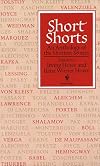
One feels after finishing many of these 38 very short pieces that they are ultimately mystery stories, not as in, Whodunnit?, but as in "what the hell just happened?" The editors, Irving and Ilana Howe, have a special fondness for ambiguity. All of the authors are world class, but with occasional exception the stories are not so well-known. My favorite effort was Doris Lessing's "Homage for Isaac Babel," so I was disappointed to find that the actual Isaac Babel story in the collection--The show more Death of Dolgushov--didn't do much for me. Overall, a few hits, a few misses, and a lot of head-scratchers. show less
Lists
Awards


You May Also Like


Associated Authors
Statistics
- Works
- 82
- Also by
- 30
- Members
- 4,423
- Popularity
- #5,663
- Rating
- 3.9
- Reviews
- 31
- ISBNs
- 150
- Languages
- 4
- Favorited
- 3