
Holmes Rolston III (1932–2025)
Author of Environmental ethics : duties to and values in the natural world
About the Author
Born in Staunton, Virginia, Holmes Rolston received both a theological and secular education. After receiving a B.S. degree in philosophy from Davidson University in 1953, he went on to earn a divinity degree from the Union Theological Seminary (1956) and a Ph.D. in theology from the University of show more Edinburgh (1958). Rolston initially taught philosophy at Hampden-Sydney College in 1958, before becoming pastor of the Walnut Grove Presbyterian Church in Bristol, Virginia, where he remained until 1967. Since 1968 he has been professor of philosophy at Colorado State University. Rolston's main areas of research and writing have focused on the interrelationship between ecology and religion and on ecological ethics and environmental issues. He is the associate editor of the Journal of Environmental Ethics, which is a primary outlet for articles in the field of environmental ethics. One of Rolston's main themes is that science can be used to promote religious experience, rather than destroy it. (Bowker Author Biography) show less
Works by Holmes Rolston III
Associated Works
Ympäristöfilosofia : kirjoituksia ympäristönsuojelun eettisistä perusteista (2010) — Contributor, some editions — 13 copies
Tagged
Common Knowledge
- Canonical name
- Rolston III, Holmes
- Birthdate
- 1932-11-19
- Date of death
- 2025-02-12
- Gender
- male
- Education
- Davidson College (BS|physics and mathematics|1953)
Union Theological Seminary (Bachelor of Divinity|1956)
University of Edinburgh (PhD|1958)
University of Pittsburgh - Occupations
- philosopher
pastor
Presbyterian pastor - Organizations
- Colorado State University
Presbyterian Church - Awards and honors
- Templeton Prize (2003)
Mendel Medal (2005) - Nationality
- USA
- Birthplace
- Rockbridge Baths, Virginia, USA
- Associated Place (for map)
- Virginia, USA
Members
Reviews
Environmental Ethics: Duties to and Values in the Natural World (Ethics and Action Series) by III Holmes Rolston
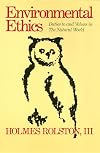
If you're going to read one ethics/philosophy book (apart from that survey of Aristotle and Kant you probably read in college), Environmental Ethics is a good choice. Rolston explains instrumental and intrinsic value, and surveys different levels of the natural world (individuals, species, communities) for value and resulting duties. The argument that humans have ethical duties to the natural world wanders through different chapters on sentient life, non-sentient organisms, species, show more ecosystems, and gathers steam as it goes. I haven't read many other ethics texts, so i can't tell if the narrative voice is typical of the genre, but it reminds me of Emerson's dense and learned prose. It's not your typical academic thesis/supporting arguments/conclusion. Rolston explores different avenues, pulling in legal precedents, conservation battles and etymology as he goes. It's almost conversational — a really, really dense conversation with frequent trips to the encyclopedia.
The first five chapters are marvelous, and Rolston gives logic to the feelings that many people have about why we should and do care about (seemingly) abstract concepts like species. The sixth chapter is about value theory, and is filled with diagrams. In 2004 I wrote, "I find this chapter incomprehensible." Still incomprehensible in 2011. The 7th chapter about environmental policy and the 8th chapter about business are perhaps worth reading once, but aren't the best sections of the book. The business chapter in particular hasn't aged well. How many of us are employees of companies that are actively using natural resources any more? It seems easier to identify ethical concerns with working for a company that has toxic waste to dispose of, and harder to judge abnormal energy usage of a server farm. The last chapter is an exploration of what ethics means, practically, and has some interesting things to say about the human capacity for story-telling, and how much richer our stories become when merged with natural history. show less
The first five chapters are marvelous, and Rolston gives logic to the feelings that many people have about why we should and do care about (seemingly) abstract concepts like species. The sixth chapter is about value theory, and is filled with diagrams. In 2004 I wrote, "I find this chapter incomprehensible." Still incomprehensible in 2011. The 7th chapter about environmental policy and the 8th chapter about business are perhaps worth reading once, but aren't the best sections of the book. The business chapter in particular hasn't aged well. How many of us are employees of companies that are actively using natural resources any more? It seems easier to identify ethical concerns with working for a company that has toxic waste to dispose of, and harder to judge abnormal energy usage of a server farm. The last chapter is an exploration of what ethics means, practically, and has some interesting things to say about the human capacity for story-telling, and how much richer our stories become when merged with natural history. show less
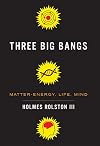
A short book by another author who bears the taint of being a Templeton awardee. His accounts of origins (of the universe, of terrestrial life, and of human intelligence) are competent and erudite enough (he's certainly not a knuckleheaded flat-Earther or evolution denier), but there is no escaping his tendentiousness in favor of a role for "spirituality" if not outright religion.
Conserving Natural Value isn't significantly different than Rolston's 1988 Environmental Ethics. The diagrams are gone, but the argument is essentially intact.
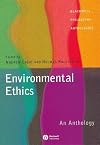
A scholarly collection of 40 essays, some classic, some cutting-edge, on themes including the welfare of animals versus ecosystems, the intrinsic value of nature, deep ecology, ecofeminism, and wilderness preservation.
Awards

You May Also Like


Associated Authors
Statistics
- Works
- 17
- Also by
- 3
- Members
- 323
- Popularity
- #73,308
- Rating
- 3.7
- Reviews
- 4
- ISBNs
- 42
- Languages
- 1