
Viktor Pelevin
Author of Omon Ra
About the Author
He was born in Moscow. (Bowker Author Biography)
Image credit: From Wikipedia
Series
Works by Viktor Pelevin
Жизнь насекомых (Russian Edition) 3 copies
COOL - Victor Pelevin / KRUT' - Viktor Pelevin / КРУТЬ - Виктор Пелевин - Вселенная TRANSHUMANISM INC. (2024) 3 copies, 1 review
T 3 copies
Transhumanism Inc. 2 copies
Transhumanism Inc. 1 copy
Встроенный напоминатель 1 copy
Kryształowy Świat 1 copy
Искусство лёгких касаний 1 copy
Жизнь насекомых 1 copy
Путешествие в Элевсин 1 copy
Vijesti iz Nepala 1 copy
Transhumanism inc. 1 copy
Generation "П" 1 copy
Зенитные кодексы Аль-Эфесби 1 copy
Kroger's Revelation 1 copy
Code of the World 1 copy
Зенитные кодексы Аль-Эфесби (из сборника Ананасная вода для прекрасной дамы) (Russian Edition) 1 copy
Затворник и Шестипалый 1 copy
Ассасин 1 copy
Кормление крокодила Хуфу 1 copy
Secret Views of Mount Fuji 1 copy
Associated Works
The Art of the Story: An International Anthology of Contemporary Short Stories (1999) — Contributor — 394 copies, 5 reviews
The Wall in My Head: Words and Images from the Fall of the Iron Curtain (2009) — Contributor — 57 copies, 4 reviews
Tagged
Common Knowledge
- Canonical name
- Pelevin, Viktor
- Legal name
- Пелевин, Виктор Олегович
Pelevin, Viktor Olegovich - Birthdate
- 1962-11-22
- Gender
- male
- Education
- Moscow Power Engineering Institute (Diplom|Electro-mechanical Engineering)
Maxim Gorky Literature Institute (Nongrad) - Occupations
- editor (Science and Religion magazine)
fiction writer - Awards and honors
- Russian Little Booker Prize (1992)
Great Circle Prize (1990, 1991, 1993)
Golden Ball Prize (1991)
Bronze Snail Prize (1993)
Interpresskon Prize (1993)
Strannik Prize (1995, 1997) - Nationality
- Russia (birth)
USSR (birth) - Birthplace
- Moscow, Russian SFSR, USSR
- Places of residence
- Moscow, Russia
Moscow, Soviet Union - Map Location
- Russia
Members
Discussions
February Group Read: The Life of Insects in 1001 Books to read before you die (March 2024)
Reviews

Ahem.
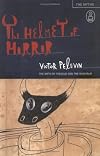
… the frontal net, heated by the action of the stream of impressions falling on it, transmits heat to the now grid. The grid sublimates the past contained in the upper section of the helmet, transforming it into vapour, which is driven up into the horns of plenty by the force of circumstances. The horns of plenty emerge from the forehead, curve round the sides of the helmet and intertwine to form the occipital braid, which descends into the base of the helmet. There, below the now show more grid, the bubbles of hope that arise in the occipital braid are ejected into the region of the future." (pp78-9).
I can't write any more. That is just a brief excerpt from just one of many of Victor Pelevin's descriptions of the titular 'helmet of horror' from this execrable book. And before you think I am disingenuously quoting out-of-context, I assure you – the majority of the book is like that. It's a bunch of self-important, pseudo-philosophising, if-you-can't-appreciate-how-clever-this-is-then-pretend-you-can tripe. It makes less sense than the scrawlings of a crazy person smeared in shit on the walls of his padded cell: you might be able to discern a certain perverse train of thought, but only if you become a bit crazy yourself – and if you can stand the stench. Even the (admittedly successful) attempts at humour only make me suspicious that Pelevin is taking the piss. I could rant and rant about how disappointing and self-indulgent it is, but I think I've already wasted enough time just in reading it. I'm struggling to sum up my opinion of this book: whether to describe it as horseshit, dogshit or bullshit. In keeping with the Minotaur theme, I think I'll go with bullshit." show less
… the frontal net, heated by the action of the stream of impressions falling on it, transmits heat to the now grid. The grid sublimates the past contained in the upper section of the helmet, transforming it into vapour, which is driven up into the horns of plenty by the force of circumstances. The horns of plenty emerge from the forehead, curve round the sides of the helmet and intertwine to form the occipital braid, which descends into the base of the helmet. There, below the now show more grid, the bubbles of hope that arise in the occipital braid are ejected into the region of the future." (pp78-9).
I can't write any more. That is just a brief excerpt from just one of many of Victor Pelevin's descriptions of the titular 'helmet of horror' from this execrable book. And before you think I am disingenuously quoting out-of-context, I assure you – the majority of the book is like that. It's a bunch of self-important, pseudo-philosophising, if-you-can't-appreciate-how-clever-this-is-then-pretend-you-can tripe. It makes less sense than the scrawlings of a crazy person smeared in shit on the walls of his padded cell: you might be able to discern a certain perverse train of thought, but only if you become a bit crazy yourself – and if you can stand the stench. Even the (admittedly successful) attempts at humour only make me suspicious that Pelevin is taking the piss. I could rant and rant about how disappointing and self-indulgent it is, but I think I've already wasted enough time just in reading it. I'm struggling to sum up my opinion of this book: whether to describe it as horseshit, dogshit or bullshit. In keeping with the Minotaur theme, I think I'll go with bullshit." show less

A legtöbb párhuzamos szálakkal dolgozó regény úgy működik, hogy a szálak futnak egymás mellett, aztán egyszer csak találkoznak. Itt olybá tűnik, mintha előbb találkoznának, és aztán kezdenék a maguk útját járni. (Hogy aztán újra találkozzanak? Majd meglátódik.) Az egyik szál Pelevin kedvenc témáit variálja: az orosz oligarcha-mentalitást (radikálisan túlhajszolt fogyasztói-szabadpiaci szemlélet némi cinikus, hidegvérű antihumanista allűrrel) elegyíti show more a specifikusan pelevini buddhizmus-értelmezéssel*. Főhőse a majdnem-milliárdos Fegya, aki addig űzi a Boldogság Cukin Kövér Arany Madarát, amíg bele nem rokkan. Mert szép hegy a Fuji, szent hegy a Fuji, de ha leesünk róla, lejön a plezúr a térdünkről. A másik szál pedig Tányáé, aki kitartott nőből lesz pussyhook-mester, a férfiak réme, a feminizmus templomos lovagja - ilyen értelemben pedig Kövér Laci bácsi személyes rémálma**.
Na, hát ez a két szál van. Szóval a szokásos pelevini filozófiai blődli. Az ötletek, mint mindig, pazarok. Mert Pelevinnek tényleg pazar ötletei szoktak lenni - néha az az érzésem, elég lenne az ötletelő noteszét elolvasni, a köré épített regény csak bűnös engedmény az irodalmi beidegződéseknek. Éreztem is olvasás közben, hogy maga a próza körülményes, döccen egyet-egyet, mintha csak szűkre szabott öltöny volna egy izompacsirta testén. Gondolkodtam is, hogy lepontozom, azzal a felkiáltással, hogy lám-lám, Pelevin önmagát ismetli. Mert tényleg, önmagát ismétli. De hát még mindig jobb, ha Pelevin Pelevint utánozza, mintha valami szar íróval tenné ugyanezt.
* A pelevini buddhizmus valahol nem vallás, hanem a vallás ellentéte - az ateizmus egy formája. Mert min alapul minden vallás? Hogy létezik egy felsőbb akarat, ami értelmet ad a létnek. De mi Pelevin szerint a buddhizmus lényege? Hogy nincs értelem, csak a semmi van, ezt kell elfogadni, ez a boldogság.
** Kövér Laci bácsi az avatárjaival együtt persze főleg azért haragszik a feministákra, mert személyes sértésnek veszi, hogy azok nem izgulnak fel a bajusza láttán. Ezt becézik "nemzeti-keresztény" ideológiának. show less

Творческую манеру Виктора Пелевина можно назвать "постсоциалистическим сюрреализмом". Так в "Жизни насекомых" его герои одновременно и люди (рэкетиры, наркоманы, мистики, проститутки), и насекомые. Эта коллекция типажей и реальна, и надумана, что позволяет писателю с show more едким остроумием описывать нашу действительность, а порой и заглядывать в будущее. Прогнозы Пелевина нельзя назвать утешительными, а прав ли он - время покажет...СодержаниеГруппа продленного дня. Предисловие. Автор: Вячеслав КурицынОмон Ра. Повесть. Автор: Виктор ПелевинЖизнь насекомых. Повесть. Автор: Виктор Пелевин show less
I have no idea how to rate this since I have no idea what I’ve just read. I’ll admit there were some thought provoking ideas being put forth, but I feel like I was on the precipice of something amazing, which was just out of reach. It reminded me of a Philip K. Dick discourse on reality or liminal space, but uniquely structured using internet chat room dialogue of twenty years ago as a group of isolated people try to work out who they are, where they are and the philosophical meanings show more behind various labyrinth symbologies that confront their individual spaces. The most interesting section presents a weird technical idea of a type of VR machine that recycles the past into the future to bring about the now. There’s also a nostalgic throwback to the old maze screensavers we used to have which made me chuckle.
I was absorbed in this for a day which is unheard of for me, but I remain fascinated and baffled all at once. Sometimes books can just feel too esoteric and intelligent for me and I think this is one of those. The tagline stating that in this age “information is abundant, but knowledge is ultimately unattainable”, is equally relevant with how this book unfolds.
I think further cogitation and maybe a reread. Or perhaps it wasn’t meant to have meaning and it’s one big trip intentionally designed to lose people. Certainly the ending confirms to that… show less
I was absorbed in this for a day which is unheard of for me, but I remain fascinated and baffled all at once. Sometimes books can just feel too esoteric and intelligent for me and I think this is one of those. The tagline stating that in this age “information is abundant, but knowledge is ultimately unattainable”, is equally relevant with how this book unfolds.
I think further cogitation and maybe a reread. Or perhaps it wasn’t meant to have meaning and it’s one big trip intentionally designed to lose people. Certainly the ending confirms to that… show less
Lists
Awards


You May Also Like


Associated Authors
Statistics
- Works
- 118
- Also by
- 10
- Members
- 5,666
- Popularity
- #4,369
- Rating
- 3.7
- Reviews
- 159
- ISBNs
- 413
- Languages
- 27
- Favorited
- 39