
Peter Padfield (1932–2022)
Author of Himmler: A Full-Scale Biography of One of Hitler's Most Ruthless Executioners
About the Author
Peter Padfield's trilogy includes Maritime Power and Maritime, Supremacy, both published by Overlook. He was born in British India and served as a navigating officer in P0 liners to India and Australia. After producing an acclaimed life of Admiral Karl Donitz, he wrote biographies of two other Nazi show more leaders. His work as a naval historian received the Mountbatten Maritime Prize. show less
Series
Works by Peter Padfield
Himmler: A Full-Scale Biography of One of Hitler's Most Ruthless Executioners (1990) 259 copies, 2 reviews
Maritime Supremacy & the Opening of the Western Mind: Naval Campaigns That Shaped the Modern World (1999) 150 copies
Armada: A Celebration of the Four Hundredth Anniversary of the Defeat of the Spanish Armada, 1588-1988 (1988) 48 copies
Hess, Hitler and Churchill: The Real Turning Point of the Second World War - A Secret History [Paperback] [Jan 01, 2012] PETER PADFIELD (2013) 42 copies
Tide of Empires: Decisive Naval Campaigns in the Rise of the West Volume 1, 1481-1654 (1979) 28 copies
Night Flight to Dungavel: Rudolf Hess, Winston Churchill, and the Real Turning Point of WWII (2014) 25 copies, 9 reviews
Tagged
Common Knowledge
- Other names
- Padfield, Peter Lawrence Notton
Padfield, P. L. N. - Birthdate
- 1932-04-03
- Date of death
- 2022-03-14
- Gender
- male
- Education
- Northcliffe House prep school, Bognor Regis, Sussex, England
Christ's Hospital, Sussex, England
Thames Nautical Training College (HMS Worcester) - Occupations
- naval historian
biographer
navigating officer (P&O) - Organizations
- The 50-50 Club
- Awards and honors
- Mountbatten Maritime Award (2003)
- Cause of death
- prostate cancer
- Nationality
- UK
- Birthplace
- Kolkata, West Bengal, India
- Places of residence
- Clare, Suffolk, England
Woodbridge, Suffolk, England - Associated Place (for map)
- Suffolk, England
Members
Reviews

War Beneath the Sea is the comprehensive account of submarine conflict in the Second World War. Padfield covers all the major belligerents, going beyond the standard accounts of the Battle of the Atlantic and the 'clean sweep' patrols of Mush Morton in the Pacific to develop a systematic account of the submarines of Nazi Germany, the United States, Japan, Britain, and even Italy.
The submarine had made its significant debut as a weapon in the First World War, where unrestricted submarine show more warfare threatened the British empire and helped bring America into the war. The power of the submarine in commerce warfare was only systematically developed by the Nazis, and in particular Admiral Donitz, who combined high quality boats with a doctrine of aggressive surface night attacks. Nazi night optics were a cut above, and a clever binocular pedestal mount fed observations from the conning tower directly into the torpedo fire control center. By comparison, British boats were small and slow; their antisubmarine doctrine completely atrophied. American boats were the most impressive at the beginning of the war, with air conditioning for crew but were hindered by a cautious attack doctrine and the fatally flawed Mk 14 torpedo, with detonators that simply did not work. Japanese boats were large, but wedded to a doctrine of decisive fleet battle that reduce their flexibility.
As we all know, the Second World War started in 1939 with the invasion of Poland, and subsequent declaration of war by France and Britain against Nazi Germany. This was a problem for Donitz, since he had been promised that the war would start in 1942, when the U-boat building program would be completed and he'd have 300 U-boats. Instead he went to war with only a few dozen ready for action in the Atlantic. His forces ran wild in the First Happy Time against disorganized British defenses, but they lacked the numbers to be truly decisive.
The Battle of the Atlantic was one of the major campaigns of the war. Meanwhile, British submarines operating from Malta and Alexandria faced a miniature version of the shipping campaign against Axis transports to North Africa. The Maltese boats faced truly horrific conditions during the siege, but presented a perennial thorn in the Axis side.
Submarine actions depended on the courage and judgement of commanders, but it was also a technological war. It was in this area that the Allies succeeded, with development of centrimetric radar giving their submarines and escorts a major advantage. Convoy escort building, new weapons like the Hedgehog depth charge projector, and doctrine for pursuing U-boats tilted the submarine war towards the Allied side. The final days of both the Japanese and Nazi services were essentially suicide operations for little gain.
Padfield blends first-person accounts of actions with a synoptic view of the campaign. He has a generally positive view of the sailors who served, and isn't afraid to shy away from judgment of higher commanders. Donitz, though an avowed Nazi, understood the use of U-boats as a weapon. His failure to keep up with technological changes doomed his arm, and his men. On the allied side, their was a surprising lassitude at proper convoy tactics and aerial escorts. Britain forgot the lessons of the First World War, and the United States ignored what their Allies had learned months before, likely due to Earnest King's Anglophobia. The diversion of long range bombers and radars to the strategic bombing offensive, which delivered relatively few results early on, when as few as 100 planes could have tilted the balance in the Atlantic, is one area of folly. The obstinance of Pacific Command over the reliability of the Mk 14 is another area.
Having read quite a few of these naval histories, Padfield joins the top ranks of authors. show less
The submarine had made its significant debut as a weapon in the First World War, where unrestricted submarine show more warfare threatened the British empire and helped bring America into the war. The power of the submarine in commerce warfare was only systematically developed by the Nazis, and in particular Admiral Donitz, who combined high quality boats with a doctrine of aggressive surface night attacks. Nazi night optics were a cut above, and a clever binocular pedestal mount fed observations from the conning tower directly into the torpedo fire control center. By comparison, British boats were small and slow; their antisubmarine doctrine completely atrophied. American boats were the most impressive at the beginning of the war, with air conditioning for crew but were hindered by a cautious attack doctrine and the fatally flawed Mk 14 torpedo, with detonators that simply did not work. Japanese boats were large, but wedded to a doctrine of decisive fleet battle that reduce their flexibility.
As we all know, the Second World War started in 1939 with the invasion of Poland, and subsequent declaration of war by France and Britain against Nazi Germany. This was a problem for Donitz, since he had been promised that the war would start in 1942, when the U-boat building program would be completed and he'd have 300 U-boats. Instead he went to war with only a few dozen ready for action in the Atlantic. His forces ran wild in the First Happy Time against disorganized British defenses, but they lacked the numbers to be truly decisive.
The Battle of the Atlantic was one of the major campaigns of the war. Meanwhile, British submarines operating from Malta and Alexandria faced a miniature version of the shipping campaign against Axis transports to North Africa. The Maltese boats faced truly horrific conditions during the siege, but presented a perennial thorn in the Axis side.
Submarine actions depended on the courage and judgement of commanders, but it was also a technological war. It was in this area that the Allies succeeded, with development of centrimetric radar giving their submarines and escorts a major advantage. Convoy escort building, new weapons like the Hedgehog depth charge projector, and doctrine for pursuing U-boats tilted the submarine war towards the Allied side. The final days of both the Japanese and Nazi services were essentially suicide operations for little gain.
Padfield blends first-person accounts of actions with a synoptic view of the campaign. He has a generally positive view of the sailors who served, and isn't afraid to shy away from judgment of higher commanders. Donitz, though an avowed Nazi, understood the use of U-boats as a weapon. His failure to keep up with technological changes doomed his arm, and his men. On the allied side, their was a surprising lassitude at proper convoy tactics and aerial escorts. Britain forgot the lessons of the First World War, and the United States ignored what their Allies had learned months before, likely due to Earnest King's Anglophobia. The diversion of long range bombers and radars to the strategic bombing offensive, which delivered relatively few results early on, when as few as 100 planes could have tilted the balance in the Atlantic, is one area of folly. The obstinance of Pacific Command over the reliability of the Mk 14 is another area.
Having read quite a few of these naval histories, Padfield joins the top ranks of authors. show less
Night Flight to Dungavel: Rudolf Hess, Winston Churchill, and the Real Turning Point of WWII by Peter Padfield

I vaguely remember hearing about the suicide of Rudolf Hess when I was in high school and being amazed that such a high ranking Nazi had been in prison rather than hanged. This book is full of names, dates and historical background about what was going on with all sides before Hess's flight. I'm a WWII history buff, so I found it to be informative, interesting and a well-paced read. It certainly raised many questions. Did Hess really fly with Hitler's foreknowledge? Was it all a trap set by show more MI6? Were the Germans running their own ruse when they put out that Hess was mentally disturbed or was he? Why are so many documents missing or still classified 73 years later? show less
 This review was written for LibraryThing Early Reviewers.
Hard to read but also hard to put down. This book shows as well as anyone ever will what motivated Himmler to be both kind to children, respectful to women and protective of animals while at the same time brutally slaughtering millions of people in the name of the "volk". Chilling.
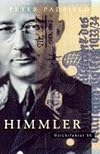
Impeccably documented, compulsively readable, this is the first full-length biography of the most powerful and coldblooded of Hitler's lieutenants. Before his suicide in 1945 Himmler had ruled the SS and Gestapo, directed the death camps in Poland, headed German intelligence services, and run the slave-labor system in the Reich. He also was responsible for pseudo-medical experiments in the death camps. Delving into the family background and upbringing of this terrible yet strangely ordinary show more man, Padfield analyzes the master-race theories that inspired Himmler and comes impressively close to explaining how a priggish, idealistic Bavarian boy turned into history's most ruthless slaughterer. Buttressed with excerpts from diaries, letters and speeches, the author examines each phase of Himmler's life in detail. Padfield describes, for instance, how Himmler expanded Hitler's personal bodyguard (the original SS) into an all-embracing empire within the Nazi state used to terrorize party hierarchy as well as occupied Europe. The book sheds light on Himmler's 11th-hour attempt to make a separate peace with the Allies, and on the details of his final hours. A powerful and horrifying narrative by the author of Donitz: The Last Fuhrer. show less
Lists
Awards

You May Also Like


Statistics
- Works
- 27
- Members
- 1,310
- Popularity
- #19,605
- Rating
- 3.9
- Reviews
- 21
- ISBNs
- 90
- Languages
- 4
- Favorited
- 1
