
Edward Rutherfurd
Author of London
About the Author
Edward Rutherford is a pseudonym for Francis Edward Wintle. A writer of historical novels, he has also found success with multigenerational epics. His first book Sarum: The Novel of England was published in 1987. It was followed in 1991 with Russka: The Novel of Russia. He has also published two show more novels which cover the story of Ireland from the time just before Saint Patrick to the twentieth century: Dublin: Foundation (The Princes of Ireland) and Ireland: Awakening (The Rebels of Ireland). His books have been translated into twenty languages. Wintle was born in 1948, in Wiltshire, England. He attended Cambridge University and graduated with honors in English. His title's Paris and Sarum: The Novel of England made The New York Times Best Seller List. (Bowker Author Biography) show less
Series
Works by Edward Rutherfurd
Budgie (Colouring Books) 8 copies
[unidentified works] 4 copies
The Forest [abridged] 3 copies
Russka [abridged] 1 copy
Pasadena * 1 copy
Non camminerai più sola 1 copy
Becoming Naomi Leon 1 copy
Nyskoven, bd. 2 1 copy
Nyskoven, bd. 1 1 copy
Galilee 1 copy
Associated Works
Reader's Digest Condensed Books: Patriot Games • Snow on the Wind • The Judgment • Sarum: The Beginning (1988) — Author — 3 copies
Tagged
Common Knowledge
- Legal name
- Wintle, Francis Edward
- Other names
- Rutherfurd, Edward (pseudonym)
- Birthdate
- 1948
- Gender
- male
- Education
- University of Cambridge
Stanford University - Occupations
- writer
author
novelist - Organizations
- Friends of Salisbury Cathedral
Salisbury Civic Society
Friends of Chawton House - Short biography
- http://www.edwardrutherfurd.com/us/au...
- Nationality
- UK
- Birthplace
- Salisbury, Wiltshire, England, UK
- Places of residence
- Salisbury, Wiltshire, England, UK
Cambridge, Cambridgeshire, England, UK
Palo Alto, California, USA
London, England, UK
New Hampshire, USA
New York, New York, USA (show all 7)
Ireland (Republic of) - Associated Place (for map)
- England, UK
Members
Discussions
Edward Rutherfurd. in Historical Fiction (November 2011)
Reviews

‘’Big river, calling him to thenorth.Big sky, calling him to the west. Land of many rivers, land of many mountains, land of many forests. How far did it continue? Nobody knew. Not for certain. High above the eagles, only the sun on its huge journey westward could ever see the whole of it.’’
Edward Rutherfurd is a master of Historical Fiction. He is a writer who communicates the time and place to perfection, an artist who communicates the feelings of his vast cast of characters to such show more an extent that you are able not only to recall their names with ease but their personality, their ideals and course in life as if they were people you have met in daily life, relatives, friends, family. I have yet to read another writer’s books whose 1500+pages go by like a breeze in the course of four days. And when it comes to Historical Fiction, I am an expert in the genre, thank you very much.
‘’When there is a little breeze, listen to the voice of the wind sighing in the pine trees. Then you will hear me.’’
A wampum belt becomes the beacon in the epic story of the true capital of the USA, New York. The Metropolis, the Modern Goddess, the Land of Dreams and Hopes and Chances and Sorrows. Paying the utmost respect to the history of the city, her people, their religions (and Rutherfurd has always been a writer who treats Christianity with absolute respect unlike other writers…), we are gifted a monumentary journey within the heart of the modern world. Divided into five chapters, dedicated to a specific era, guided by British, Dutch, Italian, Jewish, Puerto Rican families, the entire history of New York passes before our eyes.
‘’’[...] that government of the people, by the people, for the people, shall not perish from the earth.’’
Abraham Lincoln
Along the families that are the heart of the novel, meet Henry Hudson, Captain Kidd, Andrew Hamilton, George Washington, Benjamin Franklin, Thomas Jefferson, Abraham Lincoln, Enrico Caruso, Rockefeller, and a multitude of characters that shaped the USA and our world as we have come to know it. Visit Niagara Falls, the Empire State Building, the Islands, Brooklyn, Manhattan, Gramercy Park, Central Park, St. Patrick’s Cathedral, Fifth Avenue, the Statue of Liberty, the Flatiron Building, the Museum Mile. Marvel at (my favourite) brownstones, feel the buzz, the multiculturalism that defined the city, its almost anarchic personality, the Arts, the Opera, the musicals, the literary scene and the hypocrisy of the old money families. Divided and united in its differences, New York is the result of God’s absolute inspiration.
‘’When the invitation to the Seder was recited, not in Hebrew but in Aramaic, it stuck him with great force that, of course, these were exactly the proceedings that Jesus must have followed at the Last Supper. And as he considered the crisp New England Episcopalians he knew so well, he wondered how many of them truly understood the rich Middle Eastern texture to which their own religion belonged.’’
1664: The British and the Dutch, divided by religion, united by ambition. The birth of Manhattan, the customs of the Native Americans, the slaughter they suffered, the nightmare of slavery.
1735-1790: Glimpses of Boston and Philadelphia through the eyes of spirited young women, the Quakers, the War of Independence (brought to mind the exceptional film The Patriot with the one and only Mel Gibson).
1825-1896: The bond between London and New York, the Civil War, the battle of Gettysburg, and Lincoln’s famous address, the end of slavery, the impact of the Great Famine of Ireland, the immigrants, the Riots of 1863, the rising of Wall Street.
1901-1987: A new century is seen primarily through the eyes of an Italian family. The tragedy of the Triangle factory, the Great War, the Crush of 1929, WWII, the Jewish immigrants facing constant anti-semitism, the Civil Rights marches, the Vietnam War, the drugs, the assassinations, the seismic political changes on both sides of the Atlantic.
2000-2009: The boom of the economy, the threat of the Y2K bug, the unimaginable tragedy of 9/11.The fear and hope of a new world rising…
New York is waiting for you, safe in the hands of an exceptional writer.
P.S. To the ‘lady’ who called the novel ‘trash Historical Fiction’’: Excuse me, (not really…) your favourite writers are Nora Roberts and Kristin Hannah. Are you EVEN SERIOUS? The only thing that is trash is your opinion and your reading taste. Or, rather, your lack of it. So shut up!
‘’Let us have faith that Right is Might, and in that faith, let us, to the end, dare to doo our duty as we understand it.’’
Abraham Lincoln
My reviews can also be found on https://theopinionatedreaderblog.wordpress.com/ show less
Edward Rutherfurd is a master of Historical Fiction. He is a writer who communicates the time and place to perfection, an artist who communicates the feelings of his vast cast of characters to such show more an extent that you are able not only to recall their names with ease but their personality, their ideals and course in life as if they were people you have met in daily life, relatives, friends, family. I have yet to read another writer’s books whose 1500+pages go by like a breeze in the course of four days. And when it comes to Historical Fiction, I am an expert in the genre, thank you very much.
‘’When there is a little breeze, listen to the voice of the wind sighing in the pine trees. Then you will hear me.’’
A wampum belt becomes the beacon in the epic story of the true capital of the USA, New York. The Metropolis, the Modern Goddess, the Land of Dreams and Hopes and Chances and Sorrows. Paying the utmost respect to the history of the city, her people, their religions (and Rutherfurd has always been a writer who treats Christianity with absolute respect unlike other writers…), we are gifted a monumentary journey within the heart of the modern world. Divided into five chapters, dedicated to a specific era, guided by British, Dutch, Italian, Jewish, Puerto Rican families, the entire history of New York passes before our eyes.
‘’’[...] that government of the people, by the people, for the people, shall not perish from the earth.’’
Abraham Lincoln
Along the families that are the heart of the novel, meet Henry Hudson, Captain Kidd, Andrew Hamilton, George Washington, Benjamin Franklin, Thomas Jefferson, Abraham Lincoln, Enrico Caruso, Rockefeller, and a multitude of characters that shaped the USA and our world as we have come to know it. Visit Niagara Falls, the Empire State Building, the Islands, Brooklyn, Manhattan, Gramercy Park, Central Park, St. Patrick’s Cathedral, Fifth Avenue, the Statue of Liberty, the Flatiron Building, the Museum Mile. Marvel at (my favourite) brownstones, feel the buzz, the multiculturalism that defined the city, its almost anarchic personality, the Arts, the Opera, the musicals, the literary scene and the hypocrisy of the old money families. Divided and united in its differences, New York is the result of God’s absolute inspiration.
‘’When the invitation to the Seder was recited, not in Hebrew but in Aramaic, it stuck him with great force that, of course, these were exactly the proceedings that Jesus must have followed at the Last Supper. And as he considered the crisp New England Episcopalians he knew so well, he wondered how many of them truly understood the rich Middle Eastern texture to which their own religion belonged.’’
1664: The British and the Dutch, divided by religion, united by ambition. The birth of Manhattan, the customs of the Native Americans, the slaughter they suffered, the nightmare of slavery.
1735-1790: Glimpses of Boston and Philadelphia through the eyes of spirited young women, the Quakers, the War of Independence (brought to mind the exceptional film The Patriot with the one and only Mel Gibson).
1825-1896: The bond between London and New York, the Civil War, the battle of Gettysburg, and Lincoln’s famous address, the end of slavery, the impact of the Great Famine of Ireland, the immigrants, the Riots of 1863, the rising of Wall Street.
1901-1987: A new century is seen primarily through the eyes of an Italian family. The tragedy of the Triangle factory, the Great War, the Crush of 1929, WWII, the Jewish immigrants facing constant anti-semitism, the Civil Rights marches, the Vietnam War, the drugs, the assassinations, the seismic political changes on both sides of the Atlantic.
2000-2009: The boom of the economy, the threat of the Y2K bug, the unimaginable tragedy of 9/11.The fear and hope of a new world rising…
New York is waiting for you, safe in the hands of an exceptional writer.
P.S. To the ‘lady’ who called the novel ‘trash Historical Fiction’’: Excuse me, (not really…) your favourite writers are Nora Roberts and Kristin Hannah. Are you EVEN SERIOUS? The only thing that is trash is your opinion and your reading taste. Or, rather, your lack of it. So shut up!
‘’Let us have faith that Right is Might, and in that faith, let us, to the end, dare to doo our duty as we understand it.’’
Abraham Lincoln
My reviews can also be found on https://theopinionatedreaderblog.wordpress.com/ show less
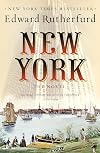
I grew up in northern New Jersey, so the history of New York is fascinating to me. Edward Rutherfurd tells the story of people living in the city, starting in the 17th century when the settlement was called New Amsterdam and was governed by Peter Styverson and ending in the 21st century when Rudy Giuliani was mayor. The novel focuses on the Master family, but also looks at other families whose lives were intertwined with the Masters. I thought Rutherfurd did an excellent job of mixing show more history with fiction.
When I lived in the New York area, I went to the city often. I loved the museums, the theater scene from the small groups in store front theaters to the Broadway shows, and I went to countless concerts in Central Park and at the Fillmore East. I spent hours in the libraries, especially the main branch on Fifth Ave and the Library for the Performing Arts at Lincoln Center. But despite loving the city I didn't know much about its history. I had no idea about the early connection to the slave trade, Spanish Harlem was just a song to me, and I knew next to nothing about the financial district, especially during the years leading up to the depression. New York covered those aspects of the city in a way that held my attention. I loved the book for that.
I saw in some of the other reviews complaints that Rutherfurd did not spend time with the African American families living in the twentieth century. He did cover their experience, especially during the pre civil war years, but those families were only mentioned briefly during modern times. I don't agree with that criticism. Rutherfurd chose to write a story about the Master family and if he left their story for too long the plot would have lost its continuity. He covered the Italians and the Irish during the years when those nationalities were the bulk of the immigrants. The African Americans were in the city from early on, just as the English were. Another novel about their experience in New York would be equally fascinating, but this novel was primarily about the English experience. Perhaps he could have spent more time with the Puerto Ricans families, given their importance to modern New York, but he did touch on that experience and I learned a good deal. He discussed the Lenape Native Americans, but as with many of the other groups that section was from the point of view of the European (Dutch) settlers.
My chief complaint comes down to a single word. Here's the line from late in the book:
He'd been fortunate to get a low number in the lottery and avoided the draft.
The word I object to is low. Rutherfurd was talking about the 1970s here and anyone who lived through that period knows that a low number meant you were going to war, not the other way around. The problem with this mistake is it stops the reader who knows its wrong and casts doubt on the accuracy of the rest of the book. But I'm still giving this book a five star rating. Overall, I loved it.
Steve Lindahl - author of Motherless Soul and White Horse Regressions show less
When I lived in the New York area, I went to the city often. I loved the museums, the theater scene from the small groups in store front theaters to the Broadway shows, and I went to countless concerts in Central Park and at the Fillmore East. I spent hours in the libraries, especially the main branch on Fifth Ave and the Library for the Performing Arts at Lincoln Center. But despite loving the city I didn't know much about its history. I had no idea about the early connection to the slave trade, Spanish Harlem was just a song to me, and I knew next to nothing about the financial district, especially during the years leading up to the depression. New York covered those aspects of the city in a way that held my attention. I loved the book for that.
I saw in some of the other reviews complaints that Rutherfurd did not spend time with the African American families living in the twentieth century. He did cover their experience, especially during the pre civil war years, but those families were only mentioned briefly during modern times. I don't agree with that criticism. Rutherfurd chose to write a story about the Master family and if he left their story for too long the plot would have lost its continuity. He covered the Italians and the Irish during the years when those nationalities were the bulk of the immigrants. The African Americans were in the city from early on, just as the English were. Another novel about their experience in New York would be equally fascinating, but this novel was primarily about the English experience. Perhaps he could have spent more time with the Puerto Ricans families, given their importance to modern New York, but he did touch on that experience and I learned a good deal. He discussed the Lenape Native Americans, but as with many of the other groups that section was from the point of view of the European (Dutch) settlers.
My chief complaint comes down to a single word. Here's the line from late in the book:
He'd been fortunate to get a low number in the lottery and avoided the draft.
The word I object to is low. Rutherfurd was talking about the 1970s here and anyone who lived through that period knows that a low number meant you were going to war, not the other way around. The problem with this mistake is it stops the reader who knows its wrong and casts doubt on the accuracy of the rest of the book. But I'm still giving this book a five star rating. Overall, I loved it.
Steve Lindahl - author of Motherless Soul and White Horse Regressions show less
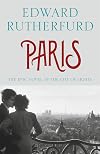
I think I might be slightly hooked on Edward Rutherfurd's city biographies, the 'no pain no gain' of 'factional' histories (800 pages, I thought I would never be finished!) Not only did I make the journey to Paris after reading London and New York but I requested that my local library buy a copy (and they did!)
Anyhoo, same format different city. The history of Paris from 1261 to 1968 (non-chronological for a pleasant change), but mainly focused on the Belle Epoque and the two world wars, show more told through six fictional (and interwoven) families representing the social strata of the city. Very clever and engrossing, but long-winded as ever. I also found the twentieth century chapters very soap opera-ish, like a Barbara Taylor Bradford novel, with everyone being very attractive and brilliant at whatever they choose to do.
The characters for me, however, are merely devices and mouth pieces (sometimes literally, when the exposition gets comically heavy) for the history, and I learned some interesting facts about people and places as ever, including the Sacre Coeur (started in 1873, why did I think it was older?) and the Eiffel Tower, the Sorbonne, named after the college of the King's chaplain, Robert de Sorbon, and Shakespeare and Company. There are also interesting discussions on religion ('The trouble with Christians is that they say one thing, and do something completely different' - this from a Jewish character in 1307, but which I thought was still very appropriate!), war, class and immigration. There are some rather crawling statements about how wonderful America is that seemed to have strayed from the New York volume, but then I supposed France did have a rather parasitic relationship with the States ('Freedom was in their blood. It was their birth right'), and all of the relationships are depressingly heteronormative, with handsome men matching with elegant women - even the 'illegitimate' children find their natural place in the end, usually after proving their worth by extending the family line.
I was of course drawn to the chapters on Versailles, and the one brief study of the Revolution (the first one), and found a couple of (intentional?) inaccuracies - Guillotin tweaked the gibbet to make a smoother and faster method of execution, he didn't invent the device, and isn't it commonly believed that Robespierre tried to shoot himself in the head and missed? I did like the story of the aristocratic de Cygne couple sent to the guillotine in 1794 and the last minute reprieve of the wife - very Scarlet Pimpernel! (As was the debate around the Dreyfus affair and anti-Semitism in France, which occurred around the time when Baroness Orczy was writing her novel.)
Fascinating through and through, glad I survived once again! show less
Anyhoo, same format different city. The history of Paris from 1261 to 1968 (non-chronological for a pleasant change), but mainly focused on the Belle Epoque and the two world wars, show more told through six fictional (and interwoven) families representing the social strata of the city. Very clever and engrossing, but long-winded as ever. I also found the twentieth century chapters very soap opera-ish, like a Barbara Taylor Bradford novel, with everyone being very attractive and brilliant at whatever they choose to do.
The characters for me, however, are merely devices and mouth pieces (sometimes literally, when the exposition gets comically heavy) for the history, and I learned some interesting facts about people and places as ever, including the Sacre Coeur (started in 1873, why did I think it was older?) and the Eiffel Tower, the Sorbonne, named after the college of the King's chaplain, Robert de Sorbon, and Shakespeare and Company. There are also interesting discussions on religion ('The trouble with Christians is that they say one thing, and do something completely different' - this from a Jewish character in 1307, but which I thought was still very appropriate!), war, class and immigration. There are some rather crawling statements about how wonderful America is that seemed to have strayed from the New York volume, but then I supposed France did have a rather parasitic relationship with the States ('Freedom was in their blood. It was their birth right'), and all of the relationships are depressingly heteronormative, with handsome men matching with elegant women - even the 'illegitimate' children find their natural place in the end, usually after proving their worth by extending the family line.
I was of course drawn to the chapters on Versailles, and the one brief study of the Revolution (the first one), and found a couple of (intentional?) inaccuracies - Guillotin tweaked the gibbet to make a smoother and faster method of execution, he didn't invent the device, and isn't it commonly believed that Robespierre tried to shoot himself in the head and missed? I did like the story of the aristocratic de Cygne couple sent to the guillotine in 1794 and the last minute reprieve of the wife - very Scarlet Pimpernel! (As was the debate around the Dreyfus affair and anti-Semitism in France, which occurred around the time when Baroness Orczy was writing her novel.)
Fascinating through and through, glad I survived once again! show less
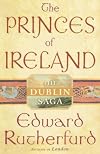
This book has been sitting on my bookshelf for 10 years waiting for me to get the time to tackle a 700+ page book of historical fiction that covers 1100 years of happenings in Ireland. It took a global pandemic for me to pull it off the shelf and finish it. Maybe there is a silver lining to all this enforced isolation.
This book starts in the year AD 430 which was before St. Patrick came to Ireland so the prevailing religion was druidic. Areas of the island were under the control of different show more chiefs and kings but there was one High King. The High King was chosen by the druids and he had to mate with a white female horse to show he had the necessary qualities. One did not disobey an edict from the druids or the High King but Deirdre, daughter of Fergus who controlled the crossing of the Liffey River near Dubh Lin (which means dark pool), and Conall, nephew of the High King, decided to run away together rather than let Deirdre become the High King's second wife. Conall paid the ultimate price for his disobedience but he impregnated Deidre before he was killed starting one of the clans that takes part in Irish history from then on. Other families are brought in throughout the book. Of course there is intermarrying and it was confusing at times to remember who was a descendent of whom. Fortunately there is a family tree at the beginning and I resorted to it often. There are also three maps at the start of the book: one of the whole island, one of the area surrounding Dublin and one of medieval Dublin itself. I also flipped back to them often. Another resource is the pronunciation guide at the back of the book which aided me in mentally saying the place names, peoples' names and phrases sprinkled throughout the book. I truly appreciated this reference material; that's how historical fiction should be.
If I have one complaint about this book it is that there is not much mention of other areas of Ireland besides the Dublin region. I suppose if Rutherfurd had included that the book would be even bigger. He has written a follow up to this book; I'll have to try to get it to see if it branches farther afield. show less
This book starts in the year AD 430 which was before St. Patrick came to Ireland so the prevailing religion was druidic. Areas of the island were under the control of different show more chiefs and kings but there was one High King. The High King was chosen by the druids and he had to mate with a white female horse to show he had the necessary qualities. One did not disobey an edict from the druids or the High King but Deirdre, daughter of Fergus who controlled the crossing of the Liffey River near Dubh Lin (which means dark pool), and Conall, nephew of the High King, decided to run away together rather than let Deirdre become the High King's second wife. Conall paid the ultimate price for his disobedience but he impregnated Deidre before he was killed starting one of the clans that takes part in Irish history from then on. Other families are brought in throughout the book. Of course there is intermarrying and it was confusing at times to remember who was a descendent of whom. Fortunately there is a family tree at the beginning and I resorted to it often. There are also three maps at the start of the book: one of the whole island, one of the area surrounding Dublin and one of medieval Dublin itself. I also flipped back to them often. Another resource is the pronunciation guide at the back of the book which aided me in mentally saying the place names, peoples' names and phrases sprinkled throughout the book. I truly appreciated this reference material; that's how historical fiction should be.
If I have one complaint about this book it is that there is not much mention of other areas of Ireland besides the Dublin region. I suppose if Rutherfurd had included that the book would be even bigger. He has written a follow up to this book; I'll have to try to get it to see if it branches farther afield. show less
Lists
Awards


You May Also Like


Associated Authors
Statistics
- Works
- 35
- Also by
- 1
- Members
- 24,688
- Popularity
- #849
- Rating
- 3.9
- Reviews
- 513
- ISBNs
- 406
- Languages
- 16
- Favorited
- 69


