
N. J. Dawood (1927–2014)
Author of Tales from the Thousand and One Nights (Penguin Classics)
About the Author
Works by N. J. Dawood
Tales from the Thousand and One Nights (Penguin Classics) (0009) — Editor, translator — 1,159 copies, 11 reviews
The Muqaddimah, an Introduction to History [abridged Rosenthal translation] (1969) — Abridger and Editor — 749 copies, 8 reviews
Associated Works
Aladdin and Other Tales from the Arabian Nights (Puffin Classics) (1989) — Translator; Narrator, some editions — 324 copies, 3 reviews
Tagged
Common Knowledge
- Canonical name
- Dawood, N. J.
- Legal name
- Dawood, Nessim Joseph
- Other names
- نعيم جوزيف داوود
David, Nessim Yousef (birth) - Birthdate
- 1927-08-27
- Date of death
- 2014-11-20
- Gender
- male
- Education
- University College of the South-West, Exeter
University College London (BA|1949) - Occupations
- translator
journalist - Organizations
- Arabic Advertising & Publishing Co Ltd
- Nationality
- Iraq (birth)
UK (naturalized) - Birthplace
- Baghdad, Iraq
- Places of residence
- London, England, UK
- Place of death
- London, England, UK
- Associated Place (for map)
- London, England, UK
Members
Reviews
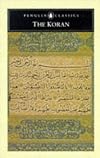
My reaction to Islam’s holy book is conditioned by my negative opinion of Muḥammad. Of course, even to entertain such thoughts risks hellfire: “You shall not speak ill of God’s apostle…this would surely be a grave offence in the sight of God. Whether you reveal or conceal them, God has knowledge of all things” (33:53). Muslim readers may want to avoid this review for that reason, and because I will assume throughout that Muḥammad (not God) authored the book. That said, let us show more embark on a journey into the book that guides a quarter of the world’s population.
Right away, I find that the Koran repeats itself a lot. And by a lot, I mean A Lot. Muḥammad’s themes were as sparse as the Arabian desert and he hammered them hard. In the beginning, when God created the angels and the jinn and humans, Satan refused the command to bow before us. God condemned him to Hell but granted his request for time to drag as many of us down with him as he can. Satan actively works to turn us from the rightly-guided path, and enjoys quite a bit of success since most of us scorn God’s messengers and fail to comprehend that Hell is real and forever. At the Last Day, all will be resurrected: some to enter a Paradise of shaded gardens, flowing waters, bashful dark-eyed houris, and fruit served by eternally youthful boys; the rest to enter a realm of flame with filth to eat, scalding water to drink, and skin that burns away only to regenerate and burn again.
Everything in the Koran is an expansion or variation on these themes, limiting the book’s appeal to me as a literary work. However, I also recognize that this lent itself to surviving and thriving in an unevenly literate population dependent on oral transmission. When Moses sees the light of the burning bush flickering in the distance, part of his motivation for investigating is to get some news from those who lit the fire (27:7). Word of mouth was the text chain of the time, and the Koran’s repetition of themes is well suited to memorization and recital by believers transiting caravan routes and crossing seas.
That’s not to say the Koran’s message was an easy fit for 7th-century Arabia, despite Muḥammad’s frequent analogy of resurrection with the rains that make the desert bloom, his regulation of ritual camel sacrifice (22:36), and his warning that God could at any time unleash a deadly sandstorm of retribution (67:17). Rather than instant acceptance, Muḥammad ran into a wall of backlash:
• "The unbelievers ask: ‘Why was the Koran not revealed to him entire in a single revelation’" (25:32)?
• "Some say: ‘It is but a medley of dreams.’ Others: ‘He has invented it himself.’ And yet others: ‘He is a poet: let him show us some sign, as did the apostles in days gone by’" (21:5).
• "They replied [to Noah]: ‘Are we to believe in you when your followers are but the lowest of the low’" (26:111)?
• "They also say: ‘Why has this Koran not been revealed to some important man from the two towns’" (43:31)?
• "Never have you read a book before this, nor have you ever transcribed one with your right hand. Had you done either, the unbelievers might have doubted. But to those who are endowed with knowledge it is an undoubted sign. Only the wrongdoers deny Our signs" (29:48).
• "The unbelievers say: ‘Pay no heed to this Koran. Cut short its recital with booing and laughter, so that you may gain the upper hand’" (41:26).
• "The unbelievers are like beasts which, call out to them as one may, can hear nothing but a shout and a cry. Deaf, dumb, and blind, they understand nothing" (2:171).
I attribute Arabian resistance to three things. First is a natural distaste for altering one’s belief system when you’re happy the way you are. Second, Muḥammad demanded radical morality. The closest thing I find to an Islamic Ten Commandments (17:22-38) requires worship of God alone, honor of parents, thriftiness in personal expenses, generosity in support of the destitute, abrogation of the custom of burying unwanted infant daughters alive, flight from adultery, and abstention from killing except in the cause of justice — and then only within reasonable limits. No doubt it was these strictures, attractive even in the modern age, that drew some to Muḥammad even as they generated hostility.
Third, though, I suspect Muḥammad met resistance due to the total war he declared on idolatry. He could be ambivalent toward monotheistic Jews and Christians as wayward cousins who might on occasion offer true worship: “Had God not defended some men by the might of others, monasteries and churches, synagogues and mosques in which His praise is daily celebrated, would have been utterly destroyed” (22:40). No such leniency was possible toward idolaters: “Fight against them until idolatry is no more and God’s religion reigns supreme” (8:39). The only response to idolatry was violence: “Fight for the sake of God those that fight against you, but do not attack them first. God does not love aggressors. Slay them wherever you find them. Drive them out of the places from which they drove you. Idolatry is more grievous than bloodshed” (2:190-191).
If I were a traditional Arabian satisfied with my plural gods, I might not appreciate a self-designated prophet who earmarks me for extermination. And, of course, self-proclaimed prophets never can contain their ambitions. Muḥammad eventually rescinded his protection from Jews and Christians who failed to take him seriously: “Fight against such of those to whom the Scriptures were given as believe in neither God nor the Last Day, who do not forbid what God and His apostle have forbidden, and do not embrace the truth Faith, until they pay tribute out of hand and are utterly subdued” (9:29). All the proof he cared to provide was your crumbling defenses: “Do you not see how We invade their land and diminish its borders? If God decrees a thing, none can reverse it. Swift is His reckoning” (13:41).
And herein lies my beef with Muḥammad. Set aside the fact that his faith reverses so many key tenets of my own; e.g., “God does not love the evil-doers” (3:57) and “Let evil be rewarded with evil” (42:40). Set aside the contrast between Jesus, who said the collapse of the Tower of Siloam was not a sign of unusually great sin, and Muḥammad, who said the collapse of the dam in Sheba was a sign that they got what they had coming (34:16-17). Set aside the gloating Muḥammad imagines for those who can look down on their friends in Hell and tell them how glad they are to be in Paradise instead (37:55-57).
Set aside the message, in other words, and look at Muḥammad the man; and it’s hard not to see a tyrant high on his own supply. When Muḥammad married the ex-wife of his adopted son, he gave himself a divine thumbs-up: “No blame shall be attached to the Prophet for doing what is sanctioned for him by God” (33:38). When two of his wives confronted him over bad behavior, he gave himself a divine hall pass and threatened his wives with replacement: “Prophet, why do you prohibit that which God has made lawful for you, in seeking to please your wives? If you two turn to God in repentance (for your hearts have sinned) you shall be pardoned….It may well be that, if he divorces you, his Lord will give him in your place better wives than yourselves, submissive to God and full of faith, obedient, penitent, devout, and given to fasting; both formerly-wedded and virgins” (66:1-5).
It’s hard for me to take seriously a man who grants himself license to do whatever he wants while threatening everyone else with divorce, domination, death, and Hell. Even disregarding what seems to me deep demerits of the message, I can’t get past the man who brought it. The closest I get to connecting with Muḥammad is when I read Surah 33:53: “Believers, do not enter the houses of the Prophet for a meal without waiting for the proper time….But if you are invited, enter; and when you have eaten, disperse. Do not engage in familiar talk, for this would annoy the Prophet.” I could almost forgive Muḥammad for constructing an entire religion just to ban unwanted guests and avoid small talk. show less
Right away, I find that the Koran repeats itself a lot. And by a lot, I mean A Lot. Muḥammad’s themes were as sparse as the Arabian desert and he hammered them hard. In the beginning, when God created the angels and the jinn and humans, Satan refused the command to bow before us. God condemned him to Hell but granted his request for time to drag as many of us down with him as he can. Satan actively works to turn us from the rightly-guided path, and enjoys quite a bit of success since most of us scorn God’s messengers and fail to comprehend that Hell is real and forever. At the Last Day, all will be resurrected: some to enter a Paradise of shaded gardens, flowing waters, bashful dark-eyed houris, and fruit served by eternally youthful boys; the rest to enter a realm of flame with filth to eat, scalding water to drink, and skin that burns away only to regenerate and burn again.
Everything in the Koran is an expansion or variation on these themes, limiting the book’s appeal to me as a literary work. However, I also recognize that this lent itself to surviving and thriving in an unevenly literate population dependent on oral transmission. When Moses sees the light of the burning bush flickering in the distance, part of his motivation for investigating is to get some news from those who lit the fire (27:7). Word of mouth was the text chain of the time, and the Koran’s repetition of themes is well suited to memorization and recital by believers transiting caravan routes and crossing seas.
That’s not to say the Koran’s message was an easy fit for 7th-century Arabia, despite Muḥammad’s frequent analogy of resurrection with the rains that make the desert bloom, his regulation of ritual camel sacrifice (22:36), and his warning that God could at any time unleash a deadly sandstorm of retribution (67:17). Rather than instant acceptance, Muḥammad ran into a wall of backlash:
• "The unbelievers ask: ‘Why was the Koran not revealed to him entire in a single revelation’" (25:32)?
• "Some say: ‘It is but a medley of dreams.’ Others: ‘He has invented it himself.’ And yet others: ‘He is a poet: let him show us some sign, as did the apostles in days gone by’" (21:5).
• "They replied [to Noah]: ‘Are we to believe in you when your followers are but the lowest of the low’" (26:111)?
• "They also say: ‘Why has this Koran not been revealed to some important man from the two towns’" (43:31)?
• "Never have you read a book before this, nor have you ever transcribed one with your right hand. Had you done either, the unbelievers might have doubted. But to those who are endowed with knowledge it is an undoubted sign. Only the wrongdoers deny Our signs" (29:48).
• "The unbelievers say: ‘Pay no heed to this Koran. Cut short its recital with booing and laughter, so that you may gain the upper hand’" (41:26).
• "The unbelievers are like beasts which, call out to them as one may, can hear nothing but a shout and a cry. Deaf, dumb, and blind, they understand nothing" (2:171).
I attribute Arabian resistance to three things. First is a natural distaste for altering one’s belief system when you’re happy the way you are. Second, Muḥammad demanded radical morality. The closest thing I find to an Islamic Ten Commandments (17:22-38) requires worship of God alone, honor of parents, thriftiness in personal expenses, generosity in support of the destitute, abrogation of the custom of burying unwanted infant daughters alive, flight from adultery, and abstention from killing except in the cause of justice — and then only within reasonable limits. No doubt it was these strictures, attractive even in the modern age, that drew some to Muḥammad even as they generated hostility.
Third, though, I suspect Muḥammad met resistance due to the total war he declared on idolatry. He could be ambivalent toward monotheistic Jews and Christians as wayward cousins who might on occasion offer true worship: “Had God not defended some men by the might of others, monasteries and churches, synagogues and mosques in which His praise is daily celebrated, would have been utterly destroyed” (22:40). No such leniency was possible toward idolaters: “Fight against them until idolatry is no more and God’s religion reigns supreme” (8:39). The only response to idolatry was violence: “Fight for the sake of God those that fight against you, but do not attack them first. God does not love aggressors. Slay them wherever you find them. Drive them out of the places from which they drove you. Idolatry is more grievous than bloodshed” (2:190-191).
If I were a traditional Arabian satisfied with my plural gods, I might not appreciate a self-designated prophet who earmarks me for extermination. And, of course, self-proclaimed prophets never can contain their ambitions. Muḥammad eventually rescinded his protection from Jews and Christians who failed to take him seriously: “Fight against such of those to whom the Scriptures were given as believe in neither God nor the Last Day, who do not forbid what God and His apostle have forbidden, and do not embrace the truth Faith, until they pay tribute out of hand and are utterly subdued” (9:29). All the proof he cared to provide was your crumbling defenses: “Do you not see how We invade their land and diminish its borders? If God decrees a thing, none can reverse it. Swift is His reckoning” (13:41).
And herein lies my beef with Muḥammad. Set aside the fact that his faith reverses so many key tenets of my own; e.g., “God does not love the evil-doers” (3:57) and “Let evil be rewarded with evil” (42:40). Set aside the contrast between Jesus, who said the collapse of the Tower of Siloam was not a sign of unusually great sin, and Muḥammad, who said the collapse of the dam in Sheba was a sign that they got what they had coming (34:16-17). Set aside the gloating Muḥammad imagines for those who can look down on their friends in Hell and tell them how glad they are to be in Paradise instead (37:55-57).
Set aside the message, in other words, and look at Muḥammad the man; and it’s hard not to see a tyrant high on his own supply. When Muḥammad married the ex-wife of his adopted son, he gave himself a divine thumbs-up: “No blame shall be attached to the Prophet for doing what is sanctioned for him by God” (33:38). When two of his wives confronted him over bad behavior, he gave himself a divine hall pass and threatened his wives with replacement: “Prophet, why do you prohibit that which God has made lawful for you, in seeking to please your wives? If you two turn to God in repentance (for your hearts have sinned) you shall be pardoned….It may well be that, if he divorces you, his Lord will give him in your place better wives than yourselves, submissive to God and full of faith, obedient, penitent, devout, and given to fasting; both formerly-wedded and virgins” (66:1-5).
It’s hard for me to take seriously a man who grants himself license to do whatever he wants while threatening everyone else with divorce, domination, death, and Hell. Even disregarding what seems to me deep demerits of the message, I can’t get past the man who brought it. The closest I get to connecting with Muḥammad is when I read Surah 33:53: “Believers, do not enter the houses of the Prophet for a meal without waiting for the proper time….But if you are invited, enter; and when you have eaten, disperse. Do not engage in familiar talk, for this would annoy the Prophet.” I could almost forgive Muḥammad for constructing an entire religion just to ban unwanted guests and avoid small talk. show less

I would have rated Tales From the Thousand and One Nights higher had the stories not homogenized into the same basic plot, only with different characters. Separately entertaining, the endless repetition of man leaves his home, finds a treasure (usually a magic lamp or ring, too), falls in love with and marries a beautiful princess, becomes king (or equivalent), rules tranquilly for years and meets the Destroyer who ends all life, eventually got monotonous.
Each story has its quirks: a humble show more son and his mother are repeatedly cheated by his unscrupulous brothers, a poor cobbler pretending to be rich ironically becomes rich. The tale of Sinbad the Sailor introduces the reader to a host of exotic creatures and people who threaten the life of the poor seaman, who never seems to learn to forgo adventure and stay at home enjoying the riches he earns on each of his seven voyages. Aladdin also makes his appearance; however, he is far removed from the honorable street rat envisioned by Disney. In fact, all of the protagonists in the stories have their good and bad sides. Most commit questionable acts and can be quite superficial in their instantaneous love and wavering allegiances. None of the stories comes with a tidy moral, only a reminder of the inevitability of death.
This might be a book better read over the course of several months, as opposed to read straight through, to keep the stories fresher. While there are sections of interrelated tales, the book doesn't have a unifying cast of characters or overarching plot and can be easily digested in its natural divisions. Still, an entertaining, enjoyable book deserving of its reputation as one of the 1,001 books you must read before you die. show less
Each story has its quirks: a humble show more son and his mother are repeatedly cheated by his unscrupulous brothers, a poor cobbler pretending to be rich ironically becomes rich. The tale of Sinbad the Sailor introduces the reader to a host of exotic creatures and people who threaten the life of the poor seaman, who never seems to learn to forgo adventure and stay at home enjoying the riches he earns on each of his seven voyages. Aladdin also makes his appearance; however, he is far removed from the honorable street rat envisioned by Disney. In fact, all of the protagonists in the stories have their good and bad sides. Most commit questionable acts and can be quite superficial in their instantaneous love and wavering allegiances. None of the stories comes with a tidy moral, only a reminder of the inevitability of death.
This might be a book better read over the course of several months, as opposed to read straight through, to keep the stories fresher. While there are sections of interrelated tales, the book doesn't have a unifying cast of characters or overarching plot and can be easily digested in its natural divisions. Still, an entertaining, enjoyable book deserving of its reputation as one of the 1,001 books you must read before you die. show less

I've always been fascinated by the concept of the Arabian Nights. It was a major influence on some of my favorite authors like Borges and Calvino, and I love Pasolini's jewel-like and erotic adaptation that tops off his Trilogy of Life. But I've never actually read a selection of the tales until now. The translation by N.J. Dawood was the first to be done in modern English from the Arabic (Lane's version was more of an "adaptation") and it had the best mix of stories, balancing the nested show more tales with the most well-known classics. There are still some anachronisms (Muslim is translated as Moslem, for example, and Qu'ran as Koran), but it's readable. The best stories are the nested tales within tales that are bawdy and super politically incorrect. There's a real love of life and magic in them. Of the tales that weren't really part of the original tales, Sindbad is the best, and Aladdin was my least favorite. The troubles with the Tales is that it's an amorphous work, and each translation is really its own rendition. I doubt I'll ever be able to read Burton without getting a headache (despite the hilarious footnotes comparing penis sizes), but I would like to read Lane's adaptation and then Husain Haddawy's more "accurate" translation of the oldest existing manuscript. There's also the Lyons translation from 2010 which translates all 1001 nights and runs 3000 pages between the three volumes. show less
I really enjoyed this collection of stories and the insight it offered to lands far far away I have only ever dreamed of, during a time of magic and wonderment. Even though the values are outdated and somewhat of the 'men are far superior and women are all whores' category, I still couldn't help but be fascinated by a world so different from my own.
Lists
Read These Too (1)
My TBR (1)
Awards


You May Also Like


Associated Authors
Statistics
- Works
- 22
- Also by
- 3
- Members
- 5,681
- Popularity
- #4,349
- Rating
- 3.6
- Reviews
- 40
- ISBNs
- 40
- Favorited
- 2
