
Samuel C. Florman
Author of The Existential Pleasures of Engineering
About the Author
An American civil engineer and vice-president of Kreisler Borg Florman Construction Company, Samuel Florman was influenced personally and professionally by his liberal undergraduate education at Dartmouth College as well as by his graduate studies at Columbia University, where he received an M.A. show more Florman's first book, Engineering and the Liberal Arts (1968), highlights the importance of a liberal arts education for engineers. As a result of the book's popularity, Florman was invited to speak at universities about the role of technology and engineering in society. During the emergence of science/technology/society studies as an academic field of study in the mid-1970s, Lewis Lapham invited Florman to write a series of articles for Harper's. Between 1976 and 1980, Florman wrote dozens of articles and eventually became a contributing editor at Harper's. He also regularly contributes to Technology Review. In his subsequent books, The Existential Pleasures of Engineering (1977) and Blaming Technology (1982), Florman expresses his concern about a growing antitechnological backlash and a decline in the status of engineers. Florman's style eschews bitterness and delightfully conveys his belief that "technological creativity is a wondrous manifestation of the human spirit." (Bowker Author Biography) show less
Works by Samuel C. Florman
Tagged
Common Knowledge
- Birthdate
- 1925-01-19
- Gender
- male
- Nationality
- USA
- Associated Place (for map)
- USA
Members
Reviews
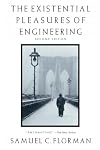
As a socialist, I often get frustrated when writing something written by a liberal for their universal assumption that the capitalist mode is simply "human nature." Even moreso when the author is arguing against someone else who also fails to see that capitalism is the problem. This is the case for the first part of this book, in which Florman argues against the "antitechnologists", perhaps more accurately described as primitivist anarchists. The latter group posits that technology in itself show more is the root of the problems of humanity (at least this is how Florman presents them-- I haven't read them myself). Florman counters with the idea that limitless consumption is human nature, and the engineers have til now only satisfied the needs of the people. One particularly revealing passage goes:
"It is common knowledge that millions of underprivileged families want adequate food and housing. What is less commonly remarked is that after they have adequate food and housing they will want to be served at a fine restaurant and to have a weekend cottage by the sea. People want tickets to the Philharmonic and vacation trips abroad. They want fine china and silver dinner sets and handsome clothes. The illiterate want to learn how to read. Then they want education, and then more education, and then they want their sons and daughters to become doctors and lawyers. It is frightening to see so many millions of people wanting so much.(76)"
Taken out of context this quote sounds much more malicious than I assume Florman intended it to be, but it's telling that he never reconsidered his word choice here. He gives this passage in retort to the antitechnologists' idea that in our technological world, the 'needs' that the average person feels is being fulfilled by the system were created by the system in the first place. This, again, frustrates me as both sides miss the point that neither technology nor "people wanting things" is to blame, but capitalism. Both Florman and the antitechnologists focus mainly on the effects of technology in first world countries, where advancements have led to both a more convenient life and people feeling alienated from society. (Although, in one particularly objectionable aside Florman points to "underdeveloped countries" as an example of where "lack of technology" has lead to suffering-- falling into the same trap he mocks his opponents for of giving technology a will of his own.) The only allusion Florman gives to socialist ideas is dismissing "socialist materialist" authors as "mostly writers of atrocious poetry," and he dismisses the idea of alienation wholesale. He later "debunks" the idea of decentralizing infrastructure by pointing to the fact that "Chain stores are still in business, while mom-and-pop stores continue to fail. Local power companies, especially, are a vanishing breed.(160)"
Other blunders in the text include quoting, without further comment, Wehrner von Braun on the subject of improving humanity through engineering, and putting forth the idea that the lack of women in engineering was because women perceive the profession as less likely to lead to political advancement, while simultaneously offering evidence to the contrary.
However, I am still giving the book 3 stars because, despite the liberal worldview and the numerous pitfalls, it still inspired me as an aspiring engineer. Florman's main idea is that engineers are an extremely diverse group and no one philosophy could encompass them all, but they are all joined by the pleasure of hard work, problem solving, and manipulating the world around them. He shows the failings of the idea of engineers and scientists as infallible leaders of humanity, something the offspring of today's STEM culture could stand to be confronted with. I would recommend this to people like me interested in engineering, but only with a critical eye to where Florman is blinded by his liberal preconceptions of society. show less
"It is common knowledge that millions of underprivileged families want adequate food and housing. What is less commonly remarked is that after they have adequate food and housing they will want to be served at a fine restaurant and to have a weekend cottage by the sea. People want tickets to the Philharmonic and vacation trips abroad. They want fine china and silver dinner sets and handsome clothes. The illiterate want to learn how to read. Then they want education, and then more education, and then they want their sons and daughters to become doctors and lawyers. It is frightening to see so many millions of people wanting so much.(76)"
Taken out of context this quote sounds much more malicious than I assume Florman intended it to be, but it's telling that he never reconsidered his word choice here. He gives this passage in retort to the antitechnologists' idea that in our technological world, the 'needs' that the average person feels is being fulfilled by the system were created by the system in the first place. This, again, frustrates me as both sides miss the point that neither technology nor "people wanting things" is to blame, but capitalism. Both Florman and the antitechnologists focus mainly on the effects of technology in first world countries, where advancements have led to both a more convenient life and people feeling alienated from society. (Although, in one particularly objectionable aside Florman points to "underdeveloped countries" as an example of where "lack of technology" has lead to suffering-- falling into the same trap he mocks his opponents for of giving technology a will of his own.) The only allusion Florman gives to socialist ideas is dismissing "socialist materialist" authors as "mostly writers of atrocious poetry," and he dismisses the idea of alienation wholesale. He later "debunks" the idea of decentralizing infrastructure by pointing to the fact that "Chain stores are still in business, while mom-and-pop stores continue to fail. Local power companies, especially, are a vanishing breed.(160)"
Other blunders in the text include quoting, without further comment, Wehrner von Braun on the subject of improving humanity through engineering, and putting forth the idea that the lack of women in engineering was because women perceive the profession as less likely to lead to political advancement, while simultaneously offering evidence to the contrary.
However, I am still giving the book 3 stars because, despite the liberal worldview and the numerous pitfalls, it still inspired me as an aspiring engineer. Florman's main idea is that engineers are an extremely diverse group and no one philosophy could encompass them all, but they are all joined by the pleasure of hard work, problem solving, and manipulating the world around them. He shows the failings of the idea of engineers and scientists as infallible leaders of humanity, something the offspring of today's STEM culture could stand to be confronted with. I would recommend this to people like me interested in engineering, but only with a critical eye to where Florman is blinded by his liberal preconceptions of society. show less
Complex collection of essays written over the course of several years defending the Engineer as a professional of the highest order. Well written from a stylistic standpoint. Florman takes the reader through the highwater mark of engineering (industrial revolution) to its demise (dawn of the nuclear age). Many of the essays are talks given to other engineering societys but they are accessable to people from other disciplines as well. This book was highly recommended to me by an engineer show more friend who got me my own copy. Not a brilliant work, but a good counterbalance to some of the 'science' writing being done today which tends toward the rhetorical more than the rational. Florman is dated but more persuasive than science-desk journalism or journal contributors. show less
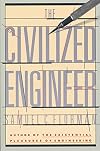
The tales of a person who as a young man decided to become an engineer.
Over the years he oscillated between engineering and literature.
"When older engineers get together they invariably agree that immediately after graduating from college they wished they had taken more technical courses. Ten years later, advancing along career paths, they wished they had learned more about business and economics. Ten years again, in their forties, thinking about the nature of leadership and musing about show more the meaning of life, they regretted not having studied literature, history, and philosophy. This pattern has become something of a cliche, confirmed by studies and polls."
I found it delightfully well written. Some books we read because we have to or feel that they will prove useful. Other books we read because they delight us. This one delights. show less
Over the years he oscillated between engineering and literature.
"When older engineers get together they invariably agree that immediately after graduating from college they wished they had taken more technical courses. Ten years later, advancing along career paths, they wished they had learned more about business and economics. Ten years again, in their forties, thinking about the nature of leadership and musing about show more the meaning of life, they regretted not having studied literature, history, and philosophy. This pattern has become something of a cliche, confirmed by studies and polls."
I found it delightfully well written. Some books we read because we have to or feel that they will prove useful. Other books we read because they delight us. This one delights. show less
As a retired engineer (and a long-time environmentalist), I read this book with interest. It was a little dry at times, but there were plenty of ideas worth chewing on. Most of my engineering jobs gave me great pleasure, for the creativity, accomplishment, and attention to details. Despite the stereotype of engineering being heavy on math, much of the work required clear communication and report-writing, which I excelled at. So it should be no surprise that my outside hobbies included show more writing poetry and short stories, which also require creativity and attention to details.
The book was a bit dated, as it was published in 1976 -- after the women's movement, but before women started flooding the engineering schools. A decade later, 14% of my engineering class were women (which included me), and I'm sure the percentage of women is higher now. Regardless, the author can be forgiven for his term "the engineering man" as he was a product of his time.
A recommended book if you are an engineer or a techie type, or even if you're not. show less
The book was a bit dated, as it was published in 1976 -- after the women's movement, but before women started flooding the engineering schools. A decade later, 14% of my engineering class were women (which included me), and I'm sure the percentage of women is higher now. Regardless, the author can be forgiven for his term "the engineering man" as he was a product of his time.
A recommended book if you are an engineer or a techie type, or even if you're not. show less
Awards

You May Also Like


Statistics
- Works
- 8
- Members
- 775
- Popularity
- #32,828
- Rating
- 3.5
- Reviews
- 11
- ISBNs
- 25