
Daniel F. Galouye (1920–1976)
Author of Dark Universe
About the Author
Image credit: Daniel F. Galouye c. 1952 By unidentified / Greenleaf Publishing - Imagination, 1952, Public Domain, https://commons.wikimedia.org/w/index.php?curid=77832100
Works by Daniel F. Galouye
Psychon e altri simulacri 5 copies
Per il rotto della mente — Author — 4 copies
All Jackson's Children 3 copies
Tonight The Sky Will Fall 2 copies
Gravy Train 1 copy
Complete Short Fiction 1 copy
Cosmic Santa Claus 1 copy
os invasores andam entre nós 1 copy
Kangaroo court [short story] 1 copy
Associated Works
Bodyguard and Four Other Short Science Fiction Novels from Galaxy (2021) — Contributor — 93 copies, 2 reviews
Stella a cinque mondi — Contributor — 4 copies
Science Fiction Adventures April 1957 — Contributor — 2 copies
Fantastic stories of imagination. No. 077 (March 1961) — Contributor — 2 copies
Fantastic stories of imagination. No. 078 (April 1961) — Contributor — 2 copies
Fantastic stories of imagination. No. 086 (December 1961) — Contributor — 1 copy
Tagged
Common Knowledge
- Legal name
- Galouye, Daniel Francis
- Other names
- Daniels, Louis G.
- Birthdate
- 1920-02-11
- Date of death
- 1976-09-07
- Gender
- male
- Education
- Louisiana State University (B.A.)
- Occupations
- test pilot
journalist
science fiction author - Organizations
- United States Navy
- Awards and honors
- Cordwainer Smith Rediscovery Award (2007)
- Short biography
- Daniel Francis (1920-1977) was born in Louisiana. After serving as a test pilot during the war he became a professional journalist. From 1952 he combined this activity with that of writer.
- Nationality
- USA
- Birthplace
- New Orleans, Louisiana, USA
- Places of residence
- New Orleans, Louisiana, USA
- Place of death
- New Orleans, Louisiana, USA
- Burial location
- Covington Cemetery #1, Covington, Louisiana, USA
- Associated Place (for map)
- New Orleans, Louisiana, USA
Members
Discussions
The Man with the Nuclear Underpanties in Good Show Sir! — bad science fiction and fantasy covers (July 2025)
Reviews

I bought and read this 1964 paperback in the year of its publication. This reread turned out to be both fun and timely.
Galouye looked ahead to the distant year 2034. There are aircars and slidewalks ("pedistrips"). The 33rd Amendment to the Constitution has outlawed smoking tobacco, so there are "smoke-easies" where one goes to smoke clandestinely.
And a giant corporation has built a computer that simulates a city. Not just the buildings, but the inhabitants, each of whom has the same degree show more of consciousness and interior life as you or I, living those lives unaware that they are just "...the surge of biasing impulses in simulectronic circuits." Simulacron-3's operators can look at the lower world through its denizen's eyes, or manifest directly to walk among them.
Protagonist Douglas Hall is putting the finishing touches on the project, after the suspicious death of the computer's creator. Odd things are happening: people and documents disappear, a crashing aircar almost kills Hall, and he is having momentary blackouts. The corporation's sinister CEO wants to repurpose Simulacron-3 from its intended use, market research, to seek sure wins of political elections, leading to a one-party state. Other people want the computer shut down permanently.
The twist in the story is thatHall's world, in which Simulacron-3 exists, is itself a simulation in a computer, one existing in an "upper" world. Hall's world is only a "middle" world. Man, that's Heavyyy...
The blackouts are the sign of the upper world's villainous project head logging into Hall's perceptions and reading his thoughts. The young woman who becomes Hall's love interest is connecting in directly from the upper world, looking to keep the middle world from being switched off.
As far as I can tell, this is the very first SF story to envision a world, and real, living people, existing as simulations in a computer. Philip K. Dick had been distrusting reality in numerous stories by 1964, but there was some degree of physicality to his simulacra; you might turn out to be a robot, but you still were made of physical parts in a single, real world. There are a couple of stories, by PKD and Stanislaw Lem, that may have got there first; I have to track them down. Of course, for years now people have taken this as a possibility for our own world, arguing about Roko's Basilisk and whatnot.
But for a 1964 reader, the twist was actually not all that twisty, because it was given away in the back-cover blurb. Evidently Bantam Book's editor didn't really understand what they had - they thought the book was about advertising. The blurb ends "THIS IS A SHATTERING PICTURE OF OUR WORLD IN THE VERY NEAR FUTURE, WHEN MADISON AVENUE AND THE PUBLIC-OPINION POLLSTERS TAKE OVER!" Madison Ave was a big deal in the 1950s and 60s, including in SF - see The Space Merchants from 1953. A classic case of missing the new by seeing it through the lens of the old.
Or so I thought when I picked the book up. And here's where the book's timeliness comes in. Advertising, the molding of public opinion, is still with us, and not just for selling cars. A plutocrat using computers to win elections and lock in one-party dominance - where have we heard about that recently? The connection is especially rich when said plutocrat is described as having "tiny hands." Not the same kind of computer use - Galouye didn't forsee social media - but that editor understood something we mustn't forget.
A film, The Thirteenth Floor, was based on Galouye's novel; it's pretty decent, but had the misfortune to come out two months after the less smart, but much more stylish The Matrix. In this connection it's amusing to note that Douglas Hall manifests in Simulacron-3 by showing up in - a phone booth! - although he doesn't say "we're in." There's also a German TV series from 1973, Welt Am Draht, based on this book. The series is by Rainer Werner Fassbinder, and I must really track it down someday.
This book also features an early use of lasers as a science-fictional weapon. They're nothing like the actual lasers of 1964 or today.
Books this old almost always have problematic presentations of gender and race. After meeting the love interest noted above, Hall remembers her as the 15-year-old daughter of his mentor. Heinlein wasn't the only period author to write about romance with someone previously known when a child. Majorly creepy. Also, if there's a person of color in the story, or anyone who's LGBTQ, I missed them.
This book is interesting as an early example of a now-common genre trope. The story is fast-paced and enjoyable, if one can overlook its faults. show less
Galouye looked ahead to the distant year 2034. There are aircars and slidewalks ("pedistrips"). The 33rd Amendment to the Constitution has outlawed smoking tobacco, so there are "smoke-easies" where one goes to smoke clandestinely.
And a giant corporation has built a computer that simulates a city. Not just the buildings, but the inhabitants, each of whom has the same degree show more of consciousness and interior life as you or I, living those lives unaware that they are just "...the surge of biasing impulses in simulectronic circuits." Simulacron-3's operators can look at the lower world through its denizen's eyes, or manifest directly to walk among them.
Protagonist Douglas Hall is putting the finishing touches on the project, after the suspicious death of the computer's creator. Odd things are happening: people and documents disappear, a crashing aircar almost kills Hall, and he is having momentary blackouts. The corporation's sinister CEO wants to repurpose Simulacron-3 from its intended use, market research, to seek sure wins of political elections, leading to a one-party state. Other people want the computer shut down permanently.
The twist in the story is that
The blackouts are the sign of the upper world's villainous project head logging into Hall's perceptions and reading his thoughts. The young woman who becomes Hall's love interest is connecting in directly from the upper world, looking to keep the middle world from being switched off.
As far as I can tell, this is the very first SF story to envision a world, and real, living people, existing as simulations in a computer. Philip K. Dick had been distrusting reality in numerous stories by 1964, but there was some degree of physicality to his simulacra; you might turn out to be a robot, but you still were made of physical parts in a single, real world. There are a couple of stories, by PKD and Stanislaw Lem, that may have got there first; I have to track them down. Of course, for years now people have taken this as a possibility for our own world, arguing about Roko's Basilisk and whatnot.
Or so I thought when I picked the book up. And here's where the book's timeliness comes in. Advertising, the molding of public opinion, is still with us, and not just for selling cars. A plutocrat using computers to win elections and lock in one-party dominance - where have we heard about that recently? The connection is especially rich when said plutocrat is described as having "tiny hands." Not the same kind of computer use - Galouye didn't forsee social media - but that editor understood something we mustn't forget.
A film, The Thirteenth Floor, was based on Galouye's novel; it's pretty decent, but had the misfortune to come out two months after the less smart, but much more stylish The Matrix. In this connection it's amusing to note that Douglas Hall manifests in Simulacron-3 by showing up in - a phone booth! - although he doesn't say "we're in." There's also a German TV series from 1973, Welt Am Draht, based on this book. The series is by Rainer Werner Fassbinder, and I must really track it down someday.
This book also features an early use of lasers as a science-fictional weapon. They're nothing like the actual lasers of 1964 or today.
Books this old almost always have problematic presentations of gender and race. After meeting the love interest noted above, Hall remembers her as the 15-year-old daughter of his mentor. Heinlein wasn't the only period author to write about romance with someone previously known when a child. Majorly creepy. Also, if there's a person of color in the story, or anyone who's LGBTQ, I missed them.
This book is interesting as an early example of a now-common genre trope. The story is fast-paced and enjoyable, if one can overlook its faults. show less
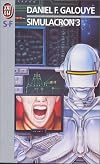
You know how they say that SF of today is insight into the world of tomorrow? While for several books I definitely would not like this to be the case (i.e. any cyber-punk or social dystopian novel, although current events seem to point towards different conclusion) for this book this statement is true.
Written in 1960's it is incredible how modern this book feels. Even technical details on i.e. electronic drums (old-style hard disks) sound and feel modern. Reason for this is very simple - show more author did not overload the reader with petty details. Everything is in the service of the story so human interaction is at the front. Everything else is in the background, used to build up the world but never taking the stage for itself. And this is reason why story remains modern. What might be novelty in 1960's for reader today all the technological descriptions sound pretty natural and common.
Story itself is excellent take on our world, inspired by famous Plato's cave - are we sure that we just see actual things or just their shadows, sort of echoes, playing in front of our eyes? Is the "cogito ergo sum" ultimate test for ones sanity?
I don't think there is something more destructive for a person from doubting the reality - is this in front of me real or not, just my perception stimulated by external source, whatever that might be. This type of thinking is a deadly spiral to the bottom because when touch with reality is lost it can only be re-established with great difficulty if ever. Some will embrace the theories of virtuality of their world while others will see no further purpose of living and just bungee jump into depression.
This topic can also be found in Matrix and movie from the same period, called "Thirteenth Floor'. When our protagonist (Doug Hall) starts realizing something weird is happening panic will take place because if his reality is under suspicion can he trust himself at all? Paranoia just creeps in.
Alongside the above, lets call it existential, story-line author manages to show how mass-population-control through various questionnaires (that are not optional but must be answered, I liked this twist :)) and finally simulations and testing on samples of population (by putting the selected set through various tests and prodding, sometimes just purely cruel and inhumane) will be a path taken by despots and wanna-be tyrants so they can manipulate the popular opinion and grab the power.
Book shows how these market-research companies are for all means and purposes very dangerous if left unchecked (and lets be honest how can they be controlled? very act of trying that would cause other issues of same gravity). Run by people who suffer from God-complex, who are automatons and completely devoid of empathy these companies can bring ruin, conflict and division in society (scenes of conflict between two .... well, to be honest since there is no better word, politically opposite populace groups and government alignment with one of them is so contemporary it is scary).
While world shown to us does not show any negative social elements (pestering pollster's aside) this is an ultimate dystopian world. Everything is quiet and at first looks normal until bad things start seeping in at the edge of ones sight.
I think we are already in the same situation as people described in this book, at mercy of various organizations that, playing untouchables, run very vile and cruel social experiments to collect data for future research. There is no creature anywhere in the universe more cold-blooded than these, true automatons that lost their humanity. It is on the rest to find a way to find way of preventing them from exerting full power over our lives.
Very good book, highly recommended. show less
Written in 1960's it is incredible how modern this book feels. Even technical details on i.e. electronic drums (old-style hard disks) sound and feel modern. Reason for this is very simple - show more author did not overload the reader with petty details. Everything is in the service of the story so human interaction is at the front. Everything else is in the background, used to build up the world but never taking the stage for itself. And this is reason why story remains modern. What might be novelty in 1960's for reader today all the technological descriptions sound pretty natural and common.
Story itself is excellent take on our world, inspired by famous Plato's cave - are we sure that we just see actual things or just their shadows, sort of echoes, playing in front of our eyes? Is the "cogito ergo sum" ultimate test for ones sanity?
I don't think there is something more destructive for a person from doubting the reality - is this in front of me real or not, just my perception stimulated by external source, whatever that might be. This type of thinking is a deadly spiral to the bottom because when touch with reality is lost it can only be re-established with great difficulty if ever. Some will embrace the theories of virtuality of their world while others will see no further purpose of living and just bungee jump into depression.
This topic can also be found in Matrix and movie from the same period, called "Thirteenth Floor'. When our protagonist (Doug Hall) starts realizing something weird is happening panic will take place because if his reality is under suspicion can he trust himself at all? Paranoia just creeps in.
Alongside the above, lets call it existential, story-line author manages to show how mass-population-control through various questionnaires (that are not optional but must be answered, I liked this twist :)) and finally simulations and testing on samples of population (by putting the selected set through various tests and prodding, sometimes just purely cruel and inhumane) will be a path taken by despots and wanna-be tyrants so they can manipulate the popular opinion and grab the power.
Book shows how these market-research companies are for all means and purposes very dangerous if left unchecked (and lets be honest how can they be controlled? very act of trying that would cause other issues of same gravity). Run by people who suffer from God-complex, who are automatons and completely devoid of empathy these companies can bring ruin, conflict and division in society (scenes of conflict between two .... well, to be honest since there is no better word, politically opposite populace groups and government alignment with one of them is so contemporary it is scary).
While world shown to us does not show any negative social elements (pestering pollster's aside) this is an ultimate dystopian world. Everything is quiet and at first looks normal until bad things start seeping in at the edge of ones sight.
I think we are already in the same situation as people described in this book, at mercy of various organizations that, playing untouchables, run very vile and cruel social experiments to collect data for future research. There is no creature anywhere in the universe more cold-blooded than these, true automatons that lost their humanity. It is on the rest to find a way to find way of preventing them from exerting full power over our lives.
Very good book, highly recommended. show less
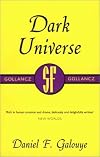
It's tricky to do a whole lot of world-building in just 154 pages, even if that world, as in Daniel F. Galouye's Dark Universe, is small and confined by nature. The trick is to be telegraphic, to let every line convey something about the plot, characters and setting all at once -- or to just let the world building take care of itself, let the reader's imagination do that work. I realized, as I read through this, that I prefer the latter.
I mention this because right from the first page, show more Galouye made the choice I favor less, and went a little overboard, to the point of raising goose eggs on my noggin with his invented slang and cursing and expressions of folk belief. This is a post-apocalyptic (nuclear war), underground world, and, as the title might just suggest, one in which there is maybe not so much light, but that does not mean that every other word coming from a character's mouth needs to be "Radiation this" and "Light that." To say nothing of substituting "period" for "day" in the context in which "gestation" means, more or less, "year." How could I not snicker like an adolescent?
It all reminded me more than a little bit of the South Park episode in which the Otters and Ostriches and other warring atheist types would use "science" as a substitute for "god" in common locutions. Oh my science!
And speaking of that, that same episode of South Park featured one Richard Dawkins, who named this book as his pick for "brilliant sci-fi that got away". And one can see why it would be dear tobhis heart, for the novel's hero, Jared, spends most of the story calling his people's cherished shibboleths into question and facing the consequences. Well, of course that's why he would like it.
To focus on either of these qualities -- annoying overuse of invented locution or hero-as-heretic -- is to miss what's amazing about this novel, though. I return to the world building, for Galouye has created a philosopher's delight of a universe, in which no one can recall what light or darkness actually are, and everyone has come to rely on other senses -- mostly hearing and smell -- to get around, to grow food (a must-be-engineered fungus they call manna that provides not only food but fiber and building material as well), to fight off predators (giant mutated "soubats"), and to perceive each other. As is legendary about the blind, these other senses are exquisitely highly developed in the dwellers of Galouye's underground world -- except among an offshoot tribe, the "Zivvers" who, it turns out, can see into the infrared spectrum, and are thus the only people in this story who actually use their eyes. They are rare exceptions to the rule here, though; everyone else echolocates, using "clickstones" and a giant central "echo-caster" to perceive their small world.
Galouye put a lot of thought and care into developing these cultures, and achieved something frankly marvelous thereby. That the plot of the story is a hackneyed coming-of-age/what-really happened narrative doesn't matter. Galouye succeeds in immersing the reader in a sightless cave of a universe, and in the process leads her to think about something she has always taken for granted, is taking for granted even as she reads his words: light ("silent sound" Jared calls it at first, struggling for words to describe the phenomenon to himself), and what it might be like to encounter it for the first time after generations without it.
Who would have thought a retelling of Plato's Allegory of the Den could be so absorbing? show less
I mention this because right from the first page, show more Galouye made the choice I favor less, and went a little overboard, to the point of raising goose eggs on my noggin with his invented slang and cursing and expressions of folk belief. This is a post-apocalyptic (nuclear war), underground world, and, as the title might just suggest, one in which there is maybe not so much light, but that does not mean that every other word coming from a character's mouth needs to be "Radiation this" and "Light that." To say nothing of substituting "period" for "day" in the context in which "gestation" means, more or less, "year." How could I not snicker like an adolescent?
It all reminded me more than a little bit of the South Park episode in which the Otters and Ostriches and other warring atheist types would use "science" as a substitute for "god" in common locutions. Oh my science!
And speaking of that, that same episode of South Park featured one Richard Dawkins, who named this book as his pick for "brilliant sci-fi that got away". And one can see why it would be dear tobhis heart, for the novel's hero, Jared, spends most of the story calling his people's cherished shibboleths into question and facing the consequences. Well, of course that's why he would like it.
To focus on either of these qualities -- annoying overuse of invented locution or hero-as-heretic -- is to miss what's amazing about this novel, though. I return to the world building, for Galouye has created a philosopher's delight of a universe, in which no one can recall what light or darkness actually are, and everyone has come to rely on other senses -- mostly hearing and smell -- to get around, to grow food (a must-be-engineered fungus they call manna that provides not only food but fiber and building material as well), to fight off predators (giant mutated "soubats"), and to perceive each other. As is legendary about the blind, these other senses are exquisitely highly developed in the dwellers of Galouye's underground world -- except among an offshoot tribe, the "Zivvers" who, it turns out, can see into the infrared spectrum, and are thus the only people in this story who actually use their eyes. They are rare exceptions to the rule here, though; everyone else echolocates, using "clickstones" and a giant central "echo-caster" to perceive their small world.
Galouye put a lot of thought and care into developing these cultures, and achieved something frankly marvelous thereby. That the plot of the story is a hackneyed coming-of-age/what-really happened narrative doesn't matter. Galouye succeeds in immersing the reader in a sightless cave of a universe, and in the process leads her to think about something she has always taken for granted, is taking for granted even as she reads his words: light ("silent sound" Jared calls it at first, struggling for words to describe the phenomenon to himself), and what it might be like to encounter it for the first time after generations without it.
Who would have thought a retelling of Plato's Allegory of the Den could be so absorbing? show less

I wonder "what were they thinking" about more American SF from the 1970s than any other period. By "they" I mean both author and publisher. Case in point: this novel.
There are some interesting hard SF concepts tossed out. (1) A search for the spontaneous creation of neutrons, as posited by Hoyle's now-defunct steady state theory of the universe, reveals that all new matter is being created inside one man. (2) The old theories of the universe were true. it's the universe that has changed. show more Once there was a geocentric universe with light shining through holes, then later a simple Newtonian model, then the one we see now. (3) PI becomes a rational number, 12 years before Carl Sagan imagined someone embedding a message in the digits of PI. (4) At one point in the story, the moon disappears briefly, then the sun for a number of minutes, then the moon again, then the other planets. A timetable of these events is presented. It's a mini-mystery with a neat solution. This is all far-out but fun.
Then there's everything else. This reads like a bad caricature of 1970s acid trip movies. Everyone "digs" things, women are all "chicks", people "freak out" every other page. This would spell doom for the best of plots. But this is a plot where God -- who doesn't seem very bright for all his omnipotence -- is hiding inside our hero, while his destructive opposite manipulates things to lead to eventual destruction. There's a cult trying to find and free our hero who wear all their clothes inside out (a topological transformation) and pronounce all proper names backwards. At one of their meetings, a woman rides a roller coaster in the form of a Moebius strip, stripping while she goes. The book ends with several pages of simple but cryptic diagrams exolaining what happens to the universe.
The Science Fiction Encyclopedia politely notes "Galouye's last novel, The Infinite Man (1973), was less successful." Yes, indeed.
Not recommended. show less
There are some interesting hard SF concepts tossed out. (1) A search for the spontaneous creation of neutrons, as posited by Hoyle's now-defunct steady state theory of the universe, reveals that all new matter is being created inside one man. (2) The old theories of the universe were true. it's the universe that has changed. show more Once there was a geocentric universe with light shining through holes, then later a simple Newtonian model, then the one we see now. (3) PI becomes a rational number, 12 years before Carl Sagan imagined someone embedding a message in the digits of PI. (4) At one point in the story, the moon disappears briefly, then the sun for a number of minutes, then the moon again, then the other planets. A timetable of these events is presented. It's a mini-mystery with a neat solution. This is all far-out but fun.
Then there's everything else. This reads like a bad caricature of 1970s acid trip movies. Everyone "digs" things, women are all "chicks", people "freak out" every other page. This would spell doom for the best of plots. But this is a plot where God -- who doesn't seem very bright for all his omnipotence -- is hiding inside our hero, while his destructive opposite manipulates things to lead to eventual destruction. There's a cult trying to find and free our hero who wear all their clothes inside out (a topological transformation) and pronounce all proper names backwards. At one of their meetings, a woman rides a roller coaster in the form of a Moebius strip, stripping while she goes. The book ends with several pages of simple but cryptic diagrams exolaining what happens to the universe.
The Science Fiction Encyclopedia politely notes "Galouye's last novel, The Infinite Man (1973), was less successful." Yes, indeed.
Not recommended. show less
Lists
Awards

You May Also Like


Associated Authors
Statistics
- Works
- 34
- Also by
- 31
- Members
- 1,258
- Popularity
- #20,396
- Rating
- 3.5
- Reviews
- 39
- ISBNs
- 67
- Languages
- 9
- Favorited
- 3