
James Goss
Author of Almost Perfect
About the Author
Series
Works by James Goss
The New Adventures of Bernice Summerfield: The Unbound Universe (2016) — Script Editor; Contributor — 7 copies
Blake's 7: The Liberator Chronicles, Volume 5: Logic, Risk Management and Three (2013) — Author — 6 copies
Doctor Who: Blackout & The Art of Death: Two Audio-Exclusive Adventures Featuring the 11th Doctor (2012) 4 copies, 2 reviews
Doctor Who: The Hounds of Artemis & Eye of the Jungle: The New Adventures, Vol. 3 (The New Adventures Doctor Who) (2011) 3 copies, 1 review
Torchwood: The House of the Dead 3 copies
Doctor Who: The Silent Scream 2 copies
The Eternity Club 3: The Terrible Shame of a Tree / Mr Pym Has an Adventure (2024) — Author — 2 copies
Wednesdays for Beginners 1 copy
Gallifrey: Renaissance 1 copy
Slight Glimpses of Tomorrow 1 copy
One Enchanted Evening 1 copy
A Christmas Card from Mr Colchester — Author — 1 copy
A Postcard from Mr Colchester — Author — 1 copy
Race of Scorpions 1 copy
VAM PD Volume 1 — Author — 1 copy
Orac | Redemption 1 copy
Another Postcard from Mr Colchester — Author — 1 copy
Associated Works
Blake's 7: The Liberator Chronicles, Volume 8: President, The Sea of Iron and Spoils (2014) — Author — 7 copies
Torchwood: The Collected Radio Dramas: Seven BBC Radio 4 Full-Cast Dramas (2017) — Contributor — 7 copies
The Lonely Computer and Other Internet Doctor Who Short Trips, 2004-21 — Contributor — 1 copy
Torchwood: Among Us Part 3 — Author, some editions — 1 copy
Tagged
Common Knowledge
- Birthdate
- 1974
- Gender
- male
- Education
- University of Oxford (BA|English Literature)
- Occupations
- writer
editor
producer - Nationality
- UK
- Places of residence
- London, England, UK
- Associated Place (for map)
- England, UK
Members
Reviews
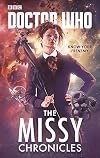
A collection of short Doctor Who stories focusing on Missy, aka the latest incarnation of the Master, the Doctor's old friend and long-term nemesis. Personally I adore Missy; I think she's enormous fun, and the best version of the Master since the original. So how could I resist?
To address each of the six stories included here individually:
"Dismemberment" by James Goss: Shortly after regenerating, Missy visits her favorite evil gentlemen's club, discovers she is no longer welcome as a show more member, and wreaks horrible vengeance on the people who kicked her out. There's some genuinely funny moments, and some darkly satiric sensibilities. And Missy gets some great lines. But the sheer levels of horror and gruesomeness to some of her actions actually made me feel a little uncomfortable by the end. I think this particular kind of villainous depravity might almost be a little over the top, even for Missy.
"Lords and Masters" by Cavan Scott: The Time Lords send Missy off on an assignment for them. They really ought to know better. I liked the concept of this one, and the way it offers up some rather dark little details about how things have been going on Gallifrey. I do wish the "companion" she was given for the job felt less two-dimensional, though. And it's genuinely a little unsettling to get a Doctor Who story like this where the Doctor doesn't get to show up to make things right in the end.
"Teddy Sparkles Must Die!" by Paul Magrs: A weird, weird little send-up of kids' adventure stories, featuring evil governess Missy and a magical talking teddy bear. I honestly can't quite decide whether this one is pleasantly ridiculous or just plain ridiculous.
"The Liar, the Glitch and the War Zone" by Peter Anghelides: An adventure in Venice featuring a damaged TARDIS, a temporal rift, and an army of angry space gryphons. But despite the fact that there's a lot going on here, I found it a bit dull. There's less good Missy dialog here than in the other stories, too. I did like her villainous plan to flood Venice, though.
"Girl Power!" by Jacqueline Rayner: An epistolary story, also featuring the Twelfth Doctor and Nardole, in which Missy hatches a plan that gives new meaning to the phrase "smash the patriarchy.". Now, this one was pleasantly ridiculous. Delightfully ridiculous, even. I was laughing out loud through pretty much the whole thing.
"Alit in Underland" by Richard Dinnick: This one is told from the POV of Alit, the little girl from the episodes "World Enough and Time"/The Doctor Falls," and is set during the period between those episodes when the Doctor is unconscious. I don't know that it's a bit from that story that really needed filling in, but it does give us the opportunity for a little more interaction between Missy and her previous incarnation, and I will never say no to that.
Rating: It's enough of a mixed bag that I'm going to call it 3.5/5, but the best stories are fun enough that I'd say it's worth checking out if you're a fan of the character. show less
To address each of the six stories included here individually:
"Dismemberment" by James Goss: Shortly after regenerating, Missy visits her favorite evil gentlemen's club, discovers she is no longer welcome as a show more member, and wreaks horrible vengeance on the people who kicked her out. There's some genuinely funny moments, and some darkly satiric sensibilities. And Missy gets some great lines. But the sheer levels of horror and gruesomeness to some of her actions actually made me feel a little uncomfortable by the end. I think this particular kind of villainous depravity might almost be a little over the top, even for Missy.
"Lords and Masters" by Cavan Scott: The Time Lords send Missy off on an assignment for them. They really ought to know better. I liked the concept of this one, and the way it offers up some rather dark little details about how things have been going on Gallifrey. I do wish the "companion" she was given for the job felt less two-dimensional, though. And it's genuinely a little unsettling to get a Doctor Who story like this where the Doctor doesn't get to show up to make things right in the end.
"Teddy Sparkles Must Die!" by Paul Magrs: A weird, weird little send-up of kids' adventure stories, featuring evil governess Missy and a magical talking teddy bear. I honestly can't quite decide whether this one is pleasantly ridiculous or just plain ridiculous.
"The Liar, the Glitch and the War Zone" by Peter Anghelides: An adventure in Venice featuring a damaged TARDIS, a temporal rift, and an army of angry space gryphons. But despite the fact that there's a lot going on here, I found it a bit dull. There's less good Missy dialog here than in the other stories, too. I did like her villainous plan to flood Venice, though.
"Girl Power!" by Jacqueline Rayner: An epistolary story, also featuring the Twelfth Doctor and Nardole, in which Missy hatches a plan that gives new meaning to the phrase "smash the patriarchy.". Now, this one was pleasantly ridiculous. Delightfully ridiculous, even. I was laughing out loud through pretty much the whole thing.
"Alit in Underland" by Richard Dinnick: This one is told from the POV of Alit, the little girl from the episodes "World Enough and Time"/The Doctor Falls," and is set during the period between those episodes when the Doctor is unconscious. I don't know that it's a bit from that story that really needed filling in, but it does give us the opportunity for a little more interaction between Missy and her previous incarnation, and I will never say no to that.
Rating: It's enough of a mixed bag that I'm going to call it 3.5/5, but the best stories are fun enough that I'd say it's worth checking out if you're a fan of the character. show less
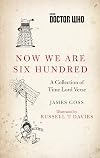
Book 143 - Doctor Who - Now we are six hundred
Written by James Goss - Illustrated by Russell T Davies
As a parody of A.A. Milne’s ‘Now we are six’ this joyous little book takes us from the end of the universe and back again through the eyes of the last (?) Gallifreyan…Doctor Who…or the Doctor as he is known.
Poems in a fabulous short little book
Gets into every alien cranny and nook
We fly through adventure like a marathon race
Through the depths of time and space.
With gems show more reminiscent about being on stairs half way up
We meet Daleks and Cybermen and a K9 pup
Travelling with a Time Lord who knows that he rocks
Are all his companions in that strange blue box.
I could keep going with this poem that rhymes
But as with most things Who, there isn’t the time.
So before both people who read this, loudly scream out
I’ll stop with a whimper and a bit of a pout
I thoroughly recommend this book full of odes
Where we met green monsters with faces like toads
There was even a clown who moved like a mime
The Doctor faced them all in space and time.
Time to put my nerd away
He only comes out on special days.
The drawings are incredible and oh so cute
Made me laugh, a bit of a hoot.
Russell T Davies drew them with aplomb
He writes and draws, so much fun.
They add to the tales of our Time Lord friend
That’s it..all done…that’s The End. show less
Written by James Goss - Illustrated by Russell T Davies
As a parody of A.A. Milne’s ‘Now we are six’ this joyous little book takes us from the end of the universe and back again through the eyes of the last (?) Gallifreyan…Doctor Who…or the Doctor as he is known.
Poems in a fabulous short little book
Gets into every alien cranny and nook
We fly through adventure like a marathon race
Through the depths of time and space.
With gems show more reminiscent about being on stairs half way up
We meet Daleks and Cybermen and a K9 pup
Travelling with a Time Lord who knows that he rocks
Are all his companions in that strange blue box.
I could keep going with this poem that rhymes
But as with most things Who, there isn’t the time.
So before both people who read this, loudly scream out
I’ll stop with a whimper and a bit of a pout
I thoroughly recommend this book full of odes
Where we met green monsters with faces like toads
There was even a clown who moved like a mime
The Doctor faced them all in space and time.
Time to put my nerd away
He only comes out on special days.
The drawings are incredible and oh so cute
Made me laugh, a bit of a hoot.
Russell T Davies drew them with aplomb
He writes and draws, so much fun.
They add to the tales of our Time Lord friend
That’s it..all done…that’s The End. show less
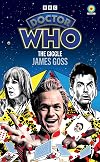
https://fromtheheartofeurope.eu/the-fourteenth-doctor-novelisations-the-star-bea....
It’s no secret that I rate James Goss as one of the best Doctor Who writers currently in business (eg here, here and here), so I awaited his novelisation of The Giggle with eager anticipation.
I have to say that my high expectations were more than exceeded. Goss tells the story from the perspective of the Toymaker (first-person Doctor Who books are very rare and not always successful), smooths off the show more edges, throws in some extra pinches of emotion and also some shifts of genre and format – at one point the book becomes a choose-your-own-adventure for Donna, and there are other puzzles throughout. I suspect that the paper version will be even nicer and it’s the only one of the three that I plan to get in hard copy. It’s a real tour de force. show less
It’s no secret that I rate James Goss as one of the best Doctor Who writers currently in business (eg here, here and here), so I awaited his novelisation of The Giggle with eager anticipation.
I have to say that my high expectations were more than exceeded. Goss tells the story from the perspective of the Toymaker (first-person Doctor Who books are very rare and not always successful), smooths off the show more edges, throws in some extra pinches of emotion and also some shifts of genre and format – at one point the book becomes a choose-your-own-adventure for Donna, and there are other puzzles throughout. I suspect that the paper version will be even nicer and it’s the only one of the three that I plan to get in hard copy. It’s a real tour de force. show less
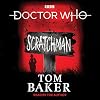
Scratchman is not a standard Doctor Who novel. It’s something stranger and more personal: a pair of Doctor Who stories filtered through Tom Baker’s own voice, memory, and late-life perspective on what it meant to be the Fourth Doctor.
If you love or miss the Fourth Doctor, the audiobook is essential. This is Tom Baker at his best — playful, melancholy, self-aware, and deeply inside the character. You don’t just hear the Doctor; you hear Baker’s understanding of him: the loneliness, show more the bravado, the tenderness for his companions, and the quiet knowledge that the universe does not always let you arrive in time.
Structurally, the book is really two linked stories.
The first, about the living scarecrows, is the stronger and more coherent piece. It’s folk-horror Doctor Who — concrete, cruel, and emotionally unsettling. The idea that people can be hollowed out and left standing in the fields in the shape of themselves is genuinely disturbing, and it carries a powerful sense of grief and loss.
The second story begins when Sarah Jane and Harry are pulled into the underworld, and the Doctor follows them. This section feels less like a monster story and more like a meditation on aging, fame, and what it means when the role that defined you no longer does. It’s funny, thoughtful, and full of Baker’s voice, but it doesn’t quite belong to the same novel as the scarecrow horror that came before it.
As Doctor Who, Scratchman shows the usual franchise seams. There are narrative gaps, improbable escapes, and moments where companions are saved again and again when logic says they shouldn’t be. These are not flaws so much as genre DNA — this is Doctor Who, not hard science fiction — but readers who care about strict internal logic will notice them.
What makes Scratchman work isn’t its plotting. It’s the intimacy. This feels like Tom Baker finally sitting down with the Fourth Doctor and saying, quietly, “This is who you really were to me.”
It’s uneven. It’s strange. It’s sometimes silly.
And it’s quietly moving in a way very few tie-in novels ever manage to be.
If you care about the Fourth Doctor, listen to it.
You won’t just get a story — you’ll get a voice coming home. show less
If you love or miss the Fourth Doctor, the audiobook is essential. This is Tom Baker at his best — playful, melancholy, self-aware, and deeply inside the character. You don’t just hear the Doctor; you hear Baker’s understanding of him: the loneliness, show more the bravado, the tenderness for his companions, and the quiet knowledge that the universe does not always let you arrive in time.
Structurally, the book is really two linked stories.
The first, about the living scarecrows, is the stronger and more coherent piece. It’s folk-horror Doctor Who — concrete, cruel, and emotionally unsettling. The idea that people can be hollowed out and left standing in the fields in the shape of themselves is genuinely disturbing, and it carries a powerful sense of grief and loss.
The second story begins when Sarah Jane and Harry are pulled into the underworld, and the Doctor follows them. This section feels less like a monster story and more like a meditation on aging, fame, and what it means when the role that defined you no longer does. It’s funny, thoughtful, and full of Baker’s voice, but it doesn’t quite belong to the same novel as the scarecrow horror that came before it.
As Doctor Who, Scratchman shows the usual franchise seams. There are narrative gaps, improbable escapes, and moments where companions are saved again and again when logic says they shouldn’t be. These are not flaws so much as genre DNA — this is Doctor Who, not hard science fiction — but readers who care about strict internal logic will notice them.
What makes Scratchman work isn’t its plotting. It’s the intimacy. This feels like Tom Baker finally sitting down with the Fourth Doctor and saying, quietly, “This is who you really were to me.”
It’s uneven. It’s strange. It’s sometimes silly.
And it’s quietly moving in a way very few tie-in novels ever manage to be.
If you care about the Fourth Doctor, listen to it.
You won’t just get a story — you’ll get a voice coming home. show less
Lists
Awards

You May Also Like


Associated Authors
Statistics
- Works
- 160
- Also by
- 31
- Members
- 4,346
- Popularity
- #5,773
- Rating
- 3.8
- Reviews
- 174
- ISBNs
- 272
- Languages
- 6
- Favorited
- 1