
Trevor Baxendale
Author of Wishing Well
About the Author
Image credit: Trevor Baxendale (right)
Series
Works by Trevor Baxendale
Associated Works
Tagged
Common Knowledge
Members
Reviews
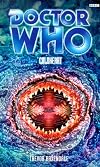
It might seem a tad harsh but this book is my benchmark for poor Who novels. It's plodding, the prose is lifeless, but even that's more animated than the characters, including the regulars. The setting and plot are forgettably generic, and would be equally or probably more at home in the Star Trek or Stargate universe. For me all this adds up to the biggest crime in a series such as Doctor Who - a complete lack of wit, ambition, originality and therefore interest.
The one remotely amusing or show more interesting feature is the inadvertantly rude looking cover. I like to think the designer was as numbed by the book as I was and decided to see what he could get away with to give the reader at least some entertainment value for their cash. show less
The one remotely amusing or show more interesting feature is the inadvertantly rude looking cover. I like to think the designer was as numbed by the book as I was and decided to see what he could get away with to give the reader at least some entertainment value for their cash. show less

There is a sort of idea in Doctor Who discourse, of "guns vs. frocks." This idea was apparently coined by Gareth Roberts, but is pretty well explained by Kate Orman in this interview with fan and scholar Alan McKee:
On the whole, I agree: I am much more likely to have a good time with "Flatline" than with "Time Heist." However, I can enjoy a good "gun" story: I am an unabashed fan of Resurrection of the Daleks, for example, and Earthshock and The Caves of Androzani are also in this space. (Well, I remember being a big fan of Resurrection, anyway; it's been a long time since I've seen it.)
One might argue, though, that the whole guns-vs.-frocks dichotomy isn't really applicable to Doctor Who as a whole so much as a very narrow slice of it, which is what Jacqueline Klieper says on this Tumblr post: "I’m generally kind of dubious about treating the gun/frock distinction as particularly meaningful outside of the fairly narrow parameters of the Virgin novels that the terms originated because of." It's not so much a term designed to describe Doctor Who in general as a way of describing two particular ways of making the New Doctor Who Adventures more "adult." You could take the Paul Cornell "frock" approach and embrace the weird camp elements of Doctor Who—sentient churches on the moon—or you could take the "gun" approach of macho space military people blowing things up—for me embodied by the particularly boring and tedious novel Shadowmind by Christopher Bulis. I tend to agree with Kliper; I struggle to map the guns-vs.-frocks dichotomy onto the 2005-22 revival, for example. (I very much struggled to come up an example before finally thinking of "Time Heist," to be honest. Klieper comes up with a couple of examples from the revival, but I'm not sure I really agree with them... though I may be falling victim to a common problem in genre distinctions: "any example I enjoy from a genre I generally don't enjoy must not count as a 'true' example of that genre.")
But that doesn't mean it can't occasionally happen. Trevor Baxendale never wrote an NA, but Prisoner of the Daleks reads like his attempt at one. The Doctor lands in the era of the Dalek Wars, and the book is all about that without reprieve: soldiers and squads and massacres and secret plots and plans and it's all Very Serious Stuff. Nicholas Briggs could have written this in his sleep, of course, but with Nick there's a thematic depth, an attempt to make the Daleks mean something that's completely absent from this book where they're just the Horrible Monsters You Know from TV. The one clever thing this novel does is to make you think there's going to be a sympathetic female character of the week who functions as a pseudocompanion... and then kill her off pretty quickly. I didn't expect this, so well done, and it firmly established the book's "gun" bona fides: no one is safe! Unfortunately, having done this, the book is left with no interesting or sympathetic guest characters to speak of. I think "gun" Doctor Who is probably a particularly poor fit for David Tennant's Doctor, even on the page.
All of this is to say, I think this book perfectly achieves what it sets out to do. But what it sets out to do completely fails to be of interest to me. If you know about the guns-vs.-frocks dichotomy, then what you think about that way of conceptualizing Doctor Who will probably tell you pretty clearly what you will think about this book before you even read it. (I picked this up because it's one of the more widely praised "New Series Adventures"... but I guess I should have paid more attention to who was doing the praising!) show less
I think it’s [Doctor Who novelist] Gareth Roberts who said that Doctor Who needs less guns and more frocks. And it became a very quick shorthand for two rough schools of writing in the Doctor Who novels: one of which was militaristic space opera books that were very serious,show more
and took themselves very seriously; and then at completely the other end of the spectrum, very camp ones that did not take themselves seriously. (10)(Also discussed here by another writer.) Like a lot of systems that break things down into exactly two categories, you're meant to favor one—I used to read Scott Alexander's Slate Star Codex, and a go-to move for him and his readership was, "There are exactly two ways of thinking, and I belong to the superior one." Guns vs. frocks doesn't hide this; it's right there in the original conception of it that Kate Orman paraphrases. As Elizabeth Sandifer points out, "this is a spectacularly loaded framing of a debate" when your main character abhors guns!
On the whole, I agree: I am much more likely to have a good time with "Flatline" than with "Time Heist." However, I can enjoy a good "gun" story: I am an unabashed fan of Resurrection of the Daleks, for example, and Earthshock and The Caves of Androzani are also in this space. (Well, I remember being a big fan of Resurrection, anyway; it's been a long time since I've seen it.)
One might argue, though, that the whole guns-vs.-frocks dichotomy isn't really applicable to Doctor Who as a whole so much as a very narrow slice of it, which is what Jacqueline Klieper says on this Tumblr post: "I’m generally kind of dubious about treating the gun/frock distinction as particularly meaningful outside of the fairly narrow parameters of the Virgin novels that the terms originated because of." It's not so much a term designed to describe Doctor Who in general as a way of describing two particular ways of making the New Doctor Who Adventures more "adult." You could take the Paul Cornell "frock" approach and embrace the weird camp elements of Doctor Who—sentient churches on the moon—or you could take the "gun" approach of macho space military people blowing things up—for me embodied by the particularly boring and tedious novel Shadowmind by Christopher Bulis. I tend to agree with Kliper; I struggle to map the guns-vs.-frocks dichotomy onto the 2005-22 revival, for example. (I very much struggled to come up an example before finally thinking of "Time Heist," to be honest. Klieper comes up with a couple of examples from the revival, but I'm not sure I really agree with them... though I may be falling victim to a common problem in genre distinctions: "any example I enjoy from a genre I generally don't enjoy must not count as a 'true' example of that genre.")
But that doesn't mean it can't occasionally happen. Trevor Baxendale never wrote an NA, but Prisoner of the Daleks reads like his attempt at one. The Doctor lands in the era of the Dalek Wars, and the book is all about that without reprieve: soldiers and squads and massacres and secret plots and plans and it's all Very Serious Stuff. Nicholas Briggs could have written this in his sleep, of course, but with Nick there's a thematic depth, an attempt to make the Daleks mean something that's completely absent from this book where they're just the Horrible Monsters You Know from TV. The one clever thing this novel does is to make you think there's going to be a sympathetic female character of the week who functions as a pseudocompanion... and then kill her off pretty quickly. I didn't expect this, so well done, and it firmly established the book's "gun" bona fides: no one is safe! Unfortunately, having done this, the book is left with no interesting or sympathetic guest characters to speak of. I think "gun" Doctor Who is probably a particularly poor fit for David Tennant's Doctor, even on the page.
All of this is to say, I think this book perfectly achieves what it sets out to do. But what it sets out to do completely fails to be of interest to me. If you know about the guns-vs.-frocks dichotomy, then what you think about that way of conceptualizing Doctor Who will probably tell you pretty clearly what you will think about this book before you even read it. (I picked this up because it's one of the more widely praised "New Series Adventures"... but I guess I should have paid more attention to who was doing the praising!) show less
http://nwhyte.livejournal.com/1975990.html
If you can swallow the completely implausible geological setup for this story - a desert planet with an ice core (or at least a permafrost mantle) - it's rather a good tale of the politics of a citadel society under stress, as the monsters arise both from the icy depths and from the elders' own children; it's rather effective as a body-horror story in its own right, and there are some excellent character moments for Fitz (one of the greatest of Who show more companions), the Doctor and even Compassion. But I can't quite forgive the geology. show less
If you can swallow the completely implausible geological setup for this story - a desert planet with an ice core (or at least a permafrost mantle) - it's rather a good tale of the politics of a citadel society under stress, as the monsters arise both from the icy depths and from the elders' own children; it's rather effective as a body-horror story in its own right, and there are some excellent character moments for Fitz (one of the greatest of Who show more companions), the Doctor and even Compassion. But I can't quite forgive the geology. show less
Warning: this review contains spoilers.
****
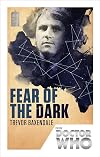
The Doctor, Tegan, and Nyssa confront an ancient evil on one of the moons of Akoshemon in this spine-tingling tale. This moon is reputed to have been a haven for depravity and corruption over many centuries, and a team of archaeologists is on hand to learn more about the civilizations that lived through such terrible times. But their presence on the moon reawakens that evil… that monster that all living creatures instinctively fear… The show more Dark.
Overall, I liked this story. The Dark is terrifying. Properly scary. And its sidekick, the Bloodhunter, is so disgusting and scary that I am glad it exists only in book form and not on television, otherwise I would have nightmares. This is also a high-stakes adventure for the Doctor, as Tegan and especially Nyssa are placed in significant danger and there seems less of a guarantee that everyone will come out alive. (We know that they all should, but this adventure comes shortly after Earthshock, in which Adric died, so another companion death is not out of the question.) Nyssa faces a great deal of peril because of her telepathic capabilities, which the Dark uses to lure them to Akoshemon's moon in the first place. She also gets to use her scientific brain and even fight on occasion. Tegan, meanwhile, never lets the Doctor deter her from getting involved in a fight. And the Doctor has met a catastrophic enemy in the Dark. The fact that we know he has future selves may detract from the suspense a little bit, but this adventure takes a great toll on him.
This story was originally published in 2003 and reprinted in a 50th Anniversary Collection, which was my edition. This publication spanned just over 300 pages -- I'm not sure how long the story was in its original edition, but this edition felt overlong. There were also puzzling spelling errors that seemed to suggest a slightly faulty OCR conversion.
I would recommend this book for those who like really creepy Doctor Who villains, with the caveat that it does run a bit long. show less
****
The Doctor, Tegan, and Nyssa confront an ancient evil on one of the moons of Akoshemon in this spine-tingling tale. This moon is reputed to have been a haven for depravity and corruption over many centuries, and a team of archaeologists is on hand to learn more about the civilizations that lived through such terrible times. But their presence on the moon reawakens that evil… that monster that all living creatures instinctively fear… The show more Dark.
Overall, I liked this story. The Dark is terrifying. Properly scary. And its sidekick, the Bloodhunter, is so disgusting and scary that I am glad it exists only in book form and not on television, otherwise I would have nightmares. This is also a high-stakes adventure for the Doctor, as Tegan and especially Nyssa are placed in significant danger and there seems less of a guarantee that everyone will come out alive. (We know that they all should, but this adventure comes shortly after Earthshock, in which Adric died, so another companion death is not out of the question.) Nyssa faces a great deal of peril because of her telepathic capabilities, which the Dark uses to lure them to Akoshemon's moon in the first place. She also gets to use her scientific brain and even fight on occasion. Tegan, meanwhile, never lets the Doctor deter her from getting involved in a fight. And the Doctor has met a catastrophic enemy in the Dark. The fact that we know he has future selves may detract from the suspense a little bit, but this adventure takes a great toll on him.
This story was originally published in 2003 and reprinted in a 50th Anniversary Collection, which was my edition. This publication spanned just over 300 pages -- I'm not sure how long the story was in its original edition, but this edition felt overlong. There were also puzzling spelling errors that seemed to suggest a slightly faulty OCR conversion.
I would recommend this book for those who like really creepy Doctor Who villains, with the caveat that it does run a bit long. show less
Lists
You May Also Like


Associated Authors
Statistics
- Works
- 52
- Also by
- 13
- Members
- 3,022
- Popularity
- #8,452
- Rating
- 3.4
- Reviews
- 68
- ISBNs
- 102
- Languages
- 6
- Favorited
- 1