
Romesh Gunesekera
Author of Reef
About the Author
Image credit: Courtesy of Allen and Unwin
Works by Romesh Gunesekera
Novel Writing: A Writers' and Artists' Companion (Writers' and Artists' Companions) (2015) 13 copies
Roadkill 1 copy
වියැකෙන ජීවිත 1 copy
Associated Works
A World of Difference: An Anthology of Short Stories from Five Continents (2008) — Contributor — 112 copies, 1 review
Many Roads Through Paradise: An Anthology Of Sri Lankan Literature (translation) (2014) — Contributor — 10 copies
Tagged
Common Knowledge
- Canonical name
- Romesh Gunesekera
- Birthdate
- 1954
- Gender
- male
- Organizations
- Council of the Royal Society of Literature
Asia House Festival of Asian Literature - Awards and honors
- Rathborne Prize in Philosophy (1976)
- Nationality
- Sri Lanka
- Birthplace
- Colombo, Sri Lanka
- Places of residence
- London, England, UK
- Associated Place (for map)
- Sri Lanka
Members
Reviews
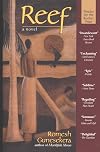
Brilliant. A first novel and a Booker finalist. Writing that captivates. Gunesekera is, to my mind, an absolute master of those moments in life that are fleeting and indescribable; of a moment between two people. Of the evanescent, as I wrote above. I cannot think of anyone I have ever read who does it better. There is an exquisiteness, a tenderness, a stunning beauty to his images. Ostensibly the story of a houseboy in Sri Lanka, it becomes the story of two lives inextricably woven into the show more tragedy of the civil war in that country. As with Sandglass, above, it is a deep, unforgettable reflection on the passage of time, chances taken and chances lost, on identity, and of exile. Just stunning. show less

Short stories from an expat Sri Lankan who I enjoy generally quite a bit. He’s written close to a dozen books and I’ll admit that I have found a clunker or two among them, but when he hits it, he writes wonderfully. These stories have a thread in common: they all share a narrator taking people (generally foreigners) to different parts of the island. The narrator tends to see things that one might expect to be familiar through new eyes—the eyes of those he is accompanying. The show more commentary is thus about both the visitors and the narrator and, inevitably, the island. Gunesekera has always been concerned about the price of the civil war; this volume is no different and he always manages to find a poignancy, a deep hurt that he expresses more by omission than anything else. Recommended. show less
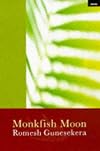
'These sad spare stories illustrate the shocking fragility of the whole modern world', June 25, 2014
This review is from: Monkfish Moon (Kindle Edition)
Collection of 9 short stories, mainly set in Sri Lanka and tinged with the issues of war. Not a lot happens in them; they are really a moment in time, but beautifully and movingly described.
I really liked 'Storm Petrel' where two friends meet up in Britain. One has just been back to Sri Lanka on holiday, and intends to return to start a show more guest-house. His dream wins the narrator over:
'The salt in the sea air lulled us almost to a sleep. Overhead the sea breeze echoed the roar of the surf as coconut trees brushed their heads together, whispering like giants planning our destiny. The sun was hot. CK was going over each step of his dream. But in just two months the whole island would be engulfed in flames...mined and strafed and bombed and pulverized, CK's beach...would be dug up, exploded and exhumed.'
Also enjoyed 'Carapace', where the narrator - a young girl with a care-free, happy relationship with a cook, is being inveigled into a suitable marriage with a well to do Sri Lankan in Australia with a 'real' job....
Having recently visited Sri Lanka, I really enjoyed the descriptions of the country. And the author's ability to portray the awkwardnesses and tensions between two people is excellent, notably between the master and servant in in 'A House in the Country'. Enjoyable read. show less
This review is from: Monkfish Moon (Kindle Edition)
Collection of 9 short stories, mainly set in Sri Lanka and tinged with the issues of war. Not a lot happens in them; they are really a moment in time, but beautifully and movingly described.
I really liked 'Storm Petrel' where two friends meet up in Britain. One has just been back to Sri Lanka on holiday, and intends to return to start a show more guest-house. His dream wins the narrator over:
'The salt in the sea air lulled us almost to a sleep. Overhead the sea breeze echoed the roar of the surf as coconut trees brushed their heads together, whispering like giants planning our destiny. The sun was hot. CK was going over each step of his dream. But in just two months the whole island would be engulfed in flames...mined and strafed and bombed and pulverized, CK's beach...would be dug up, exploded and exhumed.'
Also enjoyed 'Carapace', where the narrator - a young girl with a care-free, happy relationship with a cook, is being inveigled into a suitable marriage with a well to do Sri Lankan in Australia with a 'real' job....
Having recently visited Sri Lanka, I really enjoyed the descriptions of the country. And the author's ability to portray the awkwardnesses and tensions between two people is excellent, notably between the master and servant in in 'A House in the Country'. Enjoyable read. show less

This historical novel is basically the love-child of A passage to India and Paul et Virginie. An idealistic young Englishwoman (named Lucy!) brought up on Romantic poetry and Enlightenment politics arrives in the repressive, colonial society of 1820s Mauritius and is thrown together with a Sri Lankan intellectual, interpreter to a prince who has been exiled there by the British. The island is full of (justifiably) discontented slaves, convicts and indentured Indian labourers, the show more French-Creole settlers distrust the arrogant new British administrators, and the handful of free black Africans and Indian traders expect to be caught in the middle as soon as any trouble starts, so everyone is very much on edge.
There is plenty of local colour, with several disastrous picnics and garden-parties, a lot of Mauritian botany, a slave-revolt, and the obligatory hurricane-chapter. Maybe a few details of dialogue that don't quite ring true for the period, but overall a very competent and entertaining historical novel, just a little bit too predictable, perhaps. Certainly interesting reading if you don't know much about the history of Mauritius, but it didn't seem as witty and original as what Amitav Ghosh does with similar settings and periods. show less
There is plenty of local colour, with several disastrous picnics and garden-parties, a lot of Mauritian botany, a slave-revolt, and the obligatory hurricane-chapter. Maybe a few details of dialogue that don't quite ring true for the period, but overall a very competent and entertaining historical novel, just a little bit too predictable, perhaps. Certainly interesting reading if you don't know much about the history of Mauritius, but it didn't seem as witty and original as what Amitav Ghosh does with similar settings and periods. show less
Lists
Awards


You May Also Like


Associated Authors
Statistics
- Works
- 11
- Also by
- 11
- Members
- 940
- Popularity
- #27,333
- Rating
- 3.6
- Reviews
- 34
- ISBNs
- 84
- Languages
- 6