
Gordon M. Williams (1934–2017)
Author of Straw Dogs
About the Author
Disambiguation Notice:
Also wrote with Terry Venables under the pen-name P. B. Yuill.
Works by Gordon M. Williams
Hazell - The Complete Series [DVD] 3 copies
The Siege of Trenchers Farm 1 copy
Associated Works
Tagged
Common Knowledge
- Legal name
- Williams, Gordon MacLean
- Other names
- Yuill, P. B. (joint Pseudonym with Terry Venables)
Williams, G.M. - Birthdate
- 1934-06-20
- Date of death
- 2017-08-20
- Gender
- male
- Education
- John Neilson Institution
- Occupations
- novelist
ghostwriter
screenwriter
writer
author - Relationships
- Williams, Claerwen (spouse)
- Nationality
- UK
- Birthplace
- Paisley, Renfrewshire, Scotland, UK
- Map Location
- Scotland, UK
- Disambiguation notice
- Also wrote with Terry Venables under the pen-name P. B. Yuill.
Members
Reviews

Gordon Williams' novel is full of allusions to ancient blood and hidden rites of England's West Country. Its moody, threatening atmosphere established in just a few pages, The Siege of Trencher's Farm goes on to describe a terror that takes place over just a few hours one night, in the midst of a winter snow storm, just before Christmas.
Williams has a gift for describing visceral situations, as we see the rational George Magruder, an American professor of English, plunged into a primal show more fight for survival in which only his instincts will matter. The wimpish Magruder becomes transformed. From a henpecked husband, he turns into a one man combat team, defending his home, wife, and daughter. The novel seemingly flies in the face of contemporary feminism (1969) and reexamines the role of masculinity in modern life. Magruder has literally allowed himself and his family to become vulnerable to murder because of his commitment to "civilized values" that dismiss the evolutionary needs to protect home and family from wild intruders.
The novel provides a cathartic experience. Not just for the reader but for Magruder as well. Only at the end, upon vanquishing his foes, does he regain his manhood--literally.
It is easy to see how Sam Peckinpah became enthralled with this book as the subject for his film, Straw Dogs. Peckinpah was an enthusiast of Robert Ardrey and Ardrey's notions of Territoriality. Ardrey himself was a screenwriter, but his true interest remained in ethology, where he was a populizer of such academicians as Konrad Lorenz. According to Ardrey's explanation of Territoriality, animals, especially primates, gained a sense of self identity through their association with a home territory, for which they would always be able to leverage greater psychological advantages over intruders in defending it to the death. Much of that seems to be at work in both Peckinpah's film and in Williams' novel. show less
Williams has a gift for describing visceral situations, as we see the rational George Magruder, an American professor of English, plunged into a primal show more fight for survival in which only his instincts will matter. The wimpish Magruder becomes transformed. From a henpecked husband, he turns into a one man combat team, defending his home, wife, and daughter. The novel seemingly flies in the face of contemporary feminism (1969) and reexamines the role of masculinity in modern life. Magruder has literally allowed himself and his family to become vulnerable to murder because of his commitment to "civilized values" that dismiss the evolutionary needs to protect home and family from wild intruders.
The novel provides a cathartic experience. Not just for the reader but for Magruder as well. Only at the end, upon vanquishing his foes, does he regain his manhood--literally.
It is easy to see how Sam Peckinpah became enthralled with this book as the subject for his film, Straw Dogs. Peckinpah was an enthusiast of Robert Ardrey and Ardrey's notions of Territoriality. Ardrey himself was a screenwriter, but his true interest remained in ethology, where he was a populizer of such academicians as Konrad Lorenz. According to Ardrey's explanation of Territoriality, animals, especially primates, gained a sense of self identity through their association with a home territory, for which they would always be able to leverage greater psychological advantages over intruders in defending it to the death. Much of that seems to be at work in both Peckinpah's film and in Williams' novel. show less

A world wide famine has caused food riots. One leader diverts money to so he can miniaturize people and create a test society that could still live on the Earth. The worldwide leader wants him stopped and sends a miniaturized group into a garden to get the original leader back. The book is more "Land of the Giants" than "Fantastic Voyage. The last third of the book is exciting but shifting loyalties among characters make it difficult to accept. The best character, Professor Bob Bruce seems show more to be tailor made for Charlton Heston. An okay read. show less
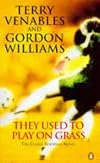
Given that this book was written such a long time ago, it's impressive that it managed to predict so many of the headaches that afflict modern football. It even predicted the millionaire footballing playboy with a David Beckham-style character. Initially the footballing action takes second place to the inter-relationships between the players, some of whom are well fleshed-out, others take some remembering. There is an extended match sequence at the end, by which time you need to care about show more the characters and who wins, as it does go on a bit. A rather predictable weepie moment (if you're a girlie) at the end concludes a reasonably good story. show less
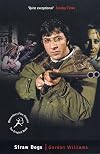
Sam Peckinpah is quoted on the blurb saying "this book makes you want to drown in your own puke", which is obviously what he drew from it to go on to make his viscerally disturbing exploitation flick. But it seems almost as if he was reading a different book to the one I read. The violence in the novel isn't gratuitous and the motivation of the villagers becoming a mob is credible.
The pacifism/liberalism of the protagonist isn't handled particularly convincingly. Also, the moral compass and show more sexual politics of the novel are clumsy and suspect, but the plotting is tight and the action unremitting. show less
The pacifism/liberalism of the protagonist isn't handled particularly convincingly. Also, the moral compass and show more sexual politics of the novel are clumsy and suspect, but the plotting is tight and the action unremitting. show less
Lists
Awards


You May Also Like


Associated Authors
Statistics
- Works
- 19
- Also by
- 3
- Members
- 535
- Popularity
- #46,548
- Rating
- 3.7
- Reviews
- 9
- ISBNs
- 48
- Languages
- 1