

Gary Indiana (1950–2024)
Author of Rent Boy
About the Author
Image credit: Courtesy of Serpent's Tail Press
Works by Gary Indiana
Last Seen Entering the Biltmore: Plays, Short Fiction, Poems 1975--2010 (Semiotext(e) / Native Agents) (2010) 18 copies
The Schwarzenegger Syndrome: Politics and Celebrity in the Age of Contempt (2005) 8 copies, 1 review
Headshots by Aura Rosenberg 5 copies
Shanghai - Wedge Pamphlet 12 1 copy
Ivory Pearl 1 copy
Carol Ross / Gary Indiana 1 copy
Barbara Kruger 1 copy
Dreams Involving Water 1 copy
Farm #4: Farm Boys 1 copy
Associated Works
Tagged
Common Knowledge
- Legal name
- Hoisington, Gary
- Other names
- Indiana, Gary
- Birthdate
- 1950
- Date of death
- 2024
- Gender
- male
- Education
- University of California, Berkeley
- Occupations
- writer
filmmaker
visual artist
journalist
photographer - Nationality
- USA
- Birthplace
- Derry, New Hampshire, USA
- Places of residence
- New York, New York, USA
- Associated Place (for map)
- USA
Members
Reviews
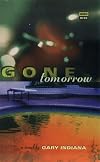
"We arrived in Cartagena. Palms lined the sidewalks, fronds half-brown from dessication. A glass-and-steel cakebox palace, its flag-lined plaza adrool with fountains, floated on the black water of the marina. Human figures crowded the esplanade, which had the look of a perpetual carnival. There were wagons selling boiled peanuts and ices, wheeled steam tables, people in straw hats and sandwhich boards hawking lottery tickets, balloons, grotesquely fat women working the crowd with trays of show more smashed coconuts and sliced papaya balanced on their heads, refugees from a Botero paiinting." Much of Gone Tomorrow is set in this sweltering city located on the northern coast of Colombia.
My first acquaintance with Gary Indiana was back in the 1980s when the New York City East Village art scene exploded with defiant, hopped up energy. I read the author's collection of short stories, Scar Tissue, and was impressed with the power of the language and his ability to create vivid scenes and a sense of impending doom. And, of course, there was the sex - in one story a gorgeous hunk of a gay man is held captive as a sex slave and in another we read the memorable lines: "That night I fucked Candy Jones for something like three hours. My nuts ached the whole next day and I couldn't get her out of my mind."
More recently I’ve been reading Gary Indiana’s book reviews to serve as models for my own reviewing. His observations are shrewd and sharp, expressed in such colorful turn of phrase I can almost see his words sizzle on the page. For example, reviewing Red Lights by Georges Simenon: “He also practices a radical economy of language using almost no adjectives or adverbs – his white space is more expressive than much of Hemingway and all of Raymond Carver. I suspect it’s because he didn’t fetishize the search for the perfect, starling word, a cause of literary acne that runs rampant in the work of writers like Cormac McCarthy and Annie Proulx. He thought the approximate word was quite good enough. Looking for the perfect one would have slowed him down.”
Also Garry Indiana essays which can be biting and caustic in the extreme. This from a piece on Johnny Carson and The Tonight Show: “He has always been there in his network time slot, embalmed in a dense magma of reassuring mediocrity, mugging behind his desk as if to guarantee the faceless millions that they, too, can repeat the same absurd gestures day after day, year after year, without an unbearable amount of suffering.”
I include these quotes as prelude to provide a sense of the radical, anti-mainstream nature of Gary Indiana’s writing, especially when it comes to his critique of art and culture. Although he has well over a dozen books of fiction and non-fiction to his credit, you will be hard pressed to find any references or webpage featuring his work. This guy is as far removed from Facebook and The New York Times as humanly possible. There were those few years back in the 1980s when he was an art critic for The Village Voice in order to eat and pay the rent but his real desire was to write novels.
Gone Tomorrow is Gary Indiana’s second novel published in 1995 as part of the High Risk Books/Serpent’s Tail series and based on Gary’s experience as an actor in German director Dieter Schidor’s 1985 film Cold in Columbia. The novel’s unnamed first-person narrator shares much with the author – he’s gay, he’s thirty-four, he’s both an actor and a writer.
There’s some action on and off the film set in Cartagena; actually, the paramount action turns out to be all the film people overindulging in booze and a mountain of the Columbian national product along with an entire list of other recreational substances. But the real juice of the novel is the Gary Indiana-like narrator’s searing critical eye taking in all the people and places in and around the film set. On Alex Garvo: “What disturbed me even more was something willfully unreal about him. Something incredible about his “casual” outfit of jeans and pinstripe shirt. Something forced and unbelievable in the stony expressions rolling across his face as he listened to the table talk, his square jaw falling open and clamping shut like a steam shovel, while his pale gray eyes bored holes in the sodden tablecloth.”
In addition to Alex, there’s an entire lineup of ravishing, narcissistic movie queens (both male and female) – Maria, Irma, Carlotta, Valentina, Ray, Michael and the narrator’s best friend, the director of the film, Paul. What an eccentric mix of egos. However, I think it is fair to say not one of these glittering superstars suffers from psychological problems or maladies that couldn’t be addressed by twenty years of intensive psychotherapy.
The narrator’s observations and reflections also extend out to the people of Columbia and their mixing and clashing with wealthy Americans and Europeans. There is even a time when the actors take to the streets shoulder to shoulder with the natives to celebrate Cartagena carnival and the parade of contestants in the Miss Columbia beauty pageant. “”This is insane!” we all kept shouting to each other over the roar of the crowd, laughing, smiling at complete strangers, cruising people in bizarre outfits, catching the startled and delighted looks of people surrendering themselves to a manic fantasy.”
Cartagena is the longer portion of Gone Tomorrow. The last third of the novel is Part Two, seven years later back in New York and Munich, when Ray and Paul join the legions of others who have contracted AIDS. We watch the torturous stages of the disease turn life into unending excruciating pain leading to death.
I can see very clearly why this Gary Indiana novel was published as part of High Risk Books. It’s a novel on the edge but a novel well worth the read. I feel as if I have lived through those stormy cocaine-fueled 1980s all over again via the mind and heart of this nonconformist critic. show less
My first acquaintance with Gary Indiana was back in the 1980s when the New York City East Village art scene exploded with defiant, hopped up energy. I read the author's collection of short stories, Scar Tissue, and was impressed with the power of the language and his ability to create vivid scenes and a sense of impending doom. And, of course, there was the sex - in one story a gorgeous hunk of a gay man is held captive as a sex slave and in another we read the memorable lines: "That night I fucked Candy Jones for something like three hours. My nuts ached the whole next day and I couldn't get her out of my mind."
More recently I’ve been reading Gary Indiana’s book reviews to serve as models for my own reviewing. His observations are shrewd and sharp, expressed in such colorful turn of phrase I can almost see his words sizzle on the page. For example, reviewing Red Lights by Georges Simenon: “He also practices a radical economy of language using almost no adjectives or adverbs – his white space is more expressive than much of Hemingway and all of Raymond Carver. I suspect it’s because he didn’t fetishize the search for the perfect, starling word, a cause of literary acne that runs rampant in the work of writers like Cormac McCarthy and Annie Proulx. He thought the approximate word was quite good enough. Looking for the perfect one would have slowed him down.”
Also Garry Indiana essays which can be biting and caustic in the extreme. This from a piece on Johnny Carson and The Tonight Show: “He has always been there in his network time slot, embalmed in a dense magma of reassuring mediocrity, mugging behind his desk as if to guarantee the faceless millions that they, too, can repeat the same absurd gestures day after day, year after year, without an unbearable amount of suffering.”
I include these quotes as prelude to provide a sense of the radical, anti-mainstream nature of Gary Indiana’s writing, especially when it comes to his critique of art and culture. Although he has well over a dozen books of fiction and non-fiction to his credit, you will be hard pressed to find any references or webpage featuring his work. This guy is as far removed from Facebook and The New York Times as humanly possible. There were those few years back in the 1980s when he was an art critic for The Village Voice in order to eat and pay the rent but his real desire was to write novels.
Gone Tomorrow is Gary Indiana’s second novel published in 1995 as part of the High Risk Books/Serpent’s Tail series and based on Gary’s experience as an actor in German director Dieter Schidor’s 1985 film Cold in Columbia. The novel’s unnamed first-person narrator shares much with the author – he’s gay, he’s thirty-four, he’s both an actor and a writer.
There’s some action on and off the film set in Cartagena; actually, the paramount action turns out to be all the film people overindulging in booze and a mountain of the Columbian national product along with an entire list of other recreational substances. But the real juice of the novel is the Gary Indiana-like narrator’s searing critical eye taking in all the people and places in and around the film set. On Alex Garvo: “What disturbed me even more was something willfully unreal about him. Something incredible about his “casual” outfit of jeans and pinstripe shirt. Something forced and unbelievable in the stony expressions rolling across his face as he listened to the table talk, his square jaw falling open and clamping shut like a steam shovel, while his pale gray eyes bored holes in the sodden tablecloth.”
In addition to Alex, there’s an entire lineup of ravishing, narcissistic movie queens (both male and female) – Maria, Irma, Carlotta, Valentina, Ray, Michael and the narrator’s best friend, the director of the film, Paul. What an eccentric mix of egos. However, I think it is fair to say not one of these glittering superstars suffers from psychological problems or maladies that couldn’t be addressed by twenty years of intensive psychotherapy.
The narrator’s observations and reflections also extend out to the people of Columbia and their mixing and clashing with wealthy Americans and Europeans. There is even a time when the actors take to the streets shoulder to shoulder with the natives to celebrate Cartagena carnival and the parade of contestants in the Miss Columbia beauty pageant. “”This is insane!” we all kept shouting to each other over the roar of the crowd, laughing, smiling at complete strangers, cruising people in bizarre outfits, catching the startled and delighted looks of people surrendering themselves to a manic fantasy.”
Cartagena is the longer portion of Gone Tomorrow. The last third of the novel is Part Two, seven years later back in New York and Munich, when Ray and Paul join the legions of others who have contracted AIDS. We watch the torturous stages of the disease turn life into unending excruciating pain leading to death.
I can see very clearly why this Gary Indiana novel was published as part of High Risk Books. It’s a novel on the edge but a novel well worth the read. I feel as if I have lived through those stormy cocaine-fueled 1980s all over again via the mind and heart of this nonconformist critic. show less

Danny, who also goes by Billy, is an architecture student at Rutgers, a food photographer’s assistant, a waiter, and a prostitute in New York City. He’s pretty jaded from all the sex, both normal and extremely odd. You can tell by the way he tosses in a mention of a mass shooting at his school mainly because it’s an inconvenience to his schedule.
His statement that “I understand why people kill other people but I’m just not into it,” like it’s another weird sex act, foreshadows show more his involvement with a crooked doctor and his nurse, “fucking on the stairs was more like her way of saying hello” who rope him into an organ harvesting scheme. That’s when things really turn weird.
This is an electric, graphic story, not for the squeamish, but well-written and full of dark humor. show less
His statement that “I understand why people kill other people but I’m just not into it,” like it’s another weird sex act, foreshadows show more his involvement with a crooked doctor and his nurse, “fucking on the stairs was more like her way of saying hello” who rope him into an organ harvesting scheme. That’s when things really turn weird.
This is an electric, graphic story, not for the squeamish, but well-written and full of dark humor. show less

Not something I've never seen before but Indiana's words are sharp and his sentences are well crafted.
There's a feeling of fever or mania about the entire book—scenes slip away out of joint, names blur together and events seem to spiral out of the narrator's grasp as soon as they occur.
There's a feeling of fever or mania about the entire book—scenes slip away out of joint, names blur together and events seem to spiral out of the narrator's grasp as soon as they occur.
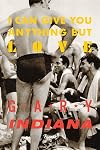
Gay, witty, clever, and with a decadent underbelly, this memoir is rich and engaging. Indiana is an excellent cultural critic and contributor to the London Review of Books, and his effort here is a joy--and sometimes a horror--to read.
Lists
Awards


You May Also Like


Associated Authors
Statistics
- Works
- 38
- Also by
- 8
- Members
- 1,331
- Popularity
- #19,337
- Rating
- 3.5
- Reviews
- 13
- ISBNs
- 79
- Languages
- 5
- Favorited
- 5