
Hermione Ranfurly, Countess of Ranfurly (1913–2001)
Author of To War with Whitaker: Wartime Diaries of the Countess of Ranfurly, 1939-1945
About the Author
Disambiguation Notice:
Please do not remove Common Knowledge entries unless they are inaccurate. Thank you!
Works by Hermione Ranfurly, Countess of Ranfurly
To War with Whitaker: Wartime Diaries of the Countess of Ranfurly, 1939-1945 (1994) 274 copies, 7 reviews
The ugly one : the childhood memoirs of Hermione, Countess of Ranfurly, 1913-1939 (1998) 54 copies, 1 review
Associated Works
The Assassin's Cloak: An Anthology of the World's Greatest Diarists (2000) — Contributor, some editions — 624 copies, 9 reviews
Tagged
Common Knowledge
- Canonical name
- Ranfurly, Hermione, Countess of Ranfurly
- Other names
- Llewellyn, Hermione (birth name)
- Birthdate
- 1913-11-13
- Date of death
- 2001-02-11
- Gender
- female
- Education
- Southover Manor School, Sussex, England, UK
- Occupations
- author
memoirist
diarist
library founder - Awards and honors
- OBE, 1970
- Short biography
- Hermione Ranfurly, née Llewellyn, was born in Postlip, Gloucestershire, to a family of Welsh origin. During her childhood, her father lost the family fortune and her mother became mentally ill. After completing her education at Southover Manor School in Sussex, 17-year-old Hermione moved to London to look for a job. It was the height of the Great Depression, and there were few opportunities, but she managed to obtain a job selling gas appliances for the Gas Light and Coke Company. Despite her near total of knowledge about cooking or kitchens, she was a success. She took a secretarial course and subsequently got a post in the War Office typing pool. In 1937, she went to Australia as secretary to Lord Wakehurst, who had been appointed as Governor of New South Wales. On a visit to Canberra, she met Daniel Knox, 6th Earl of Ranfurly, the Australian Governor-General's aide-de-camp. The couple married back in England in 1939. At the outbreak of World War II, while her husband was serving with the Sherwood Rangers in the Middle East, Lady Ranfurly defied regulations and managed to travel there to be with him. In September 1940, she was ordered to be repatriated to the UK with other "illegal wives," but jumped ship at Cape Town, South Africa, and succeeded in obtaining a plane ticket back to Egypt by implying that she was on a secret spy mission. Her ship, RMS Empress of Britain, was sunk shortly afterwards. On her arrival in Cairo, Lady Ranfurly stayed hidden in the apartment of friends, but gradually her return became known. Although her actions infuriated the British military authorities, her secretarial skills were in short supply, and she was soon recruited to work for the Special Operations Executive (SOE). In 1941, Daniel Ranfurly was reported missing after the Battle of Tobruk and Lady Ranfurly had no word of him for five months. She eventually learned he was a prisoner of war in Italy, where he remained for three years, escaping in 1944 following the Italian armistice. During this time, Lady Ranfurly worked as a personal assistant to Sir Harold MacMichael, the High Commissioner in British Palestine, and then for General Henry Maitland Wilson, the Supreme Allied commander in the Mediterranean. She lived in Cairo, Jerusalem, Baghdad, and Algiers, where she met many famous people, including Lady Diana Cooper, Antoine de Saint Exupéry, Sir Walter Monckton, and Noël Coward. She shared a house in Baghdad with Freya Stark, took Gen. George S. Patton shopping in Cairo, and dined with kings, including Peter II of Yugoslavia, Farouk of Egypt, and Paul of Greece. Gen. Wilson described her as having "outmanoeuvred every general in the Middle East" to achieve her goal of staying in the region against official opposition. She was reunited with her husband in Algiers in May 1944, and after a brief trip to England, resumed her work as Gen. Wilson's secretary in Algiers and Caserta, Italy.
With her husband in Rome, she got a job working for Air Marshal John Slessor, first in Naples and later in London, where she celebrated VE Day in 1945.
At the end of the war, her husband got a job in insurance at Lloyd's of London, and later farmed in Buckinghamshire. The couple's daughter was born in 1948. In 1953, Lord Ranfurly was appointed Governor of the Bahamas, where Hermione took a great interest in all aspects of life, especially the improvement of libraries and schools, and helped establish the Ranfurly Library Service in Nassau.
When the Ranfurlys returned to the UK, she extended the project to other developing countries that were short on English language books; the organization later changed its name to Book Aid International. Lord Ranfurly died of cancer in 1988, and Lady Ranfurly put together her wartime letters and diaries into a book called To War With Whitaker: The Wartime Diaries of the Countess of Ranfurly, 1939–1945, published in 1994. The book was a tremendous success and, encouraged by the acclaim, Lady Ranfurly then published a memoir of her childhood, The Ugly One: The Childhood Memoirs of Hermione, Countess of Ranfurly, 1913–1939 (1998). - Nationality
- England
UK - Birthplace
- Postlip, Gloucestershire, England, UK
- Places of residence
- Cairo, Egypt
London, England, UK
Nassau, Bahamas
Buckinghamshire, England, UK - Place of death
- Buckinghamshire, England, UK
- Disambiguation notice
- Please do not remove Common Knowledge entries unless they are inaccurate. Thank you!
- Associated Place (for map)
- England, UK
Members
Reviews
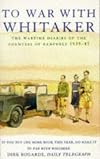
To war with Whitaker
In August 2009 I read a childhood memoir by Hermione, Countess Ranfurly, called the ‘Ugly One”, a book I came across by chance. Having finished it I wanted to read about the next stage of her life, in her war time diaries published as To War with Whitaker. I bought a copy of it some time ago – and I am stunned it has taken me quite so long to read it.
In January 1939 Hermione Llewellyn became Countess Ranfurly when she married her Dan, that is Daniel Knox the 6th show more Earl of Ranfurly. Their lives together were beginning at a particularly tumultuous time in European history, and soon the happy young couple were thrust right into the fray. In September 1939 Dan reported to his yeomanry in Nottinghamshire. The Ranfurly’s cook/butler Whitaker went too. Hermione followed after them.
Dan Ranfurly was then posted to the Middle East, unlike regular army wives, yeomanry wives were forbidden from joining their husbands in the Middle East, however Hermione had no intention of listening. Coming up against many very grumpy old generals, and miles of red tape Countess Ranfurly was determined not to return to England without her husband. Travelling between Cairo, Jerusalem Beirut, via South Africa the young Countess eventually manages to secure her place in the Middle East as a secretary – working first for the SOE Cairo office and later as a civil servant in Jerusalem.
In April 1941 Dan Ranfurly is among a group of men captured in the dessert by the Italians. Hermione is devastated by his disappearance, but she is powerless to do anything but wait for news. The Countess and the ever faithful Whitaker decide to wait it out in the Middle East, and not to return home without him. Eventually Dan’s letters start to come through to her – although they often take weeks and even months to reach her, and he is allowed only a few lines to write on.
Later the countess and her husband are reunited, and after a brief spell in London they are back working separately but in the same country – this time Italy. Throughout the years of World War II the Countess Ranfurly worked hard, often enduring long hours – earning the respect of many soldiers and civilians, among them “General Jumbo” for whom she worked for over 2 years in both the Middle East and Italy.
The dairies that Hermione kept are remarkably detailed and well written. Enormously atmospheric, they are also hugely readable and provide a marvellous history of the war in the Middle East particularly. During these years the Countess met some incredible people including Churchill, Eisenhower and Marshal Tito, and became the proud owner of a parrot called Coco – who was often given bananas by the Countess’s guests. As I read, I was continually impressed by this aristocratic young woman’s way of dealing with what the war threw at her. The Countess’s love for her young husband never wavers, she is absolutely devoted to him, but not in an over emotional way, she sheds the occasional tear but then just gets on with what she has to do – works hard, is sensible intelligent and brilliantly unstoppable. show less
In August 2009 I read a childhood memoir by Hermione, Countess Ranfurly, called the ‘Ugly One”, a book I came across by chance. Having finished it I wanted to read about the next stage of her life, in her war time diaries published as To War with Whitaker. I bought a copy of it some time ago – and I am stunned it has taken me quite so long to read it.
In January 1939 Hermione Llewellyn became Countess Ranfurly when she married her Dan, that is Daniel Knox the 6th show more Earl of Ranfurly. Their lives together were beginning at a particularly tumultuous time in European history, and soon the happy young couple were thrust right into the fray. In September 1939 Dan reported to his yeomanry in Nottinghamshire. The Ranfurly’s cook/butler Whitaker went too. Hermione followed after them.
Dan Ranfurly was then posted to the Middle East, unlike regular army wives, yeomanry wives were forbidden from joining their husbands in the Middle East, however Hermione had no intention of listening. Coming up against many very grumpy old generals, and miles of red tape Countess Ranfurly was determined not to return to England without her husband. Travelling between Cairo, Jerusalem Beirut, via South Africa the young Countess eventually manages to secure her place in the Middle East as a secretary – working first for the SOE Cairo office and later as a civil servant in Jerusalem.
In April 1941 Dan Ranfurly is among a group of men captured in the dessert by the Italians. Hermione is devastated by his disappearance, but she is powerless to do anything but wait for news. The Countess and the ever faithful Whitaker decide to wait it out in the Middle East, and not to return home without him. Eventually Dan’s letters start to come through to her – although they often take weeks and even months to reach her, and he is allowed only a few lines to write on.
Later the countess and her husband are reunited, and after a brief spell in London they are back working separately but in the same country – this time Italy. Throughout the years of World War II the Countess Ranfurly worked hard, often enduring long hours – earning the respect of many soldiers and civilians, among them “General Jumbo” for whom she worked for over 2 years in both the Middle East and Italy.
The dairies that Hermione kept are remarkably detailed and well written. Enormously atmospheric, they are also hugely readable and provide a marvellous history of the war in the Middle East particularly. During these years the Countess met some incredible people including Churchill, Eisenhower and Marshal Tito, and became the proud owner of a parrot called Coco – who was often given bananas by the Countess’s guests. As I read, I was continually impressed by this aristocratic young woman’s way of dealing with what the war threw at her. The Countess’s love for her young husband never wavers, she is absolutely devoted to him, but not in an over emotional way, she sheds the occasional tear but then just gets on with what she has to do – works hard, is sensible intelligent and brilliantly unstoppable. show less
Find it and read it.
If you have no interest in war, then it's a travelogue, a tale of derring-do by a plucky young lady, a tale of love and/or a historical snapshot of time, place and class.
If you know anything at all about WWII and particularly the North African, Middle-Eastern, Italian, Greek, Yugoslav or just Mediterranean theatres, then be prepared to read it open-mouthed with your phone in hand to check that the person she's just mentioned is who you think they are - on every page.
And show more it's an eminently readable story to boot. show less
If you have no interest in war, then it's a travelogue, a tale of derring-do by a plucky young lady, a tale of love and/or a historical snapshot of time, place and class.
If you know anything at all about WWII and particularly the North African, Middle-Eastern, Italian, Greek, Yugoslav or just Mediterranean theatres, then be prepared to read it open-mouthed with your phone in hand to check that the person she's just mentioned is who you think they are - on every page.
And show more it's an eminently readable story to boot. show less

It is difficult to hold down my enthusiasm and superlatives in reviewing this book. The author is not only an excellent writer and editor of her diaries, but also modestly understates her tremendous courage and her willingness to endure hardship for the sake of working near her active-duty husband. Born aristocratic and married to Lord Ranfurly, Countess Ranfurly chronicles in this book her life from 1939-1945 spent mostly in the middle east working as secretary to a Brithish general. She show more met in the course of her duties many interesting people of note and gives insight into the characters of each. She was a woman of immense charm and determination. When all wives were ordered back to England, she jumped ship in South Africa and made her way up the coast of Africa with the help of her connections, to arrive as an outlaw in Cairo. Her husband, Lord Ranfurly, with the same finely honed character as his wife, was captured by the Germans in North Africa and imprisoned for almost three years before he escaped and made his way back to Allied lines. Hermione Ranfurly vowed to stay in the middle east until his release despite often harsh working conditions. Besides her stenographic duties, she entertained visiting VIPs, took Gen. Patton shopping, smoothed ruffled feathers with her tact and amazingly with her social position was unfailingly courteous and mindful of military rank. Whitaker was Lord Ranfurly's valet and followed and cared for Lord or Lady as circumstances permitted, but played a minor role in the diaries. A fascinating account of one highly exceptional person's role in WWII. show less
An unusual and probably unique experience of WWII, this was fun to read if a bit boring at times because of all the names and places that I found hard to keep up with. I found it curious that of all the places she visited and lived in -- some that could probably be described as hell-holes -- Jerusalem was the only one she disliked. If you are reading this to know more about Whitaker, be warned. He makes for a snappy title, but makes only a few brief appearances in the book.
Lists
You May Also Like


Statistics
- Works
- 3
- Also by
- 1
- Members
- 336
- Popularity
- #70,810
- Rating
- 4.2
- Reviews
- 8
- ISBNs
- 19