

Christopher Barzak
Author of One for Sorrow
About the Author
Christopher Barzak teaches writing at Youngstown State University.
Image credit: Photograph of author Christopher Barzak, taken in Kinsman, Ohio [credit: Christopher Barzak]
Series
Works by Christopher Barzak
Fantasy Magazine, Issue 59 (December 2015) - Queers Destroy Fantasy! Special Issue (2015) — Editor — 49 copies
A Voice Calling 9 copies
Long Voyages, Great Lies — Editor — 7 copies
Rabid Transit: Menagerie — Editor — 5 copies
Rabid Transit: A Mischief of Rats — Editor — 4 copies
Invisible Men 3 copies
Paranormal Romance 3 copies
Dead Boy Found 2 copies
Map of Seventeen 2 copies
Plenty (short story) 2 copies
Vanishing Point 1 copy
Caryatids 1 copy
A Mad Tea Party 1 copy
The Other Angelas 1 copy
The Cure 1 copy
Learning To Leave 1 copy
Rabid Transit: Petting Zoo — Editor — 1 copy
In Between Dreams 1 copy
The Drowned Mermaid 1 copy
Dead Letters [short story] 1 copy
Gap Year 1 copy
Associated Works
The Year's Best Fantasy and Horror: Fifteenth Annual Collection (2002) — Contributor — 275 copies, 4 reviews
The Year's Best Science Fiction: Thirtieth Annual Collection (2013) — Contributor — 255 copies, 3 reviews
Firebirds Soaring: An Anthology of Original Speculative Fiction (2009) — Contributor — 231 copies, 9 reviews
The Best Science Fiction and Fantasy of the Year, Volume 5 (2011) — Contributor — 166 copies, 4 reviews
Lightspeed Magazine, Issue 61 • June 2015 (Queers Destroy Science Fiction! special issue) (2015) — Contributor — 112 copies, 3 reviews
Wilde Stories 2011: The Year's Best Gay Speculative Fiction (2011) — Contributor — 29 copies, 1 review
Wilde Stories 2012: The Year's Best Gay Speculative Fiction (2012) — Contributor — 25 copies, 1 review
Asimov's Science Fiction: Vol. 33, No. 10 & 11 [October/November 2009] (2009) — Contributor — 13 copies, 2 reviews
Lady Churchill's Rosebud Wristlet No. 10 — Contributor — 1 copy
Tagged
Common Knowledge
- Birthdate
- 1975-07-21
- Gender
- male
- Occupations
- writer
writing teacher
editor - Organizations
- Youngstown State University
- Agent
- Barry Goldblatt Literary
- Nationality
- USA
- Birthplace
- Warren, Ohio, USA
- Places of residence
- Youngstown, Ohio, USA
Tokyo, Japan
Lansing, Michigan, USA
Southern California, USA - Associated Place (for map)
- USA
Members
Reviews
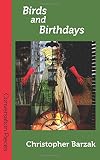
In 2007, Christopher Barzak released One For Sorrow, a supernatural YA novel that so successfully encapsulated the terrifying experience of adolescence that it became one of my favorite novels of the 2000s. While a drastically different work, Birds and Birthdays continues Barzak's exploration of the multitudinous factors that form the basis of identity.
Birds and Birthdays is, first, a conceptual collection. The fourth chapter of the book offers a detailed account of Barzak's research in the show more Surrealist movement (existing roughly in the space
between the two world wars) and the women who were almost forgotten there. As an experiment in feeding female artistic expression (painting) through literary interpretation (fiction), the collection draws parallels between the worlds of metaphor (the paintings) and the very real discourse of female identities in the wake of a patriarchal culture -- this is part of the mission of the "Conversation Pieces" series at Aqueduct Press (to explore the "grand conversation"). "Birthday," for example, expands upon Dorothea Tanning's painting of the same name by turning the unknown woman into Emma, who has spent her formative years taking on the identities required of her by her parents and the culture around her (53-54). Thus, when Emma inherits her parents' apartment complex, marries Joe at 21, and soon has a child (Jenna), she embarks on a quest to find an identify that more appropriately fits her inner self. What begins as a series of cruel gestures on Emma's part (leaving her family and her various lovers, one by one, by changing apartments within the same complex) quickly become the sympathetic acts of deliberate personal interrogation through others. Perhaps the most disturbing of the three stories, "Birthday" is also perhaps the most profound in the collection as a work of neo-surrealist magical realism that draws into question the ways humans have been conditioned to accept identities for convenience.
The other stories are equally compelling, but for drastically different reasons. "The Creation of Birds," -- drawing upon Remedios Varo's paintings, "Creation of the Birds" and "Star Catcher" -- presents a modernized fairy tale involving the romantic opposition of the Bird Woman, who has the remarkable and beautiful ability to build and bring to life real and mythical birds, and the Star Catcher, whose namesake gives away his game (the Bird Woman remarks that catching stars and other things are a reminder that "[the Star Catcher] didn't know how to love something he couldn't own" (4)). As a somewhat whimsical tale, "The Creation of Birds" is replete with period references to psychoanalysis (a field which is still practiced today, surprisingly) and stunning descriptions of the Bird Woman's abilities -- I particularly enjoyed the scenes involving the bird designs, if only because birds are, I believe, elegant creatures that would require painstaking detail to create from nothing. But the heart of the story is her relationship to herself and to the Star Catcher, who seeks to "reclaim" her. In this sense, it shares a relationship to "Birthday."
The middle story, "The Guardian of the Egg," also questions our relationships and what they mean, but with a much more epic narrative. Based on Leonora Carrington's "The Giantess," the story focuses on a what happens to the family of those who answer a "higher calling" -- in this case, a mythical calling that draws parallels to the familiar "chosen one" narratives. In particular, the story benefits from switching perspectives from "the chosen one" to an immediate family member. The shift offers a fresh -- though not wholly original -- perspective on the now-traditional epic form. Identity, of course, remains central to the narrative, but so too do the mythic forms upon which the narrative draws (similarly, I think, to "Birds"). As a story, it effectively rides between an interrogation of those forms and of the roles others play within them. But it is also a humorous tale, with dark references to our ability to turn people into "others" and a clever moment in which the main character must communicate with guardian geese.
Collected together, the three stories have the effect of providing a range of perspectives/narratives that are each unique in and of themselves and each rendered with care and depth -- a sense I draw from Barzak's clean, minimalist prose, which he uses in service of a rather complex and specific narrative agenda.
Birds and Birthdays, however, is certainly not a perfect work. While I found a great deal of thematic material to draw on, the types of stories found in this collection are, I think, geared to a particular kind of reader. With the exception of "The Guardian of the Egg," none of the stories have "clean" resolutions ("Birthday" in particular), and all of the stories are heavily focused on the visual thematics of the original source material, thus producing works which are, in a sense, almost surrealist themselves -- certainly a goal of Barzak's. For some readers, this might be too much, as surrealist works are, in my experience, frequently just that -- too much. Just like the surrealist films of the early 1900s, the stories in Birds and Birthdays are visually intense and cognitively detached. "Birthday," for example, relies more on its character's peculiarities than it does on an ordered universe in which the containment of an individual's many relationships in one apartment complex could not happen. But those same peculiarities are what make the story a brilliant medium for exploring the "skins" we wear as social creatures. Plot and pure resolution would, I think, detract from the message, just as removing the incomplete resolutions and estranging (read: not cognitive estrangement) effects would do so for the other stories.
In that sense, what I see as an at times compelling work of art, and at others a somewhat overwhelming vision, rests on the spectrum of work that you either love or you hate. If you enjoy what might be called experiments in narrative, image, and genre, this is the perfect collection for you; if, however, you prefer your genre to follow the "conventions," then you're likely to pass this one by.
I, however, eagerly await the next book from Barzak. Birds and Birthdays is, in my estimation, a phenomenal work, even at its unfairly tiny length. Replete with stunning visuals, a depth of character and theme that compels contemplation, and a conceptual framework that is at once refreshing and deliciously bizarre, Birds and Birthdays is certainly a collection to remember -- and so is its author. show less
Birds and Birthdays is, first, a conceptual collection. The fourth chapter of the book offers a detailed account of Barzak's research in the show more Surrealist movement (existing roughly in the space
between the two world wars) and the women who were almost forgotten there. As an experiment in feeding female artistic expression (painting) through literary interpretation (fiction), the collection draws parallels between the worlds of metaphor (the paintings) and the very real discourse of female identities in the wake of a patriarchal culture -- this is part of the mission of the "Conversation Pieces" series at Aqueduct Press (to explore the "grand conversation"). "Birthday," for example, expands upon Dorothea Tanning's painting of the same name by turning the unknown woman into Emma, who has spent her formative years taking on the identities required of her by her parents and the culture around her (53-54). Thus, when Emma inherits her parents' apartment complex, marries Joe at 21, and soon has a child (Jenna), she embarks on a quest to find an identify that more appropriately fits her inner self. What begins as a series of cruel gestures on Emma's part (leaving her family and her various lovers, one by one, by changing apartments within the same complex) quickly become the sympathetic acts of deliberate personal interrogation through others. Perhaps the most disturbing of the three stories, "Birthday" is also perhaps the most profound in the collection as a work of neo-surrealist magical realism that draws into question the ways humans have been conditioned to accept identities for convenience.
The other stories are equally compelling, but for drastically different reasons. "The Creation of Birds," -- drawing upon Remedios Varo's paintings, "Creation of the Birds" and "Star Catcher" -- presents a modernized fairy tale involving the romantic opposition of the Bird Woman, who has the remarkable and beautiful ability to build and bring to life real and mythical birds, and the Star Catcher, whose namesake gives away his game (the Bird Woman remarks that catching stars and other things are a reminder that "[the Star Catcher] didn't know how to love something he couldn't own" (4)). As a somewhat whimsical tale, "The Creation of Birds" is replete with period references to psychoanalysis (a field which is still practiced today, surprisingly) and stunning descriptions of the Bird Woman's abilities -- I particularly enjoyed the scenes involving the bird designs, if only because birds are, I believe, elegant creatures that would require painstaking detail to create from nothing. But the heart of the story is her relationship to herself and to the Star Catcher, who seeks to "reclaim" her. In this sense, it shares a relationship to "Birthday."
The middle story, "The Guardian of the Egg," also questions our relationships and what they mean, but with a much more epic narrative. Based on Leonora Carrington's "The Giantess," the story focuses on a what happens to the family of those who answer a "higher calling" -- in this case, a mythical calling that draws parallels to the familiar "chosen one" narratives. In particular, the story benefits from switching perspectives from "the chosen one" to an immediate family member. The shift offers a fresh -- though not wholly original -- perspective on the now-traditional epic form. Identity, of course, remains central to the narrative, but so too do the mythic forms upon which the narrative draws (similarly, I think, to "Birds"). As a story, it effectively rides between an interrogation of those forms and of the roles others play within them. But it is also a humorous tale, with dark references to our ability to turn people into "others" and a clever moment in which the main character must communicate with guardian geese.
Collected together, the three stories have the effect of providing a range of perspectives/narratives that are each unique in and of themselves and each rendered with care and depth -- a sense I draw from Barzak's clean, minimalist prose, which he uses in service of a rather complex and specific narrative agenda.
Birds and Birthdays, however, is certainly not a perfect work. While I found a great deal of thematic material to draw on, the types of stories found in this collection are, I think, geared to a particular kind of reader. With the exception of "The Guardian of the Egg," none of the stories have "clean" resolutions ("Birthday" in particular), and all of the stories are heavily focused on the visual thematics of the original source material, thus producing works which are, in a sense, almost surrealist themselves -- certainly a goal of Barzak's. For some readers, this might be too much, as surrealist works are, in my experience, frequently just that -- too much. Just like the surrealist films of the early 1900s, the stories in Birds and Birthdays are visually intense and cognitively detached. "Birthday," for example, relies more on its character's peculiarities than it does on an ordered universe in which the containment of an individual's many relationships in one apartment complex could not happen. But those same peculiarities are what make the story a brilliant medium for exploring the "skins" we wear as social creatures. Plot and pure resolution would, I think, detract from the message, just as removing the incomplete resolutions and estranging (read: not cognitive estrangement) effects would do so for the other stories.
In that sense, what I see as an at times compelling work of art, and at others a somewhat overwhelming vision, rests on the spectrum of work that you either love or you hate. If you enjoy what might be called experiments in narrative, image, and genre, this is the perfect collection for you; if, however, you prefer your genre to follow the "conventions," then you're likely to pass this one by.
I, however, eagerly await the next book from Barzak. Birds and Birthdays is, in my estimation, a phenomenal work, even at its unfairly tiny length. Replete with stunning visuals, a depth of character and theme that compels contemplation, and a conceptual framework that is at once refreshing and deliciously bizarre, Birds and Birthdays is certainly a collection to remember -- and so is its author. show less
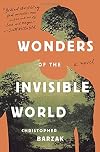
This is a sweet, fairytale-like book about curses and death and love. As a baby queer, I would have loved the romance, but as a middle-aged queer, that part was kind of meh for me. (Jarrod, buddy, try having your own life instead of just being a character in this one dude you met’s life!) But I did really love that the queer kids got their happy ending. And I loved that this is a book about mommy issues instead of daddy issues — it’s about the complicated relationships teens have with show more their moms, about the terrible things parents will do out of love, to protect their children, and it’s about the moment when you realize your mother is a human being and you love her anyway.
Warning, though: there’s child death, parent death, and suicide in here. Basically, not the book for you if you have any death issues whatsoever. show less
Warning, though: there’s child death, parent death, and suicide in here. Basically, not the book for you if you have any death issues whatsoever. show less
I know it might sound like really faint praise, but this is a really nice book, despite having pretty high stakes. I thought I picked up a completely different book when I started reading this, so everything that happened came as a surprise. The things that I liked:
- The depiction of teenagers
- The depiction of a mother/son relationship in a fraught situation (it wasn't pleasant, but it was believable, at least to me)
- The writing style
- The structure of the book, especially the history show more sequences
- The atmosphere
- That there was no real romance-based drama in the story, in stead having the background relationship simply be a source of strength
- The take on stories having power
The one thing this didn't do was get under my skin in an emotional way, but everything else made up for that. show less
- The depiction of teenagers
- The depiction of a mother/son relationship in a fraught situation (it wasn't pleasant, but it was believable, at least to me)
- The writing style
- The structure of the book, especially the history show more sequences
- The atmosphere
- That there was no real romance-based drama in the story, in stead having the background relationship simply be a source of strength
- The take on stories having power
The one thing this didn't do was get under my skin in an emotional way, but everything else made up for that. show less
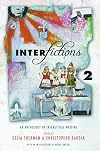
I'm a big fan of short fiction in general, especially speculative fiction. But any collection is going to have its ups and downs, especially a mixed collection with multiple contributors, and this book is no different.
This is a collection of "interstitial" writing, which is something the book is at great pains to define by not defining. I think it shades toward non-genre fiction with fantastical elements, but that could mean a lot of things. I think the best definition of what we find in show more this volume is put forward by one of the authors -- stuff that would be rejected by both genre and non-genre markets.
That's going to make it harder to build a collection in which every story pleases every reader: the nature of random homeless writing is going to provide a hit-and-miss approach. At the same time, I'll bet there's something in here to interest almost everybody, perhaps it'll be something different than what caught my eye.
The stories that tended toward the ghostly or merely unexplained left me cold, but the ones that shaded toward the weird genre gave me a lot of pleasure. I think the two stand-outs in this collection are "Remembrance Is Something Like a House" (Will Ludwigsen) and "Interviews After the Revolution" (Brian Francis Slattery). The first is a tale about a house that journeys across the country to deliver a message to its former inhabitants. The second is a straightforward story about a big heist in the midst of revolution, but it is its form that makes it interstitial, I think: snatches of interview commentary from a variety of participants and standers-by.
Also worth noting is "The Score" (Alaya Dawn Johnson), which is almost a ghost story and partly a conspiracy theory binge. Again, its interstitiality comes from its structure: bits of email, fragments of coroner reports, and so on, a sort of scrapbook of a story. But it is narrative enough to keep the flow going for the reader. show less
This is a collection of "interstitial" writing, which is something the book is at great pains to define by not defining. I think it shades toward non-genre fiction with fantastical elements, but that could mean a lot of things. I think the best definition of what we find in show more this volume is put forward by one of the authors -- stuff that would be rejected by both genre and non-genre markets.
That's going to make it harder to build a collection in which every story pleases every reader: the nature of random homeless writing is going to provide a hit-and-miss approach. At the same time, I'll bet there's something in here to interest almost everybody, perhaps it'll be something different than what caught my eye.
The stories that tended toward the ghostly or merely unexplained left me cold, but the ones that shaded toward the weird genre gave me a lot of pleasure. I think the two stand-outs in this collection are "Remembrance Is Something Like a House" (Will Ludwigsen) and "Interviews After the Revolution" (Brian Francis Slattery). The first is a tale about a house that journeys across the country to deliver a message to its former inhabitants. The second is a straightforward story about a big heist in the midst of revolution, but it is its form that makes it interstitial, I think: snatches of interview commentary from a variety of participants and standers-by.
Also worth noting is "The Score" (Alaya Dawn Johnson), which is almost a ghost story and partly a conspiracy theory binge. Again, its interstitiality comes from its structure: bits of email, fragments of coroner reports, and so on, a sort of scrapbook of a story. But it is narrative enough to keep the flow going for the reader. show less
 This review was written for LibraryThing Early Reviewers.
Lists
Awards


You May Also Like


Associated Authors
Statistics
- Works
- 42
- Also by
- 49
- Members
- 963
- Popularity
- #26,728
- Rating
- 3.8
- Reviews
- 59
- ISBNs
- 28
- Languages
- 2
- Favorited
- 3


