
Richard Wollheim (1923–2003)
Author of Art and its Objects
About the Author
Richard Wollheim is professor-in-residence and chair of the department of philosophy at the University of California.
Works by Richard Wollheim
Associated Works
Aesthetics and the Philosophy of Art: The Analytic Tradition: An Anthology (2003) — Contributor — 75 copies, 2 reviews
Reading Aesthetics and Philosophy of Art: Selected Texts with Interactive Commentary (2005) — Contributor — 11 copies
Tagged
Common Knowledge
- Canonical name
- Wollheim, Richard
- Legal name
- Wollheim, Richard Arthur
- Birthdate
- 1923-05-05
- Date of death
- 2003-11-04
- Gender
- male
- Education
- Westminster School, London
Balliol College, University of Oxford (BA | 1946 - History | 1948 - PPE) - Occupations
- philosopher
aesthetician
professor - Organizations
- University College London
Columbia University
University of California, Berkeley
Aristotelian Society
British Society for Aesthetics
American Philosophical Association (show all 10)
British Psychoanalytical Society (honorary affiliate)
San Francisco Psychoanalytical Institute (honorary member)
International Society for Psychoanalysis
British Army (WWII) - Awards and honors
- President, American Philosophical Association Pacific Division (2002-2003)
Fellow, American Academy of Arts and Sciences (1986)
Fellow, British Academy (1972) - Cause of death
- heart failure
- Nationality
- UK
- Birthplace
- London, England, UK
- Places of residence
- London, England, UK
- Place of death
- London, England, UK
- Associated Place (for map)
- London, England, UK
Members
Reviews
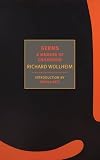
I had no idea who Richard Wollheim was before reading this book. I’ve since learned a few things about him, notably by reading this book.
Lifting my eyes, I see that the garden, and everything in it, moves. The flowers move, and the lavender moves, and the tree above me is moving. I am standing in the sun, my body is tipped forward, and I am walking. Walking I shall trip, and, if I trip, trip without a helping hand, I shall fall. I look above me, and I feel behind me, searching for the hand show more that is always there. There is no hand, and therefore, if I trip, or when I trip, and now at long last, the waiting is over, and I have tripped, and I am, am I not? I am falling, falling – and was it then, in that very moment when magically I was suspended in the early light, when the soft smells and sounds seeping out of the flowers and the insects and the birds appeared to be doing for me for a moment what the hand that was not there could not do, or was it, not then, but in the next moment, by which time the magic had failed, and the path was racing towards me, that I did what I was to do on many later occasions, on the occasion of many many later falls, and I stretched out my hands rigid in front of me so that my fingers formed a fan, not so much to break my fall, or to make things better for me when I hit the ground, but rather to pretend, to pretend also to myself, that things were not so bad as they seemed, or disaster so imminent, and that this was not a fall but a facile descent through the air, which would leave me in the same physical state, clean, ungrazed, uninjured, that I was in before I tripped, and that the urine would not, out of sheer nervousness, pour out of me?
It’s quite a dreamy state, reading this book; It’s one of those books that feels mostly like listening to really good ambient music and also like seeing worlds through the eyes of someone who has lived for quite some time and thought about things.
Having said that, this book isn’t airy and lofty in an ignorant and solipsistic sense. I don’t think it’s grandiose either, which I think is a state that some authors suffer from as they try to weave together a story from as long back as they can remember to the present day.
Wollheim wrote this book at the end of his life, at the start of the twenty-first century. It both allows for long, dreamy passages and brief ones.
At a period when, having finished one undergraduate degree, and unable to decide what to do next, I was briefly working at an editorial job in London, I suffered greatly from the fact that I was separated from a girl who was still in Oxford, and whom I loved, and who, I eventually allowed myself to believe, loved me.
What struck me hardest when reading the book were passages where Wollheim questions things that a lot of men take for granted.
Amongst Allen’s miscellaneous tasks, set him presumably by my parents, was that of trying to teach me a number of manly skills, such as carpentry, and boxing, but all ultimately to no avail. I always made an enthusiastic start, and the idea of learning a new subject, and particularly a subject that came with new words, a new vocabulary, excited me. But, in a short while, the excitement deserted me. Fear, fear that my body would fail me, compounded by the further fear that I would not be able to live with this fear, so that my mind would give out even before my body, soon drove out every other concern. Allen told me that, when I was a grown man, I would regret not being able to defend myself. But the appeal fell on deaf ears. I did not particularly want to grow up, and, even less, to grow up to be a man.
The second way in which women showed their superiority was in the more interesting and enjoyable lives that they lived. Men had to make money, which women, on the whole, did not, and this had the striking consequence that, whereas men were never permitted to talk about how they passed their days, it was something that women discussed continuously. Women could, I knew, be painters, sculptors, poets, dancers, actresses. There was no limit to the paradise that opened up at their feet and stretched forwards indefinitely, whereas for men such possibilities existed only rarely, and then mostly in the past, in history.
This is a gem of a book. I’ll remember it fondly and will read it again. show less
Lifting my eyes, I see that the garden, and everything in it, moves. The flowers move, and the lavender moves, and the tree above me is moving. I am standing in the sun, my body is tipped forward, and I am walking. Walking I shall trip, and, if I trip, trip without a helping hand, I shall fall. I look above me, and I feel behind me, searching for the hand show more that is always there. There is no hand, and therefore, if I trip, or when I trip, and now at long last, the waiting is over, and I have tripped, and I am, am I not? I am falling, falling – and was it then, in that very moment when magically I was suspended in the early light, when the soft smells and sounds seeping out of the flowers and the insects and the birds appeared to be doing for me for a moment what the hand that was not there could not do, or was it, not then, but in the next moment, by which time the magic had failed, and the path was racing towards me, that I did what I was to do on many later occasions, on the occasion of many many later falls, and I stretched out my hands rigid in front of me so that my fingers formed a fan, not so much to break my fall, or to make things better for me when I hit the ground, but rather to pretend, to pretend also to myself, that things were not so bad as they seemed, or disaster so imminent, and that this was not a fall but a facile descent through the air, which would leave me in the same physical state, clean, ungrazed, uninjured, that I was in before I tripped, and that the urine would not, out of sheer nervousness, pour out of me?
It’s quite a dreamy state, reading this book; It’s one of those books that feels mostly like listening to really good ambient music and also like seeing worlds through the eyes of someone who has lived for quite some time and thought about things.
Having said that, this book isn’t airy and lofty in an ignorant and solipsistic sense. I don’t think it’s grandiose either, which I think is a state that some authors suffer from as they try to weave together a story from as long back as they can remember to the present day.
Wollheim wrote this book at the end of his life, at the start of the twenty-first century. It both allows for long, dreamy passages and brief ones.
At a period when, having finished one undergraduate degree, and unable to decide what to do next, I was briefly working at an editorial job in London, I suffered greatly from the fact that I was separated from a girl who was still in Oxford, and whom I loved, and who, I eventually allowed myself to believe, loved me.
What struck me hardest when reading the book were passages where Wollheim questions things that a lot of men take for granted.
Amongst Allen’s miscellaneous tasks, set him presumably by my parents, was that of trying to teach me a number of manly skills, such as carpentry, and boxing, but all ultimately to no avail. I always made an enthusiastic start, and the idea of learning a new subject, and particularly a subject that came with new words, a new vocabulary, excited me. But, in a short while, the excitement deserted me. Fear, fear that my body would fail me, compounded by the further fear that I would not be able to live with this fear, so that my mind would give out even before my body, soon drove out every other concern. Allen told me that, when I was a grown man, I would regret not being able to defend myself. But the appeal fell on deaf ears. I did not particularly want to grow up, and, even less, to grow up to be a man.
The second way in which women showed their superiority was in the more interesting and enjoyable lives that they lived. Men had to make money, which women, on the whole, did not, and this had the striking consequence that, whereas men were never permitted to talk about how they passed their days, it was something that women discussed continuously. Women could, I knew, be painters, sculptors, poets, dancers, actresses. There was no limit to the paradise that opened up at their feet and stretched forwards indefinitely, whereas for men such possibilities existed only rarely, and then mostly in the past, in history.
This is a gem of a book. I’ll remember it fondly and will read it again. show less

This is a philosophical examination of the question “what is art?”. As a contribution to aesthetics it looks at how we define what is art, covering all visual and non-visual fields from poetry, music, literature, painting/ drawing etc, to sculpture and film. As some arguments apply to some of these but not others, this requires a really thorough examination of the field. What it does not do is provide criteria for judging how good any particular example of art is, which is outside the show more scope of this already pretty dense book.
What is particularly good about this book is its structure. It breaks down the argument into 65 separate sections that are summarized, grouped, and indexed at the front. Each of these examines an hypothesis, presents or criticizes a theory, or builds upon a previous section to advance the thesis. This is very useful given the complexity and number of positions examined here, and helps the reader not to get lost along the way – as at any point the summary at the front can jog the memory.
The author is quite apparently knowledgeable on the subject, and a wide range of positions are examined, pulled apart, and the useful parts are kept and combined with the best parts from other theories to move forward. He looks at historical explanations of what art is, social ones, and more abstract philosophical ones. Everything is considered and analysed with rigorous logic.
This should be essential reading for anyone interested in the history or theory of art. Though it is written clearly and succinctly, it is the sort of book that requires some concentration to make the most of. show less
What is particularly good about this book is its structure. It breaks down the argument into 65 separate sections that are summarized, grouped, and indexed at the front. Each of these examines an hypothesis, presents or criticizes a theory, or builds upon a previous section to advance the thesis. This is very useful given the complexity and number of positions examined here, and helps the reader not to get lost along the way – as at any point the summary at the front can jog the memory.
The author is quite apparently knowledgeable on the subject, and a wide range of positions are examined, pulled apart, and the useful parts are kept and combined with the best parts from other theories to move forward. He looks at historical explanations of what art is, social ones, and more abstract philosophical ones. Everything is considered and analysed with rigorous logic.
This should be essential reading for anyone interested in the history or theory of art. Though it is written clearly and succinctly, it is the sort of book that requires some concentration to make the most of. show less
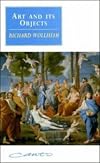
Um livro muito interessante de estética analítica, com uma orientação wittgensteiniana. Começa com a pergunta ontológica - o que é a arte, e se propõe perguntas menores, sobre os objetos, e hipóteses bobas, como a que uma obra de arte é um objeto físico. Mas com isso desfila uma série de argumentos e posturas filosóficas, identificando autores que as detém. E então contra-argumenta e desfaz as pretensões, muitas vezes de suas próprias hipóteses. De toda forma, não é show more apenas com refutações que saímos. Há importantes reflexões sobre a relação tipo-tolken para obras de arte, a falácia da construção reflexiva e a proposição da diferença entre "ver em" e "ver como", arte como forma de vida. show less

"It is early. The hall is dark. Light rims the front door. The panes of violet glass sparkle. The front door has been left open. Now I am standing outside in the sun. I can smell the flowers and the warmed air. I hear the bees as they sway above the lavender. The morning advances; a startled bird runs fast across the dew. Its breast quivers, in, out, and its song scratches on my ear. Lifting my eyes, I see that the garden, and everything in it, moves. The flowers move, and the lavender show more moves, and the tree above me is moving. I am standing in the sun, my body is tipped forward, and I am walking. Walking I shall trip, and, if I trip, trip without a helping hand, I shall fall. I look above me, and I feel behind me, searching for the hand that is always there. There is no hand…….”
This is the opening passage of the wonderful, intense childhood memoir by the late Richard Wollheim (1923-2003). Not until well into the book is there an explanation for this attempt to evoke a tempo with the words as well as with meaning – using ever- expanding sentences. He opens his memoir with three words, and then adds a word each sentence, as the atmosphere of the scene expands.
So develops an imaginative portrayal of a childhood, sharply perceptive yet retaining the naivety and perspective of a young mind. His descriptions of his flawed, eccentric family and the anxieties surrounding his love for them is combined with the aim to achieve a degree of self-examination rarely found in the words people write about themselves. A portrait of a hypersensitive, obsessive, idiosyncratic child emerges. His highly regulated life, illustrated in his toiletry regime, his requirements for dress and his moral education, can be contrasted with the feeling of parental emotional distance and perhaps even abandonment that is described as he is left in different hotels with his nanny, shuffled to the doctor for his moral discussions on coming of age, or ignored as the father entertains his actors and friends.
He describes his ‘single greatest increase in personal responsibility during his childhood, as being shown how to divide and fold the toilet paper to clean himself’. This is ‘what I think of when I hear philosophers discuss responsibility’. There is a hilarious incident where he is sent off to the doctor’s house for a discussion of the ‘birds and the bees’ and is sent home without explanation as the young boy is totally without any clue to the ideas of procreation. His naivety is complete.
Hilarious measures were taken to safeguard the health of the young boy. One 'mademoiselle' fastened safety pins to the buttonholes of the 10-year-old Wollheim's coat in case a short walk down the drive might cause the buttons to fall off.
His father was an impresario, a friend of Diaghilev’s and the epitome of a continental man at the end of the Victorian era. Speaking German and French without accent, the smell of eau de cologne, the gold pencil, the exotic shapes and smells of Old Europe bring the impresario and past manager of Diaghilev's ballet sharply to life. The alluring world of art and illusion and the glamorous leading ladies who came to lunch left a deep impression on his young son and may have compensated for the feeling of parental dislocation that were common in many childhood lives in that early post-Victorian society.
His mother is a figure who appears tall, overbearing, and comic in her absurdities: her height and strong features tower over the family as in the picture on the book's front cover. She remains more of an enigma as she is partially obscured by her role as housekeeper in the conventions of the time. Connie had been a showgirl when she married but her husband insists she give it up for her family. She lived for praise and for an opportunity to tell her stories over and over again. Although the child is vexed by his mother’s apparent lack of intellectual curiosity as he states that ‘ she has never read a book and never wishes to’, all we know of her response to being told to leave the stage by her husband is that she turned to obsessive housework, closing the door of each room until it was clean and free of the germs. The child resents the mother who talks only of herself and has no deep interests or obvious talents. But the reader is left feeling that her character portrayal is undeserved, as we reflect back from a more feminist culture of a century later.
A book to savour and enjoy, with a crystal clear existentialism evocative of Proust or Sebald. Not to be missed. show less
This is the opening passage of the wonderful, intense childhood memoir by the late Richard Wollheim (1923-2003). Not until well into the book is there an explanation for this attempt to evoke a tempo with the words as well as with meaning – using ever- expanding sentences. He opens his memoir with three words, and then adds a word each sentence, as the atmosphere of the scene expands.
So develops an imaginative portrayal of a childhood, sharply perceptive yet retaining the naivety and perspective of a young mind. His descriptions of his flawed, eccentric family and the anxieties surrounding his love for them is combined with the aim to achieve a degree of self-examination rarely found in the words people write about themselves. A portrait of a hypersensitive, obsessive, idiosyncratic child emerges. His highly regulated life, illustrated in his toiletry regime, his requirements for dress and his moral education, can be contrasted with the feeling of parental emotional distance and perhaps even abandonment that is described as he is left in different hotels with his nanny, shuffled to the doctor for his moral discussions on coming of age, or ignored as the father entertains his actors and friends.
He describes his ‘single greatest increase in personal responsibility during his childhood, as being shown how to divide and fold the toilet paper to clean himself’. This is ‘what I think of when I hear philosophers discuss responsibility’. There is a hilarious incident where he is sent off to the doctor’s house for a discussion of the ‘birds and the bees’ and is sent home without explanation as the young boy is totally without any clue to the ideas of procreation. His naivety is complete.
Hilarious measures were taken to safeguard the health of the young boy. One 'mademoiselle' fastened safety pins to the buttonholes of the 10-year-old Wollheim's coat in case a short walk down the drive might cause the buttons to fall off.
His father was an impresario, a friend of Diaghilev’s and the epitome of a continental man at the end of the Victorian era. Speaking German and French without accent, the smell of eau de cologne, the gold pencil, the exotic shapes and smells of Old Europe bring the impresario and past manager of Diaghilev's ballet sharply to life. The alluring world of art and illusion and the glamorous leading ladies who came to lunch left a deep impression on his young son and may have compensated for the feeling of parental dislocation that were common in many childhood lives in that early post-Victorian society.
His mother is a figure who appears tall, overbearing, and comic in her absurdities: her height and strong features tower over the family as in the picture on the book's front cover. She remains more of an enigma as she is partially obscured by her role as housekeeper in the conventions of the time. Connie had been a showgirl when she married but her husband insists she give it up for her family. She lived for praise and for an opportunity to tell her stories over and over again. Although the child is vexed by his mother’s apparent lack of intellectual curiosity as he states that ‘ she has never read a book and never wishes to’, all we know of her response to being told to leave the stage by her husband is that she turned to obsessive housework, closing the door of each room until it was clean and free of the germs. The child resents the mother who talks only of herself and has no deep interests or obvious talents. But the reader is left feeling that her character portrayal is undeserved, as we reflect back from a more feminist culture of a century later.
A book to savour and enjoy, with a crystal clear existentialism evocative of Proust or Sebald. Not to be missed. show less
Lists
You May Also Like


Associated Authors
Statistics
- Works
- 25
- Also by
- 9
- Members
- 1,000
- Popularity
- #25,784
- Rating
- 3.5
- Reviews
- 10
- ISBNs
- 67
- Languages
- 5
