
Kate Adie
Author of The Kindness of Strangers: The Autobiography
About the Author
Image credit: Flickr user gavinandrewstewart
Works by Kate Adie
Tagged
Common Knowledge
- Legal name
- Adie, Kathryn
- Birthdate
- 1945-09-19
- Gender
- female
- Education
- Sunderland Church High School
University of Newcastle upon Tyne - Occupations
- journalist
- Organizations
- BBC
- Awards and honors
- Officer of the Order of the British Empire (1993)
- Nationality
- UK
- Birthplace
- Northumberland, England, UK
- Places of residence
- Sunderland, Durham, England, UK
- Associated Place (for map)
- England, UK
Members
Reviews
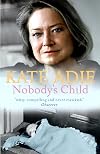
I had been waiting for months for the price on the Kindle version of this book to drop, and then a friend loaned me a copy found in a charity shop! So finally, ages after watching the documentary which made me want to read more about foundlings, I found Kate Adie's living history of abandoned children to be both informative and emotional.
Opening with an introduction about the author's own uncertain origins - 'My passport contains a lie' - Nobody's Child is broken down into chapters titled show more with various official questions which adopted children and foundlings find hard or impossible to answer, from 'What is your name?', and the important but little known legal fact that 'if you don't like your name you can change it', to 'What is your mother's name?' and 'Where were you born?'
I initially thought that Adie's book would be a series of personal accounts from foundlings, like the documentary, and although there are individual narratives - from ordinary people found as babies in strange places like railway stations and telephone boxes to more famous names including Andy McNab and Fatima Whitbread - there is also so much more. Adie describes the history of foundling hospitals, from the Innocenti in Florence, a fifteenth century orphanage, to Thomas Coram's eighteenth century charity in London, as well as modern day examples in Russia and China. Some of the facts are shocking, and not all are related to times past - mothers leaving babies at Coram's hospital might have needed certificates to prove they hadn't killed their babies, but women in the UK can still be prosecuted for abandoning their babies. The real life stories are also heartwarming, though, like the four sisters tracing their adopted brother and the 'Safe Havens' for mothers who are too scared to keep their babies in New York and Boston.
Adie also adds a personal touch, talking about her own adoption and childhood, plus her career with the BBC and the stories she has collected from people in countries all over the world. She has a witty and friendly yet professional approach to the subject that stays with you long after finishing the book.
'For we all need roots, and we are all somebody's child.' show less
Opening with an introduction about the author's own uncertain origins - 'My passport contains a lie' - Nobody's Child is broken down into chapters titled show more with various official questions which adopted children and foundlings find hard or impossible to answer, from 'What is your name?', and the important but little known legal fact that 'if you don't like your name you can change it', to 'What is your mother's name?' and 'Where were you born?'
I initially thought that Adie's book would be a series of personal accounts from foundlings, like the documentary, and although there are individual narratives - from ordinary people found as babies in strange places like railway stations and telephone boxes to more famous names including Andy McNab and Fatima Whitbread - there is also so much more. Adie describes the history of foundling hospitals, from the Innocenti in Florence, a fifteenth century orphanage, to Thomas Coram's eighteenth century charity in London, as well as modern day examples in Russia and China. Some of the facts are shocking, and not all are related to times past - mothers leaving babies at Coram's hospital might have needed certificates to prove they hadn't killed their babies, but women in the UK can still be prosecuted for abandoning their babies. The real life stories are also heartwarming, though, like the four sisters tracing their adopted brother and the 'Safe Havens' for mothers who are too scared to keep their babies in New York and Boston.
Adie also adds a personal touch, talking about her own adoption and childhood, plus her career with the BBC and the stories she has collected from people in countries all over the world. She has a witty and friendly yet professional approach to the subject that stays with you long after finishing the book.
'For we all need roots, and we are all somebody's child.' show less
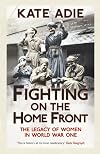
Kate Adie brings an interesting personal touch to the forgotten stories of women who struggled against a patriarchal society for the right to be taken seriously. Adie marries the story of the fight for electoral representation with that of the women who took men's places in the workplace during the war firmly on men's terms. This isn't a story often told in the more typically eulogising accounts of plucky little women filling the gap left by men who were fighting on the front. This is a show more story of women used cheaply as a stop gap and not recognised for the effort and the sacrifice they made to support the armed forces and the nation. There are some remarkable stories of bravery and bloody mindedness in the face of patronising male dismissal of women's abilities. There are also parallels drawn by Adie between the chauvinism of Edwardian Britain in a theatre of war and the chauvinism shown to her 80 years later as a war correspondent. There is some repetition of themes across the piece, and not everything in the book is entirely engaging, but on the whole this is a good popular history of a little-celebrated aspect of World War One. show less
Kate Adie’s detailed examination of the myriad ways in which the lives of women changed during the First World War offers a fascinating glimpse into the social and political upheaval of the period. It wasn’t that women hadn’t been pushing for change in the old order: the suffrage movement was gaining momentum and industrialisation was opening up new opportunities. However, the advent of war and its voracious need for men to fight on the Front, meant that women from all walks of life show more stepped up to do a wide range of jobs which had traditionally be done by men. They were also used, in a cynical way some could argue, via a poster campaign which encouraged men to fight for their country – suddenly the power of the female voice was being recognised! Many women were keen to use these new opportunities to break free from the shackles of a paternalistic, chauvinistic and stifling society and to play their part in fighting the enemy. However, they also had to fight against dismissive attitudes on the home front, from politicians and from the employers and the unions. Not only was there the issue of what they should be paid (certainly not as much as men were paid!) but they were constantly reminded that these jobs were only “for the duration” and that, once the war was over, the men would replace them. There were also some lines which couldn’t be crossed – for instance, the women were allowed to clean the trains but not to drive them ….. chauvinism and prejudice were still alive and kicking! Nevertheless, the fact was that, in so many ways, the genie was out of the bottle and life would never be the same again, for either men or women.
Kate Adie’s exploration of the complexities of these changes was impressive, highlighting some things which I hadn’t previously given thought to. One example being that a successful and popular campaign for volunteer knitters to provide items such as socks, gloves, scarves etc. for the troops was regarded as a major threat to the jobs of textile workers. She also highlighted, through well-researched examples, many instances of incredible bravery, of women risking their own lives and yet their exploits were seen as “plucky” and “splendid” rather than “brave” – another reflection of the paternalistic attitudes of the time! She told the story of Flora Sandes (probably my favourite character in the book), an ambulance volunteer who eventually fought with the Serbian army, thus becoming the only woman to officially fight in the war. I had never heard of her and yet she is still regarded by Serbs as a national hero!
This book is full of wonderful examples of the roles women adopted during this period, of neglected heroes and of the ways in which the lives of people on the home front were frequently in danger, either through the work they did or as a result of Zeppelin raids which brought death and destruction. There were times when, partly as a result of the chapter- construction of the story, I found some of the themes and observations repetitious, but overall this is a very well-written account of a fascinating period. show less
Kate Adie’s exploration of the complexities of these changes was impressive, highlighting some things which I hadn’t previously given thought to. One example being that a successful and popular campaign for volunteer knitters to provide items such as socks, gloves, scarves etc. for the troops was regarded as a major threat to the jobs of textile workers. She also highlighted, through well-researched examples, many instances of incredible bravery, of women risking their own lives and yet their exploits were seen as “plucky” and “splendid” rather than “brave” – another reflection of the paternalistic attitudes of the time! She told the story of Flora Sandes (probably my favourite character in the book), an ambulance volunteer who eventually fought with the Serbian army, thus becoming the only woman to officially fight in the war. I had never heard of her and yet she is still regarded by Serbs as a national hero!
This book is full of wonderful examples of the roles women adopted during this period, of neglected heroes and of the ways in which the lives of people on the home front were frequently in danger, either through the work they did or as a result of Zeppelin raids which brought death and destruction. There were times when, partly as a result of the chapter- construction of the story, I found some of the themes and observations repetitious, but overall this is a very well-written account of a fascinating period. show less
This is a masterful account of the massive contribution made by British Females to the UK's Total War effort from August 1914 to November 1918.
Kate Adie is a distinguished tv & radio journalist and she has made a phenomenal effort herself to ensure the Woman's perspective of WW1 is covered from every aspect.
I was reasonably familiar with the story of women replacing men who joined the forces: Their roles in factories, mills and Land Army has been the stock documentary story of women at the show more Home Front - thanks to Ms Adie, that undoubtedly 'male' perspective has been greatly enlarged: I now also know about the female coalminers, the Bridport camouflage net makers, shipyard warship builders, ladies taking Cleric duties, even ladies football teams and grave-diggers. Every kind of work that had been taken as a man's prerogative and all for the same 12 hour shifts, but half the pay of the men they so gallantly and expertly filled in for.
This includes detailed analysis and description of unheralded, (and hitherto unknown to me) Women who were very much AT THE FRONT during the combat - their astonishing escapades and heroic sacrifices to assist Allied forces as far afield as Serbia, Gallipoli, Egypt and the Western Front - Nursing the wounded and dying behind the lines and back in 'Blighty' is explained in detail, but the first all-female Surgical Team operating on casualties straight from the trenches was a particular fascination plus female Train, Truck & Ambulance drivers behind the front-lines.
Adie's use of her adoptive Sunderland family History from the era brings additional, enlightening views and always reminds us of the deprivations and class structures that so riddled Edwardian Britain and which WW1 only marginally reduced for the duration of the war.
Anyone studying WW1 should read this book: Anyone interested in Women and those who want a thoroughly researched tome from the female viewpoint should also find this book very worthwhile. show less
Kate Adie is a distinguished tv & radio journalist and she has made a phenomenal effort herself to ensure the Woman's perspective of WW1 is covered from every aspect.
I was reasonably familiar with the story of women replacing men who joined the forces: Their roles in factories, mills and Land Army has been the stock documentary story of women at the show more Home Front - thanks to Ms Adie, that undoubtedly 'male' perspective has been greatly enlarged: I now also know about the female coalminers, the Bridport camouflage net makers, shipyard warship builders, ladies taking Cleric duties, even ladies football teams and grave-diggers. Every kind of work that had been taken as a man's prerogative and all for the same 12 hour shifts, but half the pay of the men they so gallantly and expertly filled in for.
This includes detailed analysis and description of unheralded, (and hitherto unknown to me) Women who were very much AT THE FRONT during the combat - their astonishing escapades and heroic sacrifices to assist Allied forces as far afield as Serbia, Gallipoli, Egypt and the Western Front - Nursing the wounded and dying behind the lines and back in 'Blighty' is explained in detail, but the first all-female Surgical Team operating on casualties straight from the trenches was a particular fascination plus female Train, Truck & Ambulance drivers behind the front-lines.
Adie's use of her adoptive Sunderland family History from the era brings additional, enlightening views and always reminds us of the deprivations and class structures that so riddled Edwardian Britain and which WW1 only marginally reduced for the duration of the war.
Anyone studying WW1 should read this book: Anyone interested in Women and those who want a thoroughly researched tome from the female viewpoint should also find this book very worthwhile. show less
Lists
You May Also Like


Statistics
- Works
- 7
- Members
- 696
- Popularity
- #36,356
- Rating
- 3.6
- Reviews
- 15
- ISBNs
- 42
- Languages
- 1