
J. J. Scarisbrick (1928–2026)
Author of Henry VIII
About the Author
Works by J. J. Scarisbrick
Law and Government under the Tudors: Essays Presented to Sir Geoffrey Elton (1988) — Editor — 10 copies
English Monarchs: William The Conqueror, Henry VIII, Edward The Confessor, Henry VII, Henry II, Edward IV, Richard III (7 Volume Set Complete) (1964) 8 copies
Selly Park and beyond : the story of Geneviève Dupuis and the Congregation of the Sisters of Charity of St. Paul the Apostle (1997) 2 copies
English Monarchs Henry VII 1 copy
Associated Works
Historical perspectives : studies in English thought and society, in honour of J. H. Plumb (1974) — Contributor — 6 copies
Tagged
Common Knowledge
- Legal name
- Scarisbrick, John Joseph
- Other names
- Scarisbrick, Jack
- Birthdate
- 1928-10-06
- Date of death
- 2026-02-28
- Gender
- male
- Education
- Christ's College, Cambridge
John Fisher School - Occupations
- historian
professor - Organizations
- University of Warwick
LIFE - Nationality
- UK
- Birthplace
- London, England
- Places of residence
- Learnington Spa
- Associated Place (for map)
- London, England
Members
Reviews

I suspect most people would not enjoy this tome. It is not something to be picked up and read through quickly. I, on the other hand, thoroughly enjoyed it, even thought it has taken me almost a year to slog through it. Of course, that's because much of my Latin is rusty, my knowledge of words from earlier periods of the King's English is even rustier, and I wanted to absorb all the nuances of the book. My answer - copious notes and appropriate dictionaries.
The end result has been well show more worthwhile however. I picked up the book expecting it to be the somewhat usually, albeit more scholarly, take on Henry's marriages. It isn't! In fact, his queens are only a small part of the work, some barely getting any mention.
What the book really does is offer a deep dive into the religious reformation brought by Henry to England. Those not versed in English history, as I was, tend to think that reformation occurred simply because he waned to marry Anne Boleyn. My take from this work is that while the timeline would very well have been different, that reformation was likely to occur even if Anne Boleyn had not entered the picture.
It was a fascinating book. I do not begrudge the time I devoted to it at all. show less
The end result has been well show more worthwhile however. I picked up the book expecting it to be the somewhat usually, albeit more scholarly, take on Henry's marriages. It isn't! In fact, his queens are only a small part of the work, some barely getting any mention.
What the book really does is offer a deep dive into the religious reformation brought by Henry to England. Those not versed in English history, as I was, tend to think that reformation occurred simply because he waned to marry Anne Boleyn. My take from this work is that while the timeline would very well have been different, that reformation was likely to occur even if Anne Boleyn had not entered the picture.
It was a fascinating book. I do not begrudge the time I devoted to it at all. show less
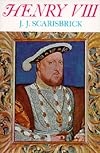
The Tudor period has long held a fascination in my life, and the shelves of books I have on the period range from the truly thorough and scholarly to historic/romantic fiction. Scarisbrick clearly falls into the category of the former. When it came out, a lost review touted it as the definitive biography of King Henry the VIII. I began to read it some forty years ago, but found it too technical for my limited knowledge of the period at the time. In conjunction with the Showtime special, The show more Tudors, the time seemed right to have another go.
Scarisbrick has written a definitive, detailed, heavily annotated biography, with an extensive bibliography, which is probably out of date now. The work is organized around the major events of Henry’s reign, rather than a straight chronological rendering of his life and times.
A great deal of information was added to my store of knowledge. For example, the divorce from Catherine of Aragon took up much more time and effort and became much more complicated than I thought. Likewise, Henry’s diplomatic maneuvers with Charles I of Spain (aka Charles V of the Holy Roman Empire) and Francis I of France filled literally hundreds of pages of this 500+ page volume.
Despite the length, the text is eminently readable, and sometimes I would begin and end a 60-page chapter in a sitting.
The parallels between Henry of the 16th century and America in the 21st, never failed to astound me. For example, when Henry became King in 1509, he could have followed in his father’s footsteps, but he choose to “reject his father’s notion of a king’s function, quickly dissipate his inherited treasure, set Scotland once more at violent odds with England and pay so little attention to the Americas and Asia that, when overseas exploration was resumed over forty years later, his country would find that Iberian ships had meanwhile gained an advantage which it would take her generations to rival” (21).
Substitute Middle East for Scotland, the US for England, industrial might for exploration, and Chinese for Iberian, and the parallels become even clearer. To paraphrase the quote from Santayana, “Those who cannot remember the past, are condemned to repeat it, because they have been overcome by megalomania and/or greed.” 5 stars
--Jim, 6/30/09 show less
Scarisbrick has written a definitive, detailed, heavily annotated biography, with an extensive bibliography, which is probably out of date now. The work is organized around the major events of Henry’s reign, rather than a straight chronological rendering of his life and times.
A great deal of information was added to my store of knowledge. For example, the divorce from Catherine of Aragon took up much more time and effort and became much more complicated than I thought. Likewise, Henry’s diplomatic maneuvers with Charles I of Spain (aka Charles V of the Holy Roman Empire) and Francis I of France filled literally hundreds of pages of this 500+ page volume.
Despite the length, the text is eminently readable, and sometimes I would begin and end a 60-page chapter in a sitting.
The parallels between Henry of the 16th century and America in the 21st, never failed to astound me. For example, when Henry became King in 1509, he could have followed in his father’s footsteps, but he choose to “reject his father’s notion of a king’s function, quickly dissipate his inherited treasure, set Scotland once more at violent odds with England and pay so little attention to the Americas and Asia that, when overseas exploration was resumed over forty years later, his country would find that Iberian ships had meanwhile gained an advantage which it would take her generations to rival” (21).
Substitute Middle East for Scotland, the US for England, industrial might for exploration, and Chinese for Iberian, and the parallels become even clearer. To paraphrase the quote from Santayana, “Those who cannot remember the past, are condemned to repeat it, because they have been overcome by megalomania and/or greed.” 5 stars
--Jim, 6/30/09 show less

There is a lot to like about this stodgy scholarship; indeed I do believe that the first paragraph of the final chapter may be the best piece of expository prose I've ever read. It must be remembered, though, that as with all books in this series, the reader is taking on a formidable task, and in this case especially so; one will face four chapters of scriptural and canonical minutiae when he takes on Henry's split from Rome. Certainly this was very important, perhaps Henry's most important show more legacy, but, at least to me, it seemed a bit much. show less

Maybe Henry was no more unaware and irresponsible than many Kings have been; but rarely, if ever, have the unawareness and irresponsibility of a king proved more costly of material benefits to his people
Scarisbrick's biography published in 1968 cannot resist looking at its subject from a moral viewpoint entrenched in the 1960's. His final chapter which is akin to a balance sheet of good points and bad points suffers the most from this stance, which is a pity because what had gone before show more was a detailed examination of the public life of one of England's most notorious kings. Henry VIII was fated and revered after his death as one of the great Kings and there is no doubt that a cold hard look at his life would redress the balance, but Scarisbrick for me does not quite give the reader enough context in which to make his own judgement.
Coming in at over 650 pages there is more than enough here to satisfy the amateur historian who wants to find out in some detail the workings of Henry VIII and his government. Scarisbrick is particularly strong on the religious and political arguments that lead to the break with the Pope and the church of Rome. There are well over 100 pages that provide a blow by blow account of the arguments and diplomacy that resulted in Henry's policy of Royal Supremacy. Scarisbrick managed to make this all very readable with some insightful commentary on the religious issues involved; that allows the reader to gasp the main points of the struggle. He was apparently the first historian to make use of hitherto unused documents from the Vatican library and so this aspect of Henry's life features very strongly in the Biography. It was perhaps the most important aspect of Henry's reign and I think the time spent on the issues rather than the characters involved (the Boleyn family for instance) gives the Biography an historical weight. The biography also provides plenty of details concerning Henry's ambitious foreign policy and his dealings with Francis 1st of France and Charles of Spain the Holy Roman emperor.
The Biography rightly centres on Henry VIII and his motives and actions providing a good insight into his character. Scarisbrick explains convincingly the reasons for his matrimonial difficulties even speculating a little as to why Henry's relationships were so fraught. From our 20th century perspective it is impossible to know or even understand all the reasons for Henry's difficulties. It is clear he was a volatile character supremely confident in his right to be king and ruler over his domain and he was Machiavellian in the extreme, but in keeping speculation to a minimum Scarisbrick serves his subject well.
I wanted to read a Biography that would provide me with a background for my reading of Early Tudor literature and this Biography fits the bill exactly, as far as kingship and politics are concerned, however it is lacking in social history and so anyone not familiar with the first half of 16th century England might need to read more widely.
This is a solid biography in many respects, there are many other books on the period and the characters surrounding the king, but if you really want to get to grips with the issues that Henry VIII faced as King of England then this is a good place to start. A four star read. show less
Scarisbrick's biography published in 1968 cannot resist looking at its subject from a moral viewpoint entrenched in the 1960's. His final chapter which is akin to a balance sheet of good points and bad points suffers the most from this stance, which is a pity because what had gone before show more was a detailed examination of the public life of one of England's most notorious kings. Henry VIII was fated and revered after his death as one of the great Kings and there is no doubt that a cold hard look at his life would redress the balance, but Scarisbrick for me does not quite give the reader enough context in which to make his own judgement.
Coming in at over 650 pages there is more than enough here to satisfy the amateur historian who wants to find out in some detail the workings of Henry VIII and his government. Scarisbrick is particularly strong on the religious and political arguments that lead to the break with the Pope and the church of Rome. There are well over 100 pages that provide a blow by blow account of the arguments and diplomacy that resulted in Henry's policy of Royal Supremacy. Scarisbrick managed to make this all very readable with some insightful commentary on the religious issues involved; that allows the reader to gasp the main points of the struggle. He was apparently the first historian to make use of hitherto unused documents from the Vatican library and so this aspect of Henry's life features very strongly in the Biography. It was perhaps the most important aspect of Henry's reign and I think the time spent on the issues rather than the characters involved (the Boleyn family for instance) gives the Biography an historical weight. The biography also provides plenty of details concerning Henry's ambitious foreign policy and his dealings with Francis 1st of France and Charles of Spain the Holy Roman emperor.
The Biography rightly centres on Henry VIII and his motives and actions providing a good insight into his character. Scarisbrick explains convincingly the reasons for his matrimonial difficulties even speculating a little as to why Henry's relationships were so fraught. From our 20th century perspective it is impossible to know or even understand all the reasons for Henry's difficulties. It is clear he was a volatile character supremely confident in his right to be king and ruler over his domain and he was Machiavellian in the extreme, but in keeping speculation to a minimum Scarisbrick serves his subject well.
I wanted to read a Biography that would provide me with a background for my reading of Early Tudor literature and this Biography fits the bill exactly, as far as kingship and politics are concerned, however it is lacking in social history and so anyone not familiar with the first half of 16th century England might need to read more widely.
This is a solid biography in many respects, there are many other books on the period and the characters surrounding the king, but if you really want to get to grips with the issues that Henry VIII faced as King of England then this is a good place to start. A four star read. show less
Lists
Awards

You May Also Like


Associated Authors
Statistics
- Works
- 10
- Also by
- 1
- Members
- 737
- Popularity
- #34,455
- Rating
- 3.9
- Reviews
- 9
- ISBNs
- 23
- Languages
- 1