
Matthew Beaumont
Author of Nightwalking: a nocturnal history of London Chaucer to Dickens
About the Author
Matthew Beaumont is a senior lecturer in the department of English at University College London.
Image credit: from University College, London faculty page
Works by Matthew Beaumont
As Radical as Reality Itself: Essays on Marxism and Art for the 21st Century (2007) 2 copies, 1 review
The Invisible Man 1 copy
Associated Works
Tagged
Common Knowledge
- Birthdate
- 1972-04-10
- Gender
- male
- Education
- University of Oxford (BA, MSt, PhD)
- Occupations
- English professor, University College, London
- Nationality
- UK
- Map Location
- UK
Members
Reviews
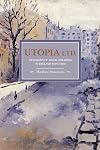
Beaumont's monograph examines the appearance of utopian ideas in late-nineteenth-century British writing, both fiction and not. I was looking for discussion of the creation of utopias, but didn't find a whole lot here, which probably does not speak ill of Beaumont's book. There are little glimpses of it, though; Beaumont discusses Karl Marx's take on Edward Bellamy's Looking Backward, which he condemned as "transform[ing] the real social movement which, in all civilised countries, already show more proclaims the approach of a terrible social upheaval into a process of comfortable and peaceful conversion, into a still life which will permit the owners and rulers of the world to slumber peacefully" (qtd. in Beaumont 78-9). I think Bellamy's utopian fiction is characteristic, however: many utopian stories elide or obscure the violence necessary for the realization of utopia, in favor of a vague, "progress happened."
Beaumont also discusses the appearance of "cacotopias" in Victorian fiction. These are kind of like dystopias, but worse. Cacotopia (at least as Beaumont puts it) isn't interested in the parameters of the "corrupt power structures of the putative socialist state" like an anti-utopian novel would be; a cacotopia is written to "portray[ ] revolution as a sexual and political apocalypse" (132). Beaumont argues that it "depicts the working class, in corpore, as dystopian" and thus having a "grisly fascination with chthonic insurrection" (132). Beaumont seems to mark it as an inherently classist form: the working class will not carry out reform in a socially acceptable because they are incapable of doing so. Beaumont's discussion of the form was the part of the book that was the most interesting to me, though I wish he had developed his idea that George Griffith's Angel of the Revolution was "a parodic reappropriation" of the cacotopia (149), as Angel is too complicated and too weird a work to be summed up so quickly (the novel gets only a paragraph) if one wants to be compelling.
One very praiseworthy feature of Beaumont's work is the sheer depth of reading he's done in his genre of choice. Some of the works I went on to read in the Eaton Collection, like Fergus Hume's The Year of Miracle (1895) and Charles Gleig's When All Men Starve (1897), but there are many many more I would still like to read. show less
Beaumont also discusses the appearance of "cacotopias" in Victorian fiction. These are kind of like dystopias, but worse. Cacotopia (at least as Beaumont puts it) isn't interested in the parameters of the "corrupt power structures of the putative socialist state" like an anti-utopian novel would be; a cacotopia is written to "portray[ ] revolution as a sexual and political apocalypse" (132). Beaumont argues that it "depicts the working class, in corpore, as dystopian" and thus having a "grisly fascination with chthonic insurrection" (132). Beaumont seems to mark it as an inherently classist form: the working class will not carry out reform in a socially acceptable because they are incapable of doing so. Beaumont's discussion of the form was the part of the book that was the most interesting to me, though I wish he had developed his idea that George Griffith's Angel of the Revolution was "a parodic reappropriation" of the cacotopia (149), as Angel is too complicated and too weird a work to be summed up so quickly (the novel gets only a paragraph) if one wants to be compelling.
One very praiseworthy feature of Beaumont's work is the sheer depth of reading he's done in his genre of choice. Some of the works I went on to read in the Eaton Collection, like Fergus Hume's The Year of Miracle (1895) and Charles Gleig's When All Men Starve (1897), but there are many many more I would still like to read. show less
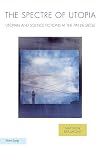
Beaumont's thesis is that utopias aren't really imagined as real places, either in time or space, but they're just ghosts of the present. In fact, utopias can only be good if they are are imagined-- otherwise they become malignant. He sees both an inability to enact real change (12) and a collective conviction of imminent change (29) that gives birth to these narratives of the future where everything has already changed. It's impossible for us to imagine what comes between 1887 and 2000 in show more the subtitle of Edward Bellamy's Looking Backward, for example, but that's where the real action of the novel is. Much of his book is about Bellamy's novel, which makes sense given how influential it was, but it's almost too much; sometimes I wanted him to broaden his outward a bit more. But he does touch on 1890s feminist utopianism, Oscar Wilde's "The Soul of Man under Socialism" (he says Wilde has just dressed up capitalist progressive platitudes in wittier language), and H. G. Wells (specifically The Time Machine, The War of the Worlds, and When the Sleeper Wakes), and presents provocative readings of them.
Some of the book reminded me about Peter Paik's excellent From Utopia to Apocalypse: we find it impossible to really imagine ourselves doing what needs to be done to change things. Either we skip over the intervening time, or we imagine a vague "progress" will handle it for us, or we let a natural disaster do the work for us. A book to come back to, and a strong development of strands begun in Beaumont's Utopia Ltd., even though I read them the wrong way round! show less
Some of the book reminded me about Peter Paik's excellent From Utopia to Apocalypse: we find it impossible to really imagine ourselves doing what needs to be done to change things. Either we skip over the intervening time, or we imagine a vague "progress" will handle it for us, or we let a natural disaster do the work for us. A book to come back to, and a strong development of strands begun in Beaumont's Utopia Ltd., even though I read them the wrong way round! show less

A collection of essays by an english literature academic loosely concerned with walking and its relationship to, well just about everything. Particularly liked the one on 'Where does the body begin?' The answer being the big toe, being essential to bipedalism, the consequent ability of humans to use tools and therefore to develop a bigger brain. The big toe - the reason for human civilisation.
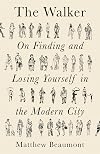
I really wanted to like this more. It is a worthy and well-researched piece of work, which explores various guises of the flaneur throughout literature, but it reads as a very dry academic text, with copious footnotes and that air of ivory-tower floweriness of language.
A book like this needs, for a general audience, some interaction between the author, the subject and the reader - which does come, but frustratingly only in the final chapter when the author loosens the bonds of academic show more strictures and dares to insert himself into the text, as he himself walks the city. This is what was needed throughout; other successful books which manage this transition from dry academic tome to accessible general text should have provided a template for what would have worked.
There is no denying the research and intelligence behind the book. It just needed a good editor to request a re-write for a more general audience. This book, I fear, is destined for the dusty shelves of libraries and the studies of academics only. Which is a shame. show less
A book like this needs, for a general audience, some interaction between the author, the subject and the reader - which does come, but frustratingly only in the final chapter when the author loosens the bonds of academic show more strictures and dares to insert himself into the text, as he himself walks the city. This is what was needed throughout; other successful books which manage this transition from dry academic tome to accessible general text should have provided a template for what would have worked.
There is no denying the research and intelligence behind the book. It just needed a good editor to request a re-write for a more general audience. This book, I fear, is destined for the dusty shelves of libraries and the studies of academics only. Which is a shame. show less
Lists
Walking (1)
Awards

You May Also Like


Associated Authors
Statistics
- Works
- 16
- Also by
- 3
- Members
- 578
- Popularity
- #43,350
- Rating
- 3.8
- Reviews
- 8
- ISBNs
- 46
- Languages
- 4