
K. W. Jeter
Author of The Mandalorian Armor
About the Author
Image credit: Infrogmation of New Orleans
Series
Works by K. W. Jeter
True Love [short fiction] 4 copies
The First Time [short fiction] 3 copies
Riding Bitch 3 copies
Mister E 2 copies
La mante 1 copy
Mantis 1 copy
Dr. Roder 1 copy
Associated Works
Alien Sex: 19 Tales by the Masters of Science Fiction and Dark Fantasy (1990) — Contributor — 530 copies, 6 reviews
Clockwork Fairy Tales: A Collection of Steampunk Fables (2013) — Contributor — 193 copies, 5 reviews
Tagged
Common Knowledge
- Canonical name
- Jeter, K. W.
- Legal name
- Jeter, Kevin Wayne
- Birthdate
- 1950-03-26
- Gender
- male
- Education
- California State University, Fullerton
San Francisco State University (BA)
San Francisco State University (MA) - Occupations
- writing instructor
AIDS researcher
probation officer - Relationships
- Jeter, Geri (wife)
- Nationality
- USA
- Birthplace
- Los Angeles, California, USA
- Places of residence
- Las Vegas, Nevada, USA
Cuenca, Ecuador - Associated Place (for map)
- USA
Members
Reviews
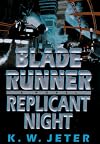
In Replicant Night, K.W. Jeter picks up where he left off in his previous Blade Runner entry, The Edge of Human, although that title would be more fitting for this novel. The story begins with Rick Deckard and Sarah Tyrell living in the U.N.'s Martian colony, their plans for emigrating to the interstellar colonies quashed by the cessation of outbound transport. Rick becomes wrapped up in a conspiracy to aid replicants currently rebelling against their human masters in those colonies while show more Sarah discovers more of the Tyrell Corporation's dirty secrets.
The background of the Salander 3 expands on ideas that Philip K. Dick first wrote about in Do Androids Dream of Electric Sheep and the powdered deities bear a resemblance to the machines used the that book as part of Mercerism, but most of the story focuses on conspiracies-within-conspiracies. Jeter continues to pose the questions about the nature of humanity, with the Tyrell Corporation's slogan of "Realer than Real" recurring throughout the story. At one point, Deckard states, "We're not the ones who get to decide who's human and who's not" (p. 304). Jeter also maintains the nihilist streak that pervaded the original novel and film, with Sarah thinking to herself, "The dead were the only ones who escaped. For the living, there was only the past and the future, the same thing in either direction, and equally painful" (p. 131). Those who enjoyed Jeter's previous novel, the ways it sought to mesh Dick's novel with Ridley Scott's 1982 film, and the questions it posed in the manner of the two works will likely enjoy those parts of Replicant Night, though the plot is almost painfully complicated at parts. show less
The background of the Salander 3 expands on ideas that Philip K. Dick first wrote about in Do Androids Dream of Electric Sheep and the powdered deities bear a resemblance to the machines used the that book as part of Mercerism, but most of the story focuses on conspiracies-within-conspiracies. Jeter continues to pose the questions about the nature of humanity, with the Tyrell Corporation's slogan of "Realer than Real" recurring throughout the story. At one point, Deckard states, "We're not the ones who get to decide who's human and who's not" (p. 304). Jeter also maintains the nihilist streak that pervaded the original novel and film, with Sarah thinking to herself, "The dead were the only ones who escaped. For the living, there was only the past and the future, the same thing in either direction, and equally painful" (p. 131). Those who enjoyed Jeter's previous novel, the ways it sought to mesh Dick's novel with Ridley Scott's 1982 film, and the questions it posed in the manner of the two works will likely enjoy those parts of Replicant Night, though the plot is almost painfully complicated at parts. show less

I love "Blade Runner," but haven't yet read "Do Androids Dream of Electric Sheep?" This book attempts to correct some discrepancies between the two and carries the story forward. K.W. Jeter perfectly captures the noir atmosphere of the original film and, in fact, surpasses it through the tools of prose. At points, the story resembles Raymond Chandler's "The Big Sleep" in the characters' scheming, but unlike that work, it has a more definite answer. Many have wondered since the film if show more Deckard is a Replicant and this book never gives a definitive answer. In fact, Jeter writes in such a way that anyone might be more machine than human, describing people remembering as though they were computers going back through their files and through his description of a characters' heart-and-lung transplant. The book is a faithful successor to the film and, with Ridley Scott's announcement of his plans to make a sequel film, it may lose its relevance, but it will continue to appeal to fans of both the movie and futuristic noir. show less

'Soul Eater' (1983) was a great improvement on Jeter's previous romp, 'Morlock Night' (1979), which we have already reviewed but it is a very different book. Instead of outrageous fantasy, Jeter offers us a form of horror naturalism grounded in early 1980s Los Angeles.
When reading a horror novel, it is often useful to distinguish the underlying real fears and anxieties that provoke what is necessarily either fantastic or extreme or both (the covert agenda) from the overt narrative - the tale show more placed before our eyes intended to excite or unnerve.
The overt narrative is a tale of soul possession by the ultimate evil, a clearly unstable mummy/wife who has sought immortality through the 'left hand path' and returns to try to possess any in her bloodline, including her young daughter, to meet her needs.
The key to the story is that she is in coma after her experimentation goes wrong. She possesses as a form of living corpse so we are close here to having an unusual variant of the zombie genre - she is supposed to have died and returned from somewhere that she has no intention of returning to.
Jeter writes (except in one area) exceptionally well as he tells his story from the point of view of the husband and father left behind, Braemar, struggling with life in any case but committed to his daughter and, so we would like to think but this is not so clear, his new partner, Sarah.
He resists the fantastic reality that faces him which allows a great deal of tension to build up, leading to a cataclysmic finale that genuinely grips the reader and which is almost cinematic in potential. There are twists and turns that do surprise (though perhaps they should not in retrospect).
The 'covert' horror (repeated through references throughout the story) is about male anxiety. We are not entirely sure what is going on here but the general sense is of fathers and husbands left adrift and depressed by the collapse of relationships and the effects on their children.
The presumption that women are best fitted to raise a child (the cultural assumption then even more than now) is undermined by this narrative, not entirely but enough to allow a man to write of the possibility, at least, of the evil and manipulative female.
This 'evil mummy' back from the dead (maybe the clue is in the word 'mummy') seems to hold all the cards once she has reached a certain level of power and this too adds to the tension. Right until the very end, we are not sure whether she will win or not. I shall not tell you if she does.
Jeter does not seem to be writing personally (he is a very private man) since he seems to have been happily married since the 1970s until his wife's death relatively recently. It seems, as an imaginative writer, he was just picking up on a male anxiety of the period or perhaps some private 'if' fear.
There is one very clever bit of writing that creates a very different sort of discomfort. Braemar attempts to escape the evil by going on a road trip that echoes Nabokov's 'Lolita'. The evil Renee shows that such an escape is not possible and offers something that makes the skin crawl.
Already having turned a hated sister into a prostituted sex object by inhabiting her body, Renee offers a possessed child-daughter to Braemar as sex-object under her control, This is evil beyond evil and triggers Braemar into an existential self-sacrificing decision to deal with the monster.
The naturalism of Jeter's narrative shifts the slow burn of horror we develop around Humbert Humbert into a short sharp understanding of the depravity of an evil returned from the grave that exists as the potential for an immortal malevolence. You do not get darker than that!
And the literary weakness - only that, when he ceases to offer us a naturalist account of the complex and deranged family dynamic, we have passages which (although clearly comprehensible once the whole story is known) are a little too obscure but this is a minor misjudgement.
Overall, if you stick with it, an accomplished horror novel that manages to be claustrophobic and yet hint at the cosmic. The malevolence of the evil soul at the heart of the story especially in relation to the young daughter genuinely unnerves the reader. show less
When reading a horror novel, it is often useful to distinguish the underlying real fears and anxieties that provoke what is necessarily either fantastic or extreme or both (the covert agenda) from the overt narrative - the tale show more placed before our eyes intended to excite or unnerve.
The overt narrative is a tale of soul possession by the ultimate evil, a clearly unstable mummy/wife who has sought immortality through the 'left hand path' and returns to try to possess any in her bloodline, including her young daughter, to meet her needs.
The key to the story is that she is in coma after her experimentation goes wrong. She possesses as a form of living corpse so we are close here to having an unusual variant of the zombie genre - she is supposed to have died and returned from somewhere that she has no intention of returning to.
Jeter writes (except in one area) exceptionally well as he tells his story from the point of view of the husband and father left behind, Braemar, struggling with life in any case but committed to his daughter and, so we would like to think but this is not so clear, his new partner, Sarah.
He resists the fantastic reality that faces him which allows a great deal of tension to build up, leading to a cataclysmic finale that genuinely grips the reader and which is almost cinematic in potential. There are twists and turns that do surprise (though perhaps they should not in retrospect).
The 'covert' horror (repeated through references throughout the story) is about male anxiety. We are not entirely sure what is going on here but the general sense is of fathers and husbands left adrift and depressed by the collapse of relationships and the effects on their children.
The presumption that women are best fitted to raise a child (the cultural assumption then even more than now) is undermined by this narrative, not entirely but enough to allow a man to write of the possibility, at least, of the evil and manipulative female.
This 'evil mummy' back from the dead (maybe the clue is in the word 'mummy') seems to hold all the cards once she has reached a certain level of power and this too adds to the tension. Right until the very end, we are not sure whether she will win or not. I shall not tell you if she does.
Jeter does not seem to be writing personally (he is a very private man) since he seems to have been happily married since the 1970s until his wife's death relatively recently. It seems, as an imaginative writer, he was just picking up on a male anxiety of the period or perhaps some private 'if' fear.
There is one very clever bit of writing that creates a very different sort of discomfort. Braemar attempts to escape the evil by going on a road trip that echoes Nabokov's 'Lolita'. The evil Renee shows that such an escape is not possible and offers something that makes the skin crawl.
Already having turned a hated sister into a prostituted sex object by inhabiting her body, Renee offers a possessed child-daughter to Braemar as sex-object under her control, This is evil beyond evil and triggers Braemar into an existential self-sacrificing decision to deal with the monster.
The naturalism of Jeter's narrative shifts the slow burn of horror we develop around Humbert Humbert into a short sharp understanding of the depravity of an evil returned from the grave that exists as the potential for an immortal malevolence. You do not get darker than that!
And the literary weakness - only that, when he ceases to offer us a naturalist account of the complex and deranged family dynamic, we have passages which (although clearly comprehensible once the whole story is known) are a little too obscure but this is a minor misjudgement.
Overall, if you stick with it, an accomplished horror novel that manages to be claustrophobic and yet hint at the cosmic. The malevolence of the evil soul at the heart of the story especially in relation to the young daughter genuinely unnerves the reader. show less
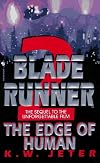
Jeter nails the tone and attitude of the Blade Runner movie (understandably, since he wrote the screenplay), and of hard-boiled detective fiction in general, while telling a somewhat revisionist history of the movie. Many of the characters from the movie turn up in Edge of Human, claiming that the other characters were lying in the movie, giving alternate explanations for their motivations. Some of them that seemed to be killed in the movie managed to survive. Seems like the kind of thing show more that hardcore fans of the movie would get angry about, but finding out that characters lied is a common feature in detective fiction and film noir. Like when the hot dame walks in the door of your detective agency and tells a story that turns out all wrong by the end.
Unfortunately a lot of the best film noir and hard-boiled detective stories have convoluted plots, and Edge of Human has that too. Life can get complicated and convoluted, so it seems realistic, but fiction is supposed to be better than reality. When they get too hard to follow, you end up with a story that is less satisfying. I guess if that kind of thing puts you off, you would have been put off by the movie anyway. show less
Unfortunately a lot of the best film noir and hard-boiled detective stories have convoluted plots, and Edge of Human has that too. Life can get complicated and convoluted, so it seems realistic, but fiction is supposed to be better than reality. When they get too hard to follow, you end up with a story that is less satisfying. I guess if that kind of thing puts you off, you would have been put off by the movie anyway. show less
Lists
Awards


You May Also Like


Associated Authors
Statistics
- Works
- 62
- Also by
- 15
- Members
- 9,763
- Popularity
- #2,446
- Rating
- 3.3
- Reviews
- 107
- ISBNs
- 219
- Languages
- 11
- Favorited
- 10