
Wioletta Greg
Author of Swallowing Mercury
About the Author
Image credit: Wioletta Grzegorzewska Monat der Autorenlesungen 2018, Breslau, Polen
Works by Wioletta Greg
Tagged
Common Knowledge
- Legal name
- Grzegorzewska, Wioletta
- Other names
- Greg, Wioletta
- Birthdate
- 1974-02-09
- Gender
- female
- Nationality
- Poland
- Birthplace
- Rzeniszów, Poland
- Places of residence
- Essex, England, UK
- Map Location
- Poland
Members
Reviews
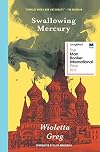
‘’A christening shawl decorated with periwinkle and yellowed asparagus hung in the window of our stone house for nearly two years. It tempted me with a little rose tucked in its folds, and I would have used it as a blanket for my dolls, but my mother wouldn’t let me go near it.’’
Wiola is a bright girl. One of the brightest you’ll ever come across in Literature. Her life in a close-knit community in 1980s Poland is far from easy. Agriculture is a mercurial way to earn a living, show more Communism is ever - present, ever - controlling, the Roman Catholic Church demands obedience to its own rules. Wiola observes the world around her while finding herself in a daily tug - of - war between different sets of principles, different worldviews, between an extremely religious mother and an atheist, yet tolerant, father, between the isolation of her community and the realisation that the world is changing. But you know what? Wiola is the kind of girl who enters forbidden rooms, speaks plainly and bravely to gossipping neighbours and relatives, comes up with extremely clever plans to swerve around the ‘no’, the ‘must’, and the ‘don’t’ of her family. And when she’s had enough, she takes her father’s air rifle to confront untrustworthy uncles.
If I had a daughter, I’d feel blessed if she resembled Wiola and her fiery personality.
‘’It was the sort of sleep during which a person decides whether to depart or to turn back.’’
Wioletta Greg is an extraordinary writer. The story is set in the Jurassic Uplands of Southern Poland in the fictional village of Hektary during the decades of the 70s and the 80s. The shadow of Communism is suffocating the land, and although young, Wiola notices every implication (the way the imposition of the 1981 martial law is seen through the child’s eyes is almost unnerving). Wiola is a brilliant child with an old soul. She is disillusioned very early on. With politics, with the strictness of the Catholic Church, with the facades of the people around her. She is a silent whiff of a girl, but her thoughts speak louder and louder as she comes to question everything.
‘’For the next week, I didn’t speak to anyone; I only whispered to myself. There was nothing strange in that, really, since everyone in our house was always whispering or singing something under their breath.’’
The imagery is so beautiful. Like a field drenched in the afternoon sun, like frost residing on the thawed grass as the mist falls over the land. Even though I’ve never been to Poland, I could clearly picture its beautiful nature along with the challenges it poses to those who earn their living thanks to its offerings. The characters are well-drawn, but Wiola is such a force of nature that every other character acquires a background role. However, what made me fall in love with Greg’s debut novel is the seamless way in which folklore and religion blend with daily life and the surprises that await a young child in every corner.
The scenes describing the Pope’s arrival in the country are so vivid you can ‘see’ the preparations and feel the excitement of the faithful. Religion is communicated in an extremely balanced and sensitive way, evident in Wiola’s prayers that give her hope - and a tiny bit of acute disappointment from time to time - and the rules imposed by the Church that have virtually nothing to do with Jesus’ teachings. I am obsessed with folklore, and I loved reading about the power of the red ribbons, the feeding of the bees, the customs of Good Friday, the killing of spiders and the statues of Jesus and the Virgin Mary. If you haven’t read about Saint Kunigunde, who fell in love with a stag, please do so. It’s a beautiful, sensual story one won’t hear in a Sunday sermon in any denomination. The creation of the Wieliczka Salt Mine is attributed to her.
Dandelion-sprinkled fields are juxtaposed with scenes of interrogation taking place in schools. Welcome to Sovietism, people. The perfume of the freshly-baked bread cannot cover the stench of child molesters. The dusk painting the silent fields with incredible colours watches over sexual awakening. Violence and cruelty become - nay, are - a part of life we’ll all encounter in some form or another.
This is a novel of the beauty and serenity of nature, the influences that shape a child, the love for your family (even when they are obnoxious), the fragile relationship between a daughter and a mother, the deep bond between a daughter and a father. Even without the themes of Communism and Catholicism, Greg would have created a masterful mixture of softness and darkness, hardship and joy, hope and disappointment. It’s just that disappointment and dissatisfaction are more common than joy and satisfaction; that is the fate of humans.
‘’Outside, wrappers were rustling; trumpets, whistles, wind-up toys and harmonicas were playing. I covered my ears and sat under the stall while raspberry juice dripped from the plastic tablecloth right into my new dress.’
My reviews can also be found on: https://theopinionatedreaderblog.wordpress.com/ show less
Wiola is a bright girl. One of the brightest you’ll ever come across in Literature. Her life in a close-knit community in 1980s Poland is far from easy. Agriculture is a mercurial way to earn a living, show more Communism is ever - present, ever - controlling, the Roman Catholic Church demands obedience to its own rules. Wiola observes the world around her while finding herself in a daily tug - of - war between different sets of principles, different worldviews, between an extremely religious mother and an atheist, yet tolerant, father, between the isolation of her community and the realisation that the world is changing. But you know what? Wiola is the kind of girl who enters forbidden rooms, speaks plainly and bravely to gossipping neighbours and relatives, comes up with extremely clever plans to swerve around the ‘no’, the ‘must’, and the ‘don’t’ of her family. And when she’s had enough, she takes her father’s air rifle to confront untrustworthy uncles.
If I had a daughter, I’d feel blessed if she resembled Wiola and her fiery personality.
‘’It was the sort of sleep during which a person decides whether to depart or to turn back.’’
Wioletta Greg is an extraordinary writer. The story is set in the Jurassic Uplands of Southern Poland in the fictional village of Hektary during the decades of the 70s and the 80s. The shadow of Communism is suffocating the land, and although young, Wiola notices every implication (the way the imposition of the 1981 martial law is seen through the child’s eyes is almost unnerving). Wiola is a brilliant child with an old soul. She is disillusioned very early on. With politics, with the strictness of the Catholic Church, with the facades of the people around her. She is a silent whiff of a girl, but her thoughts speak louder and louder as she comes to question everything.
‘’For the next week, I didn’t speak to anyone; I only whispered to myself. There was nothing strange in that, really, since everyone in our house was always whispering or singing something under their breath.’’
The imagery is so beautiful. Like a field drenched in the afternoon sun, like frost residing on the thawed grass as the mist falls over the land. Even though I’ve never been to Poland, I could clearly picture its beautiful nature along with the challenges it poses to those who earn their living thanks to its offerings. The characters are well-drawn, but Wiola is such a force of nature that every other character acquires a background role. However, what made me fall in love with Greg’s debut novel is the seamless way in which folklore and religion blend with daily life and the surprises that await a young child in every corner.
The scenes describing the Pope’s arrival in the country are so vivid you can ‘see’ the preparations and feel the excitement of the faithful. Religion is communicated in an extremely balanced and sensitive way, evident in Wiola’s prayers that give her hope - and a tiny bit of acute disappointment from time to time - and the rules imposed by the Church that have virtually nothing to do with Jesus’ teachings. I am obsessed with folklore, and I loved reading about the power of the red ribbons, the feeding of the bees, the customs of Good Friday, the killing of spiders and the statues of Jesus and the Virgin Mary. If you haven’t read about Saint Kunigunde, who fell in love with a stag, please do so. It’s a beautiful, sensual story one won’t hear in a Sunday sermon in any denomination. The creation of the Wieliczka Salt Mine is attributed to her.
Dandelion-sprinkled fields are juxtaposed with scenes of interrogation taking place in schools. Welcome to Sovietism, people. The perfume of the freshly-baked bread cannot cover the stench of child molesters. The dusk painting the silent fields with incredible colours watches over sexual awakening. Violence and cruelty become - nay, are - a part of life we’ll all encounter in some form or another.
This is a novel of the beauty and serenity of nature, the influences that shape a child, the love for your family (even when they are obnoxious), the fragile relationship between a daughter and a mother, the deep bond between a daughter and a father. Even without the themes of Communism and Catholicism, Greg would have created a masterful mixture of softness and darkness, hardship and joy, hope and disappointment. It’s just that disappointment and dissatisfaction are more common than joy and satisfaction; that is the fate of humans.
‘’Outside, wrappers were rustling; trumpets, whistles, wind-up toys and harmonicas were playing. I covered my ears and sat under the stall while raspberry juice dripped from the plastic tablecloth right into my new dress.’
My reviews can also be found on: https://theopinionatedreaderblog.wordpress.com/ show less
I'm at a cross whether to rate it 3.5 or 4. It started off, well, slightly underwhelming which I feel was due to my lack of knowledge of Poland's history but I read the Translator's Note and it started making much more sense and I also got more used to this style of interlocking short stories.
I thoroughly enjoyed it. It was very interesting. I love how it is purely from the perspective of the child and there is no external input. It is interesting to see her reaction to certain political show more events, superstitions, sexual encounters, and death. show less
I thoroughly enjoyed it. It was very interesting. I love how it is purely from the perspective of the child and there is no external input. It is interesting to see her reaction to certain political show more events, superstitions, sexual encounters, and death. show less
An excellent book about growing up in Poland in the 80's. Wioletta grows up on a farm and she seems to have a good childhood, full of running around in the fields, going to church, and being with her family. Its not all sunshine and roses, though, as the title "swallowing mercury" suggests.
Each chapter is a memory, one slice of time, good or bad. The descriptions are vivid, down to the smells. The characters in the village are wonderfully portrayed. And, like most childhood memories, the show more resolution to to the problems are left hanging. What exactly did the adults do in these cases? Who knows, the memories are those of the young girl, strong and confident or bewildered and confused.
I wanted more and was sad the book was over. show less
Each chapter is a memory, one slice of time, good or bad. The descriptions are vivid, down to the smells. The characters in the village are wonderfully portrayed. And, like most childhood memories, the show more resolution to to the problems are left hanging. What exactly did the adults do in these cases? Who knows, the memories are those of the young girl, strong and confident or bewildered and confused.
I wanted more and was sad the book was over. show less
1980-1990 Poland. A young teenagers memories and daily doings are the makings of this slim volume. The short chapters make it a somewhat light tromp through a perilous time, and is fitting for the adolescent point of view. It’s quite beautiful but sad in the end. All of our lives amounting too so much unripe fruit.
Lists
Awards


You May Also Like


Associated Authors
Statistics
- Works
- 7
- Members
- 229
- Popularity
- #98,339
- Rating
- 3.8
- Reviews
- 9
- ISBNs
- 23
- Languages
- 5