
Dorthe Nors
Author of Mirror, Shoulder, Signal
About the Author
Dorthe Nors is the author of four novels, including Mirror, Shoulder, Signal, a finalist for the Man Booker International Prize; two novellas, collected in So Much for That Winter; and the story collection Karate Chop, winner of the Per Olov Enquist Literary Prize. Nors lives in Denmark.
Image credit: Nors at the Göteborg Book Fair, 2015
Works by Dorthe Nors
Associated Works
The Second Shelf: A Quarterly of Rare Books & Words by Women (Issue 1, Autumn 2018) (2018) — Contributor — 3 copies
Tagged
Common Knowledge
Members
Reviews

Not quite a travel book or a diary, this is a collection of very subjective essays about places on the North Sea coast and the people who live there, mostly in West Jutland, where Nors grew up, but with a couple of excursions into Germany (Sylt) and the Netherlands (Den Helder and Texel).
Nors writes about sand dunes, birds, wind and waves, about fishing communities, churches and lighthouses, but also about tourism and industry and the effects they have had on nature and coastal communities. show more It's all very much like her fiction: on the surface it looks so delicately put together that a gentle breeze would be enough to scatter it, when in fact there's a lot of very well thought-out Danish engineering going on out of sight. We read about Børglum Abbey, which has been known to disappear from view for short times, about the fabulous naive wall-paintings in Jutland churches, about the women of Fanø, about surfer culture of "Cold Hawaii" and about the pollution from Cheminova. And about all kinds of other fascinating things.
I have a sudden urge to get on my bike and do a tour of Jutland... show less
Nors writes about sand dunes, birds, wind and waves, about fishing communities, churches and lighthouses, but also about tourism and industry and the effects they have had on nature and coastal communities. show more It's all very much like her fiction: on the surface it looks so delicately put together that a gentle breeze would be enough to scatter it, when in fact there's a lot of very well thought-out Danish engineering going on out of sight. We read about Børglum Abbey, which has been known to disappear from view for short times, about the fabulous naive wall-paintings in Jutland churches, about the women of Fanø, about surfer culture of "Cold Hawaii" and about the pollution from Cheminova. And about all kinds of other fascinating things.
I have a sudden urge to get on my bike and do a tour of Jutland... show less
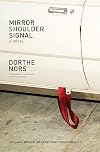
As the title rather suggests, Mirror, shoulder, signal is about learning to drive - the central character, Sonja, is a fortyish single woman from the depths of rural Jutland who feels somewhat adrift in the urban rush of Copenhagen. She earns her living as the Danish translator of the popular but appallingly violent Swedish crime novels of Gösta Svensson, which are starting to disgust her; the driving lessons with gossipy, motherly instructor Jytte are getting her nowhere; she doesn't want show more to reveal that she may be unfit to drive anyway as she suffers from dizzy spells as a result of a hereditary balance problem. And she misses the contact she used to have with her sister Kate.
This should be a grim and miserable sort of novel, but it's actually very funny, and the ending is delightfully offbeat. Maybe there isn't quite enough story to support a full-scale novel (even a relatively short one like this), but that doesn't really matter, as Sonja is such an endearing character. And there are plenty of engaging jokes about the clichés of Nordic Noir... show less
This should be a grim and miserable sort of novel, but it's actually very funny, and the ending is delightfully offbeat. Maybe there isn't quite enough story to support a full-scale novel (even a relatively short one like this), but that doesn't really matter, as Sonja is such an endearing character. And there are plenty of engaging jokes about the clichés of Nordic Noir... show less
Rating: 4* of five
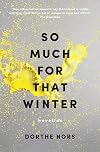
The Publisher Says: Dorthe Nors follows up her acclaimed story collection Karate Chop with a pair of novellas that playfully chart the aftermath of two very twenty-first century romances. In “Days,” a woman in her late thirties records her life in a series of lists, giving shape to the tumult of her days—one moment she is eating an apple, the next she is on the floor, howling like a dog. As the details accumulate, we experience with her the full range of emotions: show more anger, loneliness, regret, pain, and also joy, as the lists become a way to understand, connect to, and rebuild her life.
In “Minna Needs Rehearsal Space,” a novella told in headlines, an avant-garde musician is dumped via text message. Fleeing the indignity of the breakup, and friends who flaunt their achievements in life, career, and family, Minna unfriends people on Facebook, listens to Bach and reads Ingmar Bergman then decamps to an island near Sweden “well suited to mental catharsis.” A cheeky nod to the listicles and bulletins we scroll through on a daily basis, So Much for That Winter explores how we shape and understand experience, and the disconnection and dislocation that define our twenty-first-century lives, with Nors’s unique wit and humor.
THE PUBLISHER SENT ME A REVIEW COPY AT MY REQUEST. THANK YOU.
My Review: How a perfectly rational North American running at full tilt towards the last full decade of his life is seduced by a Danish lady of middling vintage into going all experimental and experiential with his reading:
Minna Needs Rehearsal Space doesn't she. I think Minna's major problem is that she can't see or hear herself anymore. I think Minna needs about a year away from her surface-obsessed life to get back to what is underneath the headlines. Minna can't be arsed to try to move on from the indignity of being dumped via text message? What makes you so special, sunshine, that you're immune from the rage and outrage that accompanies any and all intermingling of XX and YX persons?
Even her career, avant-garde musician, tells you that she's been to Paradise but she's never been to me. Charlene whinged those words in 1977! I don't know Author Nors, but I'm sure that as she's a Dane she wasn't listening to US pop music in 1977. Maybe she should go back and fill in a blank in her world experience!
(In case it needs saying out loud, the above isn't meant to be serious but rather to point out how very different Author is from character...one deep and deadly, the other shallow and affectless.)
I know that A Public Space has always been deeply committed to women's writing, and I laud them for it. This translation is well inside their wheelhouse as Author Nors presents us with a tale that could only be told by a woman about a woman. Minna is a collection of headlines; Minna is without internal awareness; Minna has just been dumped via text message.
So why does Minna crash so heavily, so thoroughly massively, into a male brain.
Days gives us numbered lists of quotidian activities and thoughts, a step-by-step way to say "this is what life is: First this, then that, and don't ever stop because lists that end are thrown away."
The entire point of reading these lists, these discrete and atomized moments, is to understand that life, Life, isn't what we thought it was. It isn't a film. It's the filming script. It's the continuity book without the costume shots.
So why, you ask me, is this not poetry, what makes this prose, how arbitrary is the line, why do you insist you don't like poetry and this feels pretty much like poetry. You're telling me, I hear you thinking, you like this and you don't like poetry but WHY isn't this poetry.
All I can tell you without getting into formal discussions that I don't have the credentials for or interest in is that it's clearly the prose side of the Great Divide. I know lots of energy goes into the "debate" between poetry fans (the aggressors) and the poetry atheists (me) to establish that I am wrong and poetry is wonderful. So stipulated, your honors.
I still don't like poetry. I still like Dorthe Nors's prose. show less
The Publisher Says: Dorthe Nors follows up her acclaimed story collection Karate Chop with a pair of novellas that playfully chart the aftermath of two very twenty-first century romances. In “Days,” a woman in her late thirties records her life in a series of lists, giving shape to the tumult of her days—one moment she is eating an apple, the next she is on the floor, howling like a dog. As the details accumulate, we experience with her the full range of emotions: show more anger, loneliness, regret, pain, and also joy, as the lists become a way to understand, connect to, and rebuild her life.
In “Minna Needs Rehearsal Space,” a novella told in headlines, an avant-garde musician is dumped via text message. Fleeing the indignity of the breakup, and friends who flaunt their achievements in life, career, and family, Minna unfriends people on Facebook, listens to Bach and reads Ingmar Bergman then decamps to an island near Sweden “well suited to mental catharsis.” A cheeky nod to the listicles and bulletins we scroll through on a daily basis, So Much for That Winter explores how we shape and understand experience, and the disconnection and dislocation that define our twenty-first-century lives, with Nors’s unique wit and humor.
THE PUBLISHER SENT ME A REVIEW COPY AT MY REQUEST. THANK YOU.
My Review: How a perfectly rational North American running at full tilt towards the last full decade of his life is seduced by a Danish lady of middling vintage into going all experimental and experiential with his reading:
Minna Needs Rehearsal Space doesn't she. I think Minna's major problem is that she can't see or hear herself anymore. I think Minna needs about a year away from her surface-obsessed life to get back to what is underneath the headlines. Minna can't be arsed to try to move on from the indignity of being dumped via text message? What makes you so special, sunshine, that you're immune from the rage and outrage that accompanies any and all intermingling of XX and YX persons?
Even her career, avant-garde musician, tells you that she's been to Paradise but she's never been to me. Charlene whinged those words in 1977! I don't know Author Nors, but I'm sure that as she's a Dane she wasn't listening to US pop music in 1977. Maybe she should go back and fill in a blank in her world experience!
(In case it needs saying out loud, the above isn't meant to be serious but rather to point out how very different Author is from character...one deep and deadly, the other shallow and affectless.)
I know that A Public Space has always been deeply committed to women's writing, and I laud them for it. This translation is well inside their wheelhouse as Author Nors presents us with a tale that could only be told by a woman about a woman. Minna is a collection of headlines; Minna is without internal awareness; Minna has just been dumped via text message.
So why does Minna crash so heavily, so thoroughly massively, into a male brain.
Days gives us numbered lists of quotidian activities and thoughts, a step-by-step way to say "this is what life is: First this, then that, and don't ever stop because lists that end are thrown away."
10. Took in the bottle of wine the neighbor had placed on my mat:
11. Excuse the noise, Love, Majbritt, it said; so that's her name, I thought,
12. and set the bottle on top of the fridge,
13. moved it under the sink,
14. I'll drink it for Pentecost,
15. for Pentecost when I'm happy,
16. really happy.
The entire point of reading these lists, these discrete and atomized moments, is to understand that life, Life, isn't what we thought it was. It isn't a film. It's the filming script. It's the continuity book without the costume shots.
16. Chopped lettuce without cutting my finger
17. and decided that perhaps in time something good
would happen. I do know that something will, I know
it, like when you're riding a train across Zealand in
winter:
18. darkness darkness darkness darkness
19 and then suddenly a greenhouse crackling warm
20. in the middle of it all.
So why, you ask me, is this not poetry, what makes this prose, how arbitrary is the line, why do you insist you don't like poetry and this feels pretty much like poetry. You're telling me, I hear you thinking, you like this and you don't like poetry but WHY isn't this poetry.
All I can tell you without getting into formal discussions that I don't have the credentials for or interest in is that it's clearly the prose side of the Great Divide. I know lots of energy goes into the "debate" between poetry fans (the aggressors) and the poetry atheists (me) to establish that I am wrong and poetry is wonderful. So stipulated, your honors.
I still don't like poetry. I still like Dorthe Nors's prose. show less

Fitting 14 stories in about 23K words (in the English translation anyway; the Danish original may have been a few thousand words shorter or longer) does not allow much space for each story (and none of them is significantly longer than the rest). I like stories but I often find the very short ones to be unsatisfying - unless they rely on surprises in the last paragraphs, the length rarely allows for much depth. And yet, there are some types, usually the ones where a single moment in time or show more an emotion is highlighted, where the shortness works to the benefit of the story.
Dorthe Nors (assisted in the English version by her translator Misha Hoekstra) knows how to make the best use of the limited space here. We have a man who finally decides to stand for himself and ends up stuck outside in the middle of winter; we have people who can keep a grudge; we have a man who believes someone to spend some time after his wife's death who gets a not so nice surprise; we have a man dying from cancer and a woman who helps him - or so it seems anyway. They are all real people - flawed, sometimes borderline bad (and maybe not so borderline) - but people. None of the stories really tell a surprising story (and none of them rely on surprising reveals) but they all build their narratives slowly and carefully, giving you details slowly until the full picture emerges - the non linear storytelling, with elements from the past showing up when you think you already know what happens can be annoying sometimes but here, because of the length of the pieces, it actually helps the story work better and not fall flat at the end.
One thing that strikes you when reading the stories is that even in the most intimate of them, there is a distance - sometimes in space (in addition to the stories set in Denmark, there are stories set in USA, Canada, England and Norway and a few stories which spend at least some of their narrative during some type of travel), sometimes in feelings, sometimes both. Noone seems allowed to feel close to anyone else or to be able to connect properly (with one curious exception - in "Sun Dogs", a writer living in a cabin develops a sudden closeness with the mother of an ex-lover - although even in that, there is a different type of remoteness and lack of closeness). The whole collection feels like the author is trying to say "People are complicated and always there but you are always alone, even when other people are around". Setting a lot of the stories away from home for the characters adds more to that feeling of remoteness and isolation (even in the middle of Boston for one of the characters in "Between Offices"). And even when things are going well, even when there is human connection which seems to work, it does not last - the man in "Hygge" may be chased by most women in the seniors meeting and even allows himself to be caught once in awhile but that does not lead to closeness.
None of the stories really shined and yet, I just kept reading the slim collection. Some of the stories in this collections had been published in Harper's, New Yorker, Tin House, A Public Space. That did not surprise me - the collection is exactly what I expect when I read these magazines.
I still wished some of the stories to be a bit longer, a bit more developed - not because they were missing something to be complete but because of all of the unsaid. But then, that just added to the remoteness. And reading them all in order, in one sitting may not be the best way to read the collection - it works length- and time-wise but it gets a bit too gloomy by the end.
If you expect something to happen in every story, this collection may not be for you. While something does happen indeed, a lot of the "something" is mundane and almost banal. But so is life, isn't it?
It was my first book by Nors and I doubt it will be the last. show less
Dorthe Nors (assisted in the English version by her translator Misha Hoekstra) knows how to make the best use of the limited space here. We have a man who finally decides to stand for himself and ends up stuck outside in the middle of winter; we have people who can keep a grudge; we have a man who believes someone to spend some time after his wife's death who gets a not so nice surprise; we have a man dying from cancer and a woman who helps him - or so it seems anyway. They are all real people - flawed, sometimes borderline bad (and maybe not so borderline) - but people. None of the stories really tell a surprising story (and none of them rely on surprising reveals) but they all build their narratives slowly and carefully, giving you details slowly until the full picture emerges - the non linear storytelling, with elements from the past showing up when you think you already know what happens can be annoying sometimes but here, because of the length of the pieces, it actually helps the story work better and not fall flat at the end.
One thing that strikes you when reading the stories is that even in the most intimate of them, there is a distance - sometimes in space (in addition to the stories set in Denmark, there are stories set in USA, Canada, England and Norway and a few stories which spend at least some of their narrative during some type of travel), sometimes in feelings, sometimes both. Noone seems allowed to feel close to anyone else or to be able to connect properly (with one curious exception - in "Sun Dogs", a writer living in a cabin develops a sudden closeness with the mother of an ex-lover - although even in that, there is a different type of remoteness and lack of closeness). The whole collection feels like the author is trying to say "People are complicated and always there but you are always alone, even when other people are around". Setting a lot of the stories away from home for the characters adds more to that feeling of remoteness and isolation (even in the middle of Boston for one of the characters in "Between Offices"). And even when things are going well, even when there is human connection which seems to work, it does not last - the man in "Hygge" may be chased by most women in the seniors meeting and even allows himself to be caught once in awhile but that does not lead to closeness.
None of the stories really shined and yet, I just kept reading the slim collection. Some of the stories in this collections had been published in Harper's, New Yorker, Tin House, A Public Space. That did not surprise me - the collection is exactly what I expect when I read these magazines.
I still wished some of the stories to be a bit longer, a bit more developed - not because they were missing something to be complete but because of all of the unsaid. But then, that just added to the remoteness. And reading them all in order, in one sitting may not be the best way to read the collection - it works length- and time-wise but it gets a bit too gloomy by the end.
If you expect something to happen in every story, this collection may not be for you. While something does happen indeed, a lot of the "something" is mundane and almost banal. But so is life, isn't it?
It was my first book by Nors and I doubt it will be the last. show less
Lists
Awards


You May Also Like


Associated Authors
Statistics
- Works
- 19
- Also by
- 3
- Members
- 898
- Popularity
- #28,531
- Rating
- 3.6
- Reviews
- 44
- ISBNs
- 69
- Languages
- 10
- Favorited
- 1