
Douglas Bush (1) (1896–1983)
Author of The Portable Milton
For other authors named Douglas Bush, see the disambiguation page.
About the Author
Image credit: Guggenheim Foundation
Works by Douglas Bush
Associated Works
Tagged
Common Knowledge
- Legal name
- Bush, John Nash Douglas
- Birthdate
- 1896-03-21
- Date of death
- 1983-03-02
- Gender
- male
- Education
- University of Toronto
- Occupations
- professor
- Organizations
- Harvard University
- Birthplace
- Morrisburg, Ontario, Canada
- Place of death
- Boston, Massachusetts, USA
Members
Reviews
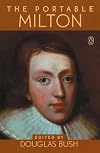
yes, Milton's work is often boring and sometimes just plain ludicrous. Yes, he had a shaky grasp of the doctrine of the Trinity, etc., etc.--but, gosh, he shore does have a lot of good lines!

The author is a professor of English at Harvard. This work for the literary layman presents both the life and the works of Milton, showing a man devoted to trying to resolve the pressing problems of his day.
Milton began
Careful but very summary reviews of the minor writings. Includes a review of the elegy on Diodati, Milton's intimate "friend" who died while JM was in Italy. It notes the "concluding vision of Diodati's virgin soul recieved into heaven" in a blend of Christian and pagan show more images. Does not deal with the homosexual issue.
Samson Agoniste - provides scans of selected verses, choric odes and short lines, to emphasize movement of thought and feeling. "The epic simplicity of form, the predominance of the protagonist, and the author's passionate concern with righteousness may be called Aeschylean. The repeated testing of the protagonist's will and integrity, the pervasive irony, and the function of the chorus recall Sophocles. The strain of intellectualism and the self-defensive prominence given to a "bad" woman suggest Euripedes."[196] Milton' topical theme - that nations grown corrupt fall readily into bondage. The author notes that one does not need any religious beliefs to be greatly moved by Milton's picture of pride, guilt, suffering, despair, and recovery. [200] The figure of blind Samson is autobiographical--the blind Milton alludes to the Restoration government's treatment of the regicides. show less
Milton began
Careful but very summary reviews of the minor writings. Includes a review of the elegy on Diodati, Milton's intimate "friend" who died while JM was in Italy. It notes the "concluding vision of Diodati's virgin soul recieved into heaven" in a blend of Christian and pagan show more images. Does not deal with the homosexual issue.
Samson Agoniste - provides scans of selected verses, choric odes and short lines, to emphasize movement of thought and feeling. "The epic simplicity of form, the predominance of the protagonist, and the author's passionate concern with righteousness may be called Aeschylean. The repeated testing of the protagonist's will and integrity, the pervasive irony, and the function of the chorus recall Sophocles. The strain of intellectualism and the self-defensive prominence given to a "bad" woman suggest Euripedes."[196] Milton' topical theme - that nations grown corrupt fall readily into bondage. The author notes that one does not need any religious beliefs to be greatly moved by Milton's picture of pride, guilt, suffering, despair, and recovery. [200] The figure of blind Samson is autobiographical--the blind Milton alludes to the Restoration government's treatment of the regicides. show less

Lists
You May Also Like


Associated Authors
Statistics
- Works
- 22
- Also by
- 5
- Members
- 921
- Popularity
- #27,851
- Rating
- 4.3
- Reviews
- 3
- ISBNs
- 46
- Languages
- 2
- Favorited
- 1