
Joan Haslip (1912–1994)
Author of The Crown of Mexico: Maximilian and His Empress Carlota
About the Author
Works by Joan Haslip
Tagged
Common Knowledge
- Birthdate
- 1912-02-27
- Date of death
- 1994-06-19
- Gender
- female
- Education
- privately educated
- Occupations
- journalist
editor
biographer
novelist - Organizations
- London Mercury
British Broadcasting Corporation - Awards and honors
- Royal Society of Literature (Fellow)
- Nationality
- UK
- Birthplace
- London, England, UK
- Places of residence
- Florence, Tuscany, Italy
- Place of death
- Bellosguardo, Tuscany, Italy
- Associated Place (for map)
- Tuscany, Italy
Members
Reviews

I've been dragging through this dreary biography for what feels like an eternity (rather than quitting) for a few reasons 1) I engaged to read this with several friends here on LT but bought the wrong biography 2) Lady Hester Stanhope was a truly fascinating woman of the Regency era, Pitt's niece, and 3) I'm a completist, darn it all. In brief LHS left England after Pitt died. She had served as his hostess when he was PM and had adored him. She ended up in the Middle East, partly by design, show more partly by happenstance (like a shipwreck) and never left. There she indulged her eccentricities, as Haslip puts it, and over time besides becoming utterly indigent by generous overspending became more and more isolated in her mountaintop home, Djoun.
I researched a little and the consensus is the Haslip, while dated and while not providing notes or a bibliography, does state the facts and details accurately. However, her theories, judgements and conclusions about the whys and wherefors of LHS's behaviours and choices are hopelessly dated and are also totally inconsistent. Was LHS mad or was she not? Was she a kind and thoughtful person or wickedly cruel? Haslip doesn't have, for example, the psychological tools to examine LHS's behaviour from a more compassionate stance other than that she was an undisciplined and arrogant aristocrat who operated on whims and impulse, uneducated and brilliant. All true, but there is no depth in that evaluation. And her sex life! Who knows? Haslip is fabulously unclear. The original was written in 1926 and, for reasons I cannot fathom, republished in 2006. Anyway, my advice is, if you are interested in LHS and you should be! don't read this bio, find a better one! ** show less
I researched a little and the consensus is the Haslip, while dated and while not providing notes or a bibliography, does state the facts and details accurately. However, her theories, judgements and conclusions about the whys and wherefors of LHS's behaviours and choices are hopelessly dated and are also totally inconsistent. Was LHS mad or was she not? Was she a kind and thoughtful person or wickedly cruel? Haslip doesn't have, for example, the psychological tools to examine LHS's behaviour from a more compassionate stance other than that she was an undisciplined and arrogant aristocrat who operated on whims and impulse, uneducated and brilliant. All true, but there is no depth in that evaluation. And her sex life! Who knows? Haslip is fabulously unclear. The original was written in 1926 and, for reasons I cannot fathom, republished in 2006. Anyway, my advice is, if you are interested in LHS and you should be! don't read this bio, find a better one! ** show less
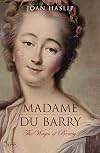
I became intrigued by the persona of Madame du Barry after watching the movie Marie Antoinette (the one with Kirsten Dunst), where she was portrayed as crass, uncultured and completely unlikeable. Joan Haslip has done an excellent job of dispelling that mischaracterization for me. The book is a quick read and is in the end a rather tragic story of a woman who was able to use her natural beauty to eventually achieve incredible wealth.
Although du Barry was manipulated by the men in her life show more and basically given over to forward her family's fortunes; she was still able to remain somewhat naive and quite charming. It is also amusing to imagine du Barry using her affected lisp to draw in men, even as her beauty began to fade. Joan Haslip really brings the reader into the world of court life and all of the customs, traditions and etiquette that so ruled each courtier. It was also startling to see how difficult it was for women such as du Barry to realize that their world had been turned upside down by the Revolution until it was much too late. show less
Although du Barry was manipulated by the men in her life show more and basically given over to forward her family's fortunes; she was still able to remain somewhat naive and quite charming. It is also amusing to imagine du Barry using her affected lisp to draw in men, even as her beauty began to fade. Joan Haslip really brings the reader into the world of court life and all of the customs, traditions and etiquette that so ruled each courtier. It was also startling to see how difficult it was for women such as du Barry to realize that their world had been turned upside down by the Revolution until it was much too late. show less
Enjoyed this book very much. As my only opinion of Madame du Barry has been from Hollywood movies, she never comes to be anything but a despised woman. She was born in undesirable circumstances and did what she had to do to survive and then achieved a position that was envied and hated by many. She was always kind to those in need and to those she called friends. Through this book I certainly have a different opinion of her. Easy reading and quick too!
The Emperor and the Actress: The Love Story of Emperor Franz Josef and Katharina Schratt by Joan Haslip

Charming and interesting. Haslip portrays the long sad but endearing story of the romantic friendship between Emperor Franz Josef and Katharina Schratt, a leading actress in the most prestigious theatre company in Vienna.
There were several aspects of this somewhat familiar story that were "new" to me. I had not been aware that the beautiful (and doomed) Empress Elizabeth was tremendously supportive of her husband's infatuation for Miss Schratt - and that the two women formed a friendship show more based upon their relationship with the Austro-Hungarian Emperor. It's as if the Empress appreciated Katharina for providing some feminine quality of suppleness and passivity to the Emperor that the she - Sisi - did not possess.
I also had not been aware that Katharine Schratt was a correspondent and close friend of the Bulgarian ruler "Foxy Ferdinand," to the point where Franz Joseph was occasionally jealous of Katharina's flirtatious behavior with the Balkan King. Ferdinand seems to have been genuinenly fond of the theatrical diva, and was also willing and able to use her as a conduit to influence Austro-Hungarian policy in southeastern Europe. (Stephen Constant's biography of Ferdinand does not include any mention of Schratt, so I'm not sure how well-known Schratt's role is to Balkan historians.) show less
There were several aspects of this somewhat familiar story that were "new" to me. I had not been aware that the beautiful (and doomed) Empress Elizabeth was tremendously supportive of her husband's infatuation for Miss Schratt - and that the two women formed a friendship show more based upon their relationship with the Austro-Hungarian Emperor. It's as if the Empress appreciated Katharina for providing some feminine quality of suppleness and passivity to the Emperor that the she - Sisi - did not possess.
I also had not been aware that Katharine Schratt was a correspondent and close friend of the Bulgarian ruler "Foxy Ferdinand," to the point where Franz Joseph was occasionally jealous of Katharina's flirtatious behavior with the Balkan King. Ferdinand seems to have been genuinenly fond of the theatrical diva, and was also willing and able to use her as a conduit to influence Austro-Hungarian policy in southeastern Europe. (Stephen Constant's biography of Ferdinand does not include any mention of Schratt, so I'm not sure how well-known Schratt's role is to Balkan historians.) show less
You May Also Like


Associated Authors
Statistics
- Works
- 13
- Members
- 835
- Popularity
- #30,604
- Rating
- 3.5
- Reviews
- 10
- ISBNs
- 50
- Languages
- 8
- Favorited
- 1