
Lisa Robinson (2)
Author of There Goes Gravity: A Life in Rock and Roll
For other authors named Lisa Robinson, see the disambiguation page.
Works by Lisa Robinson
Tagged
Common Knowledge
- Gender
- female
- Birthplace
- New York, New York, USA
- Associated Place (for map)
- New York, USA
Members
Reviews

Clearly in order to manage and work through the giant egos in the music business you need to have one yourself. Boy does Lisa love Lisa, her life and the limited scope of what she considers to be cool (chiefly; black clothing, hotels and the time when rock journalism was a small clique). I think she took a page out of the Anthony Bourdain memoir script. At every opportunity, in just about every way, Lisa reminds you that she is at the cool kids’ table. That she is a ground-breaking insider show more of outsider art. That’s not to say I didn’t like her indulgent trip down memory lane, I did. The bitchiness, the snide remarks, the gossippiness, the digs and insults; it was pretty fun (although in fairness I skimmed the chapter on U2 and skipped most of the one on Lady Gaga, hate the one, not interested in the other).
At first I had a hard time with the presentation which is made up of little scenes and vignettes that, other than the specific band she was with, had little continuity. Maybe she was establishing tone, that is, sharing with the reader what a choppy and unsettled job it is working with mercurial rock stars. Maybe she didn’t know exactly how to tie the narrative together smoothly. Maybe she pulled a bunch of tapes and notes out of storage and couldn’t remember much about their context. Who knows, but eventually the narrative evened out somewhat and became more linear. Although there are weird asides that have nothing to do with anything. Like how on page 14 after a odd comment about 84 degrees being much hotter in the 70s than it is today, she went down a rathole about food. Stuff like that gets inserted all over and keeps up the disjointed presentation even when the rest of it has settled down.
Lisa herself is a tough person to like. She’s alternatively defensive and arrogant. She is definitely the coolest person in the room no matter who else is in it, at least in her own mind, yet sometimes she can come across as a suck up. When she waxes on about Keith Richards, Jimmy Page and Bono she shyly tells you about a fault here or there, but in such a way that it’s clear their faults are part of why they’re great. They have cool faults. And being cool is definitely the best thing to be. Even if you can’t create much yourself, it’s cool to denigrate those who do if it’s something you don’t like or can’t identify with. So go ahead and insult anyone who falls outside your ring of cool. It will make you seem so much more dispassionate and unimpressed and we all know how cool that is.
The book is divided into sections, each involving a major group or personality - The Rolling Stones, Led Zeppelin, David Bowie, Michael Jackson, U2 and Lady Gaga. There’s also a good bit about the 1970s ‘punk’ scene, which I can’t recall if it gets its own chapter or is interspersed throughout. I seem to recall it being sort of omnipresent; Lisa’s musical default position, the place that fashions her stance, her world-view. Lots and lots of names get dropped, only some of which she deigns to explain to us, leaving the reader not in the music industry at the mercy of Google. Alternately Lisa’s assignments/duties are punishing and glamorous. Parties, personal interviews, private planes, sex, booze, drugs, famous arenas and divey holes in the wall. She carefully (and rightfully) disassociates herself from a lot of this and especially the sex. She is a journalist not a groupie and probably one of the few women to separate from that herd. She has to maintain distance and a modicum of detachment. Through the stories presented here, I learned one big thing - frontmen like to talk a lot. I mean a lot. Mostly about nothing or borrowed opinions. Seriously boys, just because you have a platform, doesn’t mean you have something to say. Shut up and sing.
The deaths, missing tapes and missed opportunities saddened me as they did Lisa. Underneath that studied persona of ‘business as usual’ I think Lisa does truly love music and what a force it is in humanity. She wants to share, explore, preserve and challenge people about it. Music isn’t background noise for her, something we have in common (which musically isn’t much except for Bowie and The Clash). I have been a music fan my whole life. I still listen to something I love just about every day. Although I can’t play a note (or sing either, much to my chagrin) I have a deep, neural connection to music. Whenever I hear some, I can’t just filter it to the back of my brain. I have a hard time ignoring any music that is on and so when it’s something I don’t like, it worms into my consciousness and ruins my day. For me, making music is much like an alchemical process. I have no idea how people do it. It’s like magic. My brain just isn’t wired that way and so I am in awe of those whose brains are. Even Lady Gaga. show less
At first I had a hard time with the presentation which is made up of little scenes and vignettes that, other than the specific band she was with, had little continuity. Maybe she was establishing tone, that is, sharing with the reader what a choppy and unsettled job it is working with mercurial rock stars. Maybe she didn’t know exactly how to tie the narrative together smoothly. Maybe she pulled a bunch of tapes and notes out of storage and couldn’t remember much about their context. Who knows, but eventually the narrative evened out somewhat and became more linear. Although there are weird asides that have nothing to do with anything. Like how on page 14 after a odd comment about 84 degrees being much hotter in the 70s than it is today, she went down a rathole about food. Stuff like that gets inserted all over and keeps up the disjointed presentation even when the rest of it has settled down.
Lisa herself is a tough person to like. She’s alternatively defensive and arrogant. She is definitely the coolest person in the room no matter who else is in it, at least in her own mind, yet sometimes she can come across as a suck up. When she waxes on about Keith Richards, Jimmy Page and Bono she shyly tells you about a fault here or there, but in such a way that it’s clear their faults are part of why they’re great. They have cool faults. And being cool is definitely the best thing to be. Even if you can’t create much yourself, it’s cool to denigrate those who do if it’s something you don’t like or can’t identify with. So go ahead and insult anyone who falls outside your ring of cool. It will make you seem so much more dispassionate and unimpressed and we all know how cool that is.
The book is divided into sections, each involving a major group or personality - The Rolling Stones, Led Zeppelin, David Bowie, Michael Jackson, U2 and Lady Gaga. There’s also a good bit about the 1970s ‘punk’ scene, which I can’t recall if it gets its own chapter or is interspersed throughout. I seem to recall it being sort of omnipresent; Lisa’s musical default position, the place that fashions her stance, her world-view. Lots and lots of names get dropped, only some of which she deigns to explain to us, leaving the reader not in the music industry at the mercy of Google. Alternately Lisa’s assignments/duties are punishing and glamorous. Parties, personal interviews, private planes, sex, booze, drugs, famous arenas and divey holes in the wall. She carefully (and rightfully) disassociates herself from a lot of this and especially the sex. She is a journalist not a groupie and probably one of the few women to separate from that herd. She has to maintain distance and a modicum of detachment. Through the stories presented here, I learned one big thing - frontmen like to talk a lot. I mean a lot. Mostly about nothing or borrowed opinions. Seriously boys, just because you have a platform, doesn’t mean you have something to say. Shut up and sing.
The deaths, missing tapes and missed opportunities saddened me as they did Lisa. Underneath that studied persona of ‘business as usual’ I think Lisa does truly love music and what a force it is in humanity. She wants to share, explore, preserve and challenge people about it. Music isn’t background noise for her, something we have in common (which musically isn’t much except for Bowie and The Clash). I have been a music fan my whole life. I still listen to something I love just about every day. Although I can’t play a note (or sing either, much to my chagrin) I have a deep, neural connection to music. Whenever I hear some, I can’t just filter it to the back of my brain. I have a hard time ignoring any music that is on and so when it’s something I don’t like, it worms into my consciousness and ruins my day. For me, making music is much like an alchemical process. I have no idea how people do it. It’s like magic. My brain just isn’t wired that way and so I am in awe of those whose brains are. Even Lady Gaga. show less
 This review was written for LibraryThing Early Reviewers.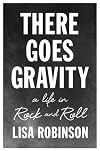
My actual rating: 4.5 of 5 stars.
I was a rock and roll teen in San Francisco in the 70s. I listened to Zeppelin, Beatles, KISS, Bowie, Queen, J. Geils, Blue Oyster Cult, Patti Smith, Foghat, Black Sabbath, and dozens of other bands on vinyl and cassettes. I wore Kiss and Zep belt buckles (though never at the same time), and proclaimed my infatuation with various bands via the reigning social media of that era: T-shirts and posters.
I was also obsessed with New York City. I sported a subway show more token on a gold chain above my rock T's, and I followed as much of the NYC music scene as I could via the few relevant publications available in SF at the time. Rolling Stone was readily available, but it was filled with pretentious, humorless studies of boring bands. There were a few juicy tidbits here and there, but RS was certainly not my pub of choice; it was a dull read.
What WAS on my radar -- what I lived for -- was the hilarious, goofy, geeky coverage found in Creem, Hit Parader, the photo-spread-heavy Rock Scene, and even (British, hard-to-find except in Haight Street head shops) New Musical Express. These were undeniably "rock and roll" magazines filled to bursting with attitude and humor. Well, NME was a little dry, but it had loads of Bri'ish bands, 'mate! Unlike RS, every one of these mags was FUN to read! They wrote about my favorite bands -- or introduced me to soon-to-become favorite bands. I fell into the articles and the interviews for hours at a crack. I felt the excitement, the rush, the joy of being at shows (here's the tricky bit) without having been at the shows. It felt like I was actually hanging out with these cool musician dudes (and occasional musician chicks), drinking Boy Howdy beer and listening to funny stories about (let's just say) trying to tune a guitar in the filthy bathroom at CBGB's without touching anything. It sounds impossible to make a disgusting dive bar sound like THE place to be, but that was the effect. This was the scene, and these were the players. But it weren't no thang... just rock and roll, baby.
What did all of these magazines have in common? Lisa Robinson. She was a rock journalist back when there were one or two dozen "rock journalists" on the planet. As her press blurb says, she has interviewed everyone from John Lennon to Bono to Patti Smith, Eminem to Lady Gaga to Jay-Z and Kanye West. One factlet in particular helps convey her insider status: At different times during the 70s, Led Zeppelin, the Rolling Stones and Elton John separately owned (or leased) the same plane for their tours. Robinson was on that plane with each of those bands! ("The plane remains the same.")
Consistently, in her coverage of all of these bands, Robinson brought warmth, humor, insight, and foremost, an obsessive love of music. Mostly rock and roll music (Lisa distinguishes it from "rock 'n roll" in this book -- the "and" has significance). But it's obvious she appreciates -- loves -- all kinds of music. This is what comes through in the writing: her absolute love of music, and her ability to capture in words the ephemeral magic that occurs when certain musicians and bands play, or simply hang out.
What's Robinson's secret to documenting the ups and downs of so many rock stars in such an engaging style? Woman in a man's world? Street-smart NYC sensibility? In the right place(s) at the right time(s)? Laying off the drugs and booze that her subjects snarfed up like Scooby snacks? Yes to all of these -- plus that main ingredient: her obsessive, infectious love of music. She put in the thousands of hours because she wanted to -- she had to. (And as evidence of that obsession: Robinson admits to a tremendous fear of flying, yet she got on planes over and over again to get the stories that could only be discovered "on the inside." There goes gravity, indeed.)
While I'm not a diehard Stones fan, nor a Lou Reed fan, nor a Clash fan, I enjoyed reading about them in this book. As with those articles I fondly remember from adolescence, Robinson convinced me that these bands and their music -- recordings as well as performances -- are worth consideration. Unlike 70s-era Rolling Stone, Robinson doesn't brow-beat readers into worshiping certain bands "because they're good for you." She simply interviews people, relates insightful / harsh / off-putting / funny anecdotes, adds her thoughtful observations about the musicians (as people, if not always as powerful -- or fallen -- rock gods), and moves on. If you like something, dive in and read all about it... and listen to the music, go to the shows, dance your ass off in that sweaty 10th row if you feel like it. And if you don't, so what? There's always next time.
By coincidence, recently I read two other books that described the 1970s downtown New York music scene: Patti Smith's Just Kids and David Byrne's How Music Works. Smith's book succeeds as a poetic encapsulation of her life with -- and without -- Robert Mapplethorpe. The downtown music scene is a vital part of her story. Byrne's book is an entertaining dive into the music business, with the 70s art-rock/punk-rock/rock-rock scene as a crucial formative slice of Byrne's career with Talking Heads.
Smith and Byrne are musicians (and so much more). They told their respective stories with wit and writerly talent; both books are enjoyable. So how is Lisa Robinson's book different? Well, she has the advantage of being able to recount a lifetime filled with scads of musicians, not just a one-musician career. Sure, she touches upon the usual NYC hot spots of the era -- CBGB's, Max's Kansas City, Mercer Arts Center, Mudd Club, Studio 54. She spent many nights at these venues ("you felt like you were missing something important even if you missed a single night"), closing clubs at 4am, sleeping until noon and waking up to plan the next evening's excursion into clubland. She became friends with some of the musicians (like Patti Smith). And as with Smith and Byrne, for Lisa the New York scene ends up being an important part of her story.
But Robinson wrote about much more than just that one "rock scene" -- she went on tour with all those bands, across the US and over to Europe! She saw the shows, and chatted with Mick, Keith, John, Yoko, Elton, Gaga in quiet moments before and after. And somehow, she came up with fresh, revealing things to say about some very unusual people who garnered (or endured) so much media attention. Time and again, she was able to unearth the human-interest story buried beneath legendary excesses, without short-changing the rock and roll. Sure, there's dirt, but so much more.
[Disclosure: I received an Early Reviewers copy of this book via LibraryThing.] show less
I was a rock and roll teen in San Francisco in the 70s. I listened to Zeppelin, Beatles, KISS, Bowie, Queen, J. Geils, Blue Oyster Cult, Patti Smith, Foghat, Black Sabbath, and dozens of other bands on vinyl and cassettes. I wore Kiss and Zep belt buckles (though never at the same time), and proclaimed my infatuation with various bands via the reigning social media of that era: T-shirts and posters.
I was also obsessed with New York City. I sported a subway show more token on a gold chain above my rock T's, and I followed as much of the NYC music scene as I could via the few relevant publications available in SF at the time. Rolling Stone was readily available, but it was filled with pretentious, humorless studies of boring bands. There were a few juicy tidbits here and there, but RS was certainly not my pub of choice; it was a dull read.
What WAS on my radar -- what I lived for -- was the hilarious, goofy, geeky coverage found in Creem, Hit Parader, the photo-spread-heavy Rock Scene, and even (British, hard-to-find except in Haight Street head shops) New Musical Express. These were undeniably "rock and roll" magazines filled to bursting with attitude and humor. Well, NME was a little dry, but it had loads of Bri'ish bands, 'mate! Unlike RS, every one of these mags was FUN to read! They wrote about my favorite bands -- or introduced me to soon-to-become favorite bands. I fell into the articles and the interviews for hours at a crack. I felt the excitement, the rush, the joy of being at shows (here's the tricky bit) without having been at the shows. It felt like I was actually hanging out with these cool musician dudes (and occasional musician chicks), drinking Boy Howdy beer and listening to funny stories about (let's just say) trying to tune a guitar in the filthy bathroom at CBGB's without touching anything. It sounds impossible to make a disgusting dive bar sound like THE place to be, but that was the effect. This was the scene, and these were the players. But it weren't no thang... just rock and roll, baby.
What did all of these magazines have in common? Lisa Robinson. She was a rock journalist back when there were one or two dozen "rock journalists" on the planet. As her press blurb says, she has interviewed everyone from John Lennon to Bono to Patti Smith, Eminem to Lady Gaga to Jay-Z and Kanye West. One factlet in particular helps convey her insider status: At different times during the 70s, Led Zeppelin, the Rolling Stones and Elton John separately owned (or leased) the same plane for their tours. Robinson was on that plane with each of those bands! ("The plane remains the same.")
Consistently, in her coverage of all of these bands, Robinson brought warmth, humor, insight, and foremost, an obsessive love of music. Mostly rock and roll music (Lisa distinguishes it from "rock 'n roll" in this book -- the "and" has significance). But it's obvious she appreciates -- loves -- all kinds of music. This is what comes through in the writing: her absolute love of music, and her ability to capture in words the ephemeral magic that occurs when certain musicians and bands play, or simply hang out.
What's Robinson's secret to documenting the ups and downs of so many rock stars in such an engaging style? Woman in a man's world? Street-smart NYC sensibility? In the right place(s) at the right time(s)? Laying off the drugs and booze that her subjects snarfed up like Scooby snacks? Yes to all of these -- plus that main ingredient: her obsessive, infectious love of music. She put in the thousands of hours because she wanted to -- she had to. (And as evidence of that obsession: Robinson admits to a tremendous fear of flying, yet she got on planes over and over again to get the stories that could only be discovered "on the inside." There goes gravity, indeed.)
While I'm not a diehard Stones fan, nor a Lou Reed fan, nor a Clash fan, I enjoyed reading about them in this book. As with those articles I fondly remember from adolescence, Robinson convinced me that these bands and their music -- recordings as well as performances -- are worth consideration. Unlike 70s-era Rolling Stone, Robinson doesn't brow-beat readers into worshiping certain bands "because they're good for you." She simply interviews people, relates insightful / harsh / off-putting / funny anecdotes, adds her thoughtful observations about the musicians (as people, if not always as powerful -- or fallen -- rock gods), and moves on. If you like something, dive in and read all about it... and listen to the music, go to the shows, dance your ass off in that sweaty 10th row if you feel like it. And if you don't, so what? There's always next time.
By coincidence, recently I read two other books that described the 1970s downtown New York music scene: Patti Smith's Just Kids and David Byrne's How Music Works. Smith's book succeeds as a poetic encapsulation of her life with -- and without -- Robert Mapplethorpe. The downtown music scene is a vital part of her story. Byrne's book is an entertaining dive into the music business, with the 70s art-rock/punk-rock/rock-rock scene as a crucial formative slice of Byrne's career with Talking Heads.
Smith and Byrne are musicians (and so much more). They told their respective stories with wit and writerly talent; both books are enjoyable. So how is Lisa Robinson's book different? Well, she has the advantage of being able to recount a lifetime filled with scads of musicians, not just a one-musician career. Sure, she touches upon the usual NYC hot spots of the era -- CBGB's, Max's Kansas City, Mercer Arts Center, Mudd Club, Studio 54. She spent many nights at these venues ("you felt like you were missing something important even if you missed a single night"), closing clubs at 4am, sleeping until noon and waking up to plan the next evening's excursion into clubland. She became friends with some of the musicians (like Patti Smith). And as with Smith and Byrne, for Lisa the New York scene ends up being an important part of her story.
But Robinson wrote about much more than just that one "rock scene" -- she went on tour with all those bands, across the US and over to Europe! She saw the shows, and chatted with Mick, Keith, John, Yoko, Elton, Gaga in quiet moments before and after. And somehow, she came up with fresh, revealing things to say about some very unusual people who garnered (or endured) so much media attention. Time and again, she was able to unearth the human-interest story buried beneath legendary excesses, without short-changing the rock and roll. Sure, there's dirt, but so much more.
[Disclosure: I received an Early Reviewers copy of this book via LibraryThing.] show less
This review was written for LibraryThing Early Reviewers.Clearly it's a slog, but a slog she loves. Lisa Robinson is with the band and she has been since the early 70's. She more or less created rock reportage — not journalism per se and definitely not rock criticism but a sort of "in the trenches every night" report from the scene. She had her notebooks and her cassette decks (often more than one) and she never went anywhere without them. This memoir begins with a chronicle of touring to wretched excess with Led Zeppelin and The Stones. Through show more the misogyny, the sex, drugs and booze she held onto her cassette deck and her professionalism. It was understood that she was there to report on the scene and was not a groupie or a hanger-on. This nightly life seems to become as boring and narrow as any suburban evening ritual...but she was there and she was reporting from the trenches! This life continued, decade after decade, with Bowie and Iggy Stooge (she never calls him Iggy Pop!); Patty Smith and the New York punk scene; a nice bittersweet appreciation of Michael Jackson; reaffirming her bonafides with Berry Gordy (she knows her Thelonius Monk and jazz pantheon) in preparing a celebration for Motown at 25. In the 80's Bono and U2 receive a sympathetic listen and on and on, night after night.
It's actually great fun to read (inhale) and melts in your mouth — no substance and little revelation, but more or less a confirmation of what we instinctively knew about “the boys” anyway. Shelly, Keats and Byron did it centuries earlier and you know she would have been there if she could. Lisa Robinson is uber-cool and was friends with everyone. In the long run there’s not much to show for it. I get that she wore in a groove on the banquet at Max’s and every other de rigueur club you can name but if you get rid of the shopping list of everyone who was there and how they were there because of Lisa Robinson (access passes and such), the book would be half as long and twice as much fun. I think I’ll stick with Jonathan Cott. show less
It's actually great fun to read (inhale) and melts in your mouth — no substance and little revelation, but more or less a confirmation of what we instinctively knew about “the boys” anyway. Shelly, Keats and Byron did it centuries earlier and you know she would have been there if she could. Lisa Robinson is uber-cool and was friends with everyone. In the long run there’s not much to show for it. I get that she wore in a groove on the banquet at Max’s and every other de rigueur club you can name but if you get rid of the shopping list of everyone who was there and how they were there because of Lisa Robinson (access passes and such), the book would be half as long and twice as much fun. I think I’ll stick with Jonathan Cott. show less
This review was written for LibraryThing Early Reviewers.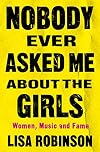
Nobody Ever Asked Me About the Girls: Women, Music and Fame by Lisa Robinson is a fascinating look at women in music and the common threads that run through so many of their stories.
Music, particularly the popular music genres, is very much about the men. Even with all of the interviews Robinson did with women she comments that when people would ask her about any of the celebrities she had met it was almost exclusively about the men. This book doesn't simply rehash old interviews, it show more explores and comments on the distinct obstacles and issues women in the industry faced in addition to the ones both men and women had to overcome.
Organized by topic rather than either separate musicians or genres, the reader more easily sees the same desires and the same hurdles across both genre and time. In her epilogue Robinson mentions some of the changes that have begun to take place during and after the writing of the book, but the comments from these women are remarkably similar whether from the 1960s or the 2010s.
I highly recommend this for readers of music history, especially rock and pop music, as well as those interested in the unique obstacles that women face that men largely never even know about.
Reviewed from a copy made available by the publisher via NetGalley. show less
Music, particularly the popular music genres, is very much about the men. Even with all of the interviews Robinson did with women she comments that when people would ask her about any of the celebrities she had met it was almost exclusively about the men. This book doesn't simply rehash old interviews, it show more explores and comments on the distinct obstacles and issues women in the industry faced in addition to the ones both men and women had to overcome.
Organized by topic rather than either separate musicians or genres, the reader more easily sees the same desires and the same hurdles across both genre and time. In her epilogue Robinson mentions some of the changes that have begun to take place during and after the writing of the book, but the comments from these women are remarkably similar whether from the 1960s or the 2010s.
I highly recommend this for readers of music history, especially rock and pop music, as well as those interested in the unique obstacles that women face that men largely never even know about.
Reviewed from a copy made available by the publisher via NetGalley. show less
Lists
Music (1)
You May Also Like


Statistics
- Works
- 4
- Members
- 205
- Popularity
- #107,801
- Rating
- 3.4
- Reviews
- 27
- ISBNs
- 37
- Languages
- 1
