
Upamanyu Chatterjee
Author of English, August: An Indian Story
About the Author
Works by Upamanyu Chatterjee
Associated Works
Tagged
Common Knowledge
- Birthdate
- 1959
- Gender
- male
- Education
- St. Stephen's College, Delhi
- Awards and honors
- Officier de l’Ordre des Arts et des Lettres (2009)
- Nationality
- India
- Birthplace
- Patna, Bihar
- Associated Place (for map)
- Patna, Bihar
Members
Reviews
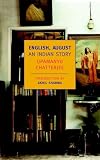
English, August is fundamentally a comedy, but I would rather call it a serio-comic reflection on a young Indian man of intelligence who exhibits, among other things, an ennui that permeates his actions and choices throughout the novel. It is the story of Agastya Sen, known to his friends by the English name, August, who is a member of the Indian elite, educated at Yale, and recently ensconced in a prize government job. It is a job which takes him to Madna, "the hottest town in India," deep show more in the rural countryside. Surrounded by an amalgam of neer-do-wells, bureaucrats and characters of various kinds that share only the common characteristic of being both annoying and of no interest to August he wonders what to do? While settling into a self-indulgent life that includes both pot and pleasing himself he incongruously he begins reading a combination of Marcus Aurelius and the Bhagavad Gita.
"In those months he grew to like immensely this wise sad Roman. Marcus immediately made him feel better, because Marcus seemed to have more problems than anyone else--not the soul-squashing problems of being poor, but the exhilarating abstract problems of one immersed wholly in his self."(p 80)
On the recommendation of one of his new acquaintances, who runs his father's hotel, he also begins to read the Gita.
"Thus, through happenstance, Agastaya could place the Bhagavad-Gita beside Marcus Aurelius on his shelf. . . Most passages were abstruse, but Agastaya was surprised by some:"(p 96)
Omnipresent throughout the novel was the ennui of this young man who had no direction in his life and no interest the profession that had been chosen for him by his father, prestige notwithstanding. August, on the contrary, after almost two hundred pages he thinks:
"No emotion was sacredly his own, and he half-hope that his restlessness would thus succumb to attrition. Perhaps his mind would finally realize that its disquietude was merely an index of its immaturity, as inevitable a sign of growing-up as the first emission of semen, as universal as excrement, and about as noteworthy."(p 195)
"At night he would lie awake and hear the clack of his uncle's typewriter and watch the dark shape of the bougainvillaea outside the window, and see in its twists and turns a million things, but never his future."(p 197)
Yet this is a comic novel. One that is filled with humorous characters, recognizable to anyone familiar with bureaucracies. The omnispresent heat and fecundity of life demonstrated, to the consternation of August, in mosquitoes and animal feces, presents an unquestionable level of discomfort that is put to use for comic purposes. But the central irony is Agastya himself and that is no better illustrated than by the derivation of his name. His doctor's father shares this near the end of the story:
"Agam is mountain. Agastya could be agam plus asyat, one who pushes a mountain. Or agam plus styayati, one who stops a mountain. We often have this ambiguity, and uncertainty about our names, their origins."
There may also be a suggestion of Sisyphus in all this mountain-pushing business, but perhaps not. What is present is great irony when considering the life of this young dreamer of uncertain origins who is adrift in the heart of India near the start of a life that may merely drift off into the future. show less
"In those months he grew to like immensely this wise sad Roman. Marcus immediately made him feel better, because Marcus seemed to have more problems than anyone else--not the soul-squashing problems of being poor, but the exhilarating abstract problems of one immersed wholly in his self."(p 80)
On the recommendation of one of his new acquaintances, who runs his father's hotel, he also begins to read the Gita.
"Thus, through happenstance, Agastaya could place the Bhagavad-Gita beside Marcus Aurelius on his shelf. . . Most passages were abstruse, but Agastaya was surprised by some:"(p 96)
Omnipresent throughout the novel was the ennui of this young man who had no direction in his life and no interest the profession that had been chosen for him by his father, prestige notwithstanding. August, on the contrary, after almost two hundred pages he thinks:
"No emotion was sacredly his own, and he half-hope that his restlessness would thus succumb to attrition. Perhaps his mind would finally realize that its disquietude was merely an index of its immaturity, as inevitable a sign of growing-up as the first emission of semen, as universal as excrement, and about as noteworthy."(p 195)
"At night he would lie awake and hear the clack of his uncle's typewriter and watch the dark shape of the bougainvillaea outside the window, and see in its twists and turns a million things, but never his future."(p 197)
Yet this is a comic novel. One that is filled with humorous characters, recognizable to anyone familiar with bureaucracies. The omnispresent heat and fecundity of life demonstrated, to the consternation of August, in mosquitoes and animal feces, presents an unquestionable level of discomfort that is put to use for comic purposes. But the central irony is Agastya himself and that is no better illustrated than by the derivation of his name. His doctor's father shares this near the end of the story:
"Agam is mountain. Agastya could be agam plus asyat, one who pushes a mountain. Or agam plus styayati, one who stops a mountain. We often have this ambiguity, and uncertainty about our names, their origins."
There may also be a suggestion of Sisyphus in all this mountain-pushing business, but perhaps not. What is present is great irony when considering the life of this young dreamer of uncertain origins who is adrift in the heart of India near the start of a life that may merely drift off into the future. show less
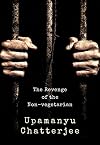
It’s part of an anthology. Or so I hope. A little story of revenge simmering inside an administrative officer across decades while he has the power to decide, or rather influence, the life of a person, death more so. Very few books paint a picture more accessible and subtler, ironically at the same time, of power structure in lesser words.
Or is it just very telling of the dull life bureaucrats are often fated to live in places remote and unfashionably uninteresting? That they need show more something very personal invisibility clinging to them so that they can get some sense of satisfaction from it knowing fully well that do not have any real power broadly speaking, being the instrument of the state they are? I have doubts. I reckon it’s just very personal in the guise of discussing something broader and deeper and not the other way round, which is usually the case with books. And that’s good.
Excellent book; a novella. It’s essentially a long story. Excellent nonetheless. What fine storytelling. Sprinkled with that occasional signature dry humour with or without the tinges of officialese which, more often than not, can be quite funny entirely on its own. show less
Or is it just very telling of the dull life bureaucrats are often fated to live in places remote and unfashionably uninteresting? That they need show more something very personal invisibility clinging to them so that they can get some sense of satisfaction from it knowing fully well that do not have any real power broadly speaking, being the instrument of the state they are? I have doubts. I reckon it’s just very personal in the guise of discussing something broader and deeper and not the other way round, which is usually the case with books. And that’s good.
Excellent book; a novella. It’s essentially a long story. Excellent nonetheless. What fine storytelling. Sprinkled with that occasional signature dry humour with or without the tinges of officialese which, more often than not, can be quite funny entirely on its own. show less
I am surprised that 'English, August' is not better known. It is well-written and is refreshingly funny. While the most outstanding aspect of this novel is its humor, what I like the best about it is that the story is told in such a genuine voice. For once this is not an NRI author trying to bring forth the truth about "real" India. Chatterjee draws heavily from his own experiences in the Indian administrative service to paint a picture of life in rural India, working of Government offices show more and bureaucracy in India of 1983. The story centers around a westernized city-boy Augustya who is stranded in a small village with a job he isn't interested in at all. The western influence on young generation and vast difference between urban and rural lives form a part of the theme as well.
There were many instances where I could easily picture the scenes in the book because it was all so familiar, it is a very Indian story.
Plot-wise not a lot seems to happen. But I guess this is a reflection of the situation at hand - just the way things don't seem to progress in government offices responsible for development and nothing seems to change from day-to-day in small villages and towns.
"Most novels progress, but this one simply chronicles an ongoing anomie and spiritual restlessness."-Washington Post.
Chatterjee doesn't let the narrative get dull at all. He presents a satirical and humorous view of the way things function. He introduces us to an array of characters who are not too far from the kind of people one could encounter in real life. And each of them is entertaining in his or her own way. Even if the situation is dull, he effortlessly evokes humor with his wit and play of words. The language perfectly complements the mood of the novel. It can be read multiple times and it still won't grow stale.
Without any doubt, Chatterjee's writing is way ahead of the likes of Adiga, Swarup or Bhagat. I am glad I came across this novel. Way to go Mr. Chatterjee!
I wanted to post some of the funny excerpts from the novel. But there are so many of them, I don't know how to pick. Just read the book... show less
There were many instances where I could easily picture the scenes in the book because it was all so familiar, it is a very Indian story.
Plot-wise not a lot seems to happen. But I guess this is a reflection of the situation at hand - just the way things don't seem to progress in government offices responsible for development and nothing seems to change from day-to-day in small villages and towns.
"Most novels progress, but this one simply chronicles an ongoing anomie and spiritual restlessness."-Washington Post.
Chatterjee doesn't let the narrative get dull at all. He presents a satirical and humorous view of the way things function. He introduces us to an array of characters who are not too far from the kind of people one could encounter in real life. And each of them is entertaining in his or her own way. Even if the situation is dull, he effortlessly evokes humor with his wit and play of words. The language perfectly complements the mood of the novel. It can be read multiple times and it still won't grow stale.
Without any doubt, Chatterjee's writing is way ahead of the likes of Adiga, Swarup or Bhagat. I am glad I came across this novel. Way to go Mr. Chatterjee!
I wanted to post some of the funny excerpts from the novel. But there are so many of them, I don't know how to pick. Just read the book... show less
"It's about doing paperwork (or avoiding doing paperwork), going to teas with your boss's wife, and overseeing village well-digging projects, as well as smoking pot, masturbating, and reading Marcus Aurelius."
That's Akhil Sharma in the introduction to English, August: An Indian Story by Upamanyu Chatterjee, incisively summing up the novel , and if that doesn't whet a reader's appetite, particularly a reader looking for something new out of India, something without the sickeningly sweet fetor show more of "magical realism," then I don't know what will. His account of the life of a slacker, forced to give up his citified ways (if not the vices mentioned above), when, as a member of the Indian civil service, he is sent to a backwater town, is often laugh-out-loud funny, and never less than amusing. It is also refreshing that the slacker-narrator never does find certainty about the path his life should take but instead, at the end, accepts that life is an uncertain business. show less
That's Akhil Sharma in the introduction to English, August: An Indian Story by Upamanyu Chatterjee, incisively summing up the novel , and if that doesn't whet a reader's appetite, particularly a reader looking for something new out of India, something without the sickeningly sweet fetor show more of "magical realism," then I don't know what will. His account of the life of a slacker, forced to give up his citified ways (if not the vices mentioned above), when, as a member of the Indian civil service, he is sent to a backwater town, is often laugh-out-loud funny, and never less than amusing. It is also refreshing that the slacker-narrator never does find certainty about the path his life should take but instead, at the end, accepts that life is an uncertain business. show less
Lists
Reading list (1)
Awards


You May Also Like


Associated Authors
Statistics
- Works
- 14
- Also by
- 1
- Members
- 932
- Popularity
- #27,550
- Rating
- 3.5
- Reviews
- 20
- ISBNs
- 33
- Languages
- 4
- Favorited
- 2