
Rosa Guy (1922–2012)
Author of The Friends
About the Author
Rosa Guy was born Rosa Cuthbert in Diego Martin, Trinidad on September 1, 1922. When she was 7, she and her older sister joined their parents in New York City. By the time she was 14, both of her parents had died. Before becoming an author, she studied acting at the American Negro Theater. She was show more among the founders of the Harlem Writers Guild in 1950. Her first book, Bird at My Window, was published in 1966. She wrote books for both young adults and adults. Her young adult books include The Friends, Ruby, and Edith Jackson. Her books for adults include A Measure of Time, Children of Longing, and My Love, My Love: Or, The Peasant Girl, which was made into a musical entitled Once on This Island. She died of cancer on June 3, 2012 at the age of 89. (Bowker Author Biography) show less
Image credit: Banyan
Works by Rosa Guy
Associated Works
Daughters of Africa: An International Anthology of Words and Writings by Women of African Descent from the Ancient Egyptian to the Present (1992) — Contributor — 188 copies
Sixteen: Short Stories by Outstanding Writers for Young Adults (1985) — Contributor — 176 copies, 1 review
Black Like Us: A Century of Lesbian, Gay, and Bisexual African American Fiction (2002) — Contributor — 127 copies, 1 review
Calling the Wind: Twentieth Century African-American Short Stories (1992) — Contributor — 116 copies
Her True-True Name : an anthology of women's writing from the Caribbean (1989) — Contributor — 48 copies
A Way Out of No Way: Writing about Growing Up Black in America (1996) — Contributor — 34 copies, 2 reviews
Tagged
Common Knowledge
- Legal name
- Guy, Rosa Cuthbert
- Birthdate
- 1922-09-01
- Date of death
- 2012-06-03
- Gender
- female
- Education
- New York University
- Occupations
- novelist
editor - Organizations
- Harlem Writer's Guild
American Negro Theater - Awards and honors
- Coretta Scott King Award, The New York Times Outstanding Book of the Year citation, the American Library Association’s Best Book Award
- Nationality
- Trinidad and Tobago
USA - Birthplace
- Trinidad
- Places of residence
- Harlem, New York, USA
- Place of death
- New York, New York, USA
- Associated Place (for map)
- New York, USA
Members
Reviews

From the first chapters of this book, I knew two things for certain.
First, I knew that I adored the character of Ruby. Her emotional intensity and melodrama, her obsessiveness and ignorance, her loneliness and need - all of these things reminded me so much of my teenage self and my teenage writing that I loved her immediately. It felt especially refreshing to resonate so strongly with a main character after the last novel I finished.
Second, I knew that my final rating of this book would show more depend heavily on how it ended. While I spent most of the book rating it a 3.75, the emotional and mental impact of the final chapter bumped it up to 4 stars for me. I couldn’t help thinking as I read it that this was the kind of uncomfortable, authentic sapphic storytelling I had hoped for when I read Lies We Tell Ourselves years ago. There’s a bitterness to the ending but there’s also something necessary there, like medicine. I felt like it forced me to really sit with what the choices Daphne and Ruby made said about love, about human relationships, about intimacy, about identity, about growth, about society. I appreciated the way it lingered in my heart and mind after I finished.
While I immediately had an affinity for Ruby, I saw parts of myself in Daphne too (especially her teenage arrogance and need to be right). I saw parts of my first relationship in both of them as well, so it made sense to methat Ruby’s low self-worth and inability to choose growth and Daphne’s beliefs about the world and her need to remain emotionally unaffected would be a large part of their relationship ending and their openness to consider dating boys once again. Unlike several other readers, I didn’t read these choices as wins for compulsory heterosexuality but as evidence of the emotional immaturity of both girls and as authentic portrayals of the ways we, especially multisexual/bisexual+ folks, have been taught to cut parts of ourselves off to protect ourselves from our desires or fears. The ending scenes with Calvin also really resonated with me, helped me see his character in a fuller light, and felt painfully true to my experience growing up with a mental illness in a Black household in some ways (and I would definitely argue that Ruby is likely mentally ill and needs a good Black therapist in her life).
All in all, I’m grateful for this first known sapphic YA novel. While I’m not sure teens today would enjoy the 70s style, I enjoyed this book much more than expected and feel like it helped me process some things from my own sapphic relationships while also being thoughtful and fun at various parts. I’m looking forward to getting my hands on the other two books in this loose trilogy so I can learn more about some of the other young women in this world Guy created. (And I'm keeping my fingers crossed that someone will adapt this book into a mini-series or a play someday because it deserves it.) show less
First, I knew that I adored the character of Ruby. Her emotional intensity and melodrama, her obsessiveness and ignorance, her loneliness and need - all of these things reminded me so much of my teenage self and my teenage writing that I loved her immediately. It felt especially refreshing to resonate so strongly with a main character after the last novel I finished.
Second, I knew that my final rating of this book would show more depend heavily on how it ended. While I spent most of the book rating it a 3.75, the emotional and mental impact of the final chapter bumped it up to 4 stars for me. I couldn’t help thinking as I read it that this was the kind of uncomfortable, authentic sapphic storytelling I had hoped for when I read Lies We Tell Ourselves years ago. There’s a bitterness to the ending but there’s also something necessary there, like medicine. I felt like it forced me to really sit with what the choices Daphne and Ruby made said about love, about human relationships, about intimacy, about identity, about growth, about society. I appreciated the way it lingered in my heart and mind after I finished.
While I immediately had an affinity for Ruby, I saw parts of myself in Daphne too (especially her teenage arrogance and need to be right). I saw parts of my first relationship in both of them as well, so it made sense to me
All in all, I’m grateful for this first known sapphic YA novel. While I’m not sure teens today would enjoy the 70s style, I enjoyed this book much more than expected and feel like it helped me process some things from my own sapphic relationships while also being thoughtful and fun at various parts. I’m looking forward to getting my hands on the other two books in this loose trilogy so I can learn more about some of the other young women in this world Guy created. (And I'm keeping my fingers crossed that someone will adapt this book into a mini-series or a play someday because it deserves it.) show less

What a story. This is very much a typical Great American Novel of a young protagonist making it in the big city against the backdrop of various historical events. The only difference here is that our protagonist is a young black woman from the American South of Montgomery in the early 20th century, seeking to make her mark in Harlem. And what a difference that makes to the whole perspective of a typical GAN.
The book traces Dorine Davis' beginnings in Montgomery, to her second beginning show more during the Harlem Renaissance - her life, her loves, her family, the sacrifices she had had to make -, while not shying away from incorporating the racism that affected her everyday life. This was doubly interesting when I think of the GANs I've read set during a similar time period. How many of them have had to navigate through the complicated racial laws and etiquettes of the time, or even had to take notice of it at all?
Yet the story isn't going for a model "minority" who through sheer hard work achieves the American dream. Davis is most certainly no model minority and nor should she be. She makes bad decisions and her rag-to-riches story is certainly very morally grey. Perhaps weirdly, Davis' life reminded me of Theo's in Donna Tartt's The Goldfinch in an overly-engorged and opulent way.
For a book this heavily condensed, (over forty years in under 400 pages), the pacing is expectedly uneven (sometimes years pass within one paragraph) but never jarringly so and the large cast of characters all satsifyingly individually treated and explored. A great record of a life, especially that of a black woman, in America during the early 20th century. show less
The book traces Dorine Davis' beginnings in Montgomery, to her second beginning show more during the Harlem Renaissance - her life, her loves, her family, the sacrifices she had had to make -, while not shying away from incorporating the racism that affected her everyday life. This was doubly interesting when I think of the GANs I've read set during a similar time period. How many of them have had to navigate through the complicated racial laws and etiquettes of the time, or even had to take notice of it at all?
Yet the story isn't going for a model "minority" who through sheer hard work achieves the American dream. Davis is most certainly no model minority and nor should she be. She makes bad decisions and her rag-to-riches story is certainly very morally grey. Perhaps weirdly, Davis' life reminded me of Theo's in Donna Tartt's The Goldfinch in an overly-engorged and opulent way.
For a book this heavily condensed, (over forty years in under 400 pages), the pacing is expectedly uneven (sometimes years pass within one paragraph) but never jarringly so and the large cast of characters all satsifyingly individually treated and explored. A great record of a life, especially that of a black woman, in America during the early 20th century. show less
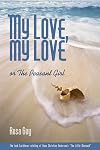
This beautifully-written story is an interesting modern rendition of Hans Christian Anderson's "The Little Mermaid" and compared together, bring about important comparisons. They share the same main ideas, yet the distinct difference that help emphasize the different themes expressed by both stories.
In My Love, My Love, the teenaged dreamer here is named Desiree Dieu-Donne, an island Ti Moune (or orphan) who, while without parents, is raised by her affectionate adoptive parents, Tonton show more Julian and Mam Euralie. Just like the character namesake in "The Little Mermaid," Desiree's life is changed when she falls in love with a comely young prince, Daniel Beauxhomme, a youthful rich mulatto who she nurses back to health after he is in a car accident. Daniel, just like the mermaid's prince, is of a different world, and not meant to be a love interest at all, and Daniel, just like the prince, must return to his old world, taking with him the simplistic heart of his young lover.
Both girls in these stories go to extreme lengths to be reunited with their sweethearts. Desiree leaves her family and village and places her life in the blood-stained hands of Papa Ge, the island's horrid messenger of the sea. An interesting feminist symbol is utilized as Desiree, forced to wear a new pair of shoes, endures the immense pain in her feet even though each step was "a new experience in torture." While the mermaid gives over her voice for freedom, Desiree is a mute in her own sense since she knows not the languages of the foreign diplomats.
The interloper who moves in the way of the two "star-cross'd lovers" in both stories is everything the protagonist is not: confident, articulate, and rich. Desiree, like the mermaid, realizes that she has endangered her life over a man who looks lost to her.
Hidden in My Love, My Love is the sometimes sad and total cost of challenging established circumstances and status quo. It shows how high the price can be for selfless love.
It is interesting to note the commonalities between "The Little Mermaid" and this modern rendition. Throughout, there are subtle, and less-than-subtle allusions to that well-loved, later-Disney-fied classic. Just note the allusion made by one of the characters, Mama Euralie: "She [Desiree] gives up her honor to this man, born of a world as different from hers as land is from the sea."
For good comparisons and a more interesting reading experience, read this novel after, or alongside, the version of Hans Christian Anderson (and no, it is quite different from Disney's cartoon!). I recommend this for adolescents and adults, as well as anyone interesting in modernized fairy tales, or in the true non-Disney versions of the stories we love. show less
In My Love, My Love, the teenaged dreamer here is named Desiree Dieu-Donne, an island Ti Moune (or orphan) who, while without parents, is raised by her affectionate adoptive parents, Tonton show more Julian and Mam Euralie. Just like the character namesake in "The Little Mermaid," Desiree's life is changed when she falls in love with a comely young prince, Daniel Beauxhomme, a youthful rich mulatto who she nurses back to health after he is in a car accident. Daniel, just like the mermaid's prince, is of a different world, and not meant to be a love interest at all, and Daniel, just like the prince, must return to his old world, taking with him the simplistic heart of his young lover.
Both girls in these stories go to extreme lengths to be reunited with their sweethearts. Desiree leaves her family and village and places her life in the blood-stained hands of Papa Ge, the island's horrid messenger of the sea. An interesting feminist symbol is utilized as Desiree, forced to wear a new pair of shoes, endures the immense pain in her feet even though each step was "a new experience in torture." While the mermaid gives over her voice for freedom, Desiree is a mute in her own sense since she knows not the languages of the foreign diplomats.
The interloper who moves in the way of the two "star-cross'd lovers" in both stories is everything the protagonist is not: confident, articulate, and rich. Desiree, like the mermaid, realizes that she has endangered her life over a man who looks lost to her.
Hidden in My Love, My Love is the sometimes sad and total cost of challenging established circumstances and status quo. It shows how high the price can be for selfless love.
It is interesting to note the commonalities between "The Little Mermaid" and this modern rendition. Throughout, there are subtle, and less-than-subtle allusions to that well-loved, later-Disney-fied classic. Just note the allusion made by one of the characters, Mama Euralie: "She [Desiree] gives up her honor to this man, born of a world as different from hers as land is from the sea."
For good comparisons and a more interesting reading experience, read this novel after, or alongside, the version of Hans Christian Anderson (and no, it is quite different from Disney's cartoon!). I recommend this for adolescents and adults, as well as anyone interesting in modernized fairy tales, or in the true non-Disney versions of the stories we love. show less

1973. Phyllisia is a 14 year old girl from Trinidad. Her father owns a restaurant in Harlem. She and her sister Ruby hate cold, dirty New York at first. The kids in school pick on her because she’s smart and has an island accent. Finally she makes friends with Edith a poor and wild girl who defends her from the bullies. Phyl, as Edith calls her, loves Edith, but is ashamed of how poor she is. Edith steals things from stores. She has learned to survive. She also tries to take care of her show more three younger sisters. There is a lot of hardship and suffering in this book. Edith’s father disappears. Her brother is shot by the police. Her youngest sister dies of the measles. Phyl’s mother dies of tuberculosis. Her father works so hard he wants to send them back to Trinidad, because he can’t keep an eye on them and work too. Finally Phyl convinces him to let them stay. This book pulls no punches, the way kid’s books were in the seventies. It is gritty and real. Now I want to read Ruby and Edith Jackson as well. show less
Lists
Awards


You May Also Like


Associated Authors
Statistics
- Works
- 20
- Also by
- 7
- Members
- 1,001
- Popularity
- #25,757
- Rating
- 3.9
- Reviews
- 17
- ISBNs
- 112
- Languages
- 5
- Favorited
- 2