
Alex Boese
Author of Elephants on Acid and Other Bizarre Experiments
About the Author
Alex Boeseis a graduate student at the University of California at San Diego, where he is completing his doctoral dissertation.
Works by Alex Boese
Psychedelic Apes: From Parallel Universes to Atomic Dinosaurs – the Weirdest Theories of Science and History (2019) 30 copies, 2 reviews
Drive-Thru Funeral Home 1 copy
Tagged
Common Knowledge
- Birthdate
- 1968-06-13
- Gender
- male
- Education
- Amherst College
University of California, San Diego (MS|History of Science) - Occupations
- journalist
correspondent
hoax expert
curator (www.museumofhoaxes.com) - Organizations
- New York Times
CNN
Museum of Hoaxes - Nationality
- USA
- Birthplace
- Glenside, Pennsylvania, USA
- Places of residence
- San Diego, California, USA
London, Middlesex, England, UK
Washington, D.C., USA
La Mesa, California, USA - Associated Place (for map)
- USA
Members
Reviews
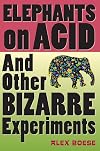
I found this book fascinating - occasionally discomfiting or even downright horrifying - but always interesting.
I wasn't sure of the contents when I picked it up, but was happy to find that it is full of specific accounts - complete with references - of experiments or studies. That each began with a short blurb written as a dramatisation or memory of the events in question was an excellent touch.
The layout, of grouped experiments in a chapter with a single theme, was easy to focus on and show more more enjoyable than if it had been more of a random jump from topic to topic - it also meant that often there were references, mentions, and influences shared between the accounts.
There are pictures included, and some of them - like the experiments they are there to illustrate - are humourous, or disquieting, or horrible. I appreciated the inclusion, though, even in the case of the horrible - it helps to get an idea of the scope of the experiment solid in my head.
There were a handful of experiments included here that I have come across, either by mention, or, in a couple of cases, in a more in-depth discussion than here, but that only served to make me enjoy it more - it is always nice to get multiple accounts of such things, and it was hardly as though there was much repetition present. (And I have quite eclectic reading and researching habits, in any case.)
If you enjoy odd science - much historical science, of course, though there was a nice blend of relatively recent with the older accounts - and don't mind that it occasionally takes you to worrying places, I recommend you give this book a try. It's quite thought-provoking - though they aren't always happy thoughts, and might not be suitably happy conversation for everyone.
Alex Boese has an engaging writing style, and the feeling that he is fascinated and engaged with the subject himself definitely comes across. (I was also relieved to read, in his introduction, that there is no mention of the Nazi experiments in the book; he had no intention to include them, he says, because he had no intention to make the book a catalog of atrocities, not to mention that they were not actual scientific research, but torture disguised as science.)
As well, I appreciated that he acknowledged there was no desire to trivialise or ridicule science or even the - often very odd - people who created, led, and, of course, published these experiments.
I'll close with a quote from the author's own introduction:
Hear hear, I say. show less
I wasn't sure of the contents when I picked it up, but was happy to find that it is full of specific accounts - complete with references - of experiments or studies. That each began with a short blurb written as a dramatisation or memory of the events in question was an excellent touch.
The layout, of grouped experiments in a chapter with a single theme, was easy to focus on and show more more enjoyable than if it had been more of a random jump from topic to topic - it also meant that often there were references, mentions, and influences shared between the accounts.
There are pictures included, and some of them - like the experiments they are there to illustrate - are humourous, or disquieting, or horrible. I appreciated the inclusion, though, even in the case of the horrible - it helps to get an idea of the scope of the experiment solid in my head.
There were a handful of experiments included here that I have come across, either by mention, or, in a couple of cases, in a more in-depth discussion than here, but that only served to make me enjoy it more - it is always nice to get multiple accounts of such things, and it was hardly as though there was much repetition present. (And I have quite eclectic reading and researching habits, in any case.)
If you enjoy odd science - much historical science, of course, though there was a nice blend of relatively recent with the older accounts - and don't mind that it occasionally takes you to worrying places, I recommend you give this book a try. It's quite thought-provoking - though they aren't always happy thoughts, and might not be suitably happy conversation for everyone.
Alex Boese has an engaging writing style, and the feeling that he is fascinated and engaged with the subject himself definitely comes across. (I was also relieved to read, in his introduction, that there is no mention of the Nazi experiments in the book; he had no intention to include them, he says, because he had no intention to make the book a catalog of atrocities, not to mention that they were not actual scientific research, but torture disguised as science.)
As well, I appreciated that he acknowledged there was no desire to trivialise or ridicule science or even the - often very odd - people who created, led, and, of course, published these experiments.
I'll close with a quote from the author's own introduction:
'The researchers who appear in the following pages-even the scariest and most eccentric ones-all share one virtue. They all looked at the world around them, and instead of taking what they saw for granted, they asked questions.'
Hear hear, I say. show less
[b: Elephants on Acid|1449994|Elephants on Acid And Other Bizarre Experiments|Alex Boese|https://images.gr-assets.com/books/1328833268s/1449994.jpg|1440722] is a delightful romp through the bizarre world of strange science experiments. Like [a: Alex Boese|56838|Alex Boese|https://images.gr-assets.com/authors/1215289694p2/56838.jpg]'s previous book [b: The Museum of Hoaxes|1485698|The Museum of Hoaxes|Alex Boese|https://images.gr-assets.com/books/1408888104s/1485698.jpg|1476873] Elephant's on show more Acid is largely made up of short entries detailing the world of the bizarre. Boese is careful to avoid the more classical entries that come up whenever strange science is discussed i.e. Nazis, the Tuskegee experiments, etc. and instead delight in the less harmful, if no less strange, situations.
I first found this book in college, and was happy to give it away to a friend when I was done so it could make the rounds from person to person. The book was enthralling, read over the course of a train ride, and it put a grin (if a disgusted one when it got to the vomit eaters) on my face. It didn't as much ignite my love in the bizarre as bolster it, and it opened a door to a world I'd scarcely known existed. One where questions like universal consciousness were genuinely pondered, and the mad scientist was more interesting than strictly scary.
My main complaint is the same as it was for [b: The Museum of Hoaxes|1485698|The Museum of Hoaxes|Alex Boese|https://images.gr-assets.com/books/1408888104s/1485698.jpg|1476873]. I wanted more, and thankfully Boese's website, as always, delivers. Even more thankfully he delivered much more solidly in [b: Electric Sheep|7082|Do Androids Dream of Electric Sheep?|Philip K. Dick|https://images.gr-assets.com/books/1435458683s/7082.jpg|830939] several years later, and even expanded upon some of the entries in the previous book that were simply glossed over. The book is one I'll happily recommend, but always with the caveat that you will want more.
And really, the elephant on LSD is probably the least strange of the entries in this book... show less
I first found this book in college, and was happy to give it away to a friend when I was done so it could make the rounds from person to person. The book was enthralling, read over the course of a train ride, and it put a grin (if a disgusted one when it got to the vomit eaters) on my face. It didn't as much ignite my love in the bizarre as bolster it, and it opened a door to a world I'd scarcely known existed. One where questions like universal consciousness were genuinely pondered, and the mad scientist was more interesting than strictly scary.
My main complaint is the same as it was for [b: The Museum of Hoaxes|1485698|The Museum of Hoaxes|Alex Boese|https://images.gr-assets.com/books/1408888104s/1485698.jpg|1476873]. I wanted more, and thankfully Boese's website, as always, delivers. Even more thankfully he delivered much more solidly in [b: Electric Sheep|7082|Do Androids Dream of Electric Sheep?|Philip K. Dick|https://images.gr-assets.com/books/1435458683s/7082.jpg|830939] several years later, and even expanded upon some of the entries in the previous book that were simply glossed over. The book is one I'll happily recommend, but always with the caveat that you will want more.
And really, the elephant on LSD is probably the least strange of the entries in this book... show less
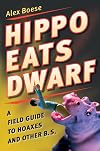
You really shouldn't believe everything you read, and Alex Boese has lots and lots of examples of the reasons why not. Most of what he talks about here are things you're likely to encounter on the internet: hoax websites, photoshopped pictures, e-mail scams, bizarre rumors, and so on, although he also does also include sections on things like political lies, shady business dealings, and "reality" TV. Often he'll present a number of odd little stories on a particular topic, sorting out which show more are true and which are false.
Since this was published in 2006, it feels a little... Well, not dated, exactly, but certainly not up-to-date. After all, six years is a long time on the internet. Still, a lot of these same fakes and urban legends and things are still very much with us; it's not like Nigerian princes in need of your bank account information are ever going to disappear. Regardless, I wouldn't recommend this as a comprehensive guide to to what real and what's not. It's a little too random for that, and not quite serious or thorough enough. If that's what you're looking for, you're much better off visiting snopes.com. But it is entertaining to browse through, and it might cause you to think twice about the next slightly-too-weird news story you come across. show less
Since this was published in 2006, it feels a little... Well, not dated, exactly, but certainly not up-to-date. After all, six years is a long time on the internet. Still, a lot of these same fakes and urban legends and things are still very much with us; it's not like Nigerian princes in need of your bank account information are ever going to disappear. Regardless, I wouldn't recommend this as a comprehensive guide to to what real and what's not. It's a little too random for that, and not quite serious or thorough enough. If that's what you're looking for, you're much better off visiting snopes.com. But it is entertaining to browse through, and it might cause you to think twice about the next slightly-too-weird news story you come across. show less
Psychedelic Apes: From parallel universes to atomic dinosaurs – the weirdest theories of science and history by Alex Boese
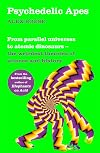
'Psychedelic Apes' looks at the scientific theories that did not make the final grade but which were reasonably plausible on the evidence available at the time. Boese also adds in some 'weird theories' (radio astronomy, dark matter, continental drift and others) that eventually became accepted.
Where Boese scores is in the clarity of his writing and his measured approach to each theory without being snide or superior. What we get is a good understanding of how science is done but also why we show more should be cautious about treating scientific claims in many areas as the final word.
One periodic lesson is how scientific orthodoxy can crush a 'weird theory' that later proves right for reasons of institutional inertia and sometimes cruel arrogance. More than once, someone who would be proved right dies or is chased out of science before a new generation accepts their theory.
There is a nice flow to the book. Twenty five 'weird theories' (and another ten plausible or accepted once-weird theories) are reviewed from the cosmological through the geo-planetary to the biological, the evolutionary and the historical.
Picking a few at random, he reviews simulation theory, the two sun theory of the solar system, extremophiles, the aquatic ape theory and early Christianity as mushroom cult, explaining the context of ideas that may not have stood up in the end but which were never pseudo-science in their time.
He loses his sure touch in the historical section but that is a quibble since the scientific sections (history of science is his main discipline) are good enough to compensate. He simply does not have the background to look at historical theory with the same level of seriousness and understanding.
Nevertheless, although some of the stories are well told and are no surprise, most are explored with a completely fresh eye and are well contextualised and explained. This is solid and entertaining popular science that avoids breathless enthusiasm in favour of an inborn respect for scientific method. show less
Where Boese scores is in the clarity of his writing and his measured approach to each theory without being snide or superior. What we get is a good understanding of how science is done but also why we show more should be cautious about treating scientific claims in many areas as the final word.
One periodic lesson is how scientific orthodoxy can crush a 'weird theory' that later proves right for reasons of institutional inertia and sometimes cruel arrogance. More than once, someone who would be proved right dies or is chased out of science before a new generation accepts their theory.
There is a nice flow to the book. Twenty five 'weird theories' (and another ten plausible or accepted once-weird theories) are reviewed from the cosmological through the geo-planetary to the biological, the evolutionary and the historical.
Picking a few at random, he reviews simulation theory, the two sun theory of the solar system, extremophiles, the aquatic ape theory and early Christianity as mushroom cult, explaining the context of ideas that may not have stood up in the end but which were never pseudo-science in their time.
He loses his sure touch in the historical section but that is a quibble since the scientific sections (history of science is his main discipline) are good enough to compensate. He simply does not have the background to look at historical theory with the same level of seriousness and understanding.
Nevertheless, although some of the stories are well told and are no surprise, most are explored with a completely fresh eye and are well contextualised and explained. This is solid and entertaining popular science that avoids breathless enthusiasm in favour of an inborn respect for scientific method. show less
Lists
Awards

You May Also Like


Statistics
- Works
- 9
- Members
- 1,395
- Popularity
- #18,426
- Rating
- 3.5
- Reviews
- 43
- ISBNs
- 45
- Languages
- 5