
Laura Kalpakian
Author of Cosette: The Sequel to Les Miserables
About the Author
Laura Kalpakian is the award-winning author of several novels and short story collections She has won the PEN West Prize for Best Short Fiction and received a National Endowment for the Arts Fellowship in Fiction. She lives in Washington State.
Works by Laura Kalpakian
Associated Works
Winter's Tales: New Series No 6 (International Anthology of Stories by New & Established Auth) (1990) — Contributor — 11 copies
Tagged
Common Knowledge
- Legal name
- Kalpakian, Laura Anne
- Birthdate
- 1945-06-28
- Gender
- female
- Relationships
- McCreary, Bear (son)
Members
Reviews
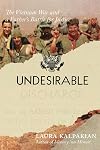
This book is a testimony to the love of both a father and mother faced with impossible choices and circumstances regarding their son. It was difficult to read because Doug's experience in Vietnam and at home shines a bright light on the injustices faced by those who served there--many who still carry visible and invisible scars decades later. So many servicemen became addicted to drugs thanks to the unconscionable decisions they were being asked to make and the horrible things they witnessed show more daily. To read in such detail how high-ranking officers in the Army, the President, and other leaders lied and covered up their own, and their government's, wrong-doing makes your blood boil, especially when it was done at the expense of ordinary enlisted men. Douglas was certainly not a model soldier, however, he did not deserve what he got. None of them did. I watched as my own father spent years arguing with the VA and government over Agent Orange and other health issues directly related to Vietnam and I can only imagine how Doug's family must have felt screaming into the void over those years of their struggle. The fact that this book came out when our country is again embroiled in a war with no purpose led by high-ranking liars just makes it all the more damning as a historical record. While I am sure this was a difficult journey for the author to take, I am grateful that she shows us one of the unintended consequences of the war in Vietnam and its impact on her family, which represents so many more. It's not an easy book to read, but it's an important one. show less
 This review was written for LibraryThing Early Reviewers.
Emily Shaw, fresh out of college with a degree in social work, thinks she can heal the world Candy Striper style with her notes from her final Sociology class. Elvis has died five years prior and Emily's first welfare client, Joyce Jackson of St. Elmo, California, is obsessed-obsessed-obsessed with the fallen idol. Joyce doesn't need a Candy Striper. She needs to spread the work of Elvis. As she sits on her porch-turned-shrine to the king with her two daughters, Priscilla and Lisa Marie (of show more course), Joyce tells anyone who will listen how Elvis's job was to sing, entertain, and look pretty, but his life's work was to spread love, charity, and compassion. To make the world see Elvis as a humanitarian is a tall order considering many see his final years as a drug-addled, overweight has-been. Emily, instead of spending the prerequisite twenty minutes with Joyce on the first visit, ends up listening to Joyce and drinking the tea for three hours.
Later we learn how Joyce came to be such an Elvis fanatic. We leave Emily's little life and follow Cilla's childhood, describing how her mom was obsessed with Elvis since forever. I think the story would have held up better if Kalpakian had stuck with the story from Emily's point of view, rather than brief first person narratives from Cilla. They didn't serve much purpose other than to fill out Joyce's personality as a mother. There is one critical scene that Cilla had to narrate, but I think Kalpakian could have found a different way.
But, back to the plot. Along the way, Emily learns Joyce is scamming the government by making money on the side. As a new social worker she needs to make a decision, turn Joyce in or give in to Elvis. show less
Later we learn how Joyce came to be such an Elvis fanatic. We leave Emily's little life and follow Cilla's childhood, describing how her mom was obsessed with Elvis since forever. I think the story would have held up better if Kalpakian had stuck with the story from Emily's point of view, rather than brief first person narratives from Cilla. They didn't serve much purpose other than to fill out Joyce's personality as a mother. There is one critical scene that Cilla had to narrate, but I think Kalpakian could have found a different way.
But, back to the plot. Along the way, Emily learns Joyce is scamming the government by making money on the side. As a new social worker she needs to make a decision, turn Joyce in or give in to Elvis. show less

What I learned from this book: Cosette has small breasts and (apparently!) enormous reserves of courage and fortitude beneath her 'I want to wear merino and sit vacuous in the Luxembourg gardens' exterior; sex with Marius is good, albeit "sticky and slimy and wet"; a man can hide from the police beneath a woman's hoopskirts and then somehow consummate the relationship from that position; your children will certainly betray you but don't worry 'cause they'll feel just awful about it later; show more Eponine had red hair.
Plus some stuff about how to hold a proper revolution. Marius should maybe have given up on insurrection after all of his friends died in the first one, but no: he goes off to get shot at again. Brave, or stupid?
A very long "bleh". show less
Plus some stuff about how to hold a proper revolution. Marius should maybe have given up on insurrection after all of his friends died in the first one, but no: he goes off to get shot at again. Brave, or stupid?
A very long "bleh". show less
"Marriage is nothing but a property arrangement between people who have decided to consolidate their assets and register themselves as card-carrying dupes to convention."
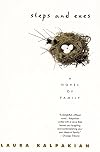
"Steps and Exes" was a hit with my book club of women varying in age from 35 to 70-plus. The title refers to the stepchildren, ex-spouses and ex-lovers who remain part of one's molecular family, if not the nuclear family.
"In the molecular family people are connected without being bound. They spindle themselves around shared show more experiences and affections rather than splashing in the shared gene pool. Families like ours created from the rag ends of other families, molecularly connected to make something entirely different, combined to create a new whole."
On the fictional Isadora Island, Celia Henry runs a bed and breakfast and lives a life unfettered by conventions such as marriage (and fidelity, at times). She teaches her children and step-children to do the same. A cast of well-drawn characters move in and out of Celia's life, eventually revealing that her vision of unfettered love is as romanticized as the fantasy of getting married and living happily ever after.
The depiction of a modern family touched a chord with me. The writing is lively and very funny. Midway through, some dark themes emerge, which only strengthen the narrative. Celia is a strong, strong woman, and I really enjoyed this book.
One woman in my book group said she'll recommend this book to everyone, and another one said she liked it as much as "The Help." show less
"Steps and Exes" was a hit with my book club of women varying in age from 35 to 70-plus. The title refers to the stepchildren, ex-spouses and ex-lovers who remain part of one's molecular family, if not the nuclear family.
"In the molecular family people are connected without being bound. They spindle themselves around shared show more experiences and affections rather than splashing in the shared gene pool. Families like ours created from the rag ends of other families, molecularly connected to make something entirely different, combined to create a new whole."
On the fictional Isadora Island, Celia Henry runs a bed and breakfast and lives a life unfettered by conventions such as marriage (and fidelity, at times). She teaches her children and step-children to do the same. A cast of well-drawn characters move in and out of Celia's life, eventually revealing that her vision of unfettered love is as romanticized as the fantasy of getting married and living happily ever after.
The depiction of a modern family touched a chord with me. The writing is lively and very funny. Midway through, some dark themes emerge, which only strengthen the narrative. Celia is a strong, strong woman, and I really enjoyed this book.
One woman in my book group said she'll recommend this book to everyone, and another one said she liked it as much as "The Help." show less
Awards


You May Also Like


Associated Authors
Statistics
- Works
- 21
- Also by
- 1
- Members
- 770
- Popularity
- #33,050
- Rating
- 3.4
- Reviews
- 18
- ISBNs
- 63
- Languages
- 3
