
Gregory Berns
Author of How Dogs Love Us: A Neuroscientist and His Adopted Dog Decode the Canine Brain
About the Author
Gregory Berns is the Distinguished Chair of Neuroeconomics at Emory University, where he is a professor in the departments of Psychiatry and Economics, and at the Goizueta Business School. He is widely known for his ability to translate technical material for a broad audience. A pioneer in the show more field of neuroeconomics, he and his research have been profiled in the New York Times, Forbes, the Wall Street Journal, Money, and other leading news, business, and science sources. show less
Works by Gregory Berns
How Dogs Love Us: A Neuroscientist and His Adopted Dog Decode the Canine Brain (2013) 296 copies, 13 reviews
The Self Delusion: The New Neuroscience of How We Invent―and Reinvent―Our Identities (2022) 33 copies
Associated Works
Tagged
Common Knowledge
- Canonical name
- Berns, Gregory
- Legal name
- Berns, Gregory S.
- Other names
- Berns, Greg
- Gender
- male
- Education
- University of California, San Diego (MD|Medicine|1994)
University of California, Davis (PhD|Biomechanical Engineering|1990)
Princeton University - Occupations
- professor
neuroscientist
neuroeconomist
writer - Organizations
- Emory University
Center for Neuropolicy - Awards and honors
- Allen G. Shenstone Prize for Outstanding Work in Experimental Physics (1986)
University of California Regents' Fellowship (1989-1990)
Postdoctoral Young Scientist Award (1991)
Thomas Detre Prize for Outstanding Medical Student Paper in General Psychiatry (1993)
APA/Lilly Resident Research Award (1995–1996)
NIMH Outstanding Resident Award (1996) (show all 12)
SOBP/Lilly Fellowship Award (1997)
Excellence in Psychiatry Residency Award (1998)
ADAA Senior Travel Award (1999)
APA/SmithKline Beecham Young Faculty Award (1999)
Dean's Clinical Investigator Award (2001–2004)
World Economic Forum Fellow (2004, 2009) - Nationality
- USA
- Places of residence
- Atlanta, Georgia, USA
- Associated Place (for map)
- Georgia, USA
Members
Reviews
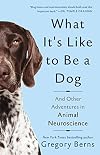
I reached kind of a split decision on this book.
Berns presents interesting research (mostly involving MRI and related brain scans) into the mental lives of dogs and other animals. His work goes beyond behavioral observation to see exactly what parts of a dog’s brain are active during different types of cognitive tasks. Doing so gives us insights into a dog’s experience of the world — how dogs deliberate and make choices, how they process sensory input, giving us clues to understand, as show more the title says, what it’s like to be a dog.
The physical structures and functional characteristics of dogs’ (and other animals’) brains are more like our own than we might have thought. Given that, it’s reasonable to believe that they in fact do have conscious lives and that those lives are more like ours than we thought. That seems to be Berns’ point (as emphasized in the last 40 pages of the book), and I’m all for it. It’s backed up by his research, and it’s important. Understanding more about the richness of the mental lives of animals like dogs should make us less tolerant of abusive treatment in medical and other research. It should also, especially in the case of dogs, strengthen our resolve to provide for animals in need — living in shelters or in otherwise poor conditions where they cannot live the lives they are capable of.
HIs presentation is a bit dry. Berns does present his work as a story — much of his writing is autobiographical here. But in keeping with the title, I did expect more in the way of descriptions of how it might feel to be a dog — what a dog’s experience of smelling the grass is like, or how a dog views his “home”, or how dogs understand their interactions with other dogs and with humans — “what it’s like to be a dog.” We get some of that, but more in the form of characterizations (e.g., that dogs’ experience the world in action terms rather than descriptive terms) than in experiential terms we might relate to.
That’s not to criticize Berns’ scientific work — his story just doesn’t engage in the way I was expecting. It doesn’t have to be all warm fuzzies, but I think he could have gone a lot farther in presenting what he thinks the conscious experience of a dog might be. When he does give brief snippets of how he imagines a dog’s conscious life (see especially pages 179-180), it's very suggestive of how much farther he might have gone.
On what might be a more academic issue, I found Berns’ use of the philosopher Thomas Nagel’s paper, What is It like to be a bat?, to be off-target. Berns’ title is formulated in response to Nagel’s paper, and he refers back to it consistently throughout the book, as a kind of challenge to the very possibility of the work he is doing.
It may well be that neuroscientists studying animal cognition take Nagel’s paper as a skeptical challenge to their very field, but I certainly have never read it that way. I don’t think that Nagel denies any of the kind of knowledge about the mental activities of animals that Berns presents here. His argument concerns the reducibility of descriptions of conscious life (of any animal — a bat, a person, a dog, . . .) to physicalistic terms. Nothing in that argument denies that we can imagine or construct characterizations of what it must be like to experience the world with a dog’s senses and the functions that Berns discovers to be active in a dog’s brain.
Nagel’s point is subtle, and I don’t want to turn my review of Berns’ book into a review of Nagel’s paper, but he’s actually pointing to something else — the inaccessibility of the first-person (or first-bat or first-dog) conscious experience of others. You can characterize, describe, and imagine that first-person experience, but you will never have it. And never having it, you will never “know” it as you know your own. That makes the experience of conscious life different from experience of an object out in the public world — a book, a table, etc. We can all know and experience the same book — our conscious experiences of it will remain our own, but the object of those experiences will be shared. The reason Nagel uses bats’ conscious experiences as an example may be misleading for his own point — bats are useful in making his point because their conscious experience of the world must be very, very different from our own, but, as he says, the same point holds for other persons’ conscious lives as well. Each of us has direct access, in the first-person position, to only our own.
For Nagel, that doesn’t imply skepticism about whether dogs or other animals have conscious lives, feel pain, or anything else. But we reach those conclusions about other animals’ (and other persons’) lives through our understanding them from our own experiential perspective, not theirs — given the similarities and differences, what must life be like for a dog, or a bat, or another person?
In fact, Berns’ own statement of how he reaches conclusions about what it is like to be a dog follow a similar path. He says, “. . . analogous structure-function relationships provide a pathway for answering the question of what it’s like to be a dog, or any other animal. I suspected that when analogous brain structures were active in an animal, they were having analogous subjective experiences to us.”
Nothing in Nagel’s paper denies the legitimacy of Berns’ method, but notice one thing about it. If Berns’ statement is taken as a hypothesis — that if we find analogous structures and related functions to our own in the brains of dogs, we can conclude that they are having similar subjective experiences to ours — it is an unverifiable hypothesis. And it’s unverifiable because of exactly the point Nagel is making. We can’t verify our conclusions about what a dog’s conscious life is like by comparing them to the dog’s own conscious life itself — we don’t have direct and independent access to that conscious life.
At any rate, I’m sorry to have spent so many words on Berns’ references to Nagel. I think it’s an unfortunate red herring in Berns’ book. His concern, at least for a general audience, is to deepen our understanding and respect for the conscious lives of dogs, and other animals. That, given the moral consequences for how we treat other animals, is an important and worthy mission. show less
Berns presents interesting research (mostly involving MRI and related brain scans) into the mental lives of dogs and other animals. His work goes beyond behavioral observation to see exactly what parts of a dog’s brain are active during different types of cognitive tasks. Doing so gives us insights into a dog’s experience of the world — how dogs deliberate and make choices, how they process sensory input, giving us clues to understand, as show more the title says, what it’s like to be a dog.
The physical structures and functional characteristics of dogs’ (and other animals’) brains are more like our own than we might have thought. Given that, it’s reasonable to believe that they in fact do have conscious lives and that those lives are more like ours than we thought. That seems to be Berns’ point (as emphasized in the last 40 pages of the book), and I’m all for it. It’s backed up by his research, and it’s important. Understanding more about the richness of the mental lives of animals like dogs should make us less tolerant of abusive treatment in medical and other research. It should also, especially in the case of dogs, strengthen our resolve to provide for animals in need — living in shelters or in otherwise poor conditions where they cannot live the lives they are capable of.
HIs presentation is a bit dry. Berns does present his work as a story — much of his writing is autobiographical here. But in keeping with the title, I did expect more in the way of descriptions of how it might feel to be a dog — what a dog’s experience of smelling the grass is like, or how a dog views his “home”, or how dogs understand their interactions with other dogs and with humans — “what it’s like to be a dog.” We get some of that, but more in the form of characterizations (e.g., that dogs’ experience the world in action terms rather than descriptive terms) than in experiential terms we might relate to.
That’s not to criticize Berns’ scientific work — his story just doesn’t engage in the way I was expecting. It doesn’t have to be all warm fuzzies, but I think he could have gone a lot farther in presenting what he thinks the conscious experience of a dog might be. When he does give brief snippets of how he imagines a dog’s conscious life (see especially pages 179-180), it's very suggestive of how much farther he might have gone.
On what might be a more academic issue, I found Berns’ use of the philosopher Thomas Nagel’s paper, What is It like to be a bat?, to be off-target. Berns’ title is formulated in response to Nagel’s paper, and he refers back to it consistently throughout the book, as a kind of challenge to the very possibility of the work he is doing.
It may well be that neuroscientists studying animal cognition take Nagel’s paper as a skeptical challenge to their very field, but I certainly have never read it that way. I don’t think that Nagel denies any of the kind of knowledge about the mental activities of animals that Berns presents here. His argument concerns the reducibility of descriptions of conscious life (of any animal — a bat, a person, a dog, . . .) to physicalistic terms. Nothing in that argument denies that we can imagine or construct characterizations of what it must be like to experience the world with a dog’s senses and the functions that Berns discovers to be active in a dog’s brain.
Nagel’s point is subtle, and I don’t want to turn my review of Berns’ book into a review of Nagel’s paper, but he’s actually pointing to something else — the inaccessibility of the first-person (or first-bat or first-dog) conscious experience of others. You can characterize, describe, and imagine that first-person experience, but you will never have it. And never having it, you will never “know” it as you know your own. That makes the experience of conscious life different from experience of an object out in the public world — a book, a table, etc. We can all know and experience the same book — our conscious experiences of it will remain our own, but the object of those experiences will be shared. The reason Nagel uses bats’ conscious experiences as an example may be misleading for his own point — bats are useful in making his point because their conscious experience of the world must be very, very different from our own, but, as he says, the same point holds for other persons’ conscious lives as well. Each of us has direct access, in the first-person position, to only our own.
For Nagel, that doesn’t imply skepticism about whether dogs or other animals have conscious lives, feel pain, or anything else. But we reach those conclusions about other animals’ (and other persons’) lives through our understanding them from our own experiential perspective, not theirs — given the similarities and differences, what must life be like for a dog, or a bat, or another person?
In fact, Berns’ own statement of how he reaches conclusions about what it is like to be a dog follow a similar path. He says, “. . . analogous structure-function relationships provide a pathway for answering the question of what it’s like to be a dog, or any other animal. I suspected that when analogous brain structures were active in an animal, they were having analogous subjective experiences to us.”
Nothing in Nagel’s paper denies the legitimacy of Berns’ method, but notice one thing about it. If Berns’ statement is taken as a hypothesis — that if we find analogous structures and related functions to our own in the brains of dogs, we can conclude that they are having similar subjective experiences to ours — it is an unverifiable hypothesis. And it’s unverifiable because of exactly the point Nagel is making. We can’t verify our conclusions about what a dog’s conscious life is like by comparing them to the dog’s own conscious life itself — we don’t have direct and independent access to that conscious life.
At any rate, I’m sorry to have spent so many words on Berns’ references to Nagel. I think it’s an unfortunate red herring in Berns’ book. His concern, at least for a general audience, is to deepen our understanding and respect for the conscious lives of dogs, and other animals. That, given the moral consequences for how we treat other animals, is an important and worthy mission. show less
A lot of great ideas in this book and possible tales to go with them, but they are never realized. I felt like each chapter led you down a path that ultimately never went anywhere but onto the next chapter. Maybe this is all because the science is only beginning and we have yet to see what it’s really like to be a dog, if we ever really can. The last two chapters were great and put us where we belong on the earth sharing limited resources with all the other species in such a way that our show more extinction is very likely. show less
Thinking Like Animals = Better Communications?
What It’s Like To Be A Dog is all over the place. Gregory Berns is passionate about dogs, but his life is neurological investigation. He uses various flavors of MRI to examine and record the brains of all kinds of animals. He has gone to the point of obtaining the pickled brains of extinct animals to scan and analyze. Several chapters deal with his adventures in bureaucracy, trying to borrow the brains and figure out how they worked. Far more show more than dogs, that is what the book is about.
He does keep coming back to dogs, though. Berns and company devised numerous experiments to see if dogs could pass tests that two year old humans ace. Importantly, this is not to prove humans are smarter, but to see how much dogs process their own observations. He patiently trains the dogs to enter and stay in MRI machines, despite the enclosure and the racket, and to follow directions. It means endless repetitions in dry runs. The idea is to find out if dogs can transfer their attention as directed. Or what has priority: praise or food? In that way, we might understand how dogs think.
Dogs don’t think in labels like humans do. Humans have a name for every little thing. Dogs don’t care. For example, given a choice to pick out a close substitute for a specifically named toy, a dog will look at shape last. It will first look for substitutes of the same general size, and then of the same texture, the very opposite of what humans would do. That should color how we think about communicating with dogs.
Dogs are not about things; they are about actions. They will follow instructions to do things all day long. But telling them to select an object by name shows most unsatisfactory results. Dogs expect/hope that commands are for actions. If we can change our approach to recognize that bias, perhaps we can communicate better with them, Berns says.
There are a bunch of fascinating sidelights, too. Dolphins, another subject of brains scans, process sound over 100 times faster than humans. Sound travels at 3355 mph under water (Sound travels at 768 mph in the air), so fast that it is near useless to use slow, low level sounds which echo back all at the same time. Dolphins instead employ high pitched sounds in the range of 100 KHz. Meanwhile, humans can only hear up to about 20 Khz, and dogs 40 Khz. Dolphins hear through their jaws, and can distinguish objects a fraction of a millimeter that way. They are far more accurate hearing than humans are with sight.
The book ends in a totally unexpected way, totally unconnected to the title. Berns is a big animal rights activist. He has the greatest respect for them, and pushes to end the suffering humans inflict on them. He goes on for pages about Dog Lab in med school and how he regrets it. He also sees the decline and fall of humans, as DNA editing will allow custom humans to be produced at will.
This is a wild conclusion to a book that already has relatively little to do with the title. It shows Berns to be a multifaceted scientist with a lot of heart. But it’s not really about what it’s like to be a dog.
David Wineberg show less
What It’s Like To Be A Dog is all over the place. Gregory Berns is passionate about dogs, but his life is neurological investigation. He uses various flavors of MRI to examine and record the brains of all kinds of animals. He has gone to the point of obtaining the pickled brains of extinct animals to scan and analyze. Several chapters deal with his adventures in bureaucracy, trying to borrow the brains and figure out how they worked. Far more show more than dogs, that is what the book is about.
He does keep coming back to dogs, though. Berns and company devised numerous experiments to see if dogs could pass tests that two year old humans ace. Importantly, this is not to prove humans are smarter, but to see how much dogs process their own observations. He patiently trains the dogs to enter and stay in MRI machines, despite the enclosure and the racket, and to follow directions. It means endless repetitions in dry runs. The idea is to find out if dogs can transfer their attention as directed. Or what has priority: praise or food? In that way, we might understand how dogs think.
Dogs don’t think in labels like humans do. Humans have a name for every little thing. Dogs don’t care. For example, given a choice to pick out a close substitute for a specifically named toy, a dog will look at shape last. It will first look for substitutes of the same general size, and then of the same texture, the very opposite of what humans would do. That should color how we think about communicating with dogs.
Dogs are not about things; they are about actions. They will follow instructions to do things all day long. But telling them to select an object by name shows most unsatisfactory results. Dogs expect/hope that commands are for actions. If we can change our approach to recognize that bias, perhaps we can communicate better with them, Berns says.
There are a bunch of fascinating sidelights, too. Dolphins, another subject of brains scans, process sound over 100 times faster than humans. Sound travels at 3355 mph under water (Sound travels at 768 mph in the air), so fast that it is near useless to use slow, low level sounds which echo back all at the same time. Dolphins instead employ high pitched sounds in the range of 100 KHz. Meanwhile, humans can only hear up to about 20 Khz, and dogs 40 Khz. Dolphins hear through their jaws, and can distinguish objects a fraction of a millimeter that way. They are far more accurate hearing than humans are with sight.
The book ends in a totally unexpected way, totally unconnected to the title. Berns is a big animal rights activist. He has the greatest respect for them, and pushes to end the suffering humans inflict on them. He goes on for pages about Dog Lab in med school and how he regrets it. He also sees the decline and fall of humans, as DNA editing will allow custom humans to be produced at will.
This is a wild conclusion to a book that already has relatively little to do with the title. It shows Berns to be a multifaceted scientist with a lot of heart. But it’s not really about what it’s like to be a dog.
David Wineberg show less
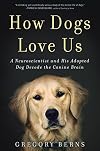
This book will be a disappointment for anyone who wants a literal answer to the title (welcome to the non-magical world - it's not gonna happen). But it's the beginning of an empirical argument against the idea that dogs are stimulus-response machines who can't have complex emotions like love or sadness. The author is just as much a dog-person as a scientist and along with the (mercifully simplified) science he also tells a lovely story about his dogs and family. And of course, any book with show more the words 'love' and 'dogs' in the title has to have its weepy moment. show less
Lists
Awards


You May Also Like


Associated Authors
Statistics
- Works
- 11
- Also by
- 1
- Members
- 879
- Popularity
- #29,122
- Rating
- 3.7
- Reviews
- 24
- ISBNs
- 43
- Languages
- 5