
Richard E. Cytowic
Author of The Man Who Tasted Shapes
About the Author
Image credit: Photo by Todd Franson
Works by Richard E. Cytowic
Tagged
Common Knowledge
- Birthdate
- 1952-12-16
- Gender
- male
- Education
- Duke University (BA)
Bowman Gray School of Medicine, Duke University (M.D.)
National Hospital for Nervous Diseases, University of London - Nationality
- USA
- Birthplace
- Trenton, New Jersey, USA
- Places of residence
- Washington, D.C., USA
- Associated Place (for map)
- USA
Members
Reviews
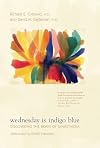
Six-word review: Why some brains multiply sensory experience.
Extended review:
In the decades since I first learned that my somewhat unusual way of perceiving written words had a name, synesthesia has ceased being regarded as a dubious, unprovable claim by oddballs who were probably either blatant attention seekers or deluded hostages to an alphabet of plastic refrigerator magnets remembered from childhood. It is now a field of study in its own right within the respectable discipline of show more neuroscience. Tools provided by advances in technology have combined with a resurgent interest in the phenomena of consciousness to yield objective evidence of the subjective experiences of synesthetes and begin to explore their implications for further study of the human brain.
Eight well-documented chapters of Cytowic's book describe various manifestations of synesthesia in ample detail. The most common variety, grapheme -> color synesthesia, typically consists in seeing words and letters as if they possessed an attribute of color. Other sensory crossovers include hearing music as if it had color and form, experiencing tastes as if they were variously shaped concrete objects, and seeing numbers as having locations in three-dimensional space. Some people have several types.
The ninth chapter treats possible explanations of how crosstalk might occur between and among areas of the brain: might it actually take place in everyone, but (for most) at a level below conscious experience? or might it be universally present in infancy, but persistent to maturity in relatively few individuals? Research into such questions is in its early stages, so much of the information currently gathered is anecdotal, with several instances of data coming from a single individual's self-reports. Chapter 10 points to areas for further research.
There's an afterword by Dmitri Nabokov, son of the famously synesthetic novelist, and extensive notes, a bibliography, and an index.
I read this book with, let me confess, a slight chip on my shoulder. As someone who thought up until about age eleven that everybody saw letters of the alphabet in color, I was surprised when I first tried to talk about it and found out that it was weird. After that I rarely mentioned it again--unless I met someone else who had the same experience and somehow the subject came up.
The first book I read on the subject, also by Cytowic (The Man Who Tasted Shapes, 1993), seemed off base to me in so many ways that it made me growl out loud. Foremost among the points that raised my hackles was the persistent use of the term "association" to denote the connection between the objective stimulus and the inner perception--a perception that, for example, the letter C is chartreuse and the number 3 is bright red. The suggestion that I might have internalized the colors of plastic refrigerator magnets (which didn't even come on the market until I was in my teens--and besides, my colors include many more hues and shades than you'll find in a standard set) struck me as willfully obtuse. The colors are not an association any more than you see grass as green because of an association. It's a property.
It seemed to me that the author was writing about something of which he had no first-hand experience, and hence choosing language that was simply not quite the right fit for the situation.
Moreover, I was put off by his breathless, self-congratulatory tone, as if he had invented synesthesia all by himself and continued to hold a proprietary claim to it.
Even more exasperating was the simplistic notion that color values might have come about through some lingering reflection of personal history; for instance, that I might have thought J was blue because my mother's name began with J and blue was her favorite color. Certainly that kind of association could happen (and I do think of my mother when I see her favorite color, which wasn't blue). But because the concept of association in this context is in itself so misleading, an explanation that settles for it is no explanation at all; it devalues and dismisses the experience of those doing the reporting.
Thus prepared, I tackled this recent work armed with a pencil. This, I should note, is my usual mode when reading nonfiction, which I invariably regard as a dialogue. My marginal notations give evidence that I did a lot of interacting with the text.
And here are my conclusions, based not on any specialized knowledge but on my own experience, internal logic, and rational consideration:
This 2009 work does show progress. It uses much more temperate language and offers many more examples. It cites actual research such as had not been done at the time of the previous publication. And it presents interesting hypotheses that might lead to explanations for the experience of synesthesia and shed light on other brain functions as well.
However, it falls short of expectation in numerous ways:
• There's a pervasive quality of disingenuousness and gee-whizziness that makes synesthesia sound too little like a subject of scientific study and slightly too much like a parlor trick.
• There's a shortage of alternative explanations. Nobody over about the age of five, for example, actually believes that the voice is coming from the ventriloquist's dummy; that is no kind of evidence for the tight coupling of sight and sound in our perception (page 165). We suspend disbelief and play along for the fun of it, and that's all.
• The authors base too many of their hypotheses on research that's too limited and that also seems to have been designed by non-synesthetes. Testing a subject who attributes gender to letters by using letters to construct male and female stick figures (page 84) disregards the fact that those restroom icons are learned cultural conventions--and outdated ones, too, since women are no longer universally attired in skirts.
• A number of varieties of synesthesia in their typology come from a single source--the same single source--and need much more documentation, in my layperson's opinion, to stand up as generalizable descriptions.
In short, it appears to me that there is on the authors' part a basic failure to comprehend the experience they're writing about.
The authors still, annoyingly, use the term "association," but they own that whatever the connection might be, it isn't a result of idiosyncratic personal history. However, the refrigerator-magnet theory still comes up. And speaking of color "choices" seems to exhibit a persistent noncomprehension.
In sum, the baloney quotient is much lower for this work than it was for its 1993 predecessor, but it's still too high for my comfort.
So why four stars? I'm giving extra points for tackling a squirrelly subject at all and making some sense of it, and the ideas in chapter 9 sound promising; and besides, there are lots of good pictures. It's groundwork. I hope it's solid in enough places that I can look forward to seeing some stable architecture on this spot in another decade or so. show less
Extended review:
In the decades since I first learned that my somewhat unusual way of perceiving written words had a name, synesthesia has ceased being regarded as a dubious, unprovable claim by oddballs who were probably either blatant attention seekers or deluded hostages to an alphabet of plastic refrigerator magnets remembered from childhood. It is now a field of study in its own right within the respectable discipline of show more neuroscience. Tools provided by advances in technology have combined with a resurgent interest in the phenomena of consciousness to yield objective evidence of the subjective experiences of synesthetes and begin to explore their implications for further study of the human brain.
Eight well-documented chapters of Cytowic's book describe various manifestations of synesthesia in ample detail. The most common variety, grapheme -> color synesthesia, typically consists in seeing words and letters as if they possessed an attribute of color. Other sensory crossovers include hearing music as if it had color and form, experiencing tastes as if they were variously shaped concrete objects, and seeing numbers as having locations in three-dimensional space. Some people have several types.
The ninth chapter treats possible explanations of how crosstalk might occur between and among areas of the brain: might it actually take place in everyone, but (for most) at a level below conscious experience? or might it be universally present in infancy, but persistent to maturity in relatively few individuals? Research into such questions is in its early stages, so much of the information currently gathered is anecdotal, with several instances of data coming from a single individual's self-reports. Chapter 10 points to areas for further research.
There's an afterword by Dmitri Nabokov, son of the famously synesthetic novelist, and extensive notes, a bibliography, and an index.
I read this book with, let me confess, a slight chip on my shoulder. As someone who thought up until about age eleven that everybody saw letters of the alphabet in color, I was surprised when I first tried to talk about it and found out that it was weird. After that I rarely mentioned it again--unless I met someone else who had the same experience and somehow the subject came up.
The first book I read on the subject, also by Cytowic (The Man Who Tasted Shapes, 1993), seemed off base to me in so many ways that it made me growl out loud. Foremost among the points that raised my hackles was the persistent use of the term "association" to denote the connection between the objective stimulus and the inner perception--a perception that, for example, the letter C is chartreuse and the number 3 is bright red. The suggestion that I might have internalized the colors of plastic refrigerator magnets (which didn't even come on the market until I was in my teens--and besides, my colors include many more hues and shades than you'll find in a standard set) struck me as willfully obtuse. The colors are not an association any more than you see grass as green because of an association. It's a property.
It seemed to me that the author was writing about something of which he had no first-hand experience, and hence choosing language that was simply not quite the right fit for the situation.
Moreover, I was put off by his breathless, self-congratulatory tone, as if he had invented synesthesia all by himself and continued to hold a proprietary claim to it.
Even more exasperating was the simplistic notion that color values might have come about through some lingering reflection of personal history; for instance, that I might have thought J was blue because my mother's name began with J and blue was her favorite color. Certainly that kind of association could happen (and I do think of my mother when I see her favorite color, which wasn't blue). But because the concept of association in this context is in itself so misleading, an explanation that settles for it is no explanation at all; it devalues and dismisses the experience of those doing the reporting.
Thus prepared, I tackled this recent work armed with a pencil. This, I should note, is my usual mode when reading nonfiction, which I invariably regard as a dialogue. My marginal notations give evidence that I did a lot of interacting with the text.
And here are my conclusions, based not on any specialized knowledge but on my own experience, internal logic, and rational consideration:
This 2009 work does show progress. It uses much more temperate language and offers many more examples. It cites actual research such as had not been done at the time of the previous publication. And it presents interesting hypotheses that might lead to explanations for the experience of synesthesia and shed light on other brain functions as well.
However, it falls short of expectation in numerous ways:
• There's a pervasive quality of disingenuousness and gee-whizziness that makes synesthesia sound too little like a subject of scientific study and slightly too much like a parlor trick.
• There's a shortage of alternative explanations. Nobody over about the age of five, for example, actually believes that the voice is coming from the ventriloquist's dummy; that is no kind of evidence for the tight coupling of sight and sound in our perception (page 165). We suspend disbelief and play along for the fun of it, and that's all.
• The authors base too many of their hypotheses on research that's too limited and that also seems to have been designed by non-synesthetes. Testing a subject who attributes gender to letters by using letters to construct male and female stick figures (page 84) disregards the fact that those restroom icons are learned cultural conventions--and outdated ones, too, since women are no longer universally attired in skirts.
• A number of varieties of synesthesia in their typology come from a single source--the same single source--and need much more documentation, in my layperson's opinion, to stand up as generalizable descriptions.
In short, it appears to me that there is on the authors' part a basic failure to comprehend the experience they're writing about.
The authors still, annoyingly, use the term "association," but they own that whatever the connection might be, it isn't a result of idiosyncratic personal history. However, the refrigerator-magnet theory still comes up. And speaking of color "choices" seems to exhibit a persistent noncomprehension.
In sum, the baloney quotient is much lower for this work than it was for its 1993 predecessor, but it's still too high for my comfort.
So why four stars? I'm giving extra points for tackling a squirrelly subject at all and making some sense of it, and the ideas in chapter 9 sound promising; and besides, there are lots of good pictures. It's groundwork. I hope it's solid in enough places that I can look forward to seeing some stable architecture on this spot in another decade or so. show less
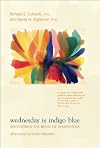
Thorough, and scientific, but still accessible. I didn't read every word, as I am only curious, and this is not directly relevant in my corner of the world, but I certainly ache for those who suffer the prejudices of either being thought mad or overly imaginative. And I rejoice for those, apparently the majority, who have learned to love this special talent that they have.
And according to the authors, it is a talent. Synesthetes are, the reader is informed, rather likely to be more creative, show more to have better memories, even to be more intelligent. The flaw in the book is that sometimes those claims are made in absolute terms, but the research explored indicates that there are only tendencies and likelihoods.
There are many interesting bits:
Sean Day, smell/taste -> color, enjoys foods that evoke harmonic or complementary or monochromatic color palettes: "... baked chicken with a scoop of vanilla ice cream topped with orange juice concentrate."
"We need to point out an important distinction that neuroscience makes between feelings and emotion because the two are not identical.... Emotion is unlearned behavior, an unfelt automatic script playing itself out, whereas feeling is the mental readout of emotional scripts. The unlearned reactions of emotion always change the body's physical state.... Emotional scripts play out unconsciously until feeling enters in: only then does the mental readout let us take stock and, if we are emotionally intelligent, make a connection between what we feel and what triggered it."
I appreciate that the distinction is made between colors of light and colors of pigment. I don't understand it all though my son has tried to explain it, but I have noticed that the 'primary' colors of the color wheel that we learn in grade school are not the 'primary' colors on a printer!
The authors also make it clear that artists can metaphorically represent cross or linked modality. But that does not mean that [a:Georgia O'Keeffe|140943|Georgia O'Keeffe|https://images.gr-assets.com/authors/1217443781p2/140943.jpg] was a synesthete. Wassily Kadinsky, otoh, was... and his work is referenced & explored here. (But not included, we have to google it.)
Many synesthetes have difficulty with arithmetic. Many also have finger agnosia. To test: ".... The subject closes his or her eyes and places the hands palm down on the table. The examiner then touches various combinations of two fingers while asking "how many" fingers are between the ones touched. A surprising number of synesthetes make errors when doing this sensory task, thus implicating their angular gyrus."
Anyway, I do see that reviewers who are synesthetes rated this book well, and I do recommend it. show less
And according to the authors, it is a talent. Synesthetes are, the reader is informed, rather likely to be more creative, show more to have better memories, even to be more intelligent. The flaw in the book is that sometimes those claims are made in absolute terms, but the research explored indicates that there are only tendencies and likelihoods.
There are many interesting bits:
Sean Day, smell/taste -> color, enjoys foods that evoke harmonic or complementary or monochromatic color palettes: "... baked chicken with a scoop of vanilla ice cream topped with orange juice concentrate."
"We need to point out an important distinction that neuroscience makes between feelings and emotion because the two are not identical.... Emotion is unlearned behavior, an unfelt automatic script playing itself out, whereas feeling is the mental readout of emotional scripts. The unlearned reactions of emotion always change the body's physical state.... Emotional scripts play out unconsciously until feeling enters in: only then does the mental readout let us take stock and, if we are emotionally intelligent, make a connection between what we feel and what triggered it."
I appreciate that the distinction is made between colors of light and colors of pigment. I don't understand it all though my son has tried to explain it, but I have noticed that the 'primary' colors of the color wheel that we learn in grade school are not the 'primary' colors on a printer!
The authors also make it clear that artists can metaphorically represent cross or linked modality. But that does not mean that [a:Georgia O'Keeffe|140943|Georgia O'Keeffe|https://images.gr-assets.com/authors/1217443781p2/140943.jpg] was a synesthete. Wassily Kadinsky, otoh, was... and his work is referenced & explored here. (But not included, we have to google it.)
Many synesthetes have difficulty with arithmetic. Many also have finger agnosia. To test: ".... The subject closes his or her eyes and places the hands palm down on the table. The examiner then touches various combinations of two fingers while asking "how many" fingers are between the ones touched. A surprising number of synesthetes make errors when doing this sensory task, thus implicating their angular gyrus."
Anyway, I do see that reviewers who are synesthetes rated this book well, and I do recommend it. show less
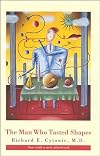
I had previously bought and then culled this book, thinking I'd never have time to read it. When I found I had purchased another copy, I decided I should read it.
I've always been curious about how people with "blended senses" perceive things. The book describes one person who perceives shapes when tasting food, and another case where the person perceives colors when hearing sound. The book also contains an interesting chart showing how senses can be blended together (the technical term is show more "synesthesia") and its frequency. All the possibilities are quite rare.
The book has three themes: synesthesia, the biology of the brain and of perceptions, and the philosophy of perception and consciousness. Most of it is presented in the context of a detective story as the author encounters the people with synesthesia, attempts to scientifically validate their perceptions, and presents the findings to a skeptical scientific community.
An interesting read. show less
I've always been curious about how people with "blended senses" perceive things. The book describes one person who perceives shapes when tasting food, and another case where the person perceives colors when hearing sound. The book also contains an interesting chart showing how senses can be blended together (the technical term is show more "synesthesia") and its frequency. All the possibilities are quite rare.
The book has three themes: synesthesia, the biology of the brain and of perceptions, and the philosophy of perception and consciousness. Most of it is presented in the context of a detective story as the author encounters the people with synesthesia, attempts to scientifically validate their perceptions, and presents the findings to a skeptical scientific community.
An interesting read. show less
An interesting book for synaesthetes. As the foreword suggests, it makes some provocative assertions (siting synaesthesia in the limbic system, and saying that, for humans, emotion, connected with that system, is biologically prior to ratiocination, with the cortex), based on the author's own researches up to 1993. The revised edition chooses not to amend the text in the light of more recent research (because, explicitly, that would spoil the 'story' of the reseach - emotion, here, before show more thought?), but places them in an afterword. Since this new research (to 2003) does alter the picture quite markedly, that is probably a wrong decision. An interesting account of one piece of fascinating scientific research, though, and Cytowic does allow himself to explore the scientific process more broadly that his precise subject might necessarily call for. Ironically, his 1993 conclusions are probably falsified to a degree by the very technological advances that he decries in the main text of the book. show less
Lists
You May Also Like


Associated Authors
Statistics
- Works
- 8
- Members
- 774
- Popularity
- #32,870
- Rating
- 3.8
- Reviews
- 10
- ISBNs
- 37
- Languages
- 2