
Mahi Binebine
Author of Horses of God
About the Author
Works by Mahi Binebine
Associated Works
Tagged
Common Knowledge
- Birthdate
- 1959
- Gender
- male
- Nationality
- Morocco
- Birthplace
- Marrakech, Morocco
- Map Location
- Morocco
Members
Reviews
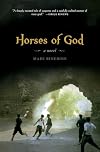
And at the end lay paradise… And I’m still waiting for the angels.Mahi Binebine's Horses of God is an almost perfect little novel, a fictional account of an event in Casablanca on 16 May 2003 that saw twelve suicide bombers slaughter innocent people along with themselves. In just over 150 pages, Binebine manages to capture the innocence and depravity of childhood in the Moroccan slum, Sidi Moumen (“where all downward slides converge”); the dreams, hopes, and desires of our show more now-deceased narrator, Yachine (not his given name, but a name he adopts for himself after Soviet soccer champion, Lev Yashin), whose voice comes to us from after (beyond?) death; and the collective and ritualistic violence that marks Yachine and his young friends as byproducts of the socioeconomic structure that crushes dreams before they can be realized—making them susceptible to outside influence: any pathway out of the slum, any proffered hand, any kind word extended are the balms these teenagers need to eventually carry bombs on their backs.
Perhaps it is natural that a novel about the allure of Islamic fundamentalism and a deadly act of terrorism that ensues would be viewed as either exploiting post-9/11 fears or else as toeing the line dangerously between sympathizing with terrorists. I seem to recall some of the former at work in criticism leveled at Mohsin Hamid’s [b:The Reluctant Fundamentalist|88815|The Reluctant Fundamentalist|Mohsin Hamid|https://d.gr-assets.com/books/1407086894s/88815.jpg|725380], which, to keep it brief as this is not a review of that novel, I think was largely unfounded and can be traced to a misreading of Hamid’s narrator’s idiosyncratic sense of deprecatory humor—one that can be misinterpreted as elitist or holier-than-thou, but which is in fact working in a different vein altogether. As for the latter side of the fence when it comes to literature and film, Julia Loktev’s 2006 film Day Night Day Night is one that many critics problematically viewed as a psychological portrait of a young, unnamed woman’s preparation to bomb a location in Manhattan. That the camera never has her out of the line of sight seems, to many, to suggest that Loktev is forcing viewers to identify with this unnamed terrorist, and therefore evoke empathy of some sort.
Rather, the major problem with all of the criticism leveled from any angle when it comes to cultural products dealing with fundamentalism and terrorism, is that a binary opposition is perpetuated, one that these very works are trying to suggest should not be invoked in any discourse on the subject. Instead of an us-versus-them or a “good-guy”-versus-“bad guy” dialectic, these works—and Binebine’s Horses of God is among them, but in a much quieter and more subtle way—suggest that we all have the potential to become terrorists, provided that environment and psychological factors collide while faced with influential and seemingly embracing figures who offer something—love, salvation, purpose—one’s life had hitherto lacked so utterly, so fundamentally.
Yachine, our narrator, is recounting events from the beyond, but it’s unclear where this is:
I won’t describe where I am now because I don’t know myself. All I can say is that I’m reduced to an entity now, to use the language of down below, I’ll call consciousness.Is it heaven? Is it an external sort of consciousness? Is it a wraith-like limbo haunting stage, causing him to relive his past wrongs? And now, as a lovelorn ghost, I feel the futile need to pour out my feelings and finally tell this story I’ve been turning over and over in my mind since the day of my death.What makes Binebine’s prose so incisive in Horses of God are the ways in which he is able to vacillate back and forth between the young Yachine’s memories of his childhood, his triumph and loss at soccer, his heterosexual love for both Ghizlane, and friend Fuad’s sister, and also his queer love for Nabil with a voice that is young, naive, childish but brash; by contrast, when recounting familial events, events going on more globally (typically relayed at the family table by his brother Said), and his induction into the fundamentalist world of Abu Zoubeir, Yachine’s voice is more mature, steady, stern, and almost weary from the world—something that makes this read as much more than the thoughts of a sixteen-year-old boy. Binebine’s skill here is in interweaving these two voices of Yachine’s, and at no point do they seem discordant. Rather, we are getting a complete psychological portrait of our narrator at various stages in his development, but without a normative chronology, a portrait that is at times eerily reminiscent of Robert Walser’s choice of narrative voice in the eponymous novel Jakob von Gunten (link to my Goodreads review).
And yet what separates Horses of God from the other cultural products—e.g., film, literature, art, and so on—on fundamentalism and terror is that despite Binebine’s emphasis on Yachine’s individuality, his inner subjectivity is rarely stressed. True, we get his young infatuations, his disappointments, his bitter childhood feuds with slum friends, his dreams for something larger, but in some ways Yachine reads like a stock character. This kind of narrative distancing can be dangerous in a novel that makes use of the first-person narrative style: it often causes readers not to feel sympathy for the narrator. But I think that is just Binebine’s point: one already feels an affinity for Yachine, so need there be sympathy as well? Isn’t it enough to feel an affinity as we can all relate to feelings of isolation, alienation, disappointment, hardship, and struggle in our formative years? Aren’t these enough to make us realize that, in reality, we’re not all that dissimilar from Yachine or his other friends who choose the path toward violence, self-annihilation, and death feeling there is no other alternative? If faced with similar circumstances and living in the same, claustrophobic world of Sidi Moumen—which Binebine, also a painter, fleshes out in such telling narrative strokes here—would we have turned out differently, or would we, too, be wanting to confess, dissuade, and ask for pardon from the beyond?
Coupled with the lack of subjectivity is a marked shift in focus: whereas the other texts and films I mentioned above center almost wholly on individuals who either have or do not have back stories—one can, of course, always imagine what places a would-be terrorist into such a position as the female jihadist in Day Night Day Night—Horses of God instead causes the reader to see the slum of Sidi Moumen as a crucible for these kinds of violent acts. Even classic literature on terrorism—e.g., Conrad’s Secret Agent or James’s Princess Casmassima—touches lightly on environment and external factors, but only insofar as these relate to the individuals’ adoption of terrorist activities and belief systems. Instead, what Binebine is doing here, and what is Horses of God’s great novelistic and also humanitarian message, is that we are all shaped by the environments in which we are raised. Yachine’s socioeconomic life filled with a potent combination of abjection, boredom, malaise, and a youthful camaraderie rooted almost wholly in violent outcomes—e.g., rape, murder—does not make him a terrorist. Rather, these are all factors in the trajectory of a life’s pathway.
Yachine is both us and yet not us: in Binebine’s skilled hands, and in prose that is haunting, nonjudgmental, and compassionate, Yachine’s story is a warning, a wake-up call for society—for if we do not address the underlying socioeconomic issues that ravage the lives of Yachine and his friends, then that is but one of many issues to which we are turning a blind eye when it comes to fundamentalism and terrorism. These are not things that are external to us: they are inside of us all, as all of the titles mentioned above also emphasize in their own ways; but it is only in recognizing this sameness (along with culpability), and beginning to change the world in which we live collectively—without dichotomizing, without ostracizing, without othering—that we can begin to address the complex network of factors that culminate in such individual and psychical violence on a global battlefield on which we all stand. show less
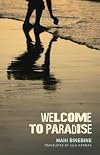
I picked this little gem up at a used book sale. I originally picked it up because of the cover (yes, I will buy a book for the cover...) than I read the blurb from the book jacket:
Mahi Binebine’s courageous novel takes place in Morocco, where seven would-be immigrants gather one night near the Strait of Gibraltar to wait for a signal from a trafficker that it is time to cross. While they wait, their stories unfold.
So worth the 50 cents I paid for it.
The POV is from Aziz, a young man who show more travels with his cousin Reda. Both long for a better life. Aziz has been fortunate and is educated. However, dire circumstances put him on the path he finds himself. The other 5 people all have their own reasons to flee. We sit on the beach and learn their stories as they wait for the signal from out in the strait.
The writing is poignant through out
"...The world went on turning. No one bothered about us, it was as if we didn't exist, as if we'd never been born. So what did it matter if we were devoured here, or somewhere else, or on the open seas..."
"...as for the rest of my family, what had they done to be so utterly forgotten? They were buried in my mind like a handicap, sucked down to the depths of my conscience.....I had known from my earliest childhood that I was born at the wrong time, in the wrong place. I was a stranger among my kin, a soul forgotten by the heavens, lost in the mud."
A stunningly beautiful book-highly recommended. show less
Mahi Binebine’s courageous novel takes place in Morocco, where seven would-be immigrants gather one night near the Strait of Gibraltar to wait for a signal from a trafficker that it is time to cross. While they wait, their stories unfold.
So worth the 50 cents I paid for it.
The POV is from Aziz, a young man who show more travels with his cousin Reda. Both long for a better life. Aziz has been fortunate and is educated. However, dire circumstances put him on the path he finds himself. The other 5 people all have their own reasons to flee. We sit on the beach and learn their stories as they wait for the signal from out in the strait.
The writing is poignant through out
"...The world went on turning. No one bothered about us, it was as if we didn't exist, as if we'd never been born. So what did it matter if we were devoured here, or somewhere else, or on the open seas..."
"...as for the rest of my family, what had they done to be so utterly forgotten? They were buried in my mind like a handicap, sucked down to the depths of my conscience.....I had known from my earliest childhood that I was born at the wrong time, in the wrong place. I was a stranger among my kin, a soul forgotten by the heavens, lost in the mud."
A stunningly beautiful book-highly recommended. show less
The narrator of Horses of God is a dead, young Moroccan man looking back on his adolescence growing up in the slums and the events that lead to him and his friends becoming suicide bombers. It is not an entirely joyless book but there are scenes of shocking brutality. The narrator is very accepting of the fact that society provides no protections. The author, a Moroccan man portrays the lives of these youth in a dispassionate manner as he traces their steps towards becoming fundamentalist show more martyrs. I was impressed with Binebine's skill in tackling this sensitive issue, in providing a window into that world.
Horses of God is a short book, translated from French and short listed for the 2014 Best Translated Fiction Award. I plan to read more of Binebine's books.
4 stars show less
Horses of God is a short book, translated from French and short listed for the 2014 Best Translated Fiction Award. I plan to read more of Binebine's books.
4 stars show less

Accostandomi a questo romanzo ero un po' intimorita, dato che il terrorismo islamico non è un argomento facile da trattare: si rischia di scrivere l'ennesimo libro-denuncia o di cadere nella facile retorica. Per fortuna invece l'approccio dell'autore è originalissimo e privo di qualunque considerazione morale. Sceglie la strada coraggiosa di far raccontare la vicenda ad un morto, uno dei giovanissimi kamikaze: così facendo ci offre un coinvolgimento maggiore, ma allo stesso tempo crea show more un'atmosfera rarefatta e onirica che addolcisce i toni e permette al lettore di prendere le distanze; e ce n' è davvero bisogno, altrimenti si verrebbe sopraffatti dalla montagna di disperazione che sovrasta la vita dei protagonisti. Questi ragazzi sono talmente imbevuti di miseria da non essere neppure in grado di sognare, non conoscono altro che violenza e morte; e allora non sorprende che proprio nella morte, loro compagna quotidiana, vedano l'unica speranza di riscatto; non soprende che si facciano plagiare dagli unici adulti in grado di offrirgli uno scopo e un qualcosa a cui appartenere. Nessuna giustificazione, solo tanta tanta pena.
Lo stile è semplice e diretto ma molto delicato, anche nelle scene più brutali c'è sempre qualche accento più soave.
Uno di quei libri probabilmente non rileggerò mai, ma che ha lasciato comunque il segno. show less
Lo stile è semplice e diretto ma molto delicato, anche nelle scene più brutali c'è sempre qualche accento più soave.
Uno di quei libri probabilmente non rileggerò mai, ma che ha lasciato comunque il segno. show less
Lists
Awards


You May Also Like


Associated Authors
Statistics
- Works
- 22
- Also by
- 1
- Members
- 205
- Popularity
- #107,801
- Rating
- 3.9
- Reviews
- 12
- ISBNs
- 51
- Languages
- 6