
John Russell Taylor (1935–2025)
Author of Hitch: The Life and Times of Alfred Hitchcock
About the Author
John Russell Taylor was Professor in the Cinema Division of the University of Southern California, Los Angeles.
Works by John Russell Taylor
Masterworks of the British Cinema: Brief Encounter / Henry V / The Lady Vanishes (1974) — Screenplay — 19 copies
Claude Monet: Impressions of France : from Le Havre to Giverny (The Illustrated Letters) (1995) 11 copies
Masterworks of the British Cinema: Brief Encounter, Third Man, Kind Hearts and Coronets (1974) 4 copies
Edgar Holloway at 90 1 copy
Peter Shaffer 1 copy
El teatro de la ira 1 copy
Claude Monet 1 copy
Associated Works
The Wizard of Oz: 50th Anniversary Edition with Original Script and Songs (1989) — Foreword — 20 copies
Tagged
Common Knowledge
- Legal name
- Taylor, John Russell
- Birthdate
- 1935-06-19
- Date of death
- 2025-08-18
- Gender
- male
- Education
- University of Cambridge (Jesus College)
Courtauld Institute of Art - Occupations
- critic
biographer - Nationality
- UK
- Birthplace
- Dover, Kent, England, UK
- Associated Place (for map)
- England, UK
Members
Reviews

This is an early academic study of filmmakers in the 1970s who were considered auteurs. That is, the work considers the director to be similar to a book author in his fashioning of films and the themes and imagery throughout them. Dated now, because almost all the individuals under discussion went on to make additional movies, the book still has merit. For it pictures these filmmakers in their prime, in the context of the 1970s in which they were considered to be dominant. The chapters on show more Lindsay Anderson, Stanley Kubrick, and Pier Paolo Pasolini are particularly helpful. show less
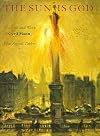
In the opening chapter The Making of an Artist Taylor traces Mann’s family origins and schooling and his early scholarship to art school, his time in Canada and contact with the Group of Seven, his return to England and his war service. The chapter Living with Art continues with the theme with his art education and the Royal Academy and the people prominent in his life. The chapter Living for Art picks up following the break up of his first marriage and the subsequent necessity to find show more paying employment, meeting of his second wife, and finally the problems of his later life.
The chapter entitled The Art considers Mann’s work with much emphasis on the artists who influenced him prominent among whom were Turner and Van Gogh, but included many others. However what comes through most strongly in all these chapters is a picture of Mann himself, a forceful and overbearing personality. A man obsessed with his own views and ideas and ready to impose them on anyone willing enough to be his audience, often so engrossed in his own thoughts that he would be unaware of those of his listener, or of what was going on around him. Perhaps it is only fitting that this quality should dominate the writing here in the same way as Mann himself would dominate by his own presence; it is certainly clear that he was a man one would find either fascinating or insufferable.
The section of plates runs from page 49 to 160; the dominant themes of Mann’s output being still life, the nude and townscapes, with an overriding interest in the effects of light and shadow. The book concludes with a chronology and A Portrait of My Husband and a Memoir of My Father, the latter two both self-explanatory.
This is a lavishly illustrated book, in addition to the section of around 150 full colour plates, the text is illustrated throughout with black and white contemporary photographs. The plates include several large scale detail images, but sadly one or two of the paintings are reproduced unnecessarily small on the page, why do the designers of such books insist on offering a minuscule image adrift in acres of white space? However that aside it is a intriguing book about a fascinating artists, an artist one would have loved to have met, if only the once! Perhaps having been taught throughout my own art education by those of the same generation as Mann, and who displayed similar traits, I found it particularly interesting; but whatever one thinks of Cyril Mann, one cannot deny the beauty and power, the richness of colour and sense of light, of his painting. show less
The chapter entitled The Art considers Mann’s work with much emphasis on the artists who influenced him prominent among whom were Turner and Van Gogh, but included many others. However what comes through most strongly in all these chapters is a picture of Mann himself, a forceful and overbearing personality. A man obsessed with his own views and ideas and ready to impose them on anyone willing enough to be his audience, often so engrossed in his own thoughts that he would be unaware of those of his listener, or of what was going on around him. Perhaps it is only fitting that this quality should dominate the writing here in the same way as Mann himself would dominate by his own presence; it is certainly clear that he was a man one would find either fascinating or insufferable.
The section of plates runs from page 49 to 160; the dominant themes of Mann’s output being still life, the nude and townscapes, with an overriding interest in the effects of light and shadow. The book concludes with a chronology and A Portrait of My Husband and a Memoir of My Father, the latter two both self-explanatory.
This is a lavishly illustrated book, in addition to the section of around 150 full colour plates, the text is illustrated throughout with black and white contemporary photographs. The plates include several large scale detail images, but sadly one or two of the paintings are reproduced unnecessarily small on the page, why do the designers of such books insist on offering a minuscule image adrift in acres of white space? However that aside it is a intriguing book about a fascinating artists, an artist one would have loved to have met, if only the once! Perhaps having been taught throughout my own art education by those of the same generation as Mann, and who displayed similar traits, I found it particularly interesting; but whatever one thinks of Cyril Mann, one cannot deny the beauty and power, the richness of colour and sense of light, of his painting. show less

(photocopy of one chapter)
You May Also Like


Associated Authors
Statistics
- Works
- 52
- Also by
- 2
- Members
- 865
- Popularity
- #29,594
- Rating
- 3.6
- Reviews
- 3
- ISBNs
- 118
- Languages
- 8