
Sophie D. Coe (1933–1994)
Author of The True History of Chocolate
About the Author
Image credit: photo by Michael D. Coe
Works by Sophie D. Coe
Tagged
Common Knowledge
- Legal name
- Coe, Sophie Dobzhansky
- Birthdate
- 1933-07-07
- Date of death
- 1994-05-25
- Gender
- female
- Occupations
- food historian
- Relationships
- Dobzhansky, Theodosius (father)
Coe, Michael D. (spouse) - Short biography
- [from Sophie D. Coe Prize website]
Sophie D. Coe was an anthropologist, food historian, and author, primarily known for her work on the history of chocolate. Her friendship with Alan Davidson and her association with the annual Oxford Symposium on Food & Cookery led her husband Michael D. Coe, with the help of Davidson and Harlan Walker, to set up the Sophie Coe Prize in 1995. It has been awarded annually ever since and continues to be the most prestigious established prize in the field, reflecting the quality of Coe's own work. - Nationality
- USA
- Associated Place (for map)
- USA
Members
Reviews
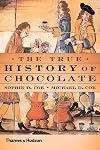
What a wonderful history! I jokingly (maybe not so jokingly) like to say there are three food groups: cheese, chocolate, … and the other stuff. And I have a beverage maxim: there are only coffee, beer, wine - that order changes depending on my mood, and what country I am in - water, and everything else. Last week I was scavenging the books tucked away in several Chattanooga antique shops and I came across a book on coffee (signed - new to me - by the dedicatee) and this one. I found this show more first, so it gets the first read.
Extensively researched and cited, the history is rewarding and the storytelling equally so. I was so engrossed that I atypically made few notes. I now have some more jumping off points and references to find! And even though they provided some original source recipes, I think I’ll be duckduckgoing for more accessible recipes to make authentic Mesoamerican chocolate drinks.
If you are the least interested in cacao/chocolate (be advised that as the authors note, “during nine tenths of its long history, chocolate was drunk, not eaten”), this is as I said at the start, a wonderful book. Now… to the coffee counterpart… show less
Extensively researched and cited, the history is rewarding and the storytelling equally so. I was so engrossed that I atypically made few notes. I now have some more jumping off points and references to find! And even though they provided some original source recipes, I think I’ll be duckduckgoing for more accessible recipes to make authentic Mesoamerican chocolate drinks.
If you are the least interested in cacao/chocolate (be advised that as the authors note, “during nine tenths of its long history, chocolate was drunk, not eaten”), this is as I said at the start, a wonderful book. Now… to the coffee counterpart… show less
written by a husband and wife whose last name is Coe. yes, Coe-Coe wrote this history about cocoa. the story of this book is bittersweet because the wife, who was the original author, died before she could complete it and her husband took over and finished it.
fantastic history. history the way it should be done always with lots of facts couched in self-aware acknowledgment of where those facts came from mixed with a wry sense of humor. too often, historians tend to write dryly from some show more sense of upright moral indignation against humor or light-heartedness. maybe the female Coe’s demise allowed the male Coe to get away with a little more than usual due to the heart-wrenching nature of finishing this work? i hope not. and this does not imply that the scholarship is anything less than impeccable or respectable. however, i think many historians think exactly that.
the history of chocolate is laid bare and taken much farther back than the Aztecs to the Olmecs who Coe thinks were cultivating it as early as 1500BCE. the significance, preparation (including recipes), and economy of the substance are all interlaced with brief overviews of the history of said society or region. really well-done narrative and prose with just the right proportion of broad context and microhistory to add spice. show less
fantastic history. history the way it should be done always with lots of facts couched in self-aware acknowledgment of where those facts came from mixed with a wry sense of humor. too often, historians tend to write dryly from some show more sense of upright moral indignation against humor or light-heartedness. maybe the female Coe’s demise allowed the male Coe to get away with a little more than usual due to the heart-wrenching nature of finishing this work? i hope not. and this does not imply that the scholarship is anything less than impeccable or respectable. however, i think many historians think exactly that.
the history of chocolate is laid bare and taken much farther back than the Aztecs to the Olmecs who Coe thinks were cultivating it as early as 1500BCE. the significance, preparation (including recipes), and economy of the substance are all interlaced with brief overviews of the history of said society or region. really well-done narrative and prose with just the right proportion of broad context and microhistory to add spice. show less
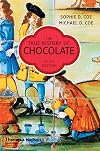
I finished The True History of Chocolate today when I was trying to take a nap. I liked it and I'll be trying to find a cheap used copy. The authors are a married couple, the wife being the food historian who traveled around to various libraries and archives over a few years to collect the materials for this book. Unfortunately, she died before it could be written and her husband completed it after she apparently dictated the rough outline and part of one of the chapters. That information is show more in the introduction to the second edition that I read.
The book is very readable and engaging, full of anecdotes and excerpts from a range of primary sources, as well as an array of illustrations. They trace the origins of the cacao tree, Theobroma cacao, and the history of its use as beverage, medicine, and food, from pre-Columbian cultures (Olmec, Maya, Aztec, etc.) to modern day chocolatiers, ending with the beginnings of fair-trade chocolate bars under the Green & Black label. The book is divided into eight chapters (my summaries, not actual chapter headings): 1. cacao biology and ecology, 2. early cultivation and production (Olmec and Maya), 3. Aztec, 4. Conquistadores and their criollo settlements, 5. its introduction and adoption in Europe during the Age of Exploration and Baroque era, 6. cultivation and trade during the Colonial era, 7. Enlightenment and Revolutionary Eras, 8. modern industrial processes and development of chocolate candy industry.
I learned a lot about the plant itself and how chocolate is made, as well as about indigenous cultures and the saddening details of conquest and colonization. The book included images of Mayan archeological artifacts and ideograms and the most recent archaeological findings that date cacao use much earlier than previously thought. They also discuss the origins of the word "chocolate."
Traveling to Europe, the question of hot chocolate during fasts came before the Pope more than once. The authors detail this religious and political debate, as well as the sociopolitical roles of tea, coffee, and hot chocolate as the beverages associated with particular movements or classes. I learned something new about White's, the exclusive club known for its gambling that is prominently featured in many novels set in the Regency era: it was opened as White's Chocolate-House in 1693 by an Italian immigrant.
The authors also include a variety of recipes from different time periods. They also describe the first experiments to incorporate chocolate into food and the possible origins of mole poblano, of Mexican cuisine fame.
The book also covers the history of commercial cacao plantations, from Maya days in Meso-America through its establishment in tropical zones worldwide to its recent introduction to Hawaii. The different plant varieties are covered and what kind of beans they produce in terms of quantity and quality. The invention of the Dutch cocoa process and modern machines are detailed.
The only complaints I have are minor quibbles. The prose is very engaging and personable because it is generally quite subjective. Sometimes that subjective (read, judgmental) tone was annoying and somewhat snide. The text also frequently included self-referential asides. I didn't need to be told multiple times that there was more on a particular topic ahead or already described elsewhere.
So this book is a fairly comprehensive look at a single species of food plant and its cultural importance over time in a variety of contexts. The text is accompanied by substantial notes and an extensive bibliography that allow the reader to chase down the original sources if so desired. And a note on the book's title: it pays homage to one of those sources, The True History of the Conquest of New Spain, a first-hand account written by a retired conquistador to refute all of the myth-building taking place in his lifetime. show less
The book is very readable and engaging, full of anecdotes and excerpts from a range of primary sources, as well as an array of illustrations. They trace the origins of the cacao tree, Theobroma cacao, and the history of its use as beverage, medicine, and food, from pre-Columbian cultures (Olmec, Maya, Aztec, etc.) to modern day chocolatiers, ending with the beginnings of fair-trade chocolate bars under the Green & Black label. The book is divided into eight chapters (my summaries, not actual chapter headings): 1. cacao biology and ecology, 2. early cultivation and production (Olmec and Maya), 3. Aztec, 4. Conquistadores and their criollo settlements, 5. its introduction and adoption in Europe during the Age of Exploration and Baroque era, 6. cultivation and trade during the Colonial era, 7. Enlightenment and Revolutionary Eras, 8. modern industrial processes and development of chocolate candy industry.
I learned a lot about the plant itself and how chocolate is made, as well as about indigenous cultures and the saddening details of conquest and colonization. The book included images of Mayan archeological artifacts and ideograms and the most recent archaeological findings that date cacao use much earlier than previously thought. They also discuss the origins of the word "chocolate."
Traveling to Europe, the question of hot chocolate during fasts came before the Pope more than once. The authors detail this religious and political debate, as well as the sociopolitical roles of tea, coffee, and hot chocolate as the beverages associated with particular movements or classes. I learned something new about White's, the exclusive club known for its gambling that is prominently featured in many novels set in the Regency era: it was opened as White's Chocolate-House in 1693 by an Italian immigrant.
The authors also include a variety of recipes from different time periods. They also describe the first experiments to incorporate chocolate into food and the possible origins of mole poblano, of Mexican cuisine fame.
The book also covers the history of commercial cacao plantations, from Maya days in Meso-America through its establishment in tropical zones worldwide to its recent introduction to Hawaii. The different plant varieties are covered and what kind of beans they produce in terms of quantity and quality. The invention of the Dutch cocoa process and modern machines are detailed.
The only complaints I have are minor quibbles. The prose is very engaging and personable because it is generally quite subjective. Sometimes that subjective (read, judgmental) tone was annoying and somewhat snide. The text also frequently included self-referential asides. I didn't need to be told multiple times that there was more on a particular topic ahead or already described elsewhere.
So this book is a fairly comprehensive look at a single species of food plant and its cultural importance over time in a variety of contexts. The text is accompanied by substantial notes and an extensive bibliography that allow the reader to chase down the original sources if so desired. And a note on the book's title: it pays homage to one of those sources, The True History of the Conquest of New Spain, a first-hand account written by a retired conquistador to refute all of the myth-building taking place in his lifetime. show less
This wonderful book by Sophie D. Coe and Michael D. Coe spends a lot of time talking about pre-Colonial Mesoamerican culture. It's awesome. The Coes did a lot of research on the Mayans and other cultures in the same area, and as a result the book is highly educational about more than just chocolate. But even just as foodie history, it stands out. Great book.
Lists
Awards

You May Also Like


Associated Authors
Statistics
- Works
- 3
- Members
- 808
- Popularity
- #31,570
- Rating
- 4.0
- Reviews
- 11
- ISBNs
- 23
- Languages
- 7
- Favorited
- 1